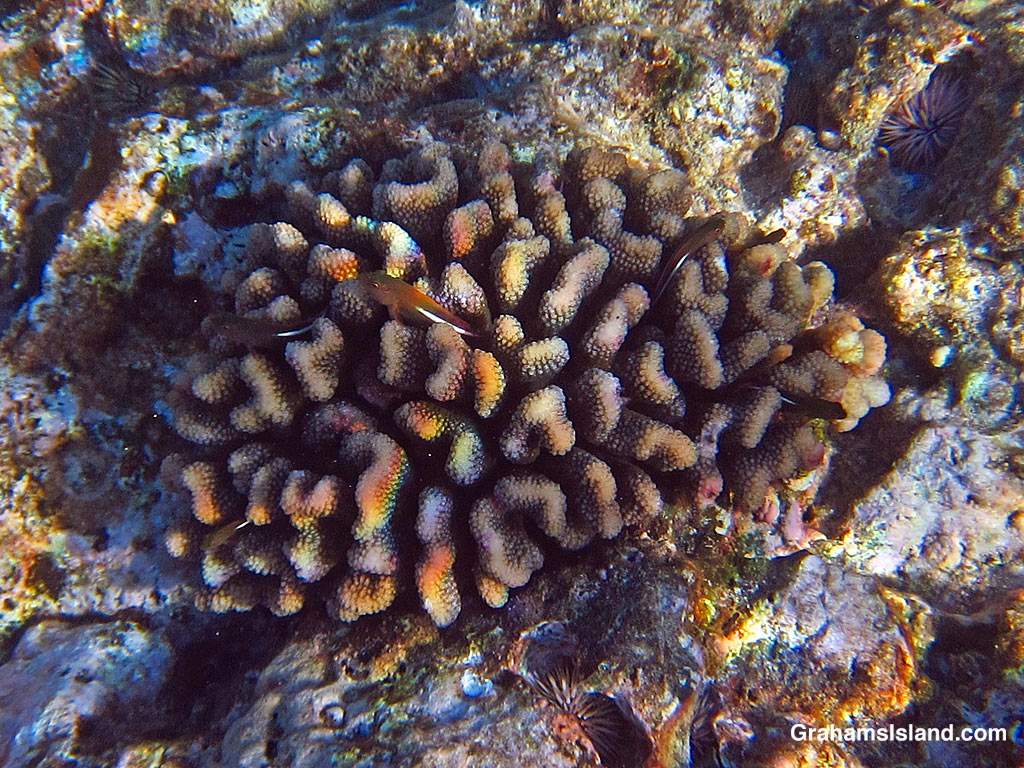
How many Arc-eye Hawkfishes can you fit in a head of Cauliflower Coral? I count six here, though there could be more, and who knows what else besides. Corals like this offer vital shelter for small fish and other creatures seeking to avoid the many predators out hunting.
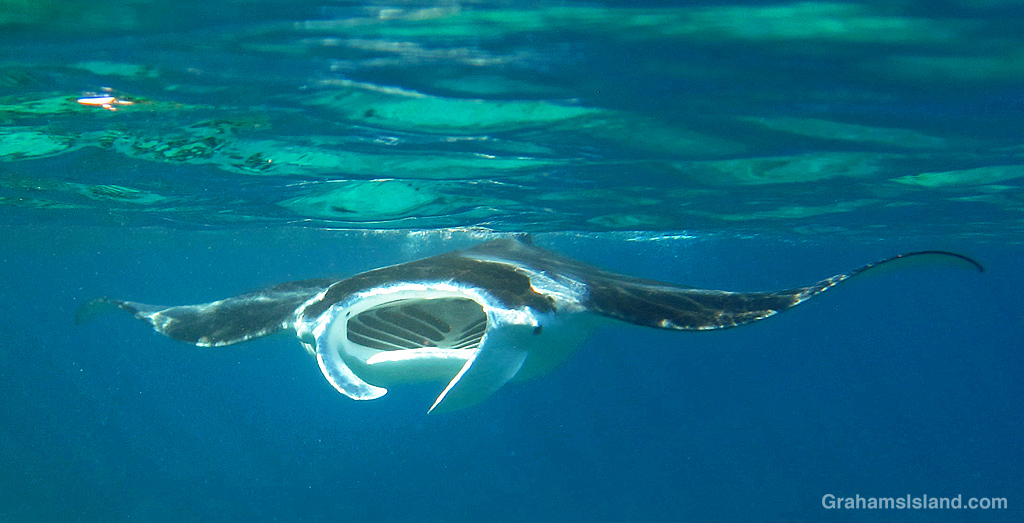
A couple of days ago, my wife and I arrived at our usual snorkeling spot and, when we got out of the car, she spotted fins in the water. Fins generally belong to dolphins, sharks or rays. Each has a different look and these had the look of manta ray wingtips. We could see that there were at least two mantas in the bay. Sometimes, especially with dolphins, the fins will be on the move as the bearers move along the coast. These mantas did not seem in a hurry to go anywhere, but were just puttering around the bay. We hustled down to the water and swam off in the general direction of where we’d seen activity.
We were swimming along when I saw the first manta heading towards me. I stopped and started taking photos. It came fairly close before veering away and heading back the way it came. Then it turned, came back past us and continued on its way.
When it became clear it wasn’t coming back we continued on our way. A little farther along we saw the second manta. It was doing barrel rolls and then came our way. Again, we stopped and watched. This one was more curious, passing by quite close and then looping around several times. Sometimes it went a fair distance away and we’d pop up and follow its progress when it was close to the surface.
Eventually, it seemed to head off in the general direction of the other manta. We lost track of it and popped up in the water to decide what to do next. When I ducked under the water again and turned around I saw the manta again. It made a couple more passes before heading out towards deeper water.
I saw this Undulated Moray Eel out in the open recently and, rather than dart for shelter, it remained where it was opening and closing its jaws. While this looks threatening, it’s typical of most eels, the purpose being to push water over its gills, the equivalent of breathing. However, that’s not to say it’s a good idea to dive down and interact with the eel.
My fish book describes the Undulated Moray Eel as “one of the nastiest.” Its narrow jaws hold three rows of teeth, one running down the middle of its mouth. It’s usual prey includes small fish, but this eel was accompanied by a changing group of fish, and neither seemed too bothered about the other.
In Hawaii, this eel is often called the chainlink eel, for obvious reasons.
A pair of Fourspot Butterflyfishes disturbed a pair of Arc-eye Hawkfishes perched in a head of Cauliflower Coral, as they often do. The coral head is doing OK, but areas of it have died off, probably during one of the coral bleaching events that have happened in the past few years, where the water gets too warm.
I can get chilly fairly easily when I go swimming, but for me, it’s more distressing when the water feels oddly warm because I know this is bad news for the corals.
This Reef Lizardfish snagged itself a prospective lunch. The trouble is, its lunch is a Whitespotted Toby and, like all pufferfish, one mode of defense is to inflate itself so it can’t be swallowed. This toby has done just that and the lizardfish will have a hard job getting that down.
If it is successful, it might still be in trouble since another of the toby’s defenses is a skin toxin which renders it, at best unpalatable, and at worst, deadly!
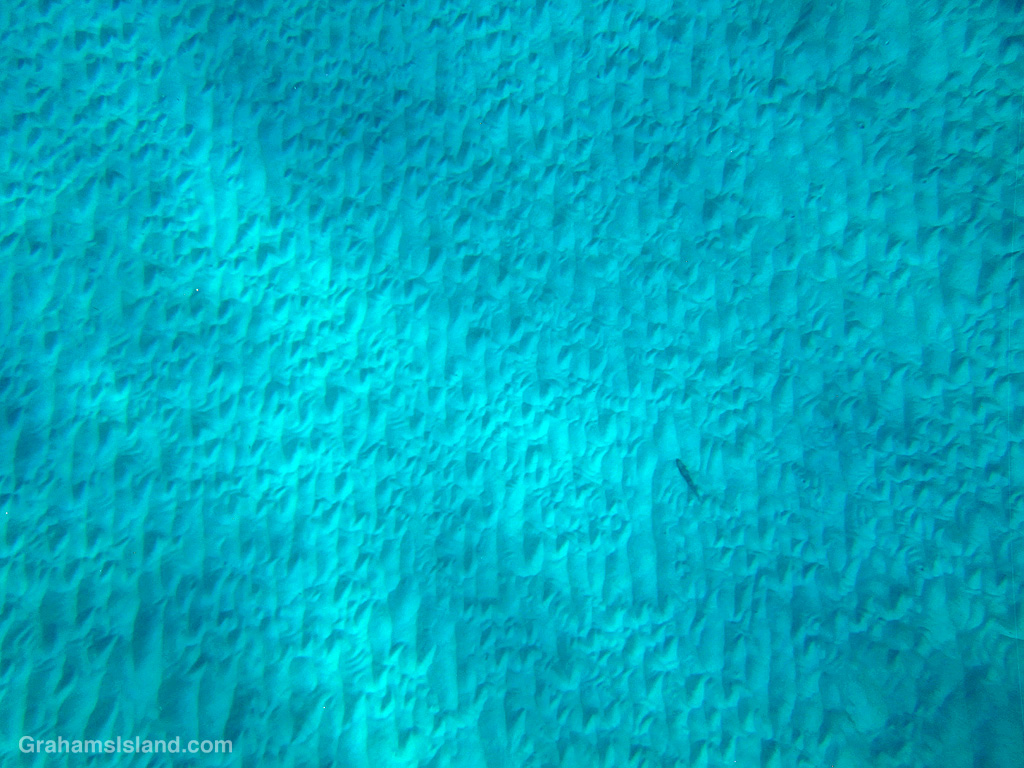
A large patch of sand is sculpted into patterns by the water movement over it. Sometimes these patterns can last quite a long time. Other times they change from day to day. Sandy areas tend to have less fish activity, but there is one fish in this photo.
When I go snorkeling, one of the first fish I’m almost guaranteed to see are needlefish. The often congregate in the shallows just below the surface of the water. I can often get very close to them before they scoot to one side or part in the middle as I go through.
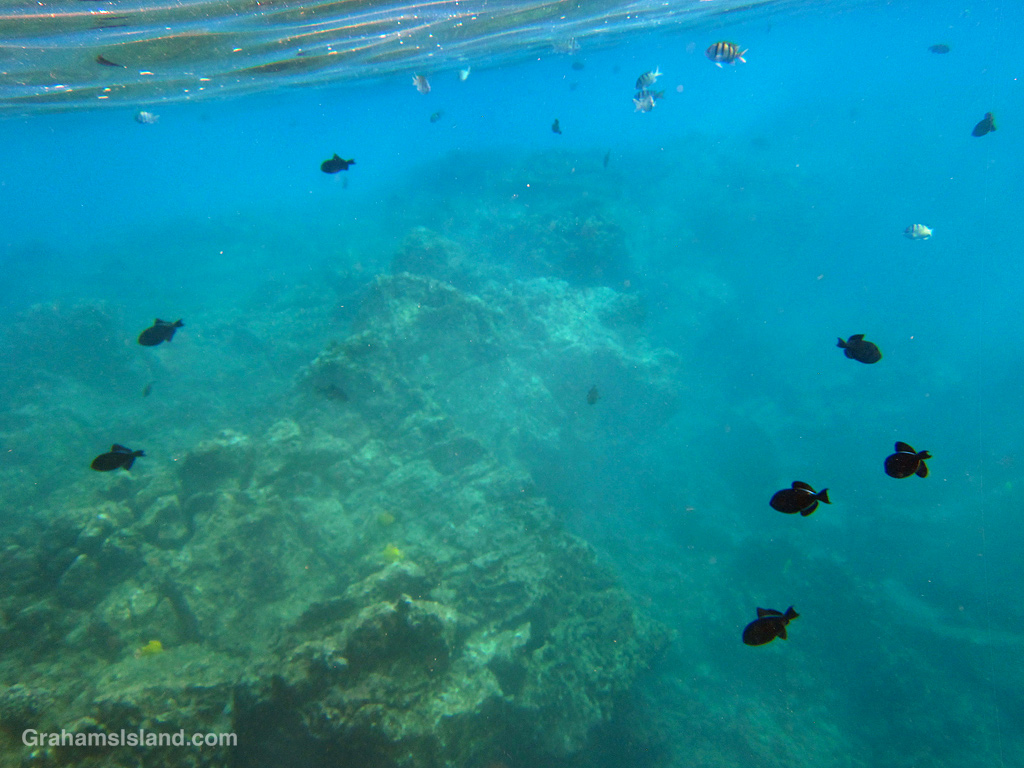
These days, when I go snorkeling, it’s not unusual to encounter hazy water like this. 10 years ago this would have been unusual. Today, it’s closer to the norm. I don’t know why this is, but warmer water is likely one factor.
From a snorkeling perspective, I have to be a lot closer to fish to hope to get a decent photo of them.