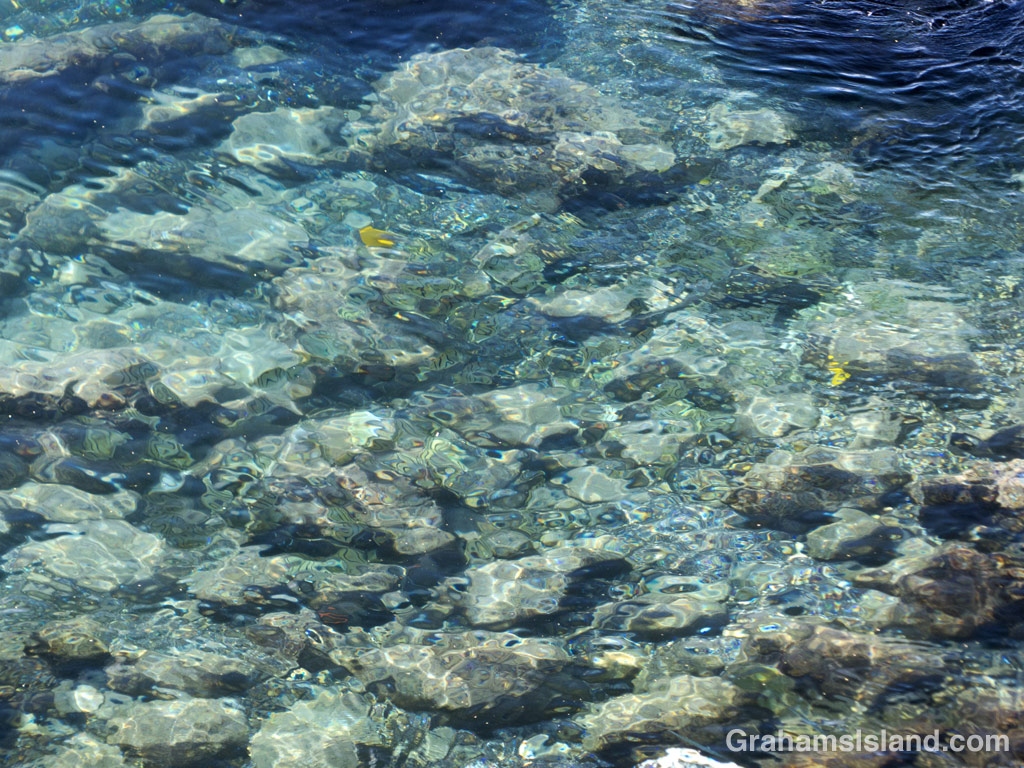
A couple of yellow tang swim around rocks as the surface water ripples overhead.
Category Archives: Fish
Giant porcupinefish


These large, wedge-shaped fish are likely not among the favorites in a fish beauty contest. They are, however, surprisingly maneuverable. They’re also somewhat shy and when they see they’ve been spotted, have a tendency to slide into holes or under ledges with the minimum of effort.
Like pufferfish, they can inflate themselves into a ball when threatened. Unlike pufferfish, they’re covered in sharp spines which stick out when inflated. They’re also poisonous so, while I enjoy seeing them, I have no intention of ever bothering one.
In my attempts to identify what I see in the water, I use John P. Hoover’s book The Ultimate Guide to Hawaiian Reef Fishes, Sea Turtles, Dolphins, Whales, and Seals. His website is hawaiisfishes.com.
Abstracts: Little convicts
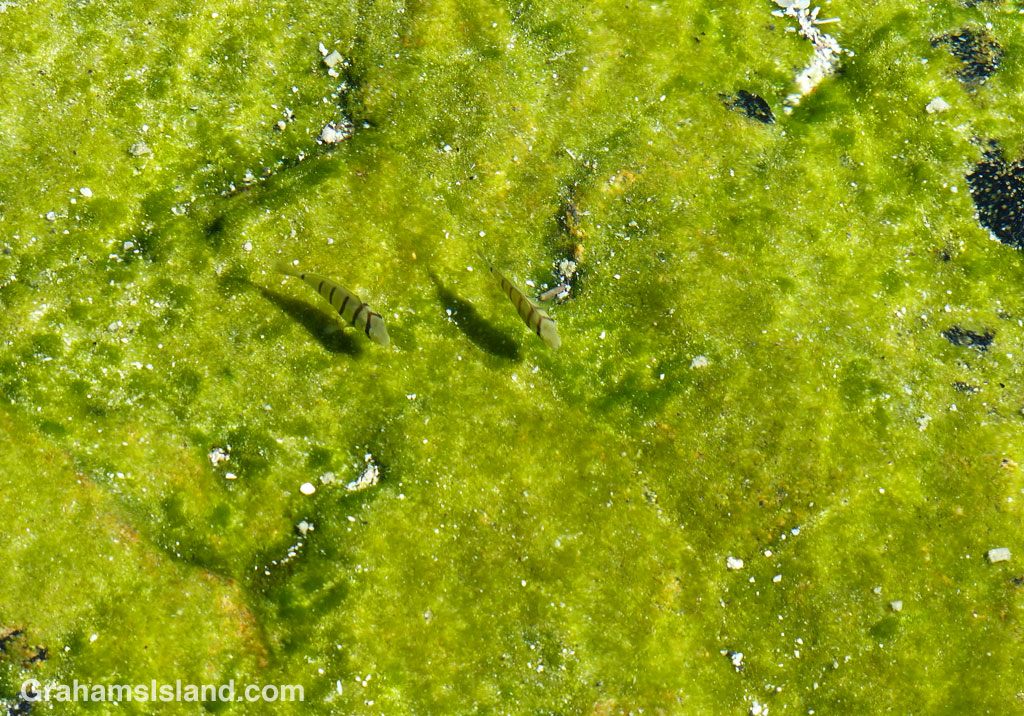
A pair of baby convict tang putter around in a shallow tide pool.
In my attempts to identify what I see in the water, I use John P. Hoover’s book The Ultimate Guide to Hawaiian Reef Fishes, Sea Turtles, Dolphins, Whales, and Seals. His website is hawaiisfishes.com.
A splash of color
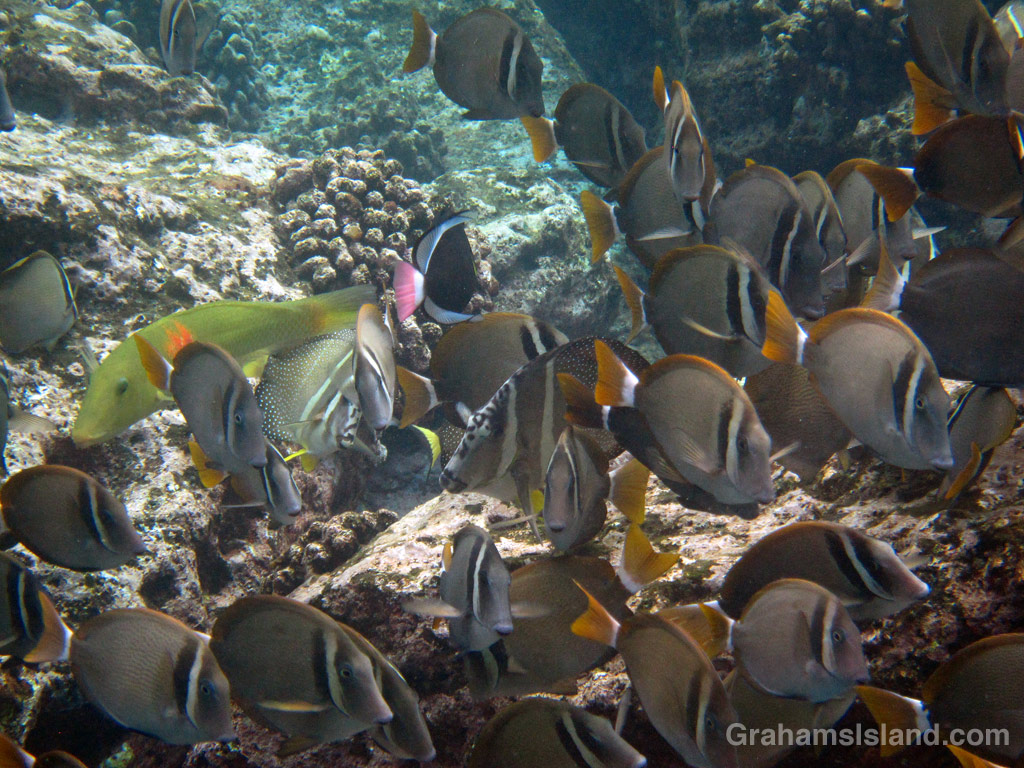
This predominately brown shoal of whitebar surgeonfish and whitespotted surgeonfish is enlivened by the yellow and orange of a male cigarfish and a flash of pink from the aptly named pinktail triggerfish.
In my attempts to identify what I see in the water, I use John P. Hoover’s book The Ultimate Guide to Hawaiian Reef Fishes, Sea Turtles, Dolphins, Whales, and Seals. His website is hawaiisfishes.com.
Bluefin trevally
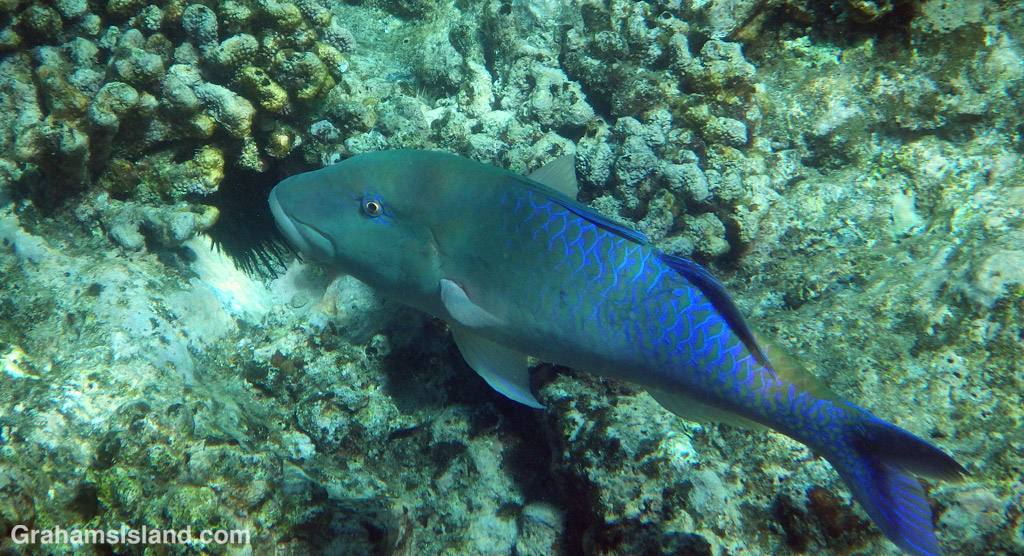
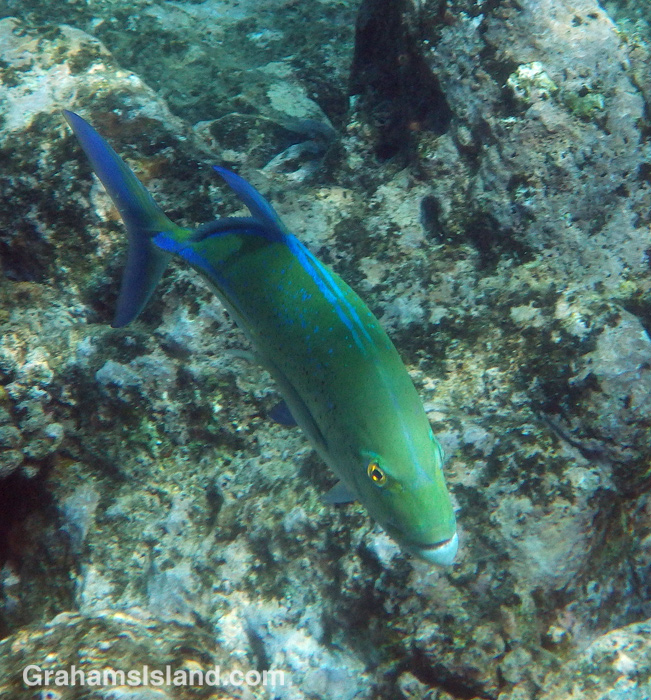
These are another of those fish that look quite different when they catch the light, with blue highlights standing out. They also look different as they age. The top photo is a large adult, the other two, a small younger adult.
These fish are big time predators, eating many other species of fish. I find this interesting because I often see bluefin trevally when I’m in the water. I see them pass by other fish and I’ve never seen them strike or seen other fish particularly bothered by their presence. One day …
In my attempts to identify what I see in the water, I use John P. Hoover’s book The Ultimate Guide to Hawaiian Reef Fishes, Sea Turtles, Dolphins, Whales, and Seals. His website is hawaiisfishes.com.

Sailfin tang
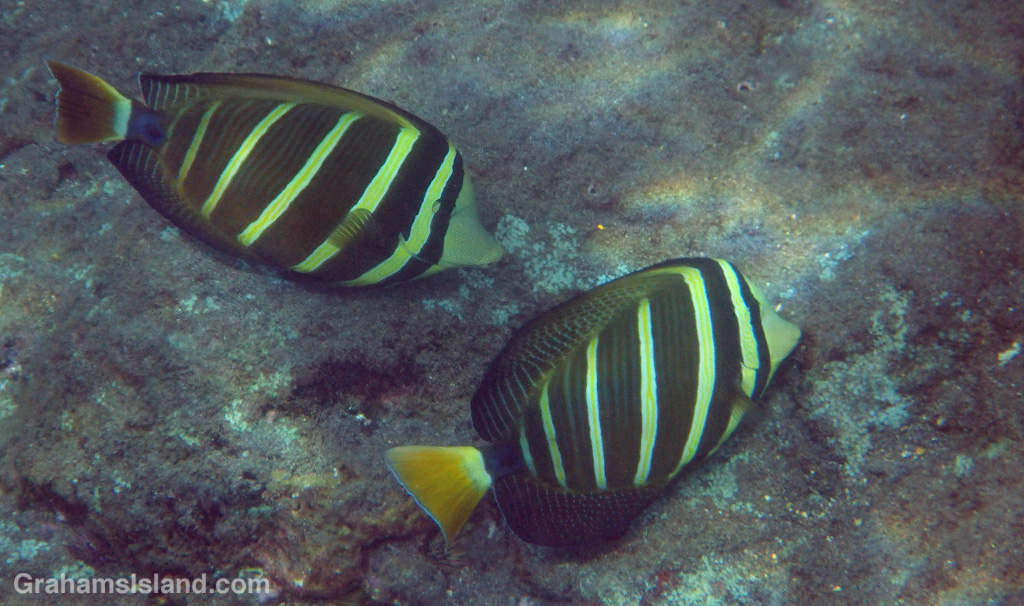
A pair of sailfin tang graze for algae.
In my attempts to identify what I see in the water, I use John P. Hoover’s book The Ultimate Guide to Hawaiian Reef Fishes, Sea Turtles, Dolphins, Whales, and Seals. His website is hawaiisfishes.com.
Palenose parrotfish
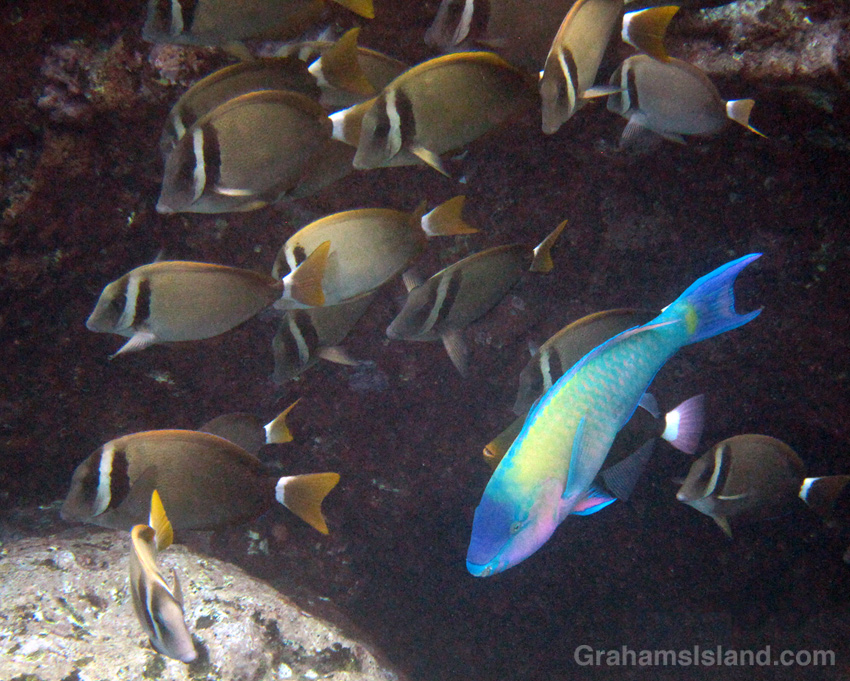
This is a palenose parrotfish passing through a school of whitebar surgeonfish. Most parrotfish attain this kind of color when they reach adulthood. Often times it appears somewhat muted, but when the sun catches them they are iridescent and stand out as much or more than anything else in the water.
In my attempts to identify what I see in the water, I use John P. Hoover’s book The Ultimate Guide to Hawaiian Reef Fishes, Sea Turtles, Dolphins, Whales, and Seals. His website is hawaiisfishes.com.
Ember parrotfish

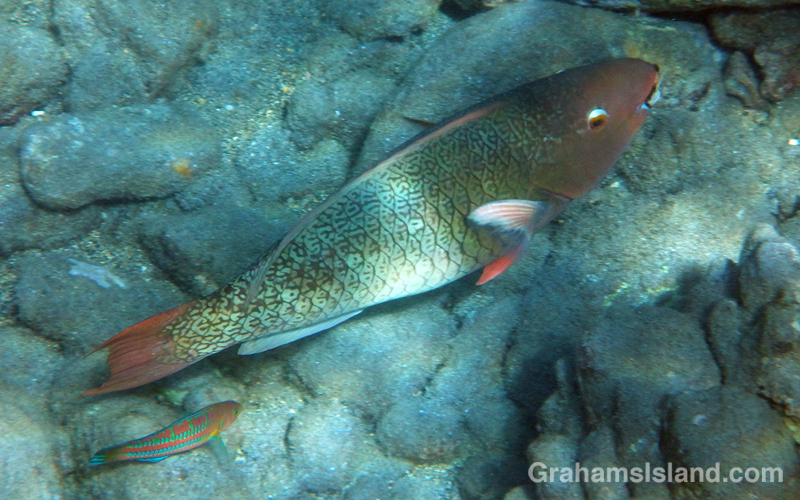
This ember parrotfish is one of several kinds of parrotfish to be seen around here. They scrape algae from the rocks, which is the reason for the dark stains around its beak. This fish is in its ‘initial’ phase and will later turn a beautiful blue-green.
Parrotfish are often trailed by a smaller wrasse of some kind, in this case, a Christmas wrasse. It’s there to snap up any small creatures dislodged by the larger fish’s grazing.
In my attempts to identify what I see in the water, I use John P. Hoover’s book The Ultimate Guide to Hawaiian Reef Fishes, Sea Turtles, Dolphins, Whales, and Seals. His website is hawaiisfishes.com.