

When the light catches a scrawled filefish right, its blue scribbles shine in the water.
Category Archives: In The Water
Abstracts: Impressionist photo of Hawaiian sea turtles
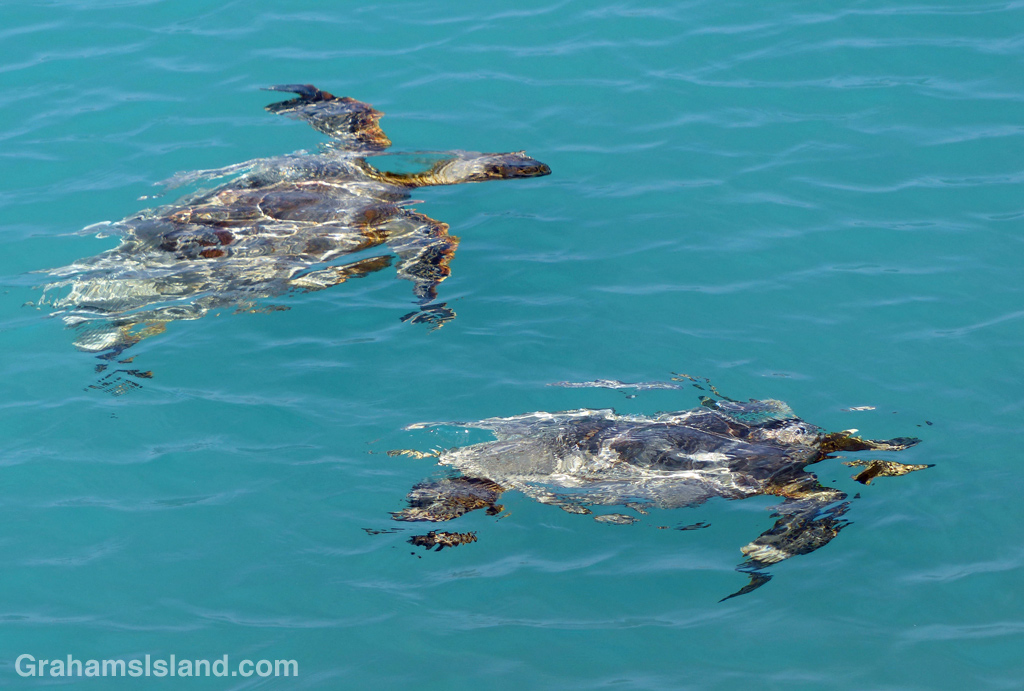
Kiholo Bay is a popular spot for Hawaiian green sea turtles. On a recent hike I saw several of them on land and in the water. A light breeze rippled the water and when the turtles swam just below the surface, their appearance was in constant flux. It was a nice surprise to find I’d captured this impressionistic effect.
Black triggerfish
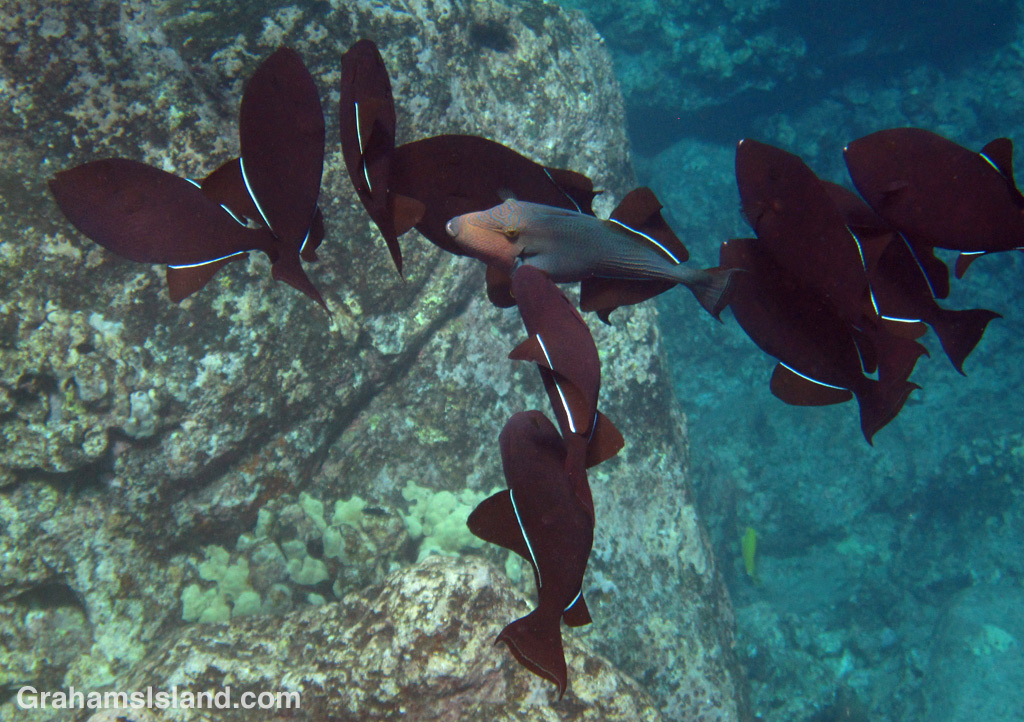
I came across this blob of black triggerfish just floating and weaving idly back and forth. Only the one had the coloration that is a sign of arousal and agitation, though it was drifting about much like the others. I suspect this was some sort of courtship/mating ritual going on, but it was quite ethereal to watch.
Bicolor chub
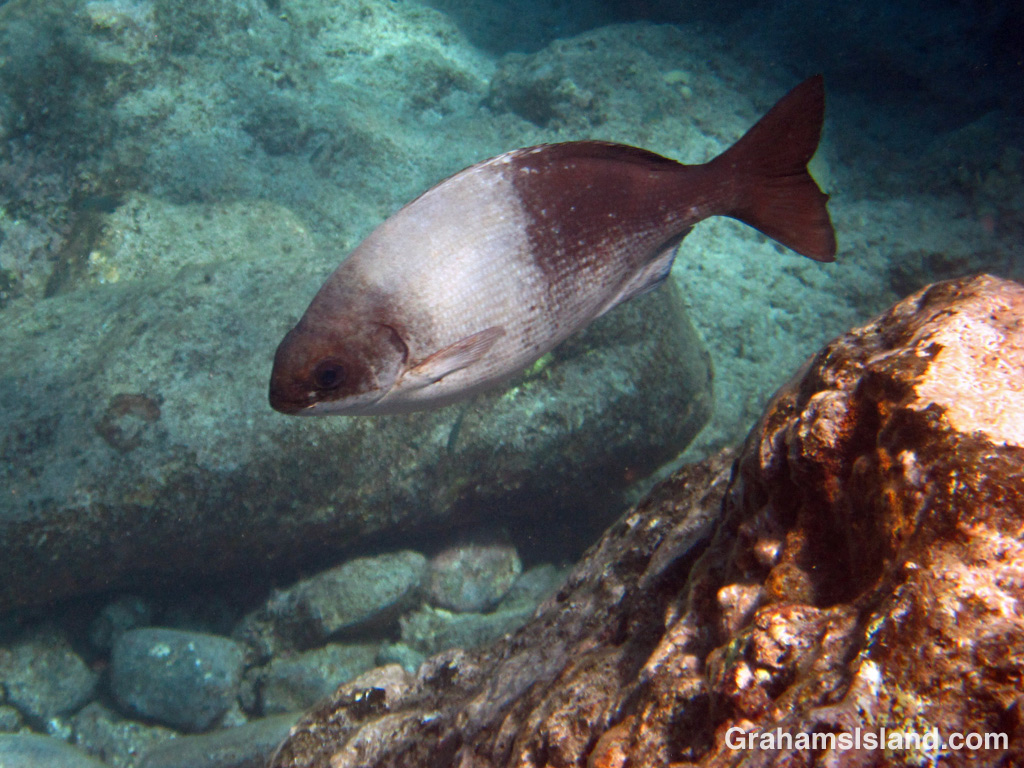
The bicolor chub’s distinguishing feature is that its rear third or half is dark. Sometimes, as with this one, the head turns dark and sometimes the back also, so only the belly is light.
Silver hookfish
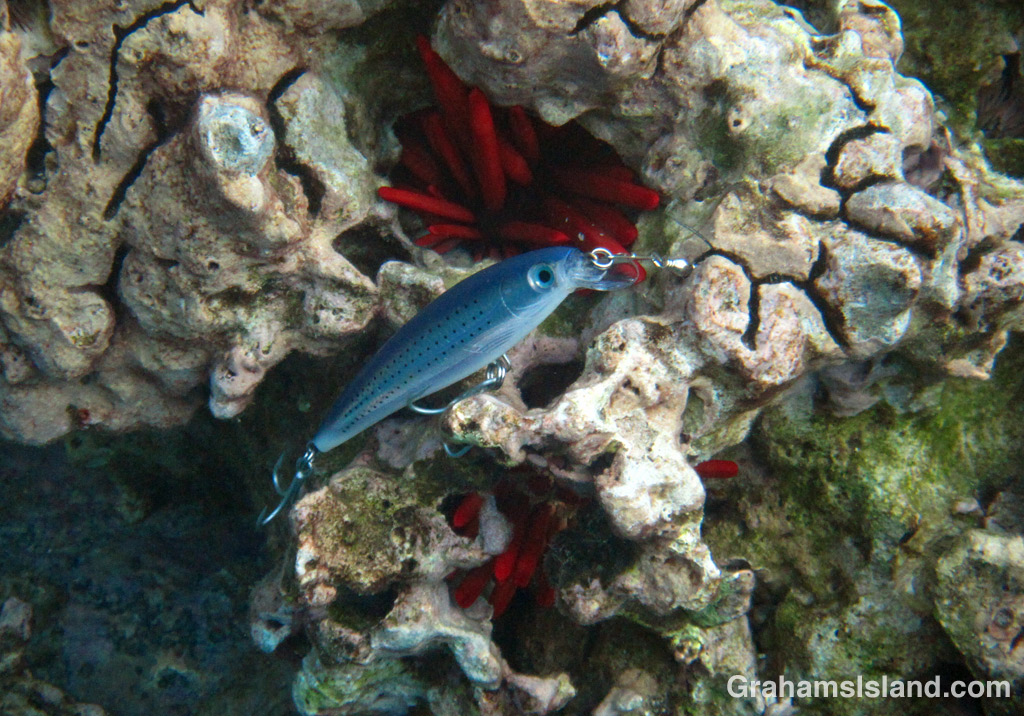
The silver hookfish is fairly common in coastal waters here. It spends much of its time slowly cruising shallow waters in search of prey, usually much larger fish than itself. On occasion, the silver hookfish will rest for an extended time on a patch of coral or rock as seen here. Sometimes they can even be seen leaping through the air like flying fish.
While humans aren’t their usual prey, curious or gullible people, lured by its glittering appearance, are sometimes snagged by one of the hookfish’s several barbs. This can be a painful experience, sometimes requiring medical treatment.
Silver hookfish are not recommended for human consumption, since they’re extremely tough and may contain concentrations of toxins, which can impair perceptivity.
Castaway?
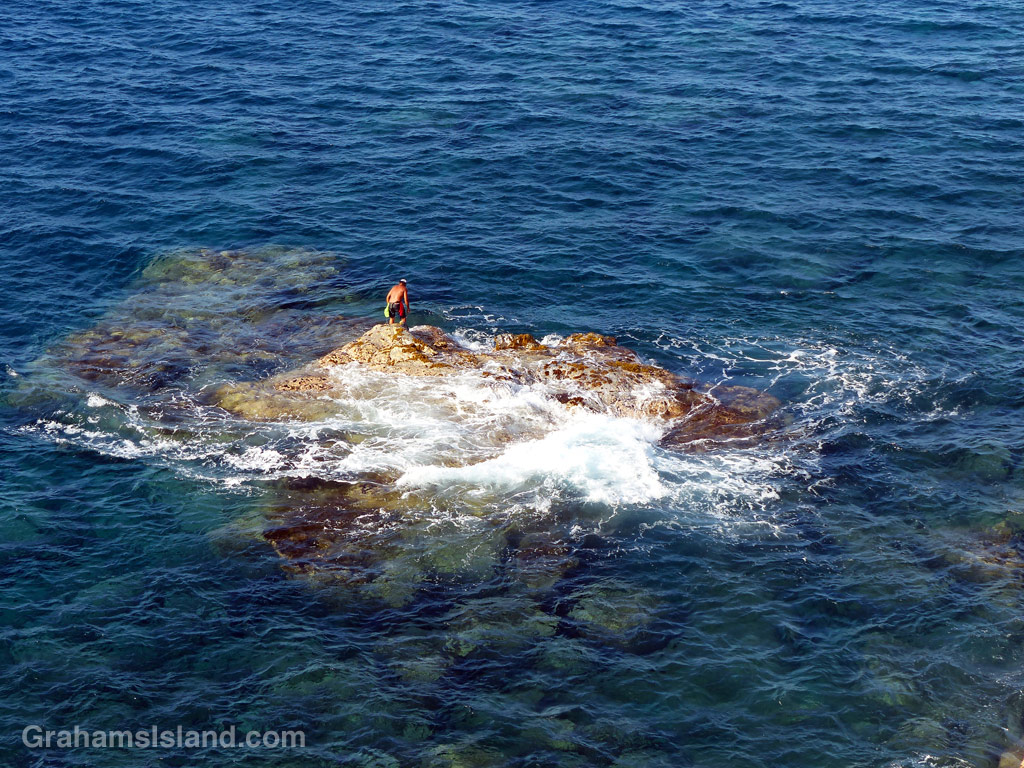 This lonesome individual, scrambling over a tiny islet, searching for food, appears to be the quintessential castaway. But he’s really collecting opihi and the islet is about a hundred-foot swim to the much larger Big Island.
On a different day with windier conditions, the swim wouldn’t be necessary since the surf could pick a person up and slam them against the cliff with no effort required on their part.
Square-spot goatfish
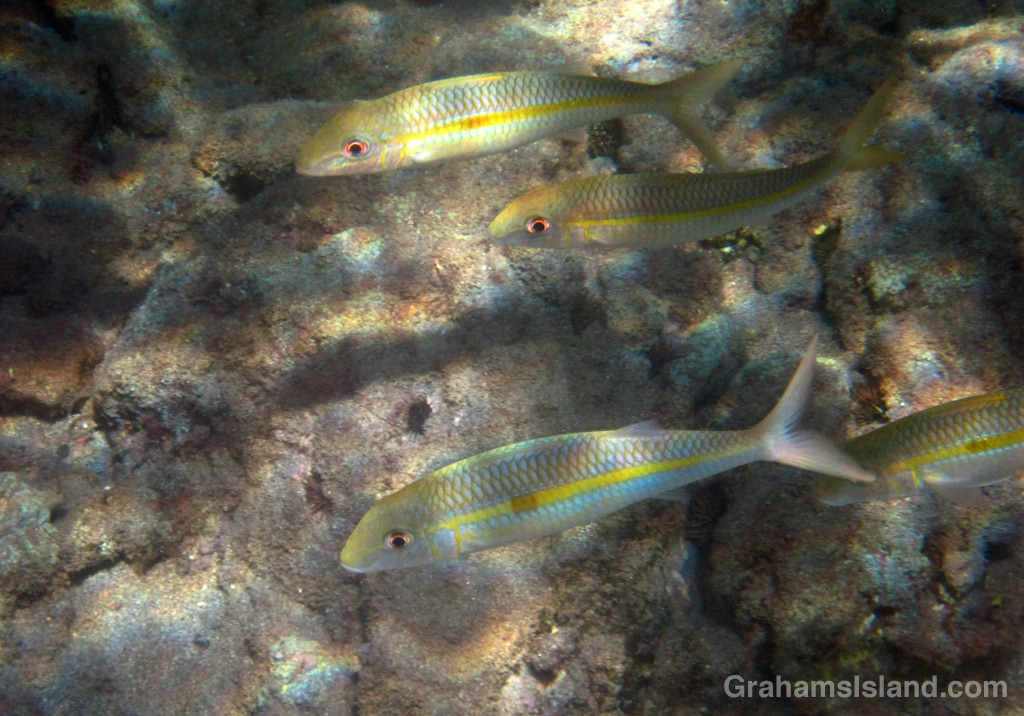
Square-spot goatfish are quite common and most easily distinguished by the square spot in the yellow stripe along their sides. However, the intensity of the square spot changes, darker during feeding, and fading (as with the fish in the photo) or disappearing altogether while resting or schooling. When the spot disappears, square-spot goatfish are hard to distinguish from yellowfin goatfish.
In my attempts to identify what I see in the water, I use John P. Hoover’s book The Ultimate Guide to Hawaiian Reef Fishes, Sea Turtles, Dolphins, Whales, and Seals. His website is hawaiisfishes.com.
Spotted coral blenny
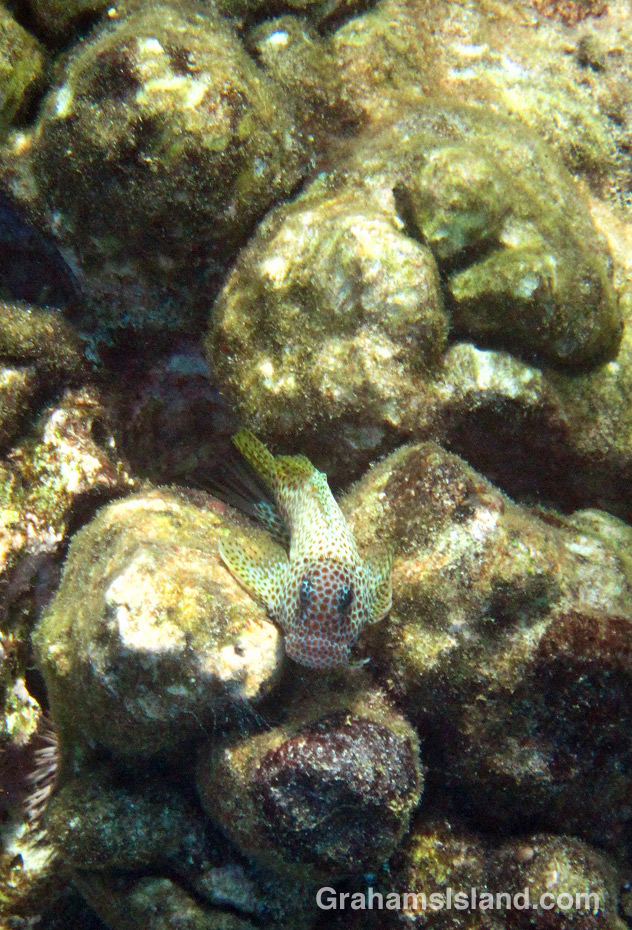
I like blennies. They have the kind of goofy expression I see when I look in a mirror. The spotted coral blenny is considered large for the species, growing to 6 inches long. This one was engaged in typical blenny behavior, sitting motionless on a piece of coral.
In my attempts to identify what I see in the water, I use John P. Hoover’s book The Ultimate Guide to Hawaiian Reef Fishes, Sea Turtles, Dolphins, Whales, and Seals. His website is hawaiisfishes.com.

