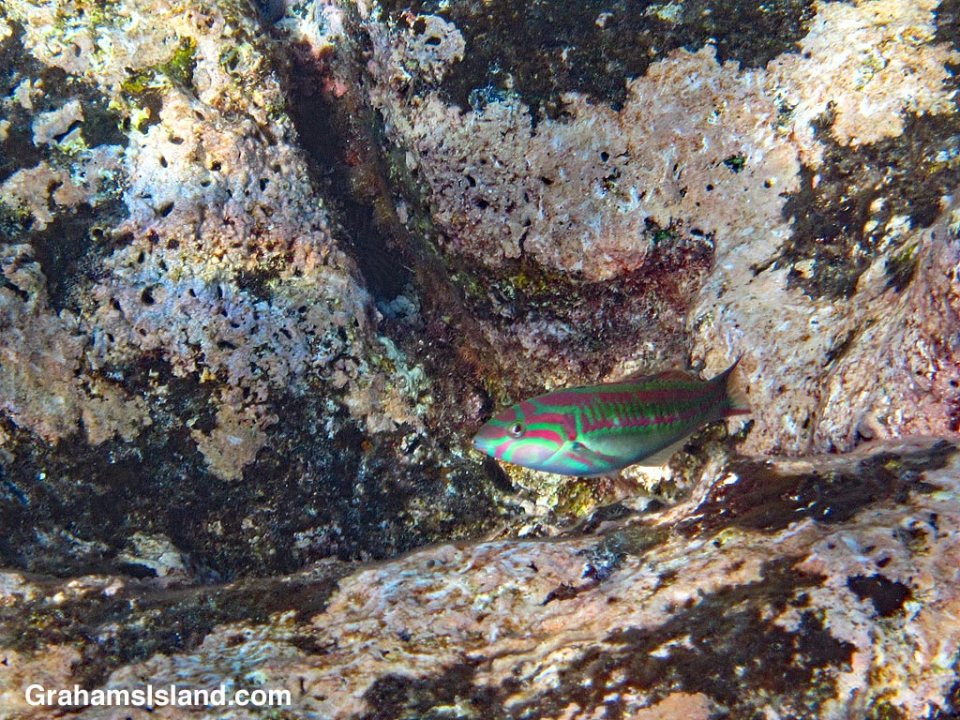
This is a supermale fivestripe wrasse. There are many colorful wrasses in Hawaii, but the fivestripe wrasse is one of the less common varieties. Despite the impressive name, it’s less than five inches in length.

This is a supermale fivestripe wrasse. There are many colorful wrasses in Hawaii, but the fivestripe wrasse is one of the less common varieties. Despite the impressive name, it’s less than five inches in length.

This is an adult snowflake moray eel. Their distinctive markings make them one of the easier eels to identify. Unlike other eels, they don’t have sharp teeth, but pebble-like plates which they use to crush the shells of their invertebrate prey.
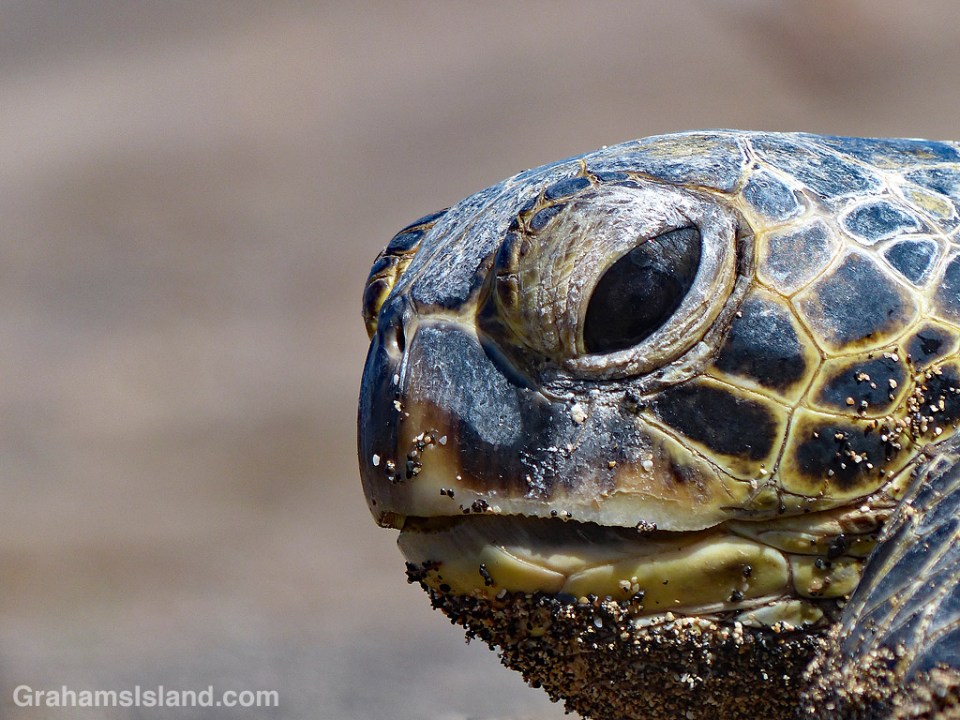
A Hawaiian green turtle lifts its head after resting on the sand at Kaloko-Honokohau National Historical Park. The park is one of many good places on the island to see turtles, either on the beach or foraging in the shallow waters there.
For more information about Kaloko-Honokohau National Historical Park, go to https://www.nps.gov/kaho/index.htm or bigislandhikes.com/kaloko-honokohau-park/.
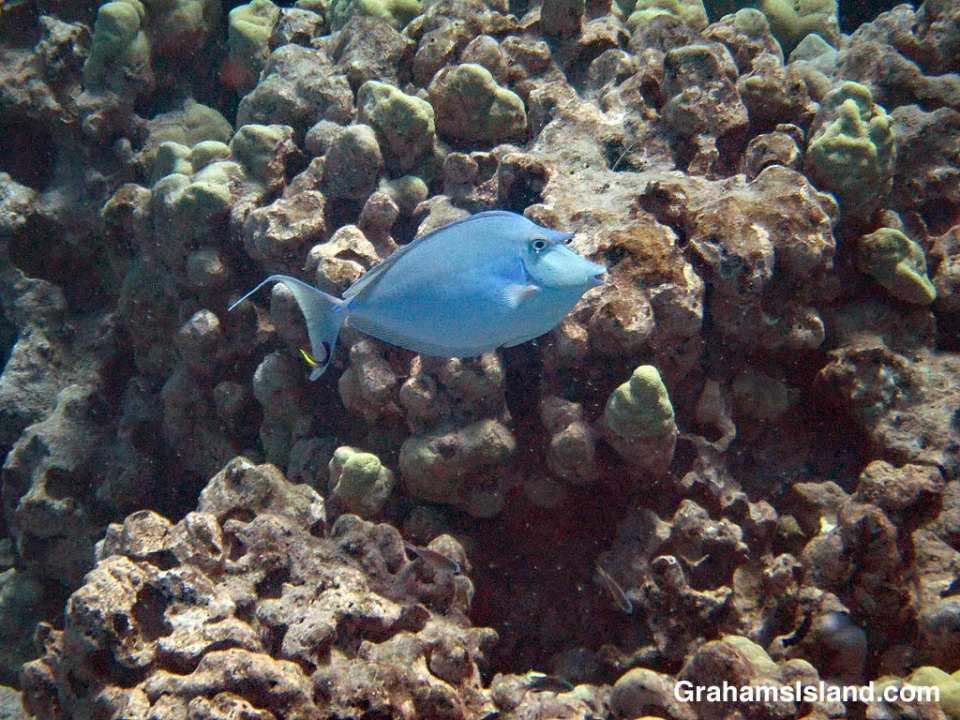
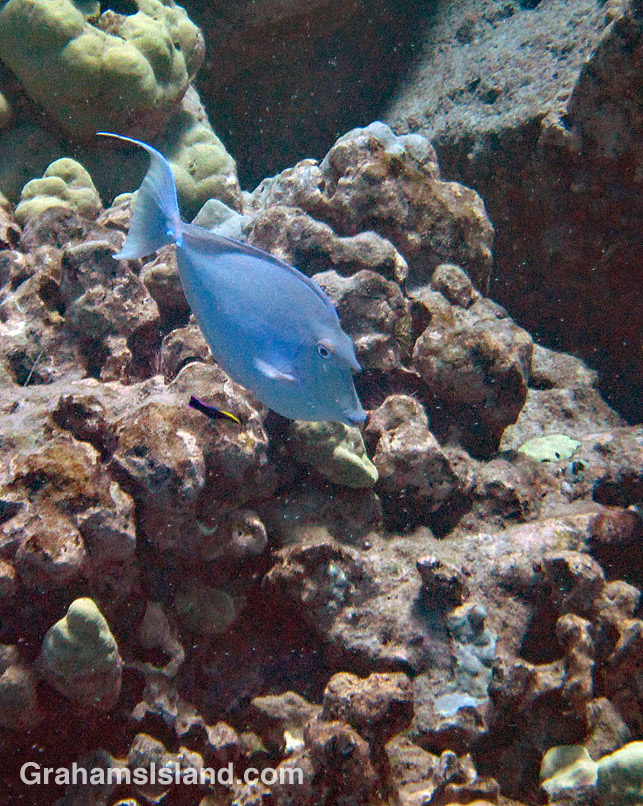 The bluespine unicornfish must be a contender for any ‘Grumpiest Looking Fish’ awards. This one though was enjoying the attention of a small yellow and blue Hawaiian cleaner wrasse.
Cleaner wrasses establish territories where other fish come to be cleaned, removing mucus, dead tissue, and parasites from their customers. This service is obviously valued by other fish. They will line up to be cleaned, waiting their turn. Often times, their expressions are quite blissful during the process. But most significant, cleaner wrasse perform their services on bigger fish, including predators, without becoming prey.

 On a recent walk I noticed some disturbance in the water not far offshore and was happy to see a school of 15 to 20 spinner dolphins. I thought they were headed south and set out to follow them from shore. Then they turned around and went north again. I followed. This happened several times, so I just sat down and watched while they tried to make up their minds.
Spinner dolphins get their name from the twirls they make when they leap from the water. It’s thought this activity helps dolphins know where others in the school are because the bubbles generated by their takeoff and return to the water are a good target for their echolocation.
Posted in response to this week’s Sunday Stills challenge on the theme of ‘Back to School’ (Yes, it’s a stretch!). See more responses here.

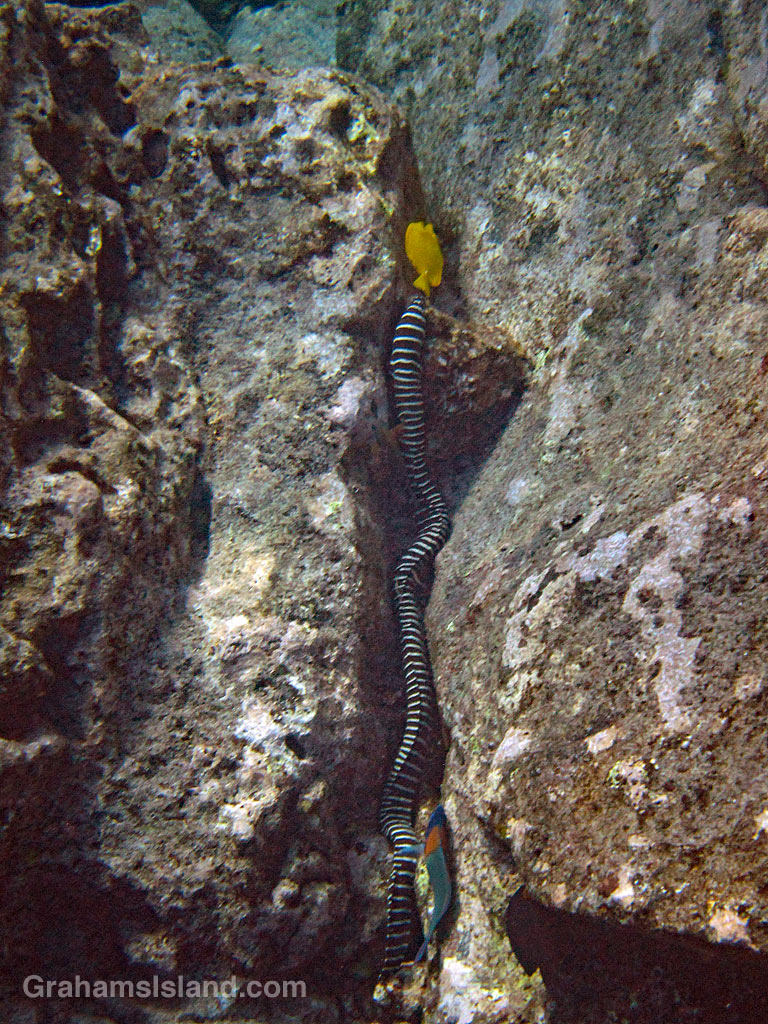
Zebra moray eels are one of the easiest eels to identify, their circular stripes differentiating them from any other eel. They feed mostly on crabs, which they crush with their blunt teeth.
These eels can grow to five feet in length, but are usually smaller. This one though is probably about as large as they get. The yellow tang near its head could be as long as six or seven inches, while the saddle wrasse at its tail tops out at ten inches. That would make this eel somewhere between four and five feet long. It’s certainly the biggest zebra moray that I’ve seen.
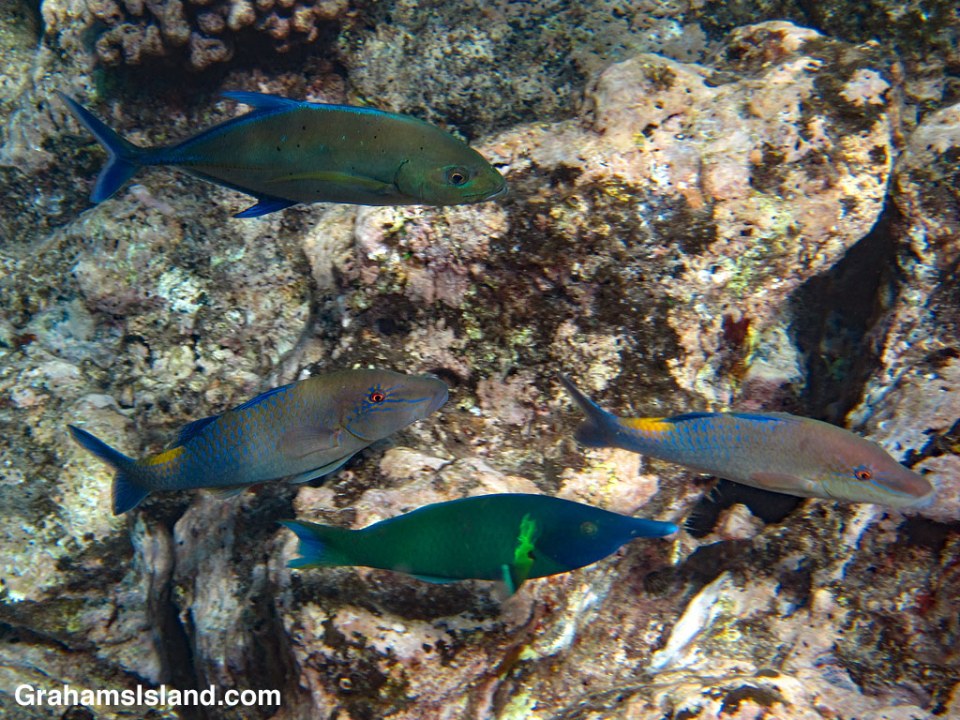
I happened upon this little gang of fish while I was swimming. At the top is a bluefin trevally, in the center a pair of blue goatfish, and at the bottom a male bird wrasse. Trevallies and goatfish regularly hunt together, often in the company of an eel or octopus. They try to flush out or ambush small fish as their prey. The bird wrasse eats mostly marine invertebrates but will also take small fish .
I often see fish like these hunting, but have yet to see any of them snag a meal, though they clearly are reasonably successful hunters.

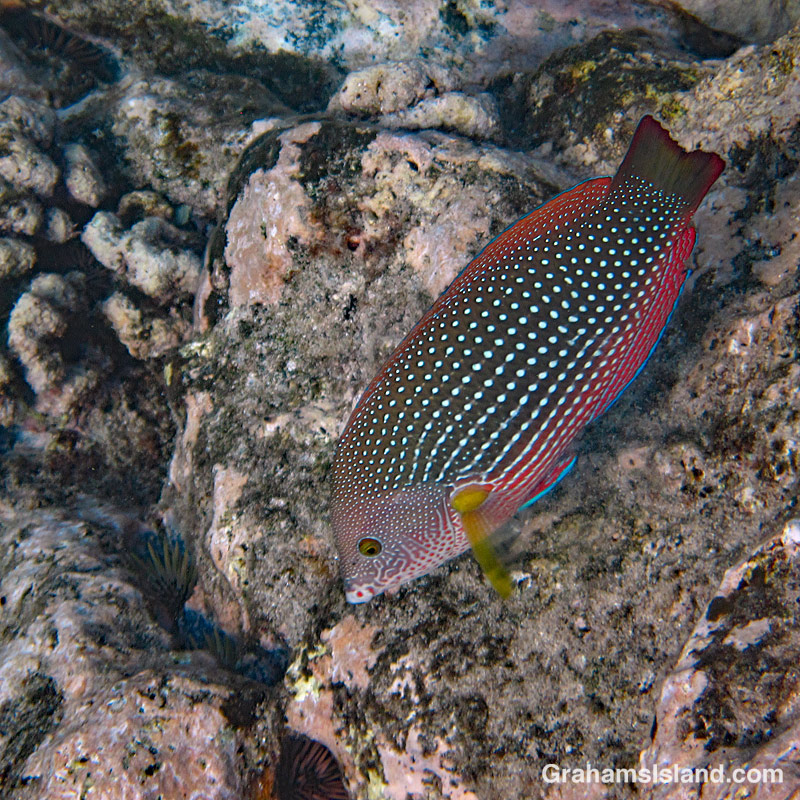 The pearl wrasse, which is endemic to Hawaii, gets its name from the markings of the female, which look like strings of pearls. The male pearl wrasse is predominantly green with fine blue lines.
I hadn’t seen a pearl wrasse before, or at least not identified one, until this female showed up in a fairly shallow area. She was there for several days before apparently moving on and I haven’t seen her again since.
A striking fish at any time, this one was particularly brilliant when the sun caught her colors.

