
This longnose butterflyfish was cruising around, probing for tasty morsels, when it disturbed this surgeonfish. I think it might be a Thompson’s surgeonfish, but it disappeared before I could make a positive ID.

This longnose butterflyfish was cruising around, probing for tasty morsels, when it disturbed this surgeonfish. I think it might be a Thompson’s surgeonfish, but it disappeared before I could make a positive ID.
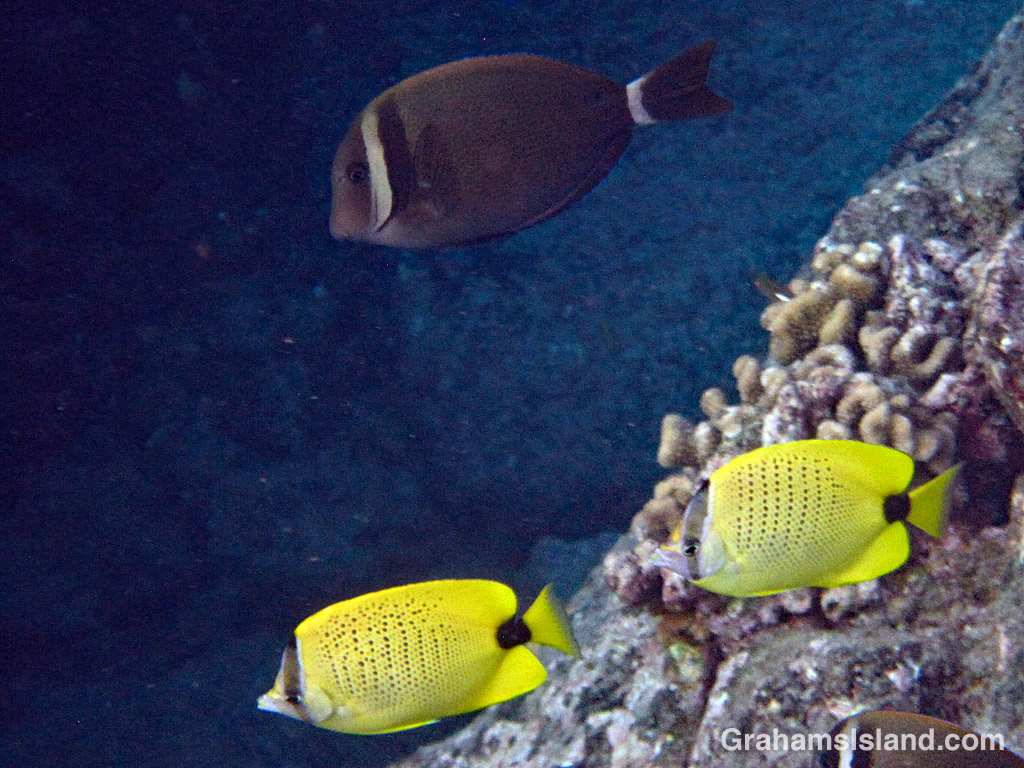
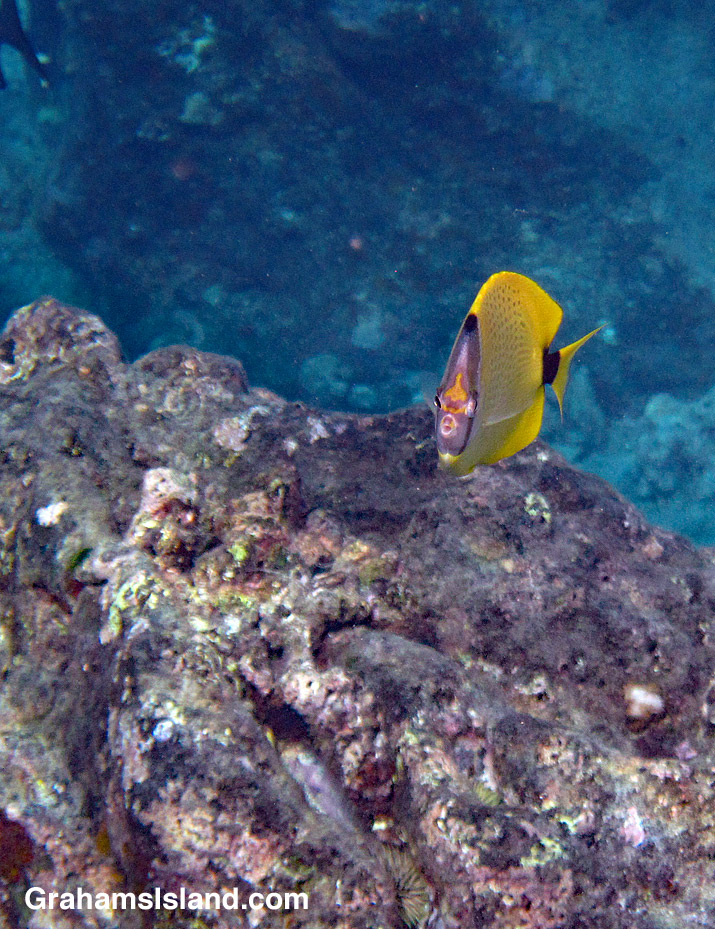 Milletseed butterflyfish get their name from their markings, a series of dark dots along their sides. Of course, the markings could be morse code and they could be trying to communicate something to us, if only we’d listen.
I was quite pleased to get a shot of this fish looking my way, for the fish’s expression and for how it shows how slender these fish are. When people approach, most fish, wisely, turn away.
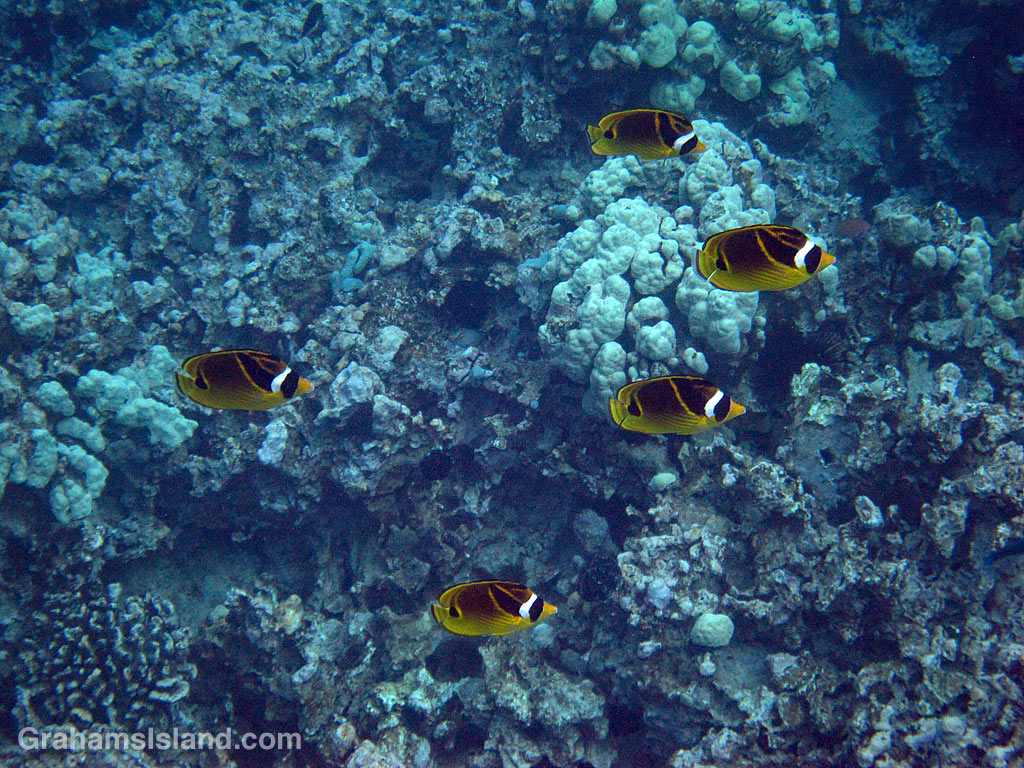
Raccoon butterflyfish are one of those fishes often seen in small groups. Other fish tend to clump together, but raccoon butterflyfish always seem to be traveling in formation as though they’re taking part in some kind of synchronized swim competition. Perhaps they are, in which case this group would have scored high points.
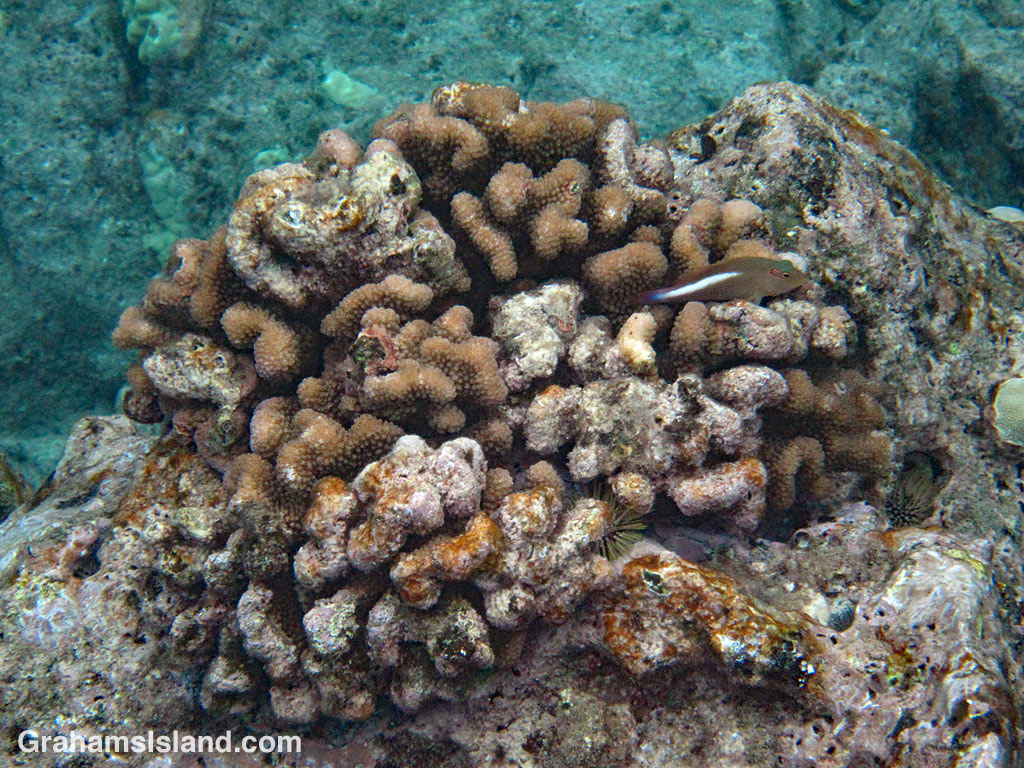
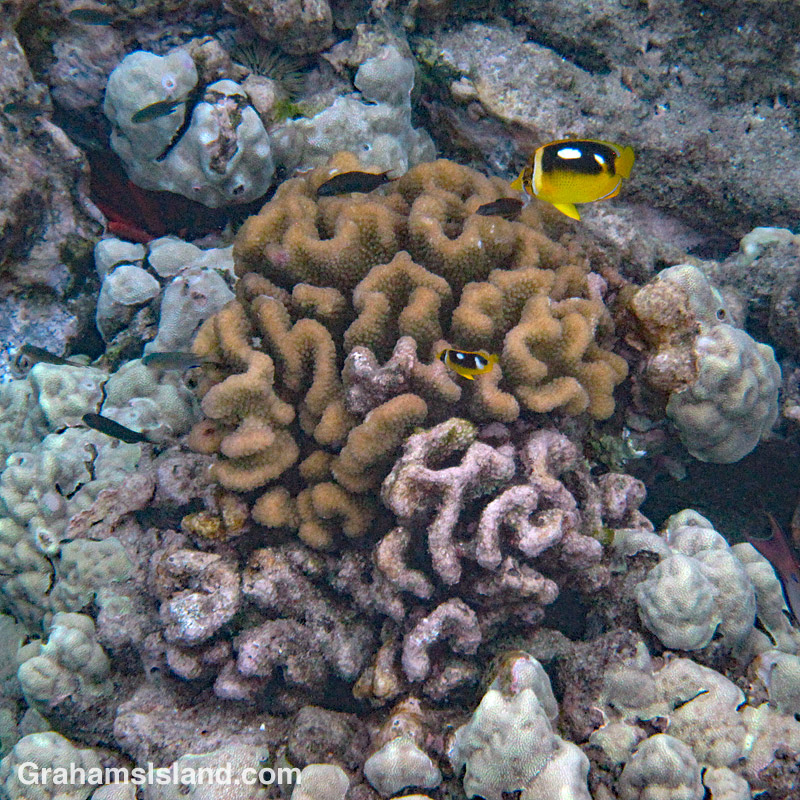
Cauliflower coral was once a mainstay of reefs along the west coast of the Big Island, but has been in decline for a while. Then, in late 2015, high water temperatures caused a huge coral bleaching event, which resulted in a die-off of more than 90% of the area’s cauliflower coral. In some places, nothing was left. Because of this, the reproduction of surviving corals has become of increased importance.
Different corals have different methods of reproduction. Cauliflower coral reproduces in a synchronized spawning event. During this event, the corals release gametes (eggs and sperm) into the water, creating a milky cloud. For many corals, the spawning event takes place at night, but research indicates that cauliflower corals spawn shortly after sunrise, two or three days after the May full moon. At least, that’s what I was told.
Consequently, twice last week, I got up at an early hour in order to be in the water before 7 a.m. in the hope of witnessing a cauliflower coral spawning. Yes, that’s the kind of life-on-the-edge that I lead.
The first priority was to find some live cauliflower coral, easier said than done. There were a few patches in deeper water, but since visibility was not great, it would be almost impossible to tell if and when they spawned. After some finning around, I found a shallow spot with three small clumps and decided to pin my hopes on them. The live coral was part of a larger mass, part of which had died, as can be seen in the photos. Also to be seen in the photos are an arc-eye hawkfish (above), and two four-spot butterflyfish (second photo) among others. Corals are very important to fish stocks because many small fish, and the young of bigger fish, use the coral for protection, a place to hide when threatened.
What’s not to be seen in the photos is any evidence of spawning, because I didn’t see any. It was unlikely that I would. Conditions might not have been right for the coral or my timing could have been off. The May full moon is actually on the 29th so it might be that the spawning will be at the end of the month, not the beginning. I’ll try again then.
Posted in response to this week’s WordPress Photo Challenge ‘Unlikely.’

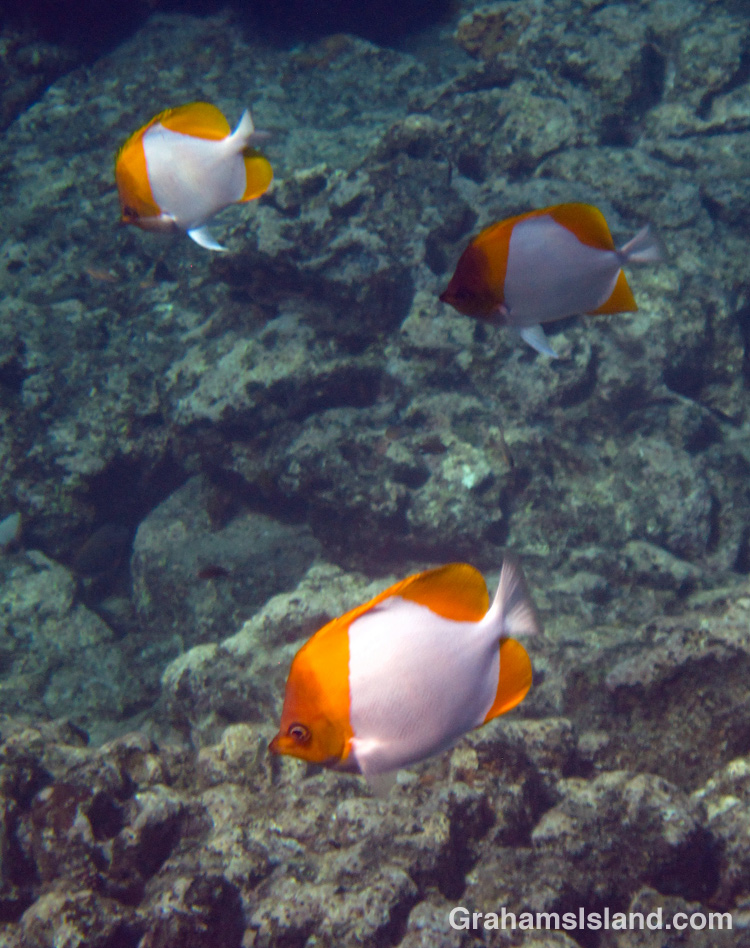
I kept hearing about a large school of pyramid butterflyfish that hung around in a particular area where I often snorkel. Trouble is, every time I went there, I never caught so much as a glimpse of one.
By the time I last swam in that direction, I’d forgotten all about pyramid butterflyfish and their alleged presence in the area. Naturally, that’s when I ran into a very large shoal of mixed fish including yellow tang, black triggerfish, filefish and other reef fish. In amongst them were a large number of pyramid butterflyfish, which stood out when the sunlight caught the large white triangles on their sides.
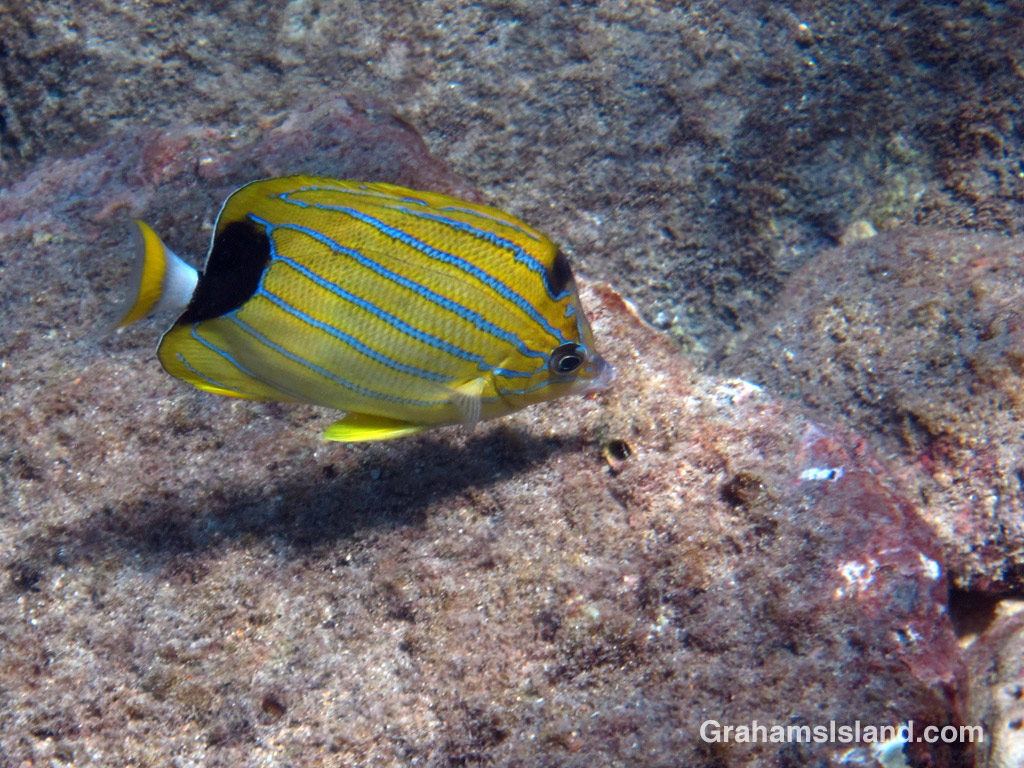
Most butterflyfish have some sort of eye camouflage, so the bluestripe butterflyfish is unusual in having none. The diagonal blue stripes also make it stand out from the crowd. And where most butterflyfish have relatives in the Pacific, the nearest relative of the endemic bluestripe butteflyfish, is the east coast of Africa
In my attempts to identify what I see in the water, I use John P. Hoover’s book The Ultimate Guide to Hawaiian Reef Fishes, Sea Turtles, Dolphins, Whales, and Seals. His website is hawaiisfishes.com.
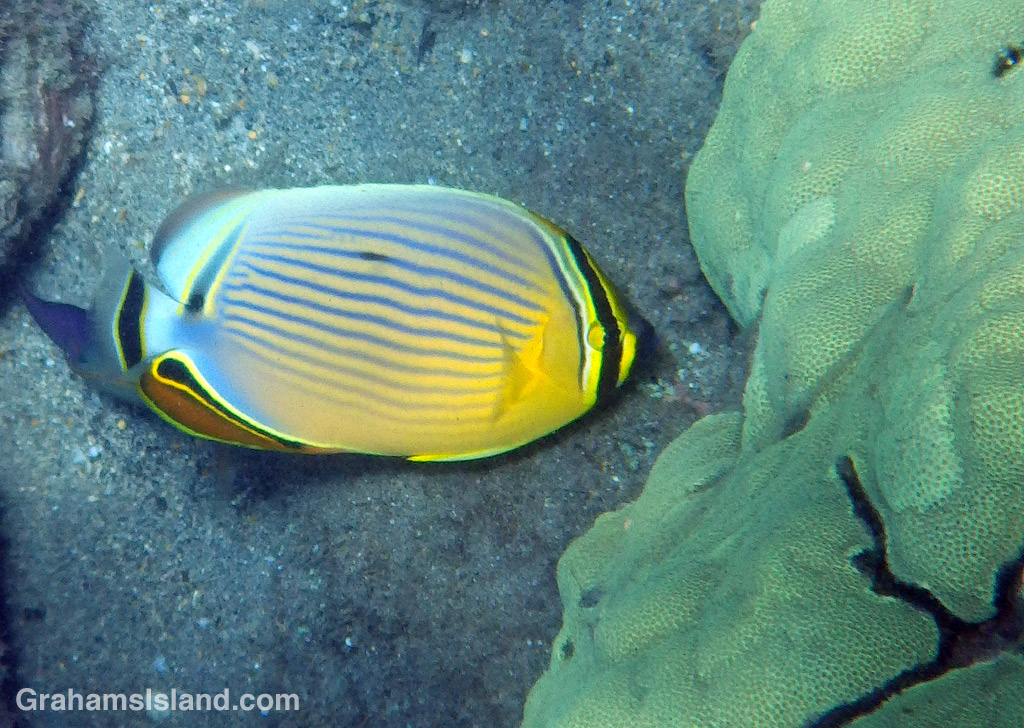
A brightly-colored oval butterflyfish grazes on polyps of living coral head. Since this is almost the only thing they eat, it makes them unsuitable for keeping in home aquariums.
In my attempts to identify what I see in the water, I use John P. Hoover’s book The Ultimate Guide to Hawaiian Reef Fishes, Sea Turtles, Dolphins, Whales, and Seals. His website is hawaiisfishes.com.
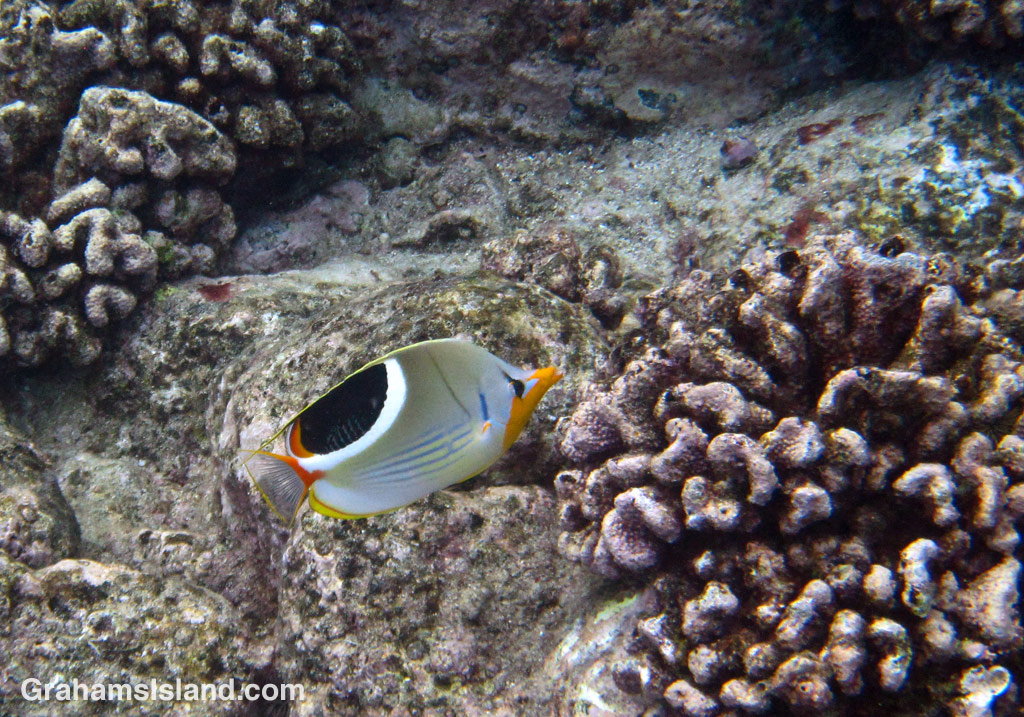
A saddleback butterflyfish cruises through coral heads. These colorful fish aren’t seen as often as many other kinds of butterflyfish so it’s always a treat to see one or, often, a pair of these striking fish.
 Graham's Island