Tag Archives: Flatfish

Abstracts: Flowery flounder

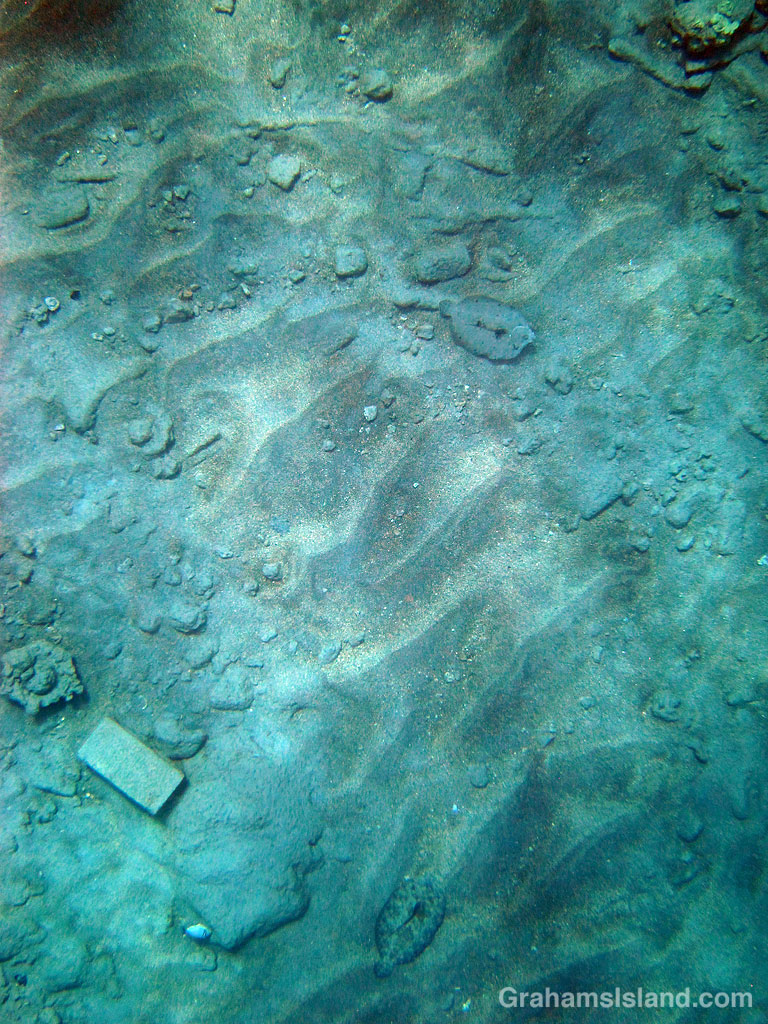
Time for an eye test as in spot the flowery flounder. I don’t think this one is too hard. Not like the last flounder I saw which settled on a sandy bottom, churned up a bunch of sand, and disappeared beneath it leaving only a tiny, inconspicuous bit of tail identifying where it was.

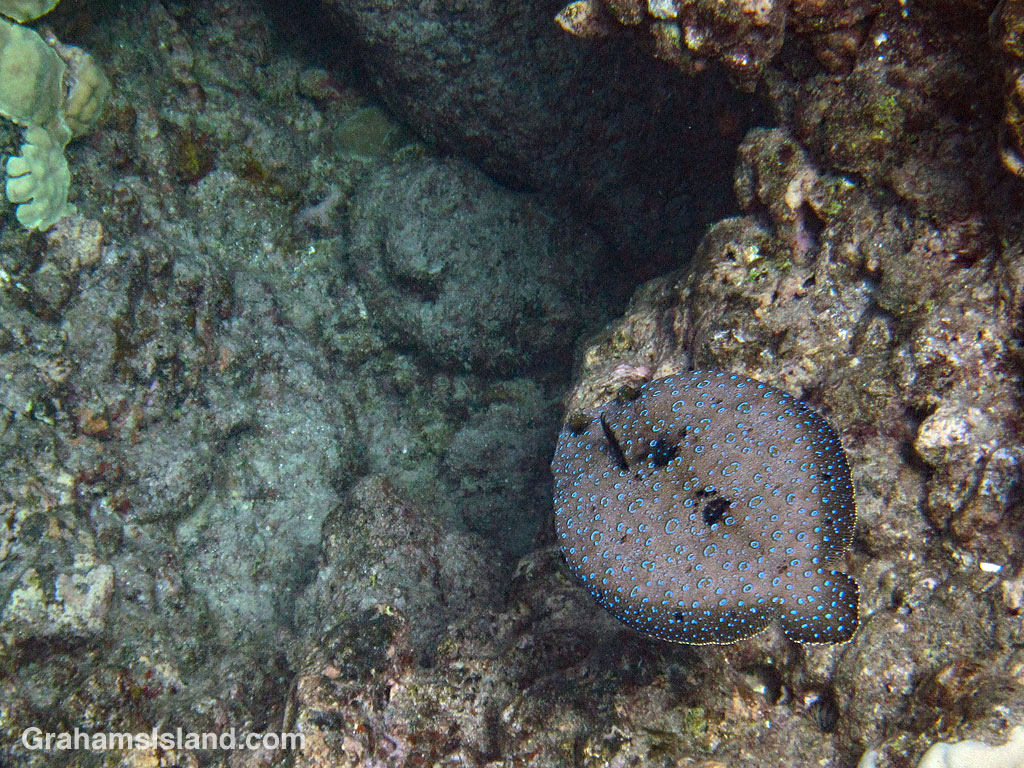
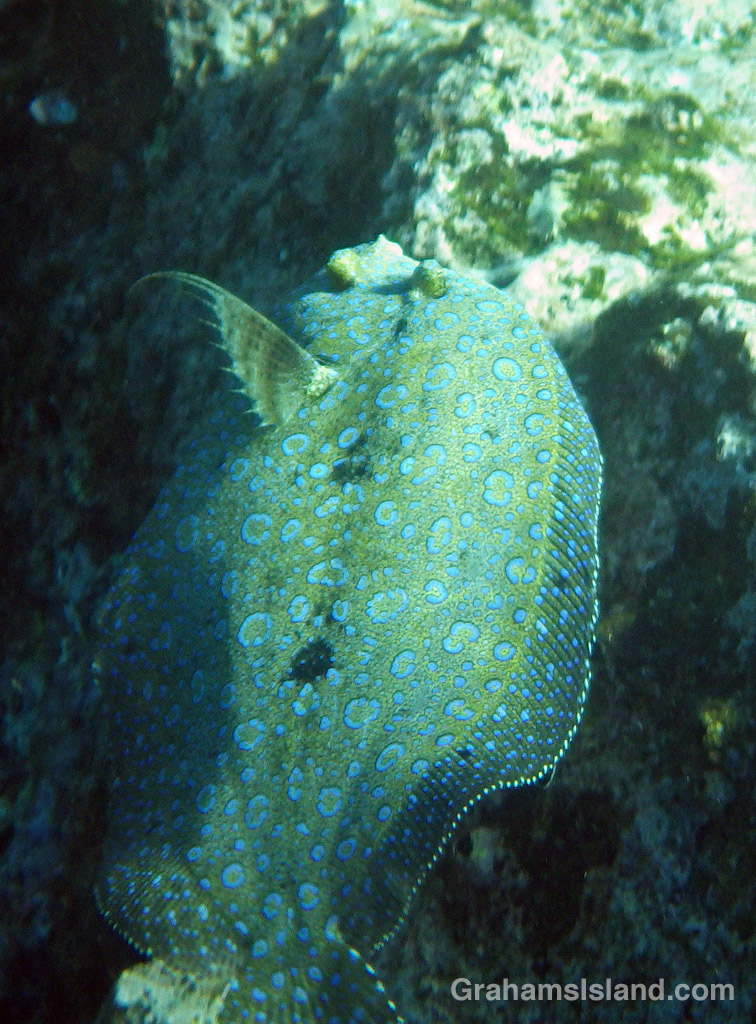
A flowery flounder on the move

Flowery Flounder

As you would expect, fish that rely on camouflage for protection are hard to spot when they’re at rest. The best bet to see them is to spot them on the move.

Sometimes I notice the final motion of one of these creatures before it settles in one spot and blends in. In this case, this flowery flounder was trucking along over a sandy bottom for quite some distance before it rested on the sand. Even in motion, and casting a shadow, it’s easy to see how hard it will be to spot this fish when it stops on the sand below.

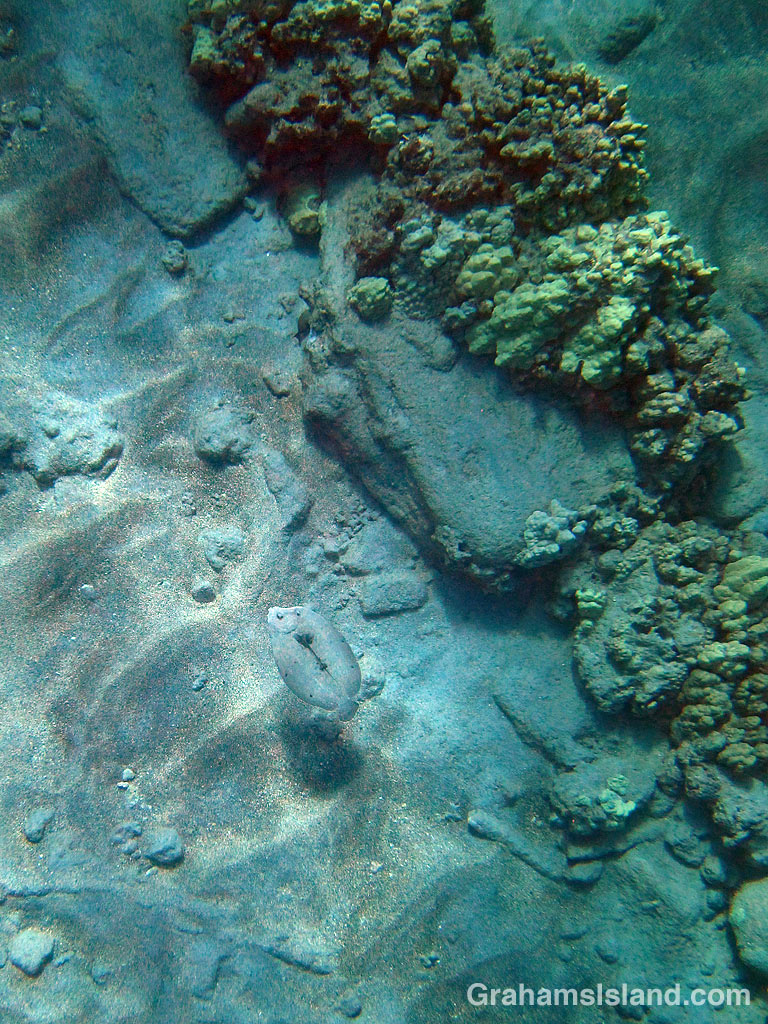
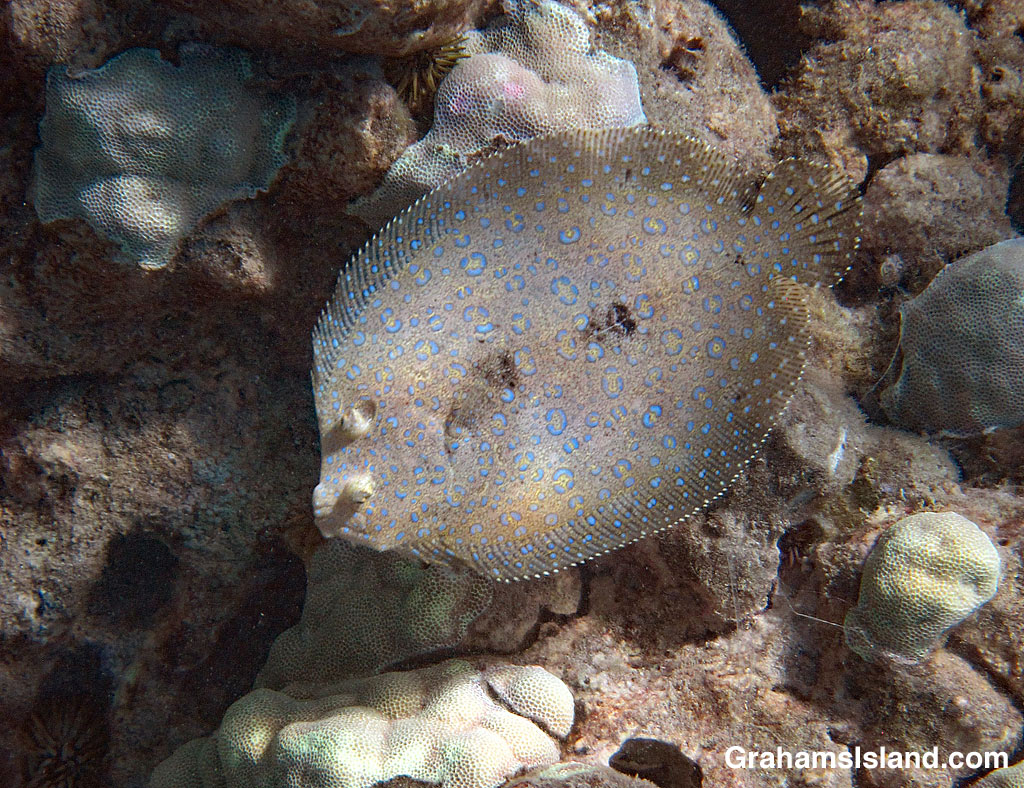
A flowery flounder and lobe coral

Flowery Flounder and lobe coral

A small flowery flounder passes over what I think are patches of lobe coral. Those two bumps casting shadows on the top of the fish are the flounder’s eyes, which sit on the end of small stalks. As you can see in the photo, the two eyes are pointing in different directions. This isn’t a case of wandering eyes; they work independently.

However, flounders, like other flatfish, do indeed have the most remarkable wandering eyes. Flatfish start out looking like regular fish, with one eye on each side of the head. As they transition from the larval to juvenile stage, one of the eyes migrates over the head to join the other one on what ends up being the top side of the fish.

The eyes migrate to different places, depending on the kind of flatfish. Some are left-eyed and some right-eyed, which refers to the eyes’ relationship to the mouth. Flowery flounders are left-eyed flatfish, the eyes being to the left of the mouth when seen from head on.

There are pros and cons to photographing flounders and other fish that rely on camouflage for protection. On the plus side, once they settle, they tend not to move so it makes it easier to get a photo. On the downside, because they blend in so well, it’s not easy to get a photo where the fish is clear. The best hope is to see one on the move, as I did with this one, not only to get a photo, but also to enjoy their elegant motion as they ripple through the water.

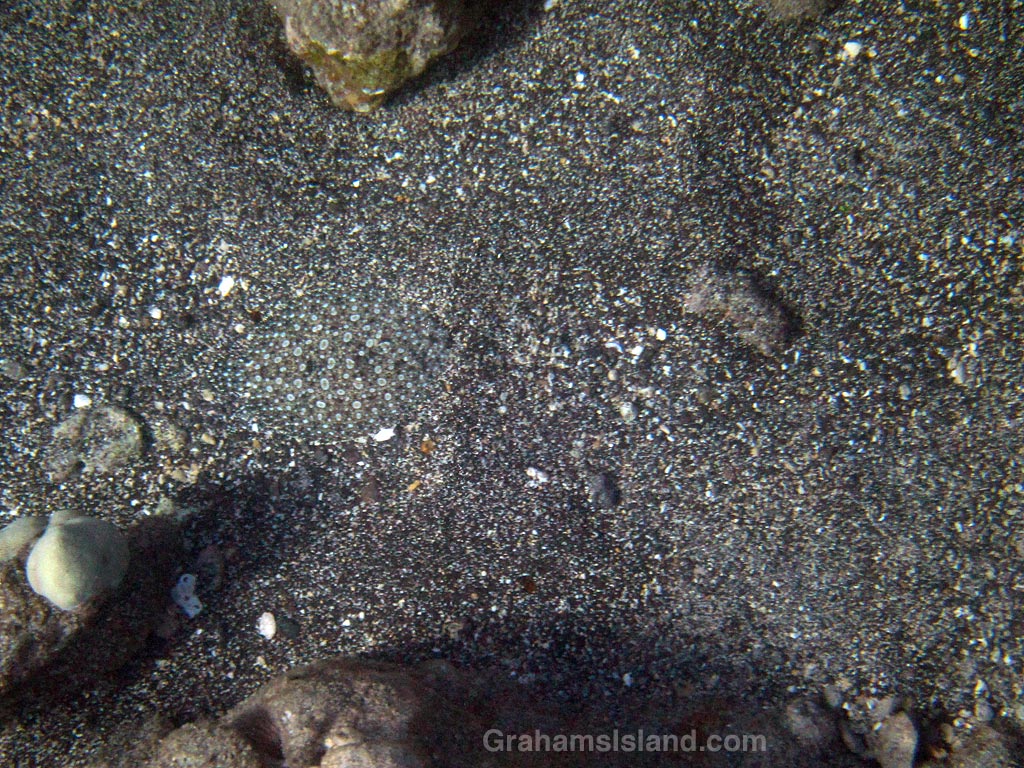
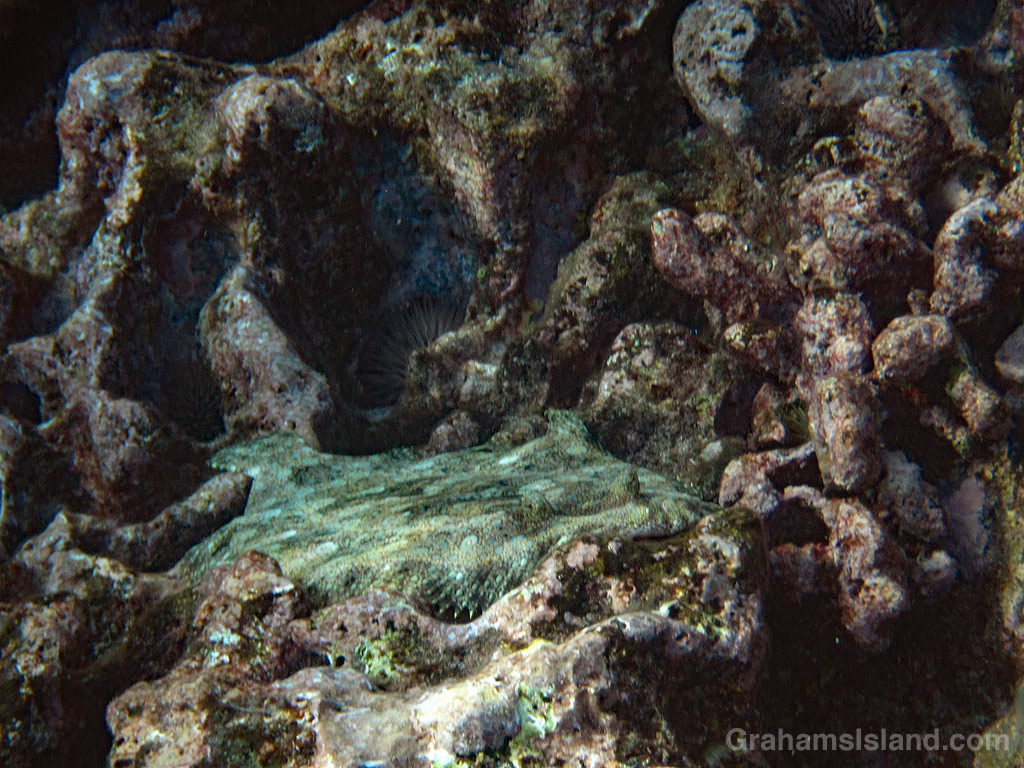
A flowery flounder vanishes

A flowery flounder disappears against a rock.A flowery flounder swimming
Camouflage is a creature making a good match with its surroundings. This serves to conceal it from both predators and prey. In the water, there are many exponents of this approach, from octopuses to scorpionfish.

Flatfish are masters of camouflage. It’s a fluke to see a stationary flatfish. It’s almost always necessary to see one on the move and to track it to where it settles down. Once it’s set though, it will usually stay put, making it one of the easier fish to observe and photograph.

I saw this flowery flounder on the move but once it plopped onto a rock (above) I would never have noticed it had I not known it was there.