
On a recent swim, I saw this shoal of fish, mostly comprising of Whitebar Surgeonfishes, heading off on its morning business.

On a recent swim, I saw this shoal of fish, mostly comprising of Whitebar Surgeonfishes, heading off on its morning business.

On my last swim, I saw this Wedgetail Triggerfish slip into this crevice in the rocks. I thought it might have disappeared, but there it was, wedged in, side on. It might have been protecting eggs laid in there or just waiting for me to move on!
This fish is also known as the Picasso Triggerfish. In Hawaiian, it’s called humuhumu-nukunuku-ā-pua-a and it’s the official state fish.
Posted for Bushboy’s Last on the Card photo challenge. See more responses here.

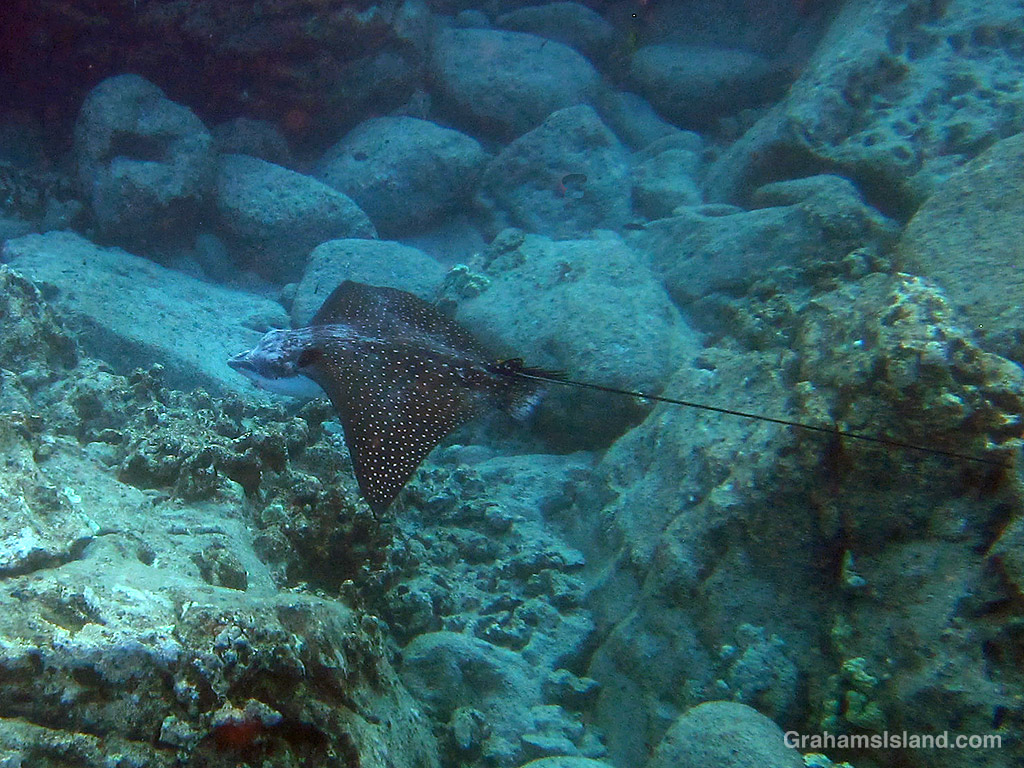
I don’t see Spotted Eagle Rays as often as I used to, but that’s true of many creatures that live in the ocean around here. This one went skimming by a small school of Yellow Tangs and out into deeper water. Happily, it looked in excellent condition with a beautiful array of white spots on its wings.

I came across this relatively small Giant Porcupinefish on a recent swim and it headed directly towards me for a short while, before deciding I wasn’t that interesting and swimming off.

I used to see Scrawled Filefishes all the time at the place where I usually go snorkeling. For the past few years they’ve become occasional visitors, so I’m pleased when I run into them these days. This one had the good graces to not only stick around, but to do so in a spot where the light illuminated its wonderful markings.

I rarely see Paletail Unicornfishes in my usual swimming spot, though it might be that they’re around and I just haven’t noticed them before. I managed to snap a few quick photos before they disappeared and this was the best of them. Ironically, the pale tail was at exactly the wrong angle! No prizes for guessing the reason for the name ‘unicornfish.’

It’s fairly common to see lobster molts while snorkeling, but not live lobsters, since they’re mostly active at night. On a recent swim, I got down to the water earlier than usual and was rewarded by seeing two fairly lively Tufted Spiny Lobsters. The smaller of the two scooted amongst the rocks and never really came out into the open, but this larger one traveled a good distance over the sea floor before scuttling backwards under a ledge.
These lobsters are notable for the patches of blue at the base of their antennae and the pale stripes on their legs.

This Pacific Day Octopus was easy to spot when it was on the move, but when it settled down it quickly became almost invisible.

 Graham's Island