
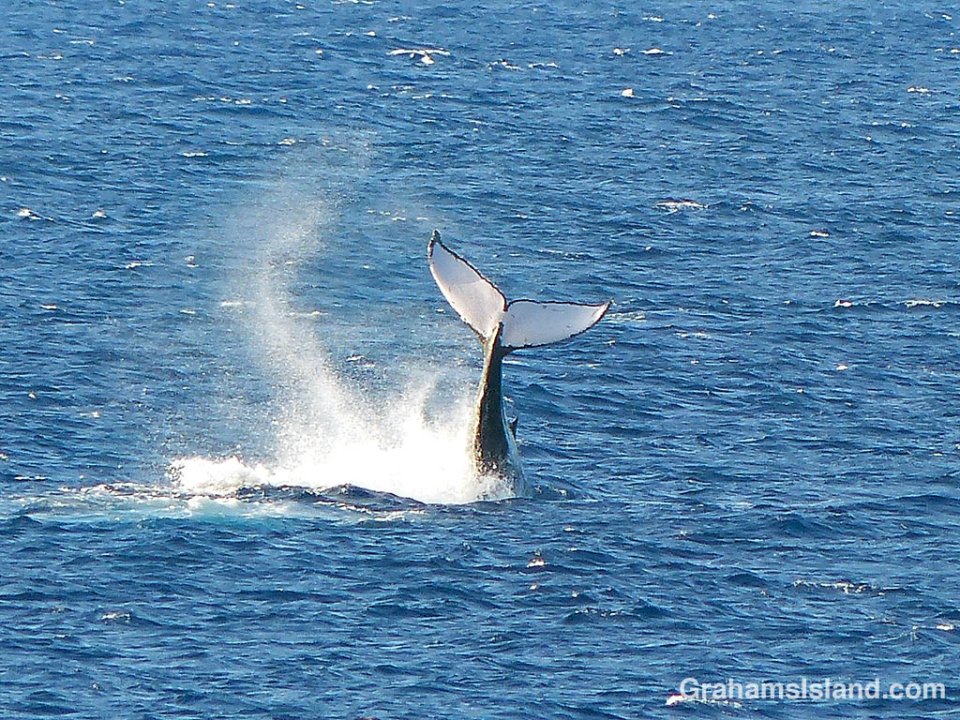
 This week’s Friendly Friday challenge theme is ‘Climate Change.’ (See more responses here.) Living on an island in the middle of the Pacific Ocean makes climate change a relevant topic. Our weather is affected, our wildlife is impacted, our food supplies could be disrupted. But I’ve chosen to picture something obvious and current – humpback whales.
I posted (here) about the decline in the number of humpbacks coming to Hawaii to breed and calve, an estimated drop of 50- to 80-percent over the last four years. I expect that decline to extend to this year’s numbers.
I’ve lived here for seven whale seasons and the drop in numbers from the first couple of years to now is visible and obvious. January through March are supposed to be the height of whale season, but the number of whales here is dropping. I spend a lot of time in the island’s prime whale viewing area and already they are few and far between.
Each year, NOAA conducts a whale count on the last Saturday of January, February, and March. Last year, at the count site I attended, we saw no whales in March – none. This was unprecedented. I wouldn’t be surprised if this month’s count repeats that result and I certainly don’t expect them to see more than two or three whales.
A conference in Honolulu last fall attributed the drop in the number of whales visiting Hawaii to warmer waters in Alaska affecting the whales’ food supply. Those waters are warming because of climate change. So what will happen? Well, my belief is that people make money off activities that cause climate change and the best/only way to change that is to make those activities less profitable or to make it more profitable to be engaged in activities that combat climate change. An alternative is to have people become less geared to making obscene amounts of money, but that, I think, is wishful thinking indeed.
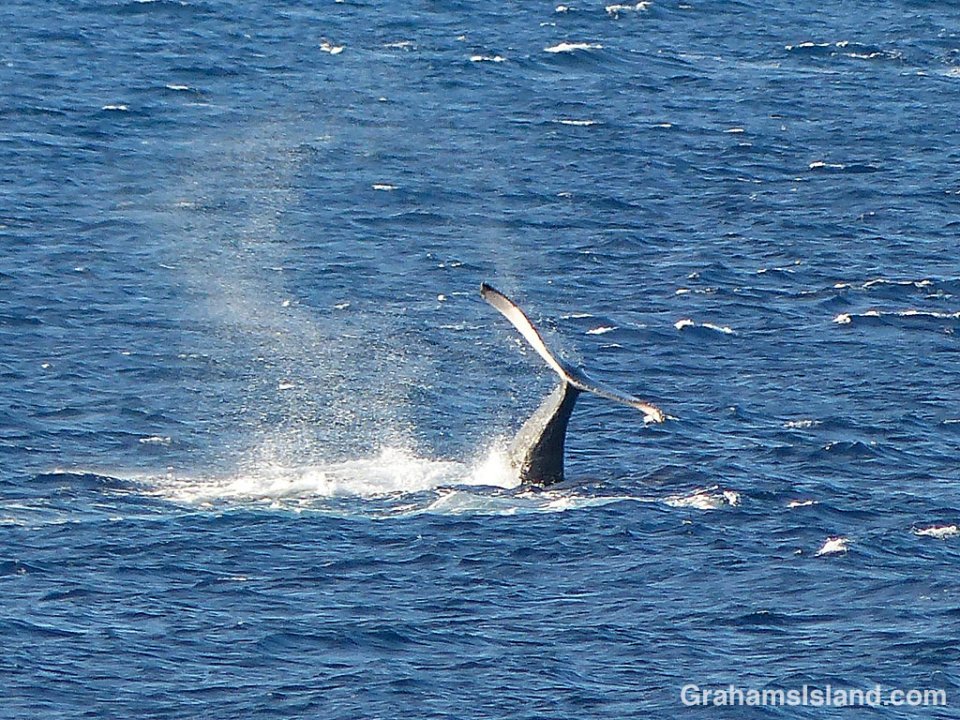
In these photos, a humpback whale slaps its tail, one of several common humpback activities that are monitored during the NOAA whale counts.
 Graham's Island
We’ve lost 6 whales in the past two months in the Outer Banks, NC. They’ve determined that over 50% of them died after human interaction in some form. I want to blog about it, but need to find a way without sharing the video of the decaying whale body that I came up on at the beach. It would more than likely get removed/reported, but I feel that it would grab attention.
LikeLiked by 1 person
Whales are under threat the world over. It’s so sad. They’re such wonderful creatures. I hope you find a way to share your story. It’s good to get the word out.
LikeLiked by 1 person
We’re expecting humpback whales soon in Newfoundland. Every year as temperatures increase and ocean dynamics shift, we notice big changes in marine mammal behavior. It feels like the more we learn, the more we discover how little we know. The Department of Fisheries and Oceans just discovered blue whales apparently live year-round off the coast of Newfoundland and Nova Scotia near the continental shelf drop-offs and deep ocean trenches https://www.whalehouse.ca/nature/fauna/whale-watching/new-research-shows-blue-whales-live-off-newfoundland-coast-year-round-according-to-underwater-atlantic-blue-whale-auido-recordings It’s pretty unbelievable.
LikeLiked by 1 person
Interesting article. Thanks for the link. Enjoy your time with the humpbacks, they’re mostly gone from here now.
LikeLike
Impressive photos. The implications of climate change, known and unknown, are overwhelming. Denialism suits so many vested interests, although only in the shortterm.
LikeLiked by 1 person
Unfortunately, people in power tend only to think in the short term these days.
LikeLiked by 2 people
Thanks Graham for this post – and the earlier one, too. I’m afraid tourism is one of the culprits. I saw whales from the shore in Hawaii in late 2010, about the time you arrived there if I counted correctly, and it’s sad to know that experience is unlikely to happen again.
Unrelated to whales, I read somewhere that mining lithium to power our cell phones so we can indulge in our various social media addictions also has a number of effects. Things you don’t even think of all affect one another…
LikeLiked by 1 person
You can still see whales, and rather a lot at times. It’s just that there’s not as many as in previous years. It’s like when I go snorkeling and see a good number of fish, but locals say it’s nothing like it used to be. There are so many things we do that have repercussions, it’s hard to keep up with everything. The thing that really bothers me is the wilful disregard of problems that have been identified and researched, and people either ignore or deny these things because it doesn’t suit them. I’m not religious, but I hope there’s a special place in hell for them!
LikeLiked by 1 person
Hahah! I’m not religious either but I guess there’s a sort of karma at work, somehow. Yes, we ignore things that don’t suit us. I ignored the pollution airlines produced, happily, for over a decade while working in aviation and loving it. As for snorkeling, I remember seeing so many fish in the Great Barrier Reef back in 1999 but now it’s been bleached out and not the same. Tourism doesn’t help either, sunscreens in the water etc
LikeLiked by 1 person
Hey, I work for a helicopter tour company on an island dependent on tourism, so I’m not exactly helping. I do regret that people in a position to make an immediate difference usually don’t. A pet peeve is U.S. presidents who spend four or eight years in power, not doing anything about climate change or other big problems, who leave office and then start speaking up about how important it is to do something about these things. They’re just burnishing their image, which I find particularly depressing.
LikeLiked by 1 person
Yes not to mention the current one who is clearly not fit for the job, mentally…
LikeLiked by 1 person
Our planet is in a sad state, although climate change happens to the Earth over the millennia. I’m sad to read the decline in the humpback migration…oh I wish they could tell us what we puny humans can do to fix this and prevent the loss of countless species. The photos are amazing, Graham!
LikeLiked by 1 person
It is sad and while awareness is on the rise I’m not sure it’s rising as fast as we are trashing things. The immediate question to resolve regarding the humpbacks is whether the decline in numbers being seen here represents a decline in their population or just a behavior change. My guess is they’ll have a better idea of what’s going on within a year or two.
LikeLiked by 1 person
They have big brains, perhaps they’ve found better real estate!
LikeLiked by 1 person
One would hope so, but I’m not sure about that. Not sure the folks who study them know either.
LikeLiked by 1 person