Leatherbacks are members of the Jack family and are most often seen singly or in pairs. I see them quite often and always try to get a photo of them and almost always fail. That’s because they have a tendency to surge upwards to feed and then zip back down.
On this occasion, a group of a dozen or more leatherbacks went by in the company of several bluefin trevallies and other fish. As usual, they were traveling at speed, but the numbers meant I had a better opportunity to get this photo.
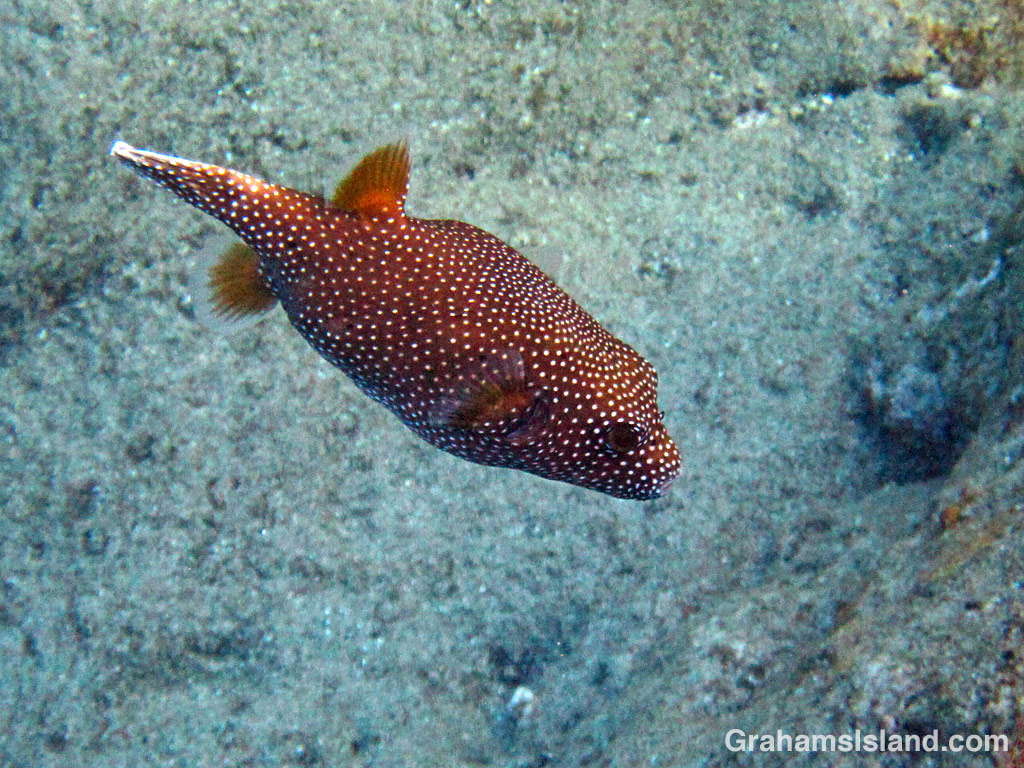
The male spotted boxfish (top) is blue with orange highlights and white spots along the back, whereas the female (second photo) is a fairly uniform brown with white spots all over. Despite their shape, boxfishes are nimble swimmers boasting a good turn of speed and surprising maneuverability.
I got these photos because the male boxfish came up to check me out a couple of times and the female was unperturbed by my presence as she searched for food on an old pier piling.
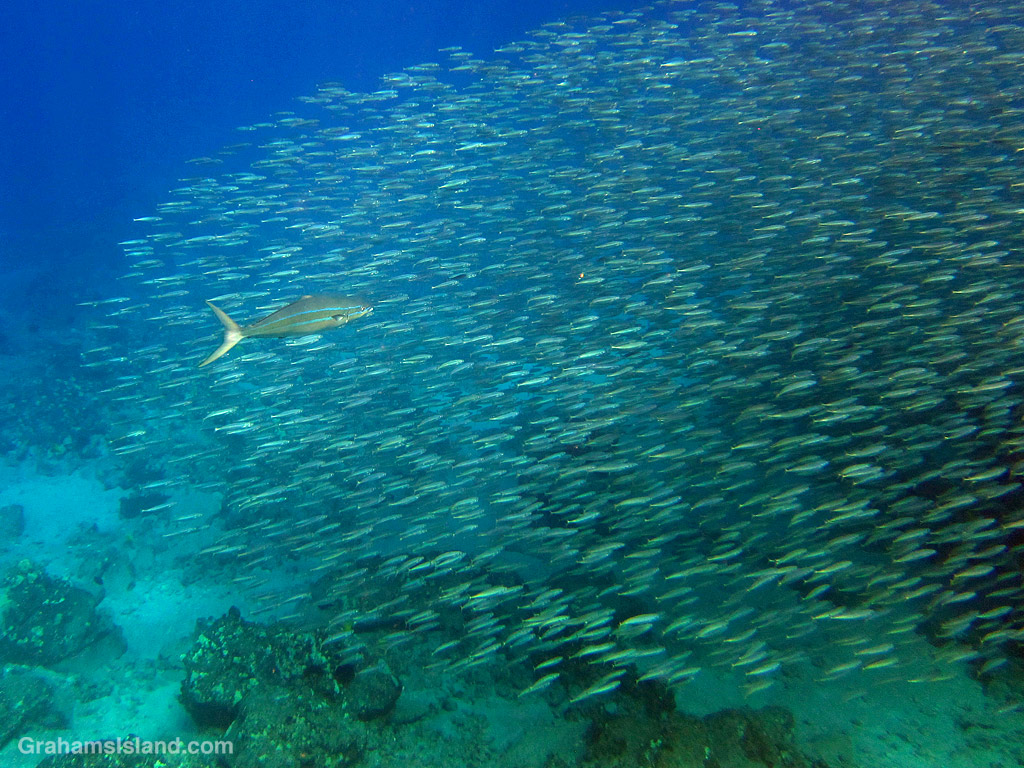
On a recent swim, I was turning to head for home when I saw this large school of fish rocketing towards me. As they zipped by I snapped the top photo. I could see they were mackerel scads, known in Hawaii as Opelu.
The reason for their haste also became clear as the last of them went by. The bottom photo shows a rainbow runner hot on their tails. Both fish are members of the jack family, but it’s a family that doesn’t get along. Mackerel scads are a favorite food of rainbow runners.
In a matter of moments, the fish disappeared out of sight. These were the only two photos I was able to take of the episode and I was thrilled that both turned out pretty well.
Mostly when I see spotted pufferfish they’re below me and quickly dive even lower. This one was quite high in the water and it was a while before it headed down to the safety of a greater depth.
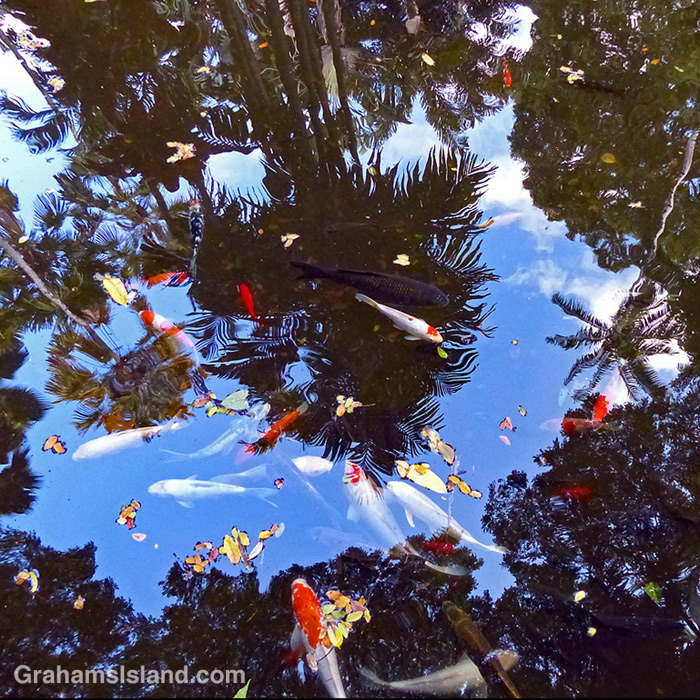
Koi swim in the still waters of Lily Lake at Hawai’i Tropical Bioreserve & Garden. For more information about Hawai’i Tropical Bioreserve & Garden, go to htbg.com.
Posted in response to Becky’s July Squares challenge theme of ‘Trees.’ See more responses here.
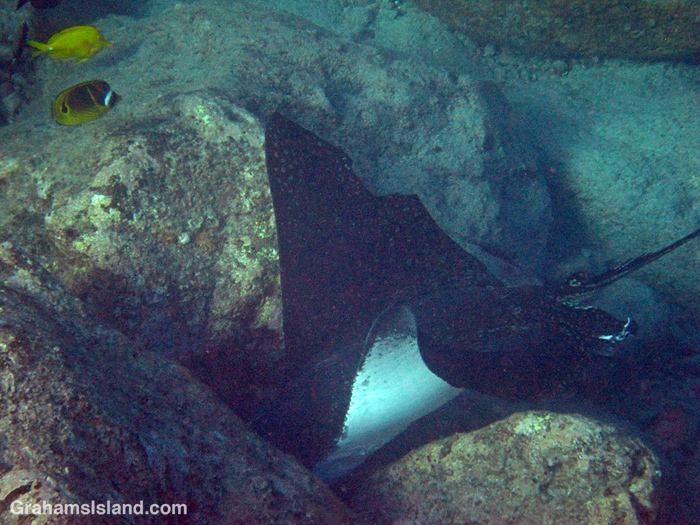
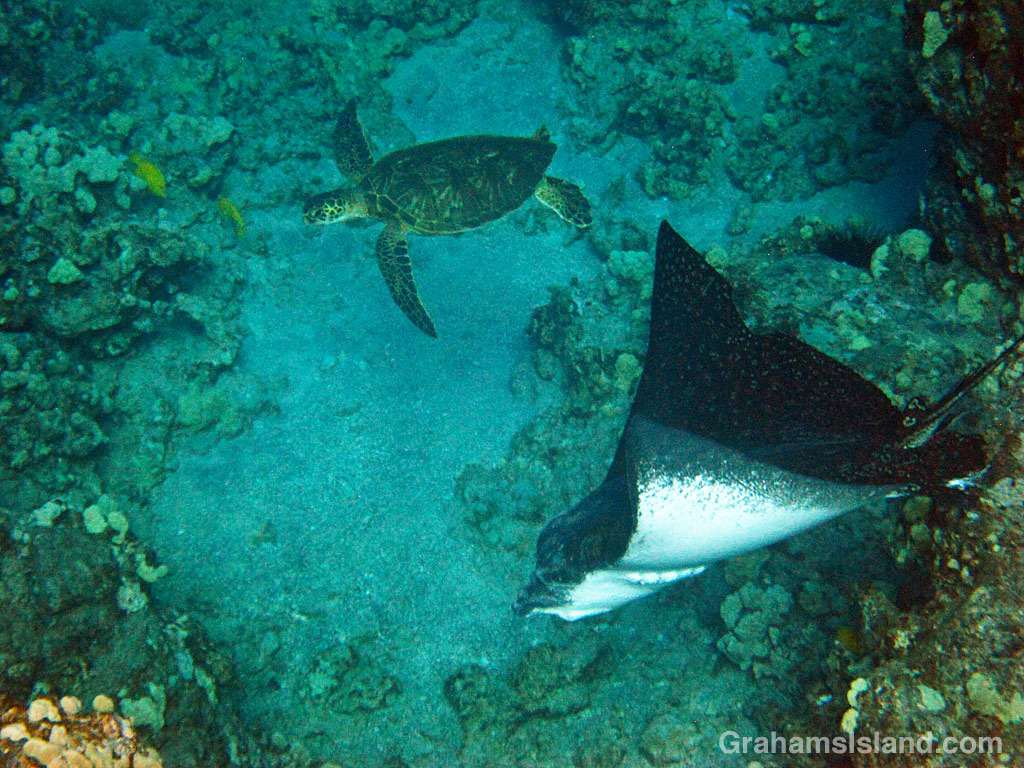
On a morning swim with my wife a couple of days ago, we were lucky enough to see a spotted eagle ray cruising around looking for breakfast. It stopped often, to probe the sand and rocks for food, and was successful at least once, since it emerged from its efforts chewing and swallowing. This eagle ray looked a bit battered, with damage to its tail fins and a chunk missing from its right wing, but it didn’t seem to be affected by this at all.
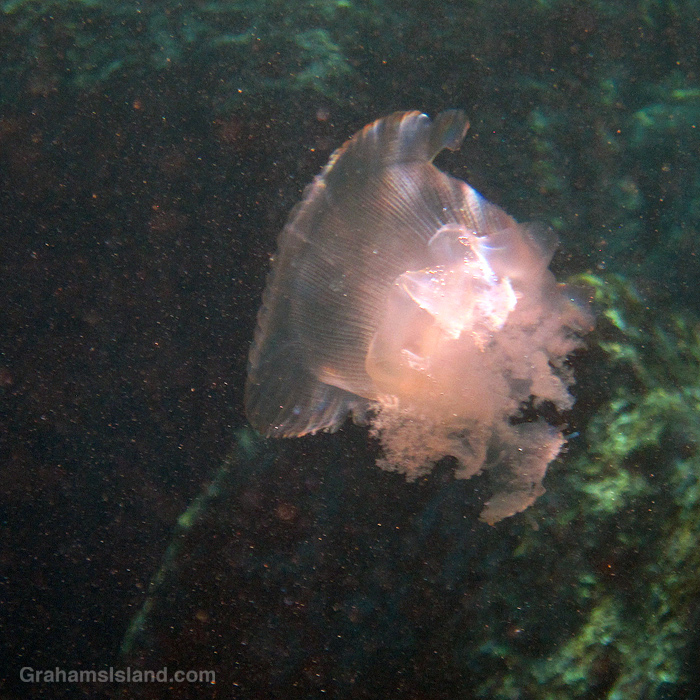
As we continued swimming, I saw the ray heading the same way. For a while it followed us, got ahead, then we followed it. On the way we saw a couple of flowery flounders, a couple of day octopuses, a crowned jellyfish as roughed up as the ray, and an oriental flying gurnard. It’s not a great photo of that, but it’s the first one I’ve seen here.
Oriental flying gurnard
Crowned Jellyfish
Flowery flounder
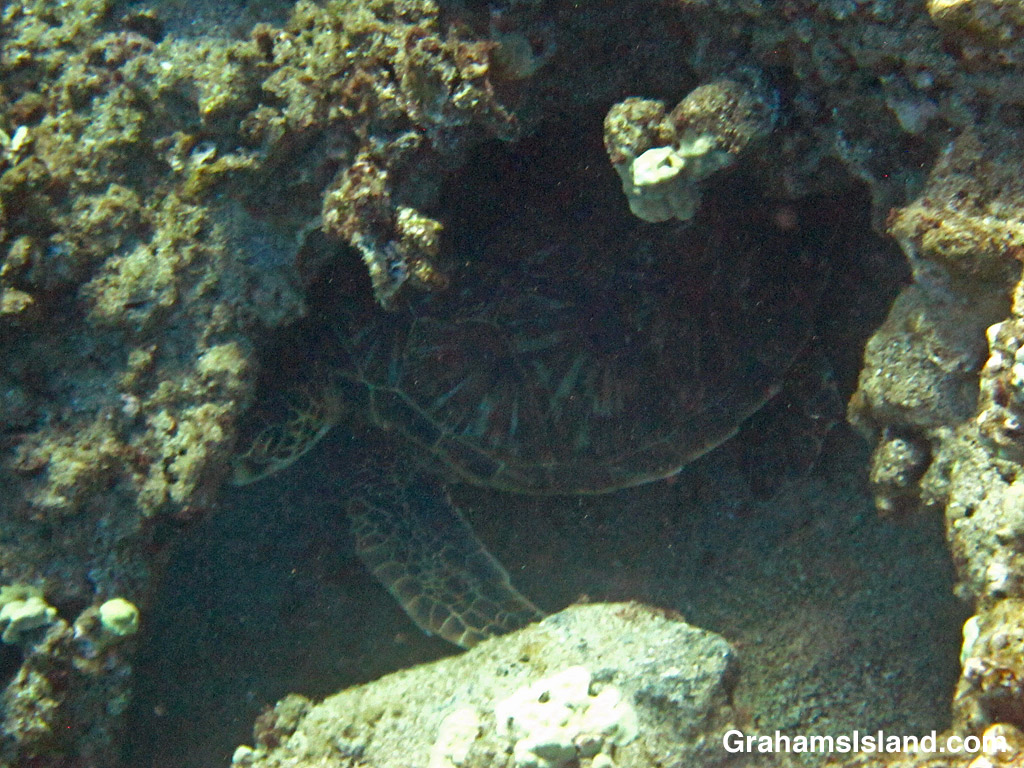
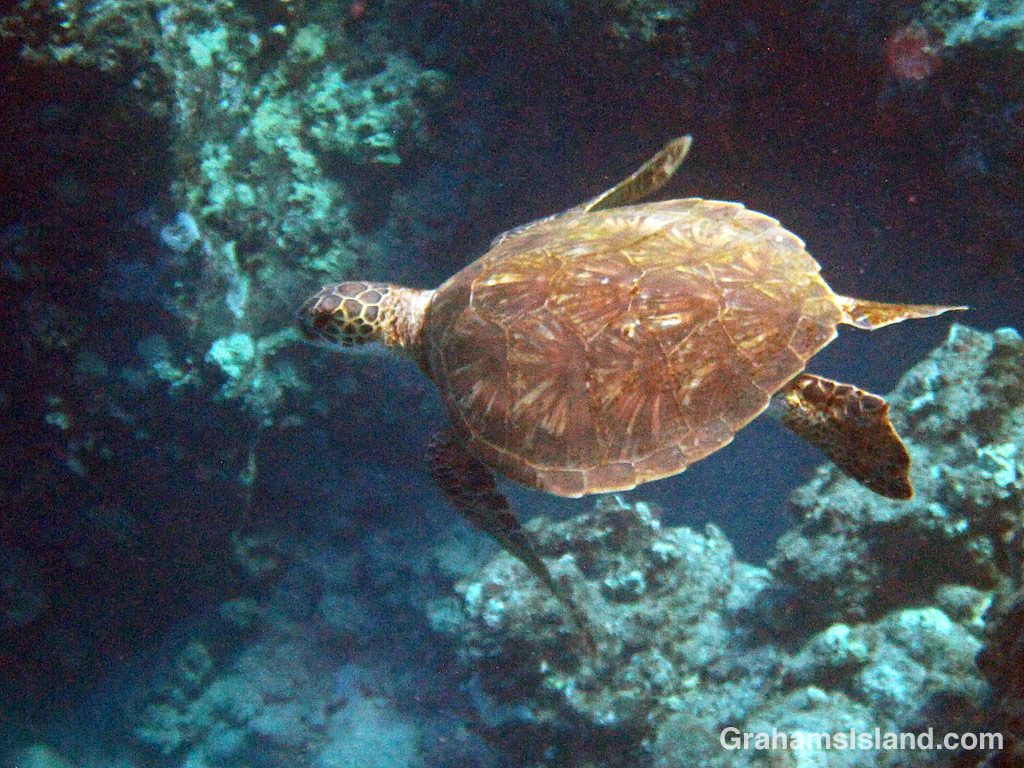
Near the spot where we planned to turn around and head back, I passed over a hole in the rocks and, glancing down, saw the distinctive shape and colors of a green turtle. I think it must have chosen this spot to take a rest, but my appearance startled it and it clambered out of the hole and swam away.
Shortly after that, the turtle encountered the eagle ray. The two of them crossed paths a couple of times before going their separate ways.
I encountered this Gosline’s fang blenny recently while snorkeling. It seemed to be curious about me, swimming in my direction and then turning away. Perhaps it was thinking about taking a bite out of me, because that’s what these fish do. They bear a resemblance to juvenile Hawaiian cleaner wrasses, which clean larger fish. These blennies use this similarity to sneak in and take a bite out of the bigger fish.
And what about the name? These blennies have fangs on their lower jaws that they use to bite the inside of the mouth of any predator that grabs them. It’s usually enough to cause the predator to spit them out.









 Graham's Island