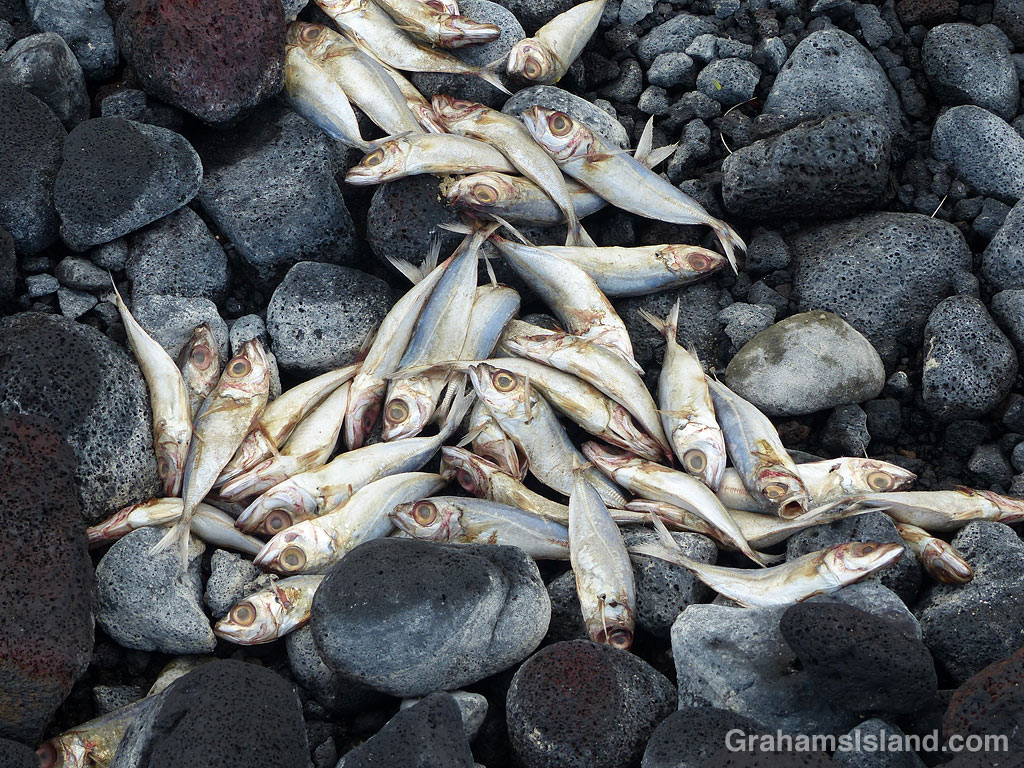
On a walk at Kiholo, I noticed a bit of a ripe smell in the air. When I got to the top end of the lagoon I found the reason for it. The shoreline was littered with clumps of these dead fish. There must have been several hundred of them all told. I don’t know the reason for the stranding, but the scene reminded me of images of fish markets or still life paintings.
This is the fifth of my rainbow colors in response to Becky’s April Squares challenge theme of ‘Bright.’ (See more responses here.) It’s also where I get into trouble. Cyan? What’s cyan doing in a rainbow? What happened to blue?
Well, blue is coming. What’s gone is indigo. The traditional rainbow colors are red, orange, yellow, green, blue, indigo and violet. These colors were assigned by Sir Isaac Newton way back in the 1600s. In fact, he started with just five colors – red, yellow, green, blue and violet. Later, he added orange and indigo to the color spectrum. These days though, what Newton called blue is today called cyan, and what he called indigo is now called blue.
In reality, there are no bands of color in a rainbow. There’s a continuous gradation of color. The bands are seen because the human eye is limited in the colors it perceives. Converted to black and white, the bands dissolve.
So, for my rainbow colors, I looked at my photos and what I see are red, orange, yellow, green, cyan, blue and violet. Of course, if you look at the colors on the inside of a rainbow, you’ll see they keep going, back through the same sequence. And where the red of this supplementary rainbow overlaps the violet of the primary, the result is more of a purple color.
Having labored through all that, today’s rainbow is a small, bright segment on the ocean, with a black and white version of the same image. Then we have a patch of sand underwater, showing different patterns and colors. Finally, a bullethead parrotfish, bashes its beak on some coral in its pursuit of food.
This week’s Friendly Friday challenge theme is ‘Something Fishy.’ See more responses here.
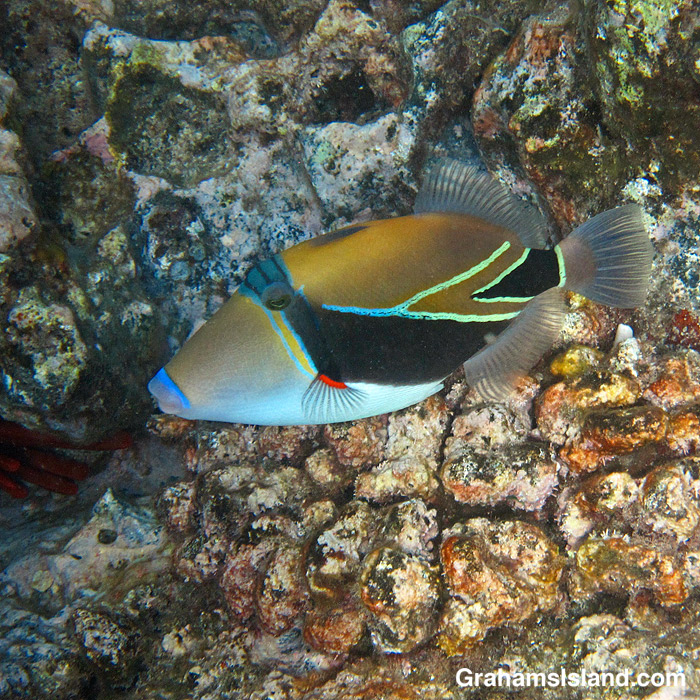
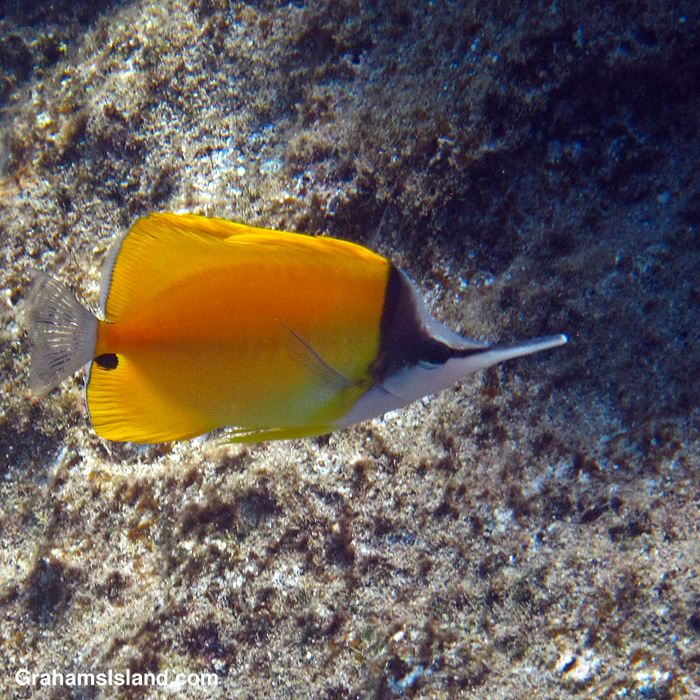
This seemed like a good opportunity to post a gallery of some of the fish I see when I snorkel around here. Most are brightly colored or have distinctive markings.
Also posted in response to Becky’s April Squares challenge theme of ‘Bright.’ See more responses here.
A pair of reef lizardfish rest on a patch of lobe coral. I usually see lizardfish by themselves so this was unusual. Their complete lack of movement was not unusual. That’s what they do unless you get too close.
I hadn’t seen a spotted eagle ray in quite some time before I saw this one, hunting in deeper water. It looked in very good condition and had a fine array of spots.
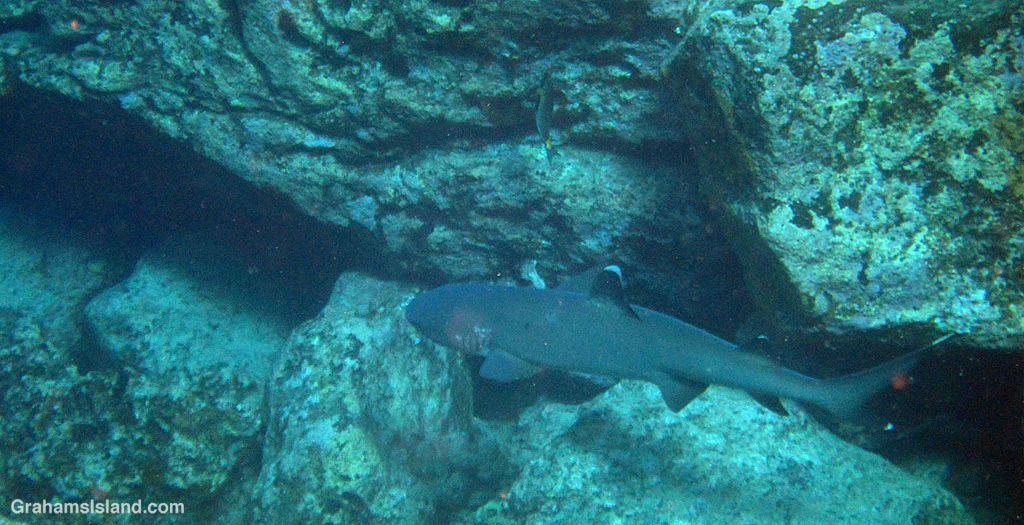
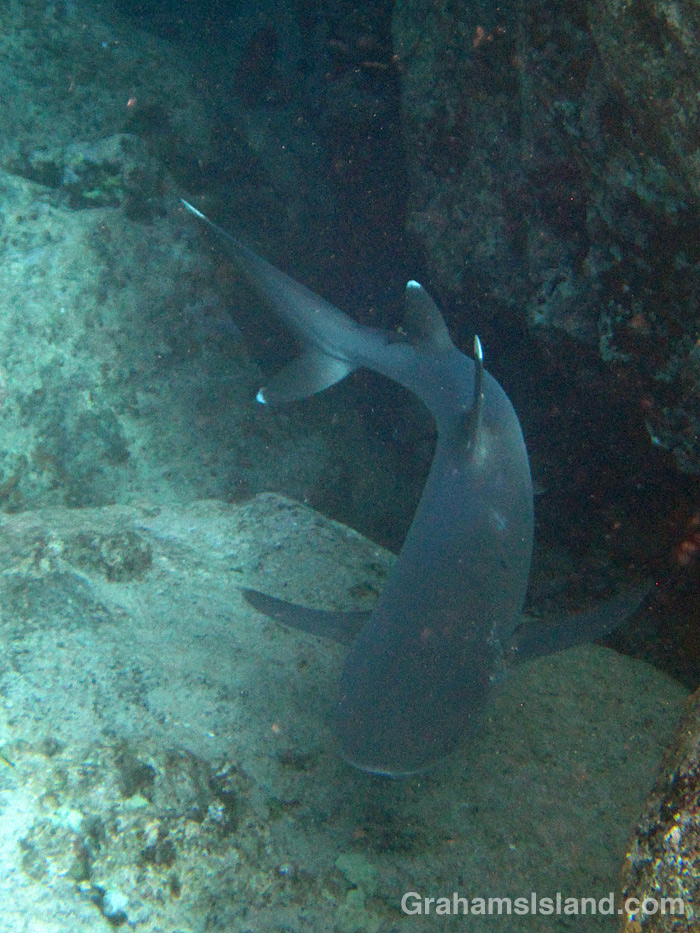
It’s been a while since I last saw a shark (cue seeing one this morning!) so I thought I’d post a couple of photos to remind myself what they look like.
This whitetip reef shark was cruising back and forth at the foot of a rocky ledge, possibly looking for a recess where it could rest.
Yellow tangs are common here and are usually seen in schools. I like how, when they move from one feeding spot to another, they string out in long, colorful lines. They’re often seen in mixed schools with convict tangs, the paler fish with vertical black lines.
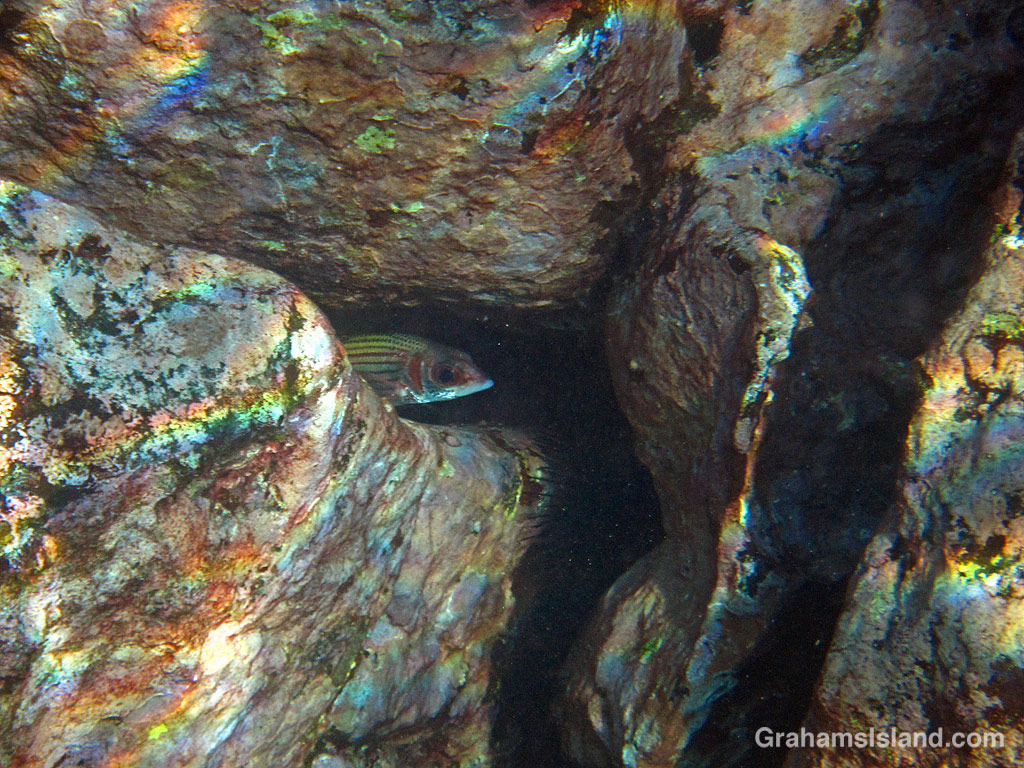
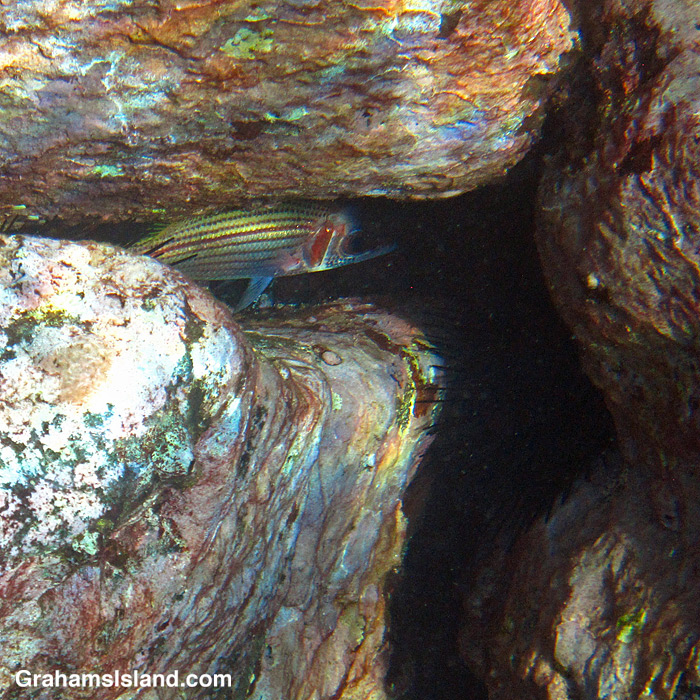
A few days ago, I posted a photo of a common bigeye, a fish that tends to hang out in recesses in the rocks. The yellowstripe squirrelfish is a similar creature. I see them occasionally, but they’re down in holes and recede even farther when I appear. This one lingered momentarily before sinking out of sight. They’re more often seen in deeper water, but not if you’re a snorkeler.








 Graham's Island