
This week’s Sunday Stills challenge theme is ‘Think Pink.’ See more responses here.
I chose this pinktail triggerfish, not just for its tail, but for the pink around the mouth and the strong colors and lines of the rest of it.

This week’s Sunday Stills challenge theme is ‘Think Pink.’ See more responses here.
I chose this pinktail triggerfish, not just for its tail, but for the pink around the mouth and the strong colors and lines of the rest of it.

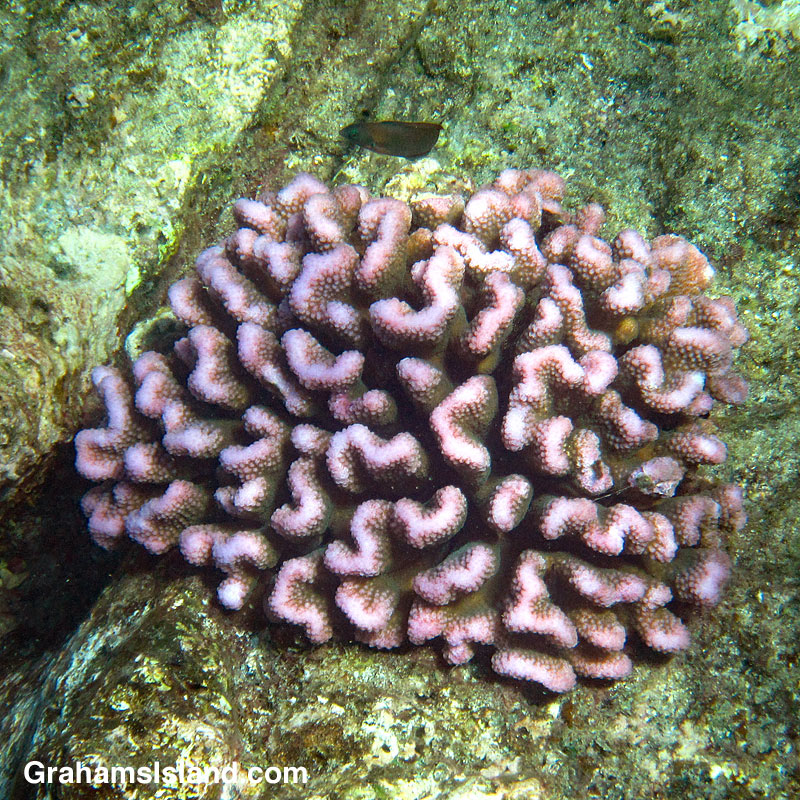
Back in the fall of 2014, Hawaiian waters experienced temperatures up to 86°F. This very warm water resulted in a major coral bleaching event statewide. Since that time, water temperatures have been in a more normal range and the coral has stabilized and even shown signs of recovery in places.
In August of this year, the National Oceanic and Atmospheric Administration (NOAA) issued a warning that another major bleaching event was likely to happen this fall. Last month, NOAA reported that bleaching was already occurring. And I’ve noticed that the water does seem warmer, sometimes disturbingly so.
Because of the bleaching threat, I’ve been looking at the coral when I go snorkeling. There are a few very white patches, but by and large it doesn’t look too bad. This patch of purple coral still looked quite healthy and was host to a saddle wrasse (lower photo) and three unidentified fish (above).
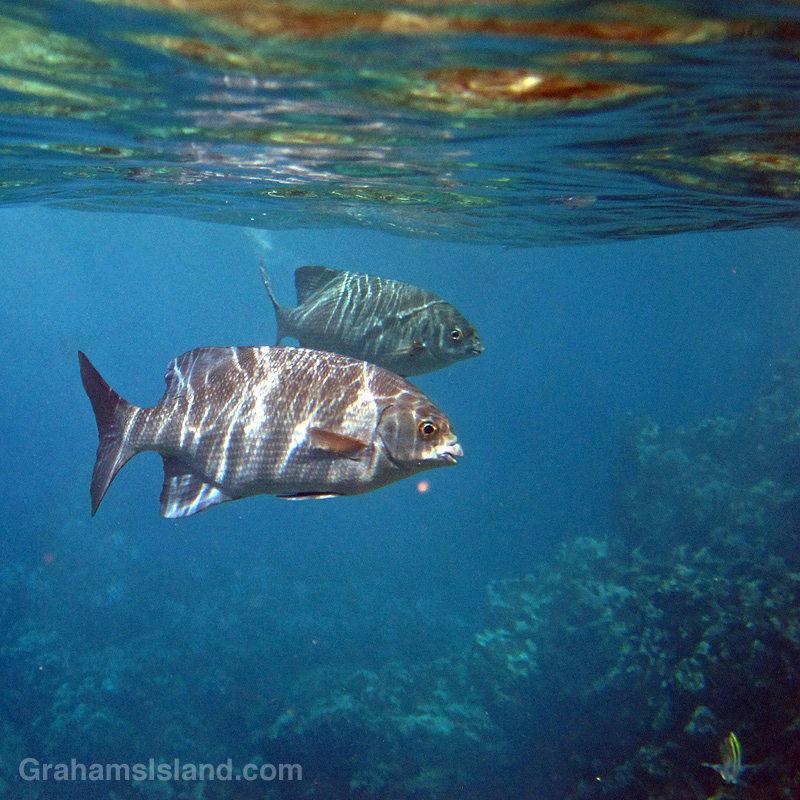
A pair of highfin chubs catch the light as they cruise just below the surface. These large fish are quite common and are typically seen fairly close to shore and near the surface of the water.
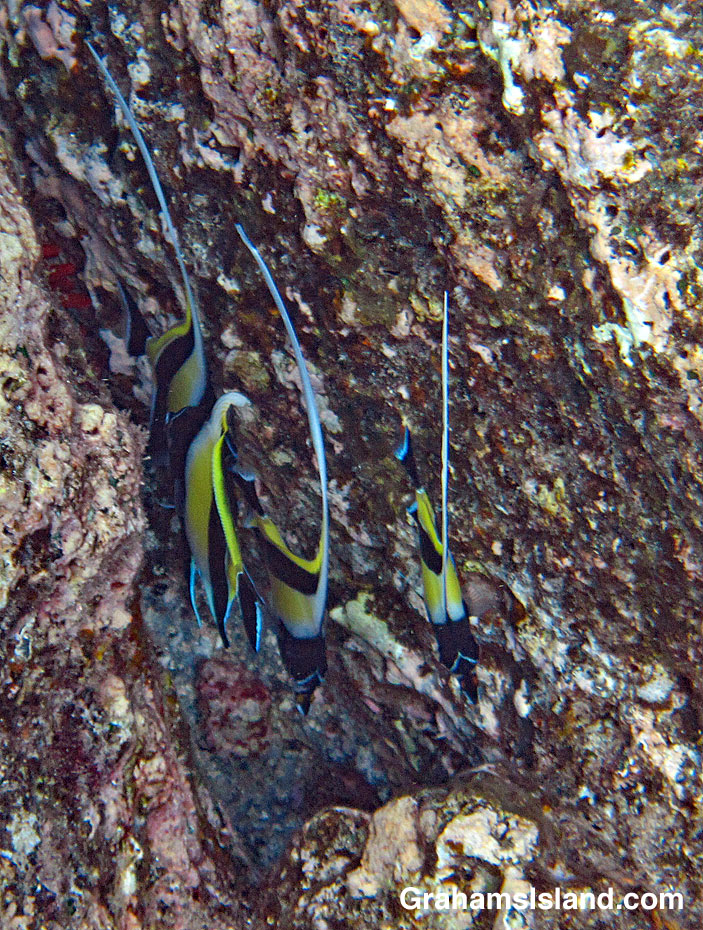
I came across this group of young moorish idols meandering through a crack in the rocks and liked how the location accentuated their narrow but curvy look.

Things to like about the zebra moray eel include that they’re probably the easiest eel to identify. They also tend to be quite long and make visually interesting shapes as they meander through rock and coral.

This spotted pufferfish came up to take a little look at me before scooting off to deeper waters. I have yet to see a pufferfish inflated, but this one looked fairly round, even if that’s its normal shape.
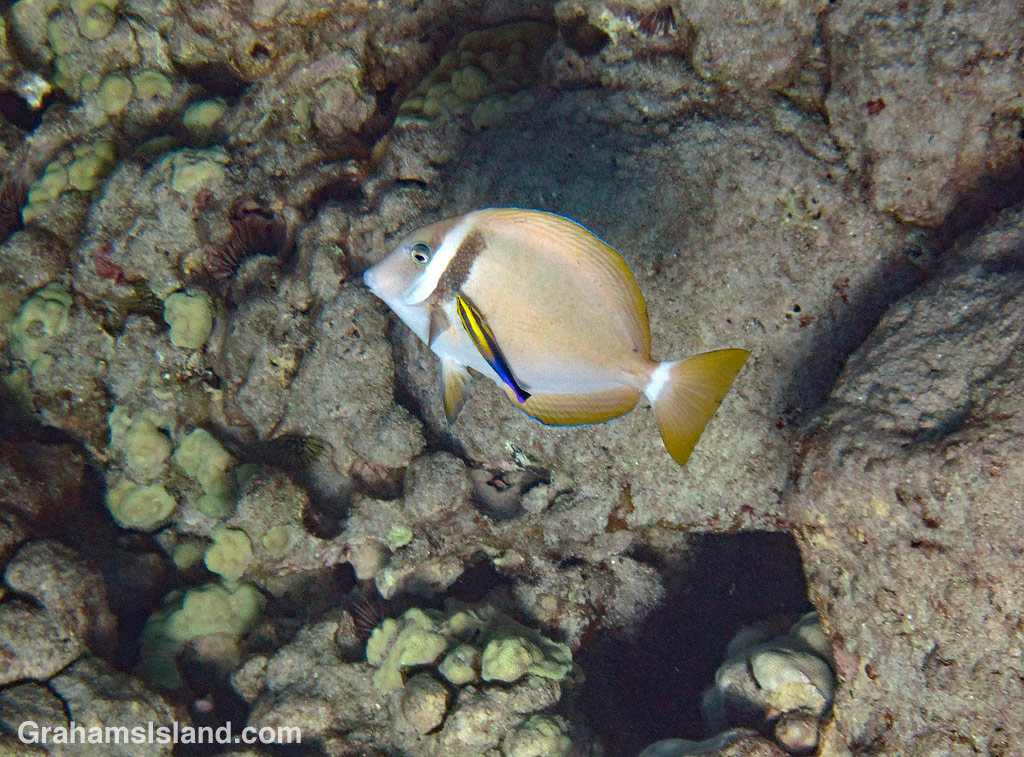
A cleaner wrasse performs its service on a whitebar surgeonfish. Cleaner wrasse establish stations where other fish can visit to be cleaned of mucus and parasites.
When I’m snorkeling, I enjoy visiting these stations to see what’s going on and which fish are availing themselves of the services offered. Some of these fish are predators who, in other circumstances, might be expected to make a meal of a cleaner wrasse. But because of the beneficial service they offer, cleaner wrasse get a free pass with predators.
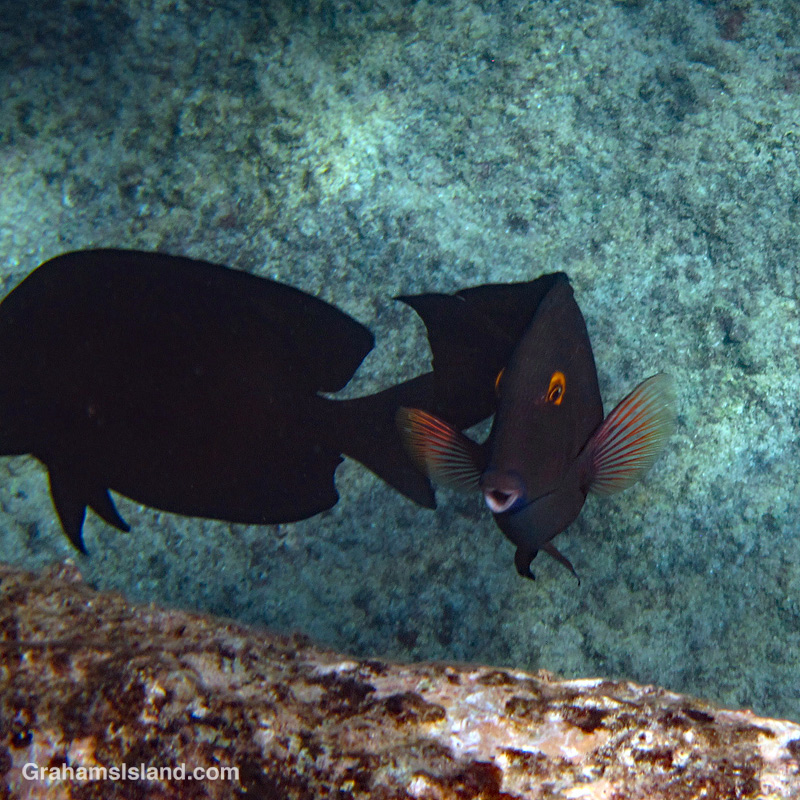
This goldring surgeonfish is so named because of the colorful ring around its eyes. This one came up to take a look at me. I like how it looks like it’s casting a giant shadow, but that’s actually a different fish (another goldring surgeonfish I think) passing behind it.
 Graham's Island