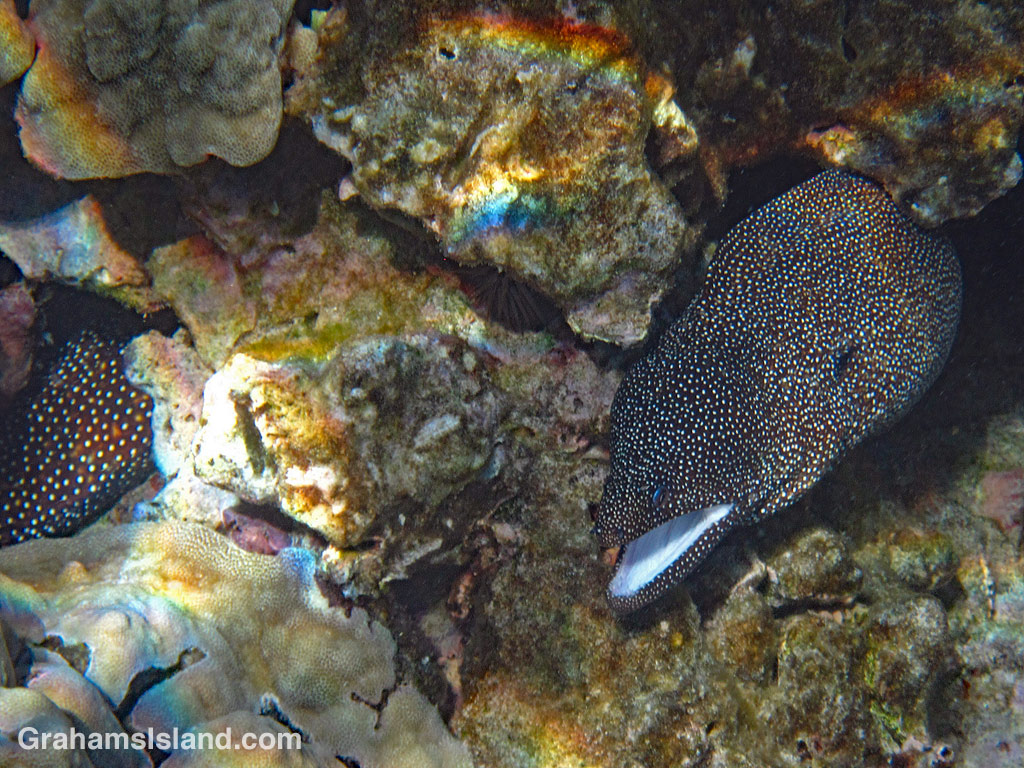
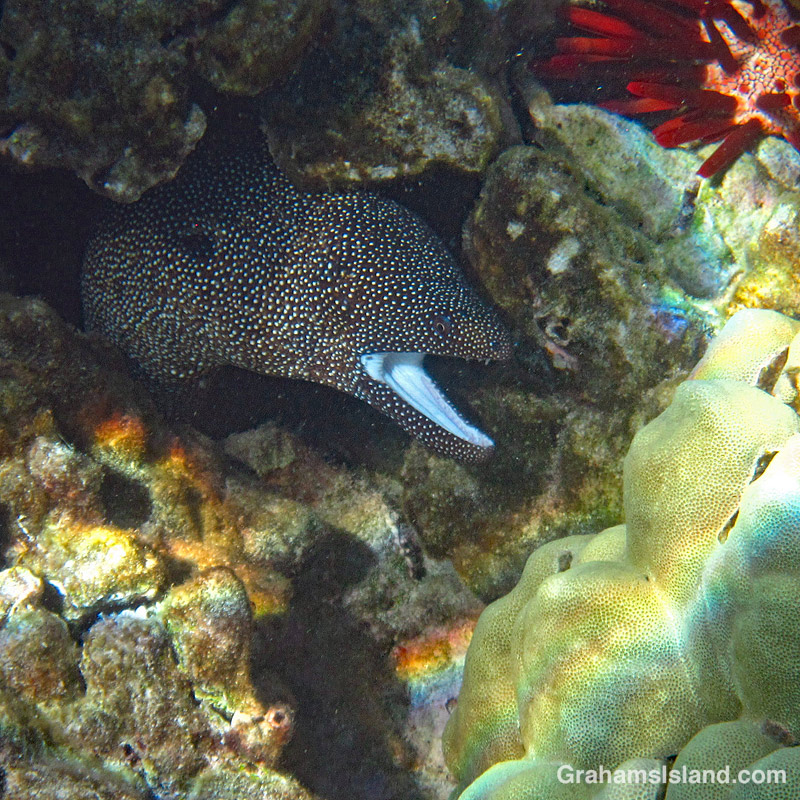
Undulated moray eels have a reputation for being ill-tempered. This photo shows why it’s a good idea not to provoke that temper – an abundance of long, sharp teeth.

Undulated moray eels have a reputation for being ill-tempered. This photo shows why it’s a good idea not to provoke that temper – an abundance of long, sharp teeth.

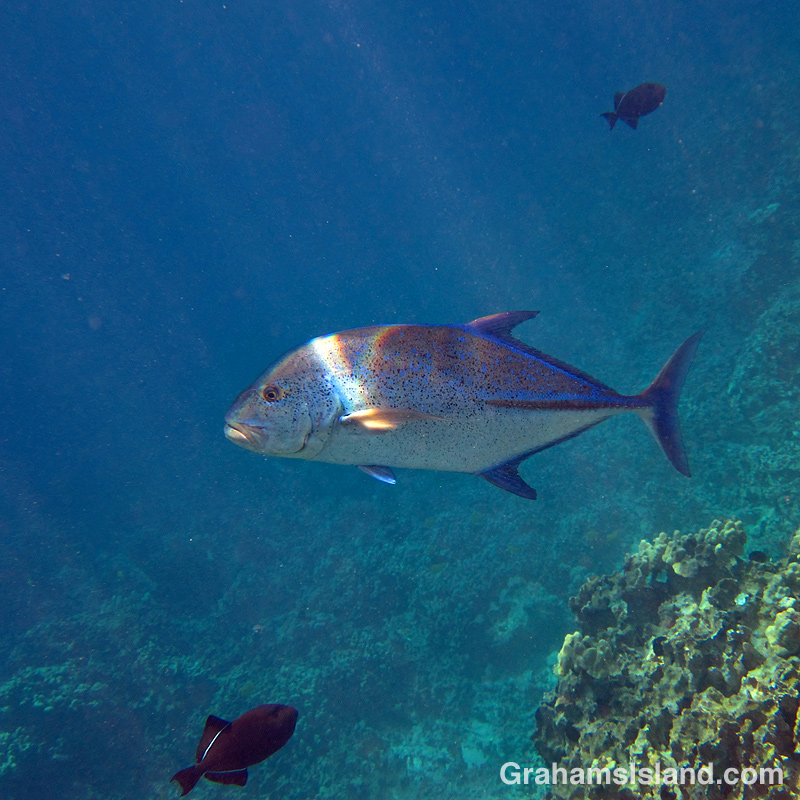
This big-eye emperor fish gave me the big eye, which is very unusual. Big-eye emperors are the kings of hanging in the water and imperceptibly drifting away. It’s an act of extreme futility to try and get close. The more you try, the farther away they get.

Orangespine unicornfish, like most unicornfish, tend to look a little grumpy. If they actually get grumpy, they have sharp orange spines at the base of the tail fin that they can use to express their displeasure. This doesn’t mean they’re a dangerous fish, just one not to provoke, which is a good attitude to have to any creature.

This is a group of Hawaiian zebra blennies that I came across in a tide pool one day. The largest of them, with the blue highlights and yellow cheeks is the breeding male. The others are likely females that he has won over.

Milletseed butterflyfish get their name from their markings, a series of dark dots along their sides. Of course, the markings could be morse code and they could be trying to communicate something to us, if only we’d listen.
I was quite pleased to get a shot of this fish looking my way, for the fish’s expression and for how it shows how slender these fish are. When people approach, most fish, wisely, turn away.

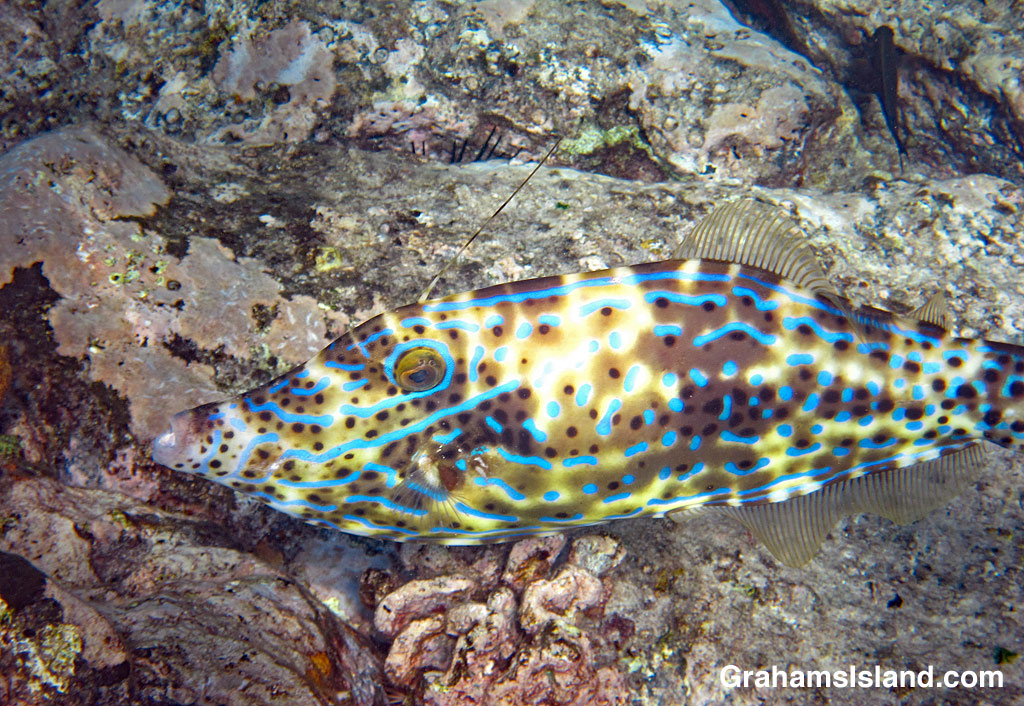
A scrawled filefish passes through a shaft of sunlight as it swims toward deeper waters.

A while ago, I posted a photo of an ember parrotfish missing a chunk from its back (here), but able to carry on quite normally.
In this photo, a bluespotted cornetfish has had its back end removed, likely by a larger predator. However, it too seemed to be getting around fine, though the tail fin is certainly one that cornetfish use a lot.
The other thing about this photo is that it nicely illustrates why this species is called the bluespotted cornetfish.

As you would expect, fish that rely on camouflage for protection are hard to spot when they’re at rest. The best bet to see them is to spot them on the move.
Sometimes I notice the final motion of one of these creatures before it settles in one spot and blends in. In this case, this flowery flounder was trucking along over a sandy bottom for quite some distance before it rested on the sand. Even in motion, and casting a shadow, it’s easy to see how hard it will be to spot this fish when it stops on the sand below.