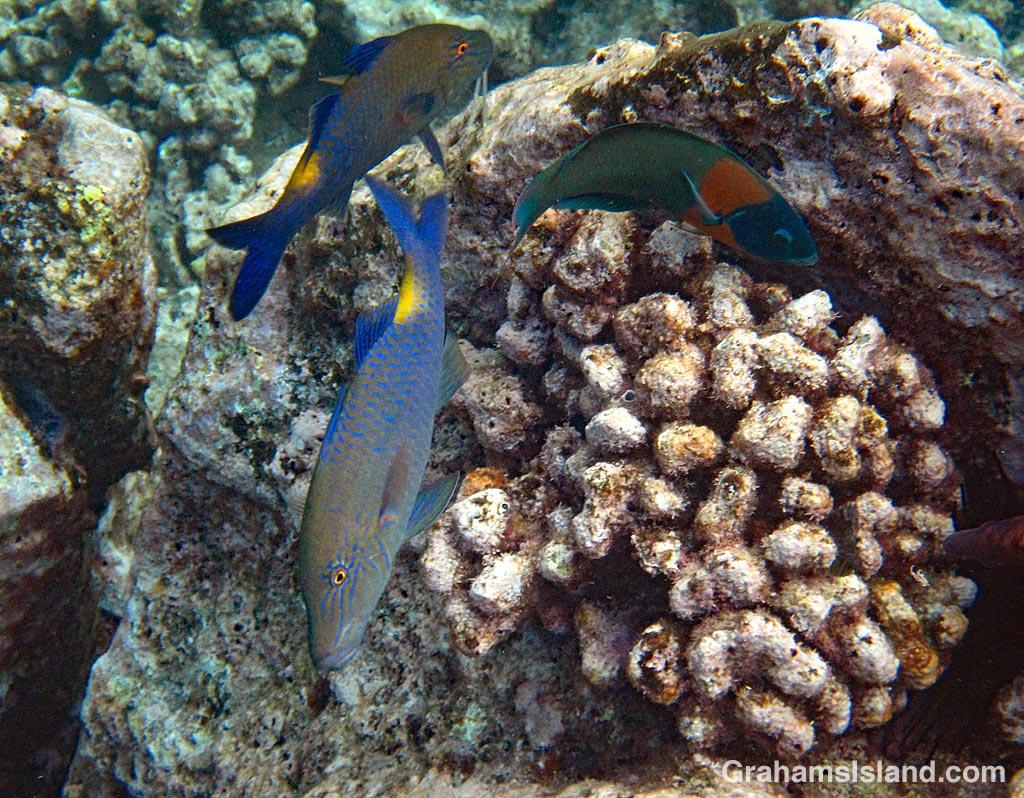
These three were swimming together, the two goatfish probing for prey and the saddle wrasse hanging about to snaffle up tasty tidbits stirred up by the two other fish.

These three were swimming together, the two goatfish probing for prey and the saddle wrasse hanging about to snaffle up tasty tidbits stirred up by the two other fish.
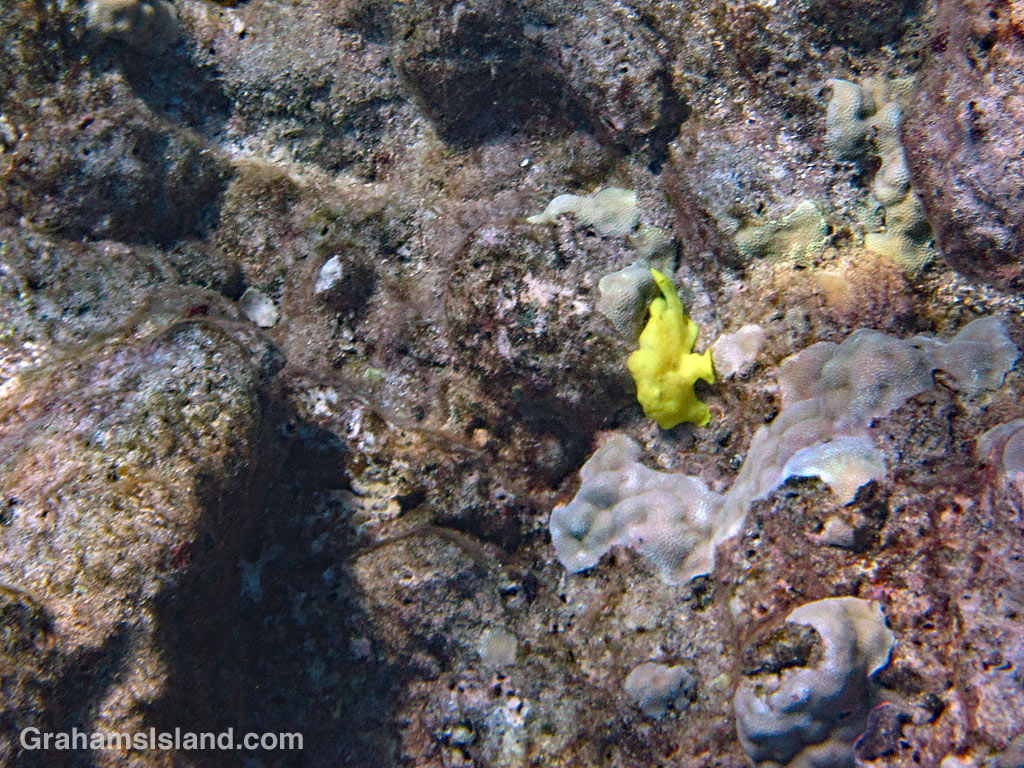
This little lemon-yellow beauty is a juvenile Commerson’s frogfish. Frogfish are rarely seen by snorkelers because they blend in so beautifully. Typically they look like bits of the reef but some, such as this one, mimic sponges and so are more easily seen.
Frogfish are anglers. They sit motionless on the bottom. When potential prey approaches, they flick their first dorsal fin forward. This is tipped with a fleshy lure that hangs over its mouth. If the prey takes the bait, the frogfish strikes. It can expand its mouth to swallow quite large fish and it strikes with such speed that other fish in the vicinity are generally unaware what’s happened, thus allowing the frogfish to remain in place and continue fishing.
In this photo, the frogfish’s eyes and mouth are visible, as are its pectoral fins that are adapted to help it hang on to the reef and to move about.
This frogfish was spotted by my wife and we watched it for a while before we were interrupted by three whales breaching. They were half-a-mile or more away, but this was the first time I’d seen whale activity from the water and it was pretty impressive, if almost impossible to photograph.
When the whales settled down, I dipped my head below the water to try and locate the frogfish again and the first thing I saw was a white-tipped reef shark cruising by. I suspect it had been attracted by my feeble attempts to dive and photograph the frogfish, probably thinking there was some easy prey to be had. It quickly disappeared again, but it made for a memorable few minutes.
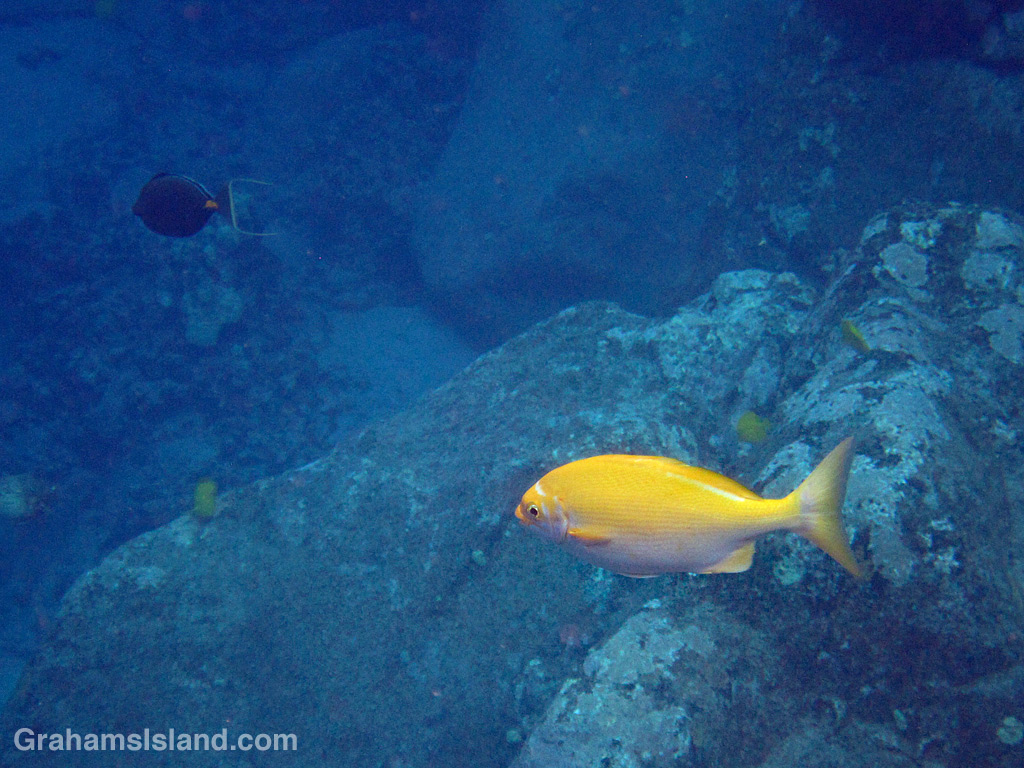
This fish is a gray chub, so why is it yellow? That’s a question with no good answer. Locals used to think that yellow-colored chubs were ‘queens’ of their schools, but there’s no evidence to support that. Instead, it’s regarded as simply a color variation, seen in a few fish, that is without significance. This is the first one of these I’ve seen.
Gray chubs’ usual coloration can be seen in the photo below.


 Mackerel scad are schooling fish, the kind that make ‘bait balls’ which end up being decimated by large predators. They’re members of the jack family, not that this does them much good. Some of those large predators are other members of the jack family such as greater amberjacks and almaco jacks.
I came across this school not far from shore. There were probably two or three hundred fish in the school and it was fun watching them twirl and circle in harmony. They encircled me, went past and I popped out the other side. It was then I noticed they weren’t alone. One the other side of the school, a medium-sized great barracuda cruised around.
The barracuda came toward me to take a look, but I was clearly less interesting than the scad and it moved away again. The barracuda can be seen in the bottom photo. See if you can spot it.

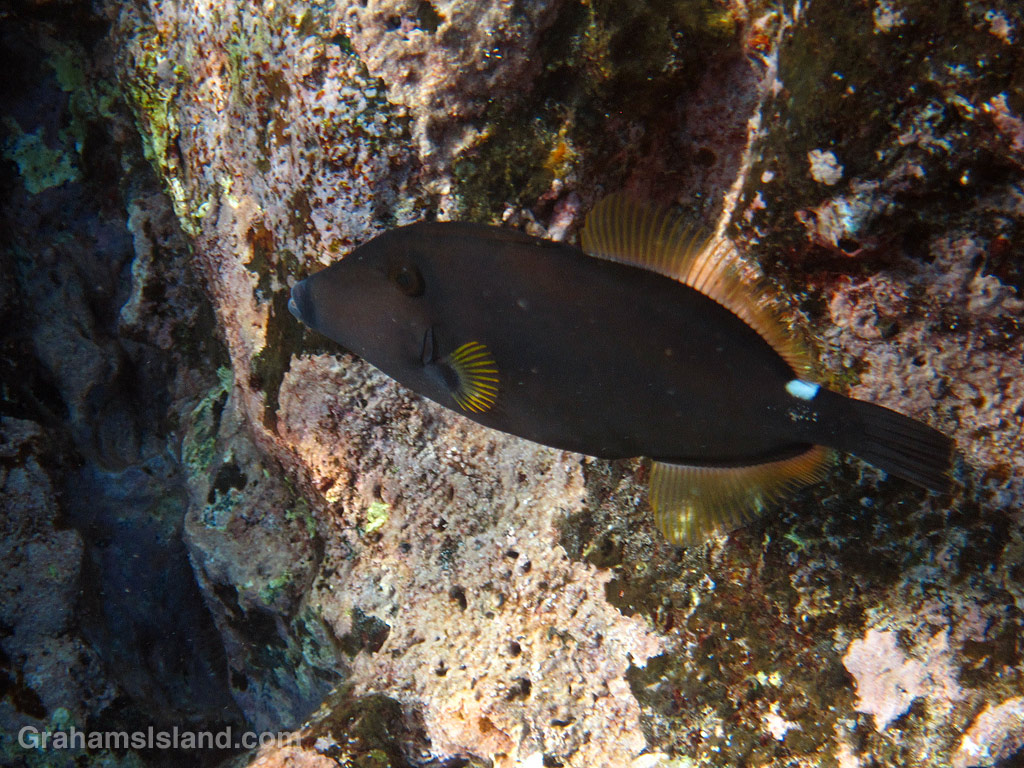
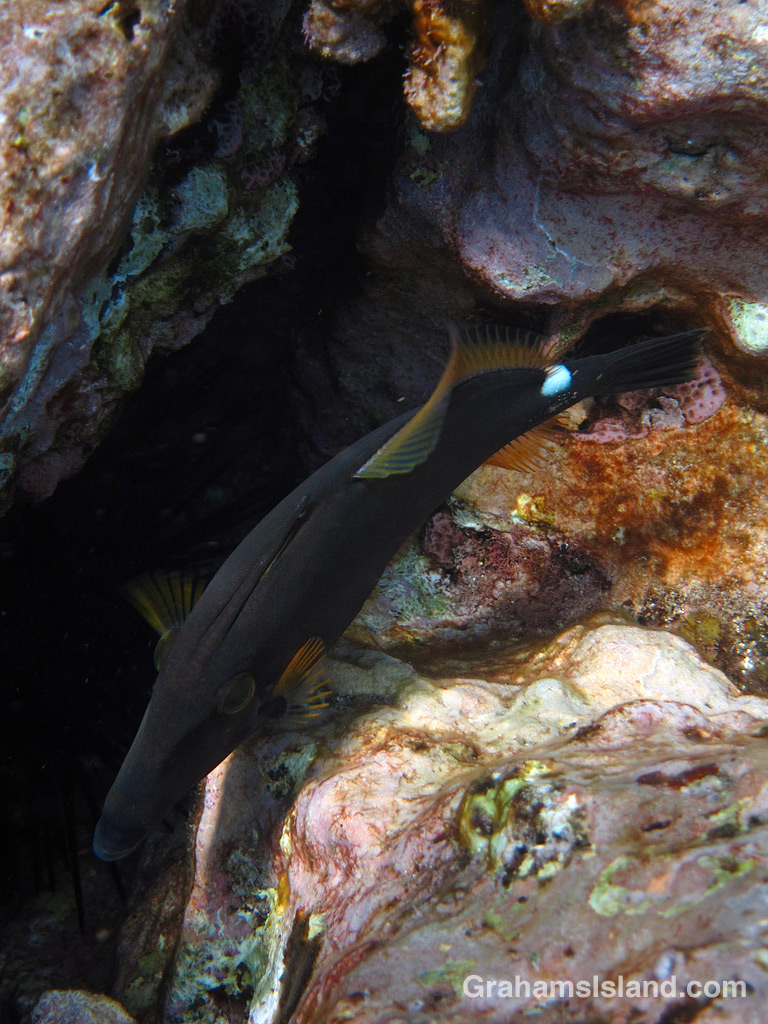 Squaretail filefish are easily identified by the white patch at the base of the tail and the orange fins.

A couple of views of different bluefin trevallies. There are two things I particularly I like about this quite large fish. One is that they’re quite beautiful when the sun catches their blue markings. The other is that they tend to hunt in twos and threes, often times in the company of goatfish, and an eel or octopus. Indeed, if you want to see an octopus, one of the best ways is to watch for trevallies, especially if they’re just stooging around in one area for no apparent reason. In that case, it’s probably because there’s an eel or octopus present that can’t easily be seen.

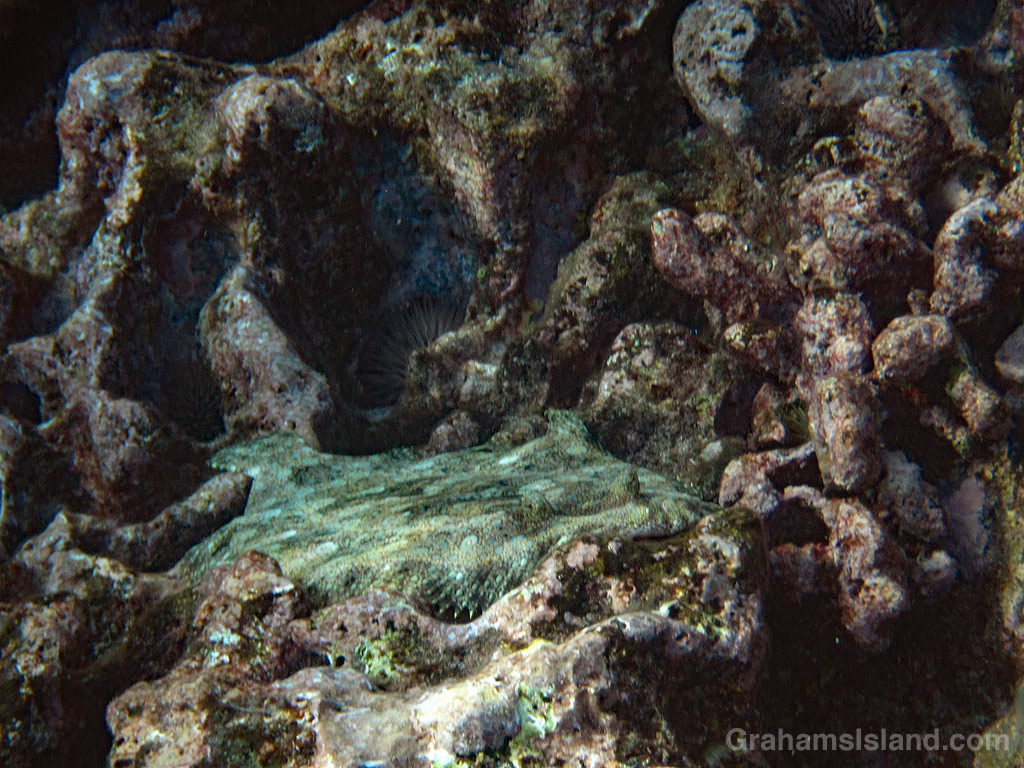
When I saw this flowery flounder swimming, it promptly plopped down on this rock where it didn’t blend in quite as well as flounders usually do. It watched me as I took a few photos. I swam away and when I looked back the flounder had gone.
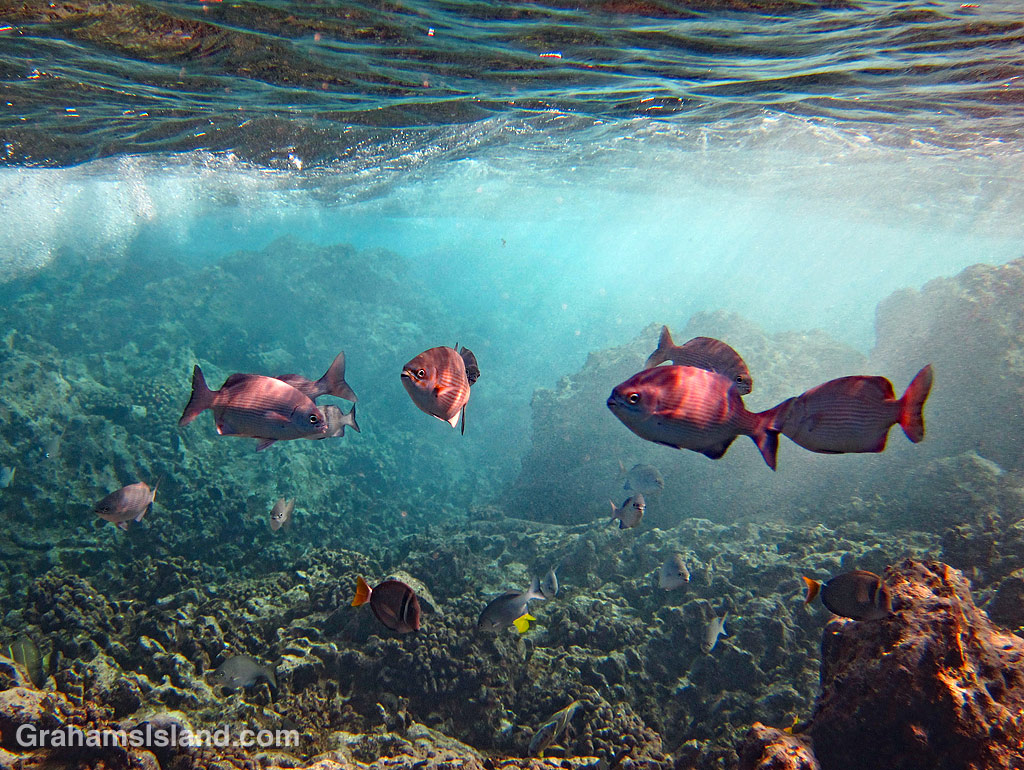
These are probably gray chubs, but might also be brassy chubs, or even a mixture of both. The two species look similar and are found in similar locations, in the surge zone. I like to find a safe spot, just outside this zone, and watch the swells roiling in and see chubs and other fish swish back and forth with the swell.
Chubs are quite common and they aren’t shy. They’ll pass quite close, often with a cheerful, engaging look, which makes them a fun fish to encounter.
 Graham's Island