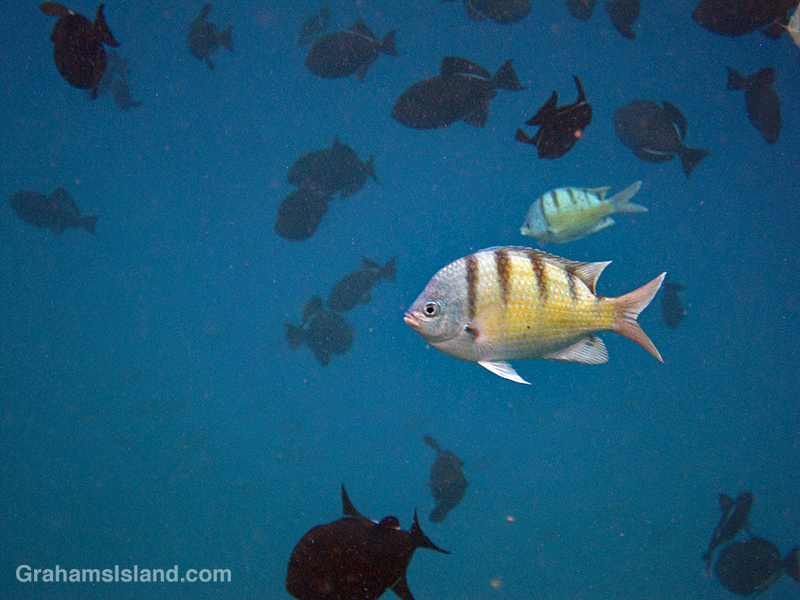
The largest of Hawaii’s endemic parrotfish, this one caught the sunlight just right, bringing out its bold coloration.
Yellow tang are one of the staple reef fish in Hawaii. They often putter around in large shoals in the shallows, and since they’re entirely bright yellow, except for a white tail spine, they’re easily visible from shore. The white variation seen here is very unusual. I’m not sure why some are white, but I’ve read that it might have to do with stress or disease.
These photos were taken in the same location, a few months apart, but I think it’s the same fish as the markings appear identical.
I kept hearing about a large school of pyramid butterflyfish that hung around in a particular area where I often snorkel. Trouble is, every time I went there, I never caught so much as a glimpse of one.
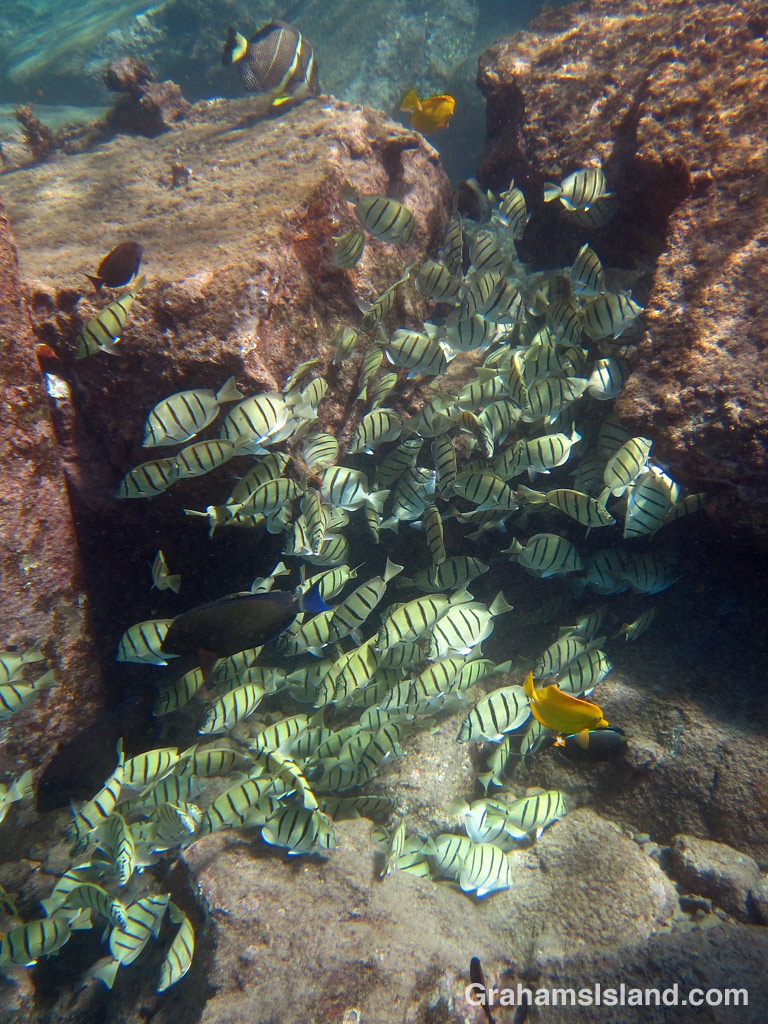
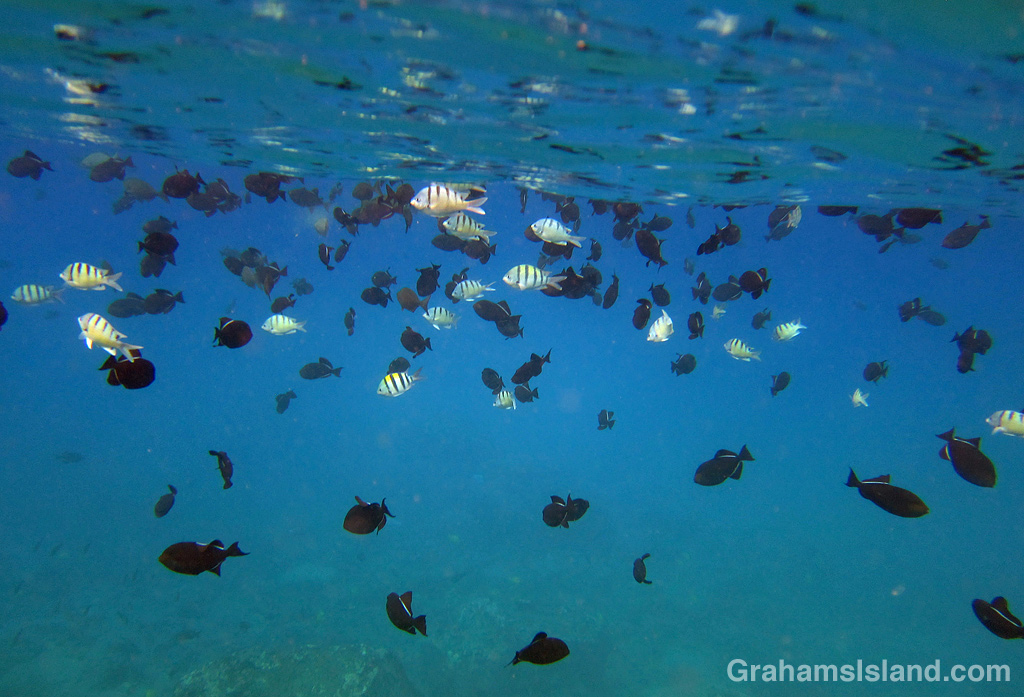
By the time I last swam in that direction, I’d forgotten all about pyramid butterflyfish and their alleged presence in the area. Naturally, that’s when I ran into a very large shoal of mixed fish including yellow tang, black triggerfish, filefish and other reef fish. In amongst them were a large number of pyramid butterflyfish, which stood out when the sunlight caught the large white triangles on their sides.
About ¾ of a mile east of the parking area at Kiholo State Park Reserve is this channel or ‘auwai. It connects what remains of Kiholo fish pond with the ocean. King Kamehameha 1 is credited with building the fish pond though he may have actually improved one that was already there. In his day, the pond was much larger than it is today, a lava flow from one of Mauna Loa’s periodic eruptions having filled in a good deal of it.
Turtles and, of course, fish go back and forth through this channel, which also flushes brackish water from the pond. While the pond is on private land, it’s always fun to pause on the little bridge and scan the channel to see if anything is on the move.
For more information about Kiholo fish pond, go to www.nature.org/ourinitiatives/regions/northamerica/unitedstates/hawaii/placesweprotect/kiholo-preserve.xml.
A day octopus settles on a patch of coral. It will change its coloration from moment to moment depending on whether it wants to blend in or, perhaps, display an aggressive warning.
Spotting an octopus is a matter of chance. It helps if it’s on the move, but the presence of goatfish (in this photo, a manybar goatfish), is sometimes a tipoff.