

At first I thought this was something straight out of Doctor Dolittle, a pushmi-pullyu eel. Alas, no. Instead, it’s two whitemouth moray eels wedged into the same space behind a clump of coral. While whitemouth moray eels are a fairly common sight in the water, this is the first and only time I’ve seen two together. I don’t know whether this proximity was related to breeding. Perhaps they were just helping each other stay warm! Looks like they must be pretty good friends.
Category Archives: Fish
A manta ray glides by

Most weeks I post something in response to the WordPress photo challenge. This week’s theme is ‘evanescent,’ a word I wasn’t familiar with. The definition provided is “soon passing out of sight, memory, or existence; quickly fading or disappearing,” or, put simply, ‘a moment in time.’
To me, this is what any photo is, a snapshot of a given moment. Even the look of a fixed object, a landscape, a building, a monument, is always changing. It could be the light, weather, activity around the subject. Everything is in constant flux, sometimes in obvious ways, sometimes only in the detail. With birds, animals, bugs, even plants – blowing in the wind – those changes of passing moments are more obvious.
So I thought I’d take this week’s challenge as my theme for the week (or at least the remaining six days of the challenge). I start off with this photo of a manta ray. One of the great joys of snorkeling is never knowing what I’ll see that day. It could be a common fish engaged in some activity I’ve never seen before. It could be a glimpse of something unexpected. It could be something seen only at a certain time of year. Whatever it is, it almost always gives me a little jolt of ‘wow.’
While out snorkeling, I got a jolt of ‘wow’ when I saw this manta ray gliding along in the opposite direction. I turned and followed its effortless progress for several minutes until it headed into deeper water and disappeared. An evanescent experience? I think so, though it won’t soon disappear from my memory.
Hawaiian cleaner wrasse services a bullethead parrotfish
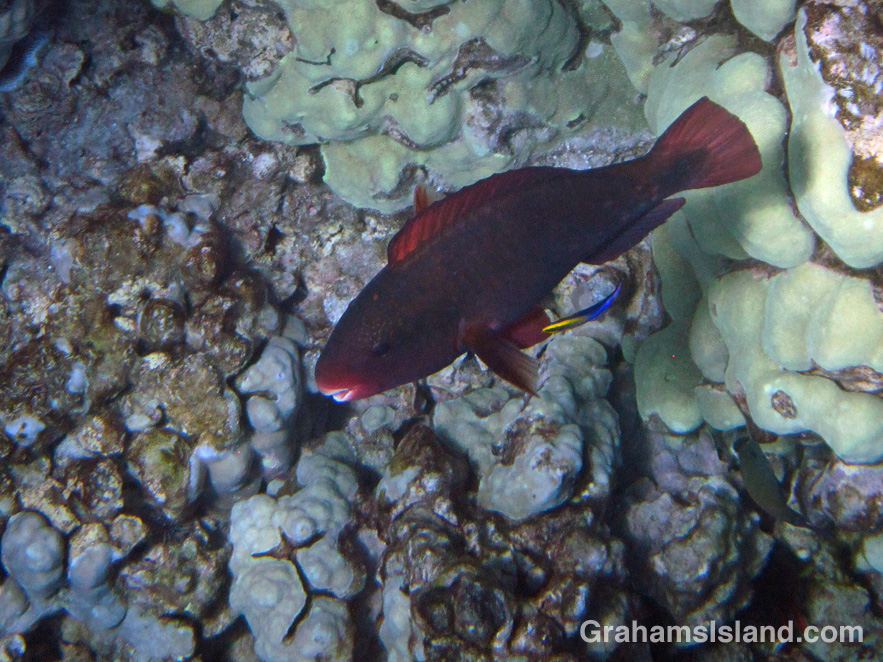
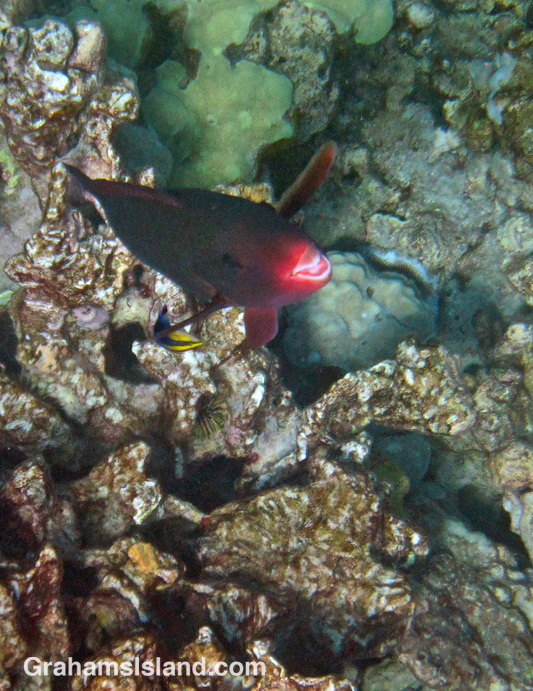
Hawaiian cleaner wrasse are small blue and yellow fish that clean the mucus, dead tissue and parasites off other fish. They establish permanent stations on the reef, and fish that need cleaning swim up and hover around until it’s their turn.
A fish can get nipped during a cleaning, but they also seem to enjoy the process and the sensation of the cleaner wrasse dragging its fins over a client’s body – a one-stop clean and massage. This bullethead parrotfish seemed positively ecstatic during its clean, several times sporting a look of bliss on its face.
Maybe next time I’m in the water, I’ll dive down and give it a go.
Pacific trumpetfish
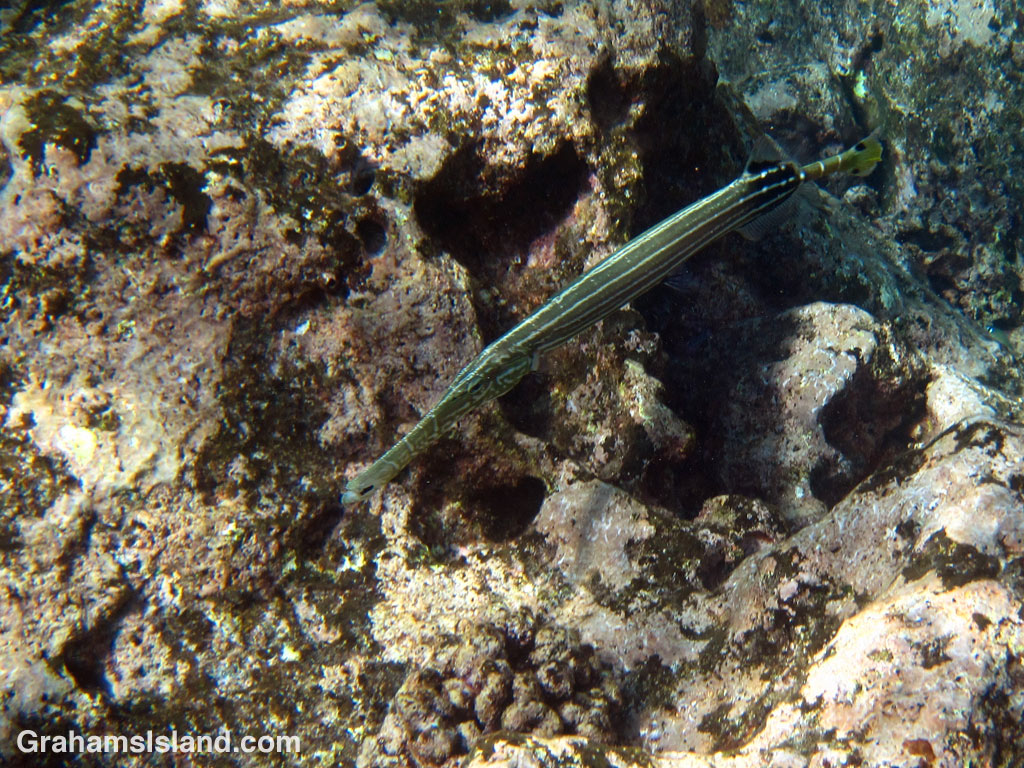
Pacific trumpetfish are one of those fish that like to blend in with the crowd. Their color can vary from yellow to black depending on which fish they’re trying to mimic. The can also display vertical bars or horizontal stripes. Oftentimes, they’re seen hanging upside down in the water. The purpose of all this subterfuge is to sneak up on their prey which is mostly other fish.
This one was in horizontal bar mode and on a horizontal trajectory, but not with any quarry in sight, unless I was its intended victim. I think I’d be a bit hard to swallow.
Bluestripe butterflyfish
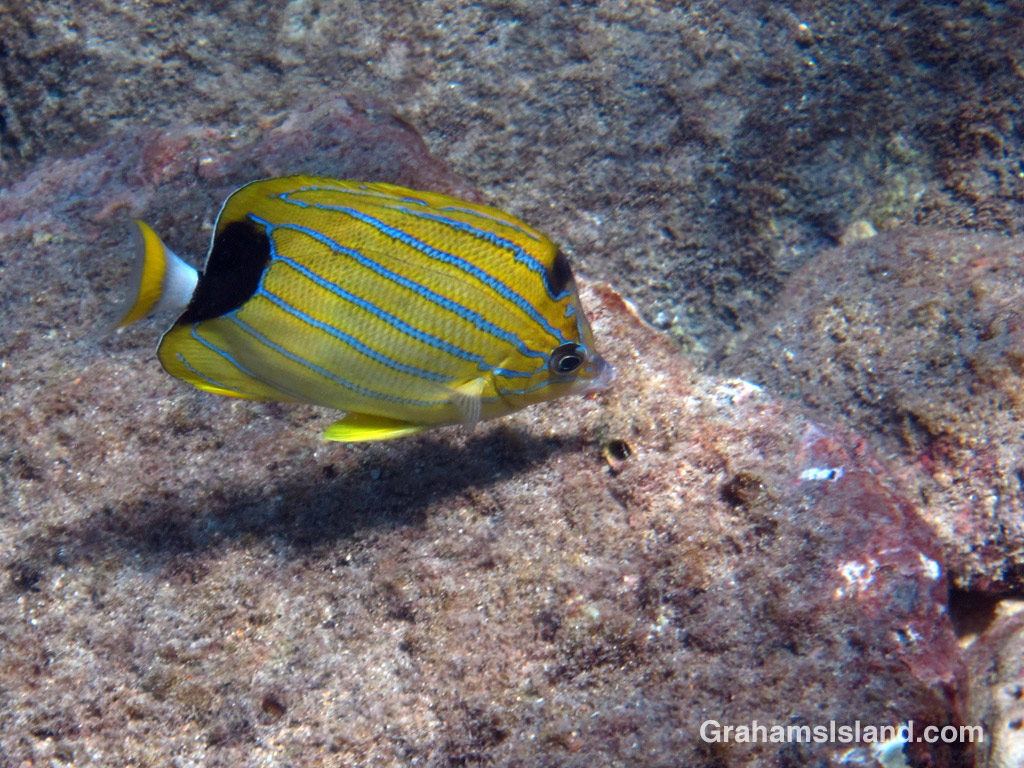
Most butterflyfish have some sort of eye camouflage, so the bluestripe butterflyfish is unusual in having none. The diagonal blue stripes also make it stand out from the crowd. And where most butterflyfish have relatives in the Pacific, the nearest relative of the endemic bluestripe butteflyfish, is the east coast of Africa
In my attempts to identify what I see in the water, I use John P. Hoover’s book The Ultimate Guide to Hawaiian Reef Fishes, Sea Turtles, Dolphins, Whales, and Seals. His website is hawaiisfishes.com.
Bluespotted cornetfish
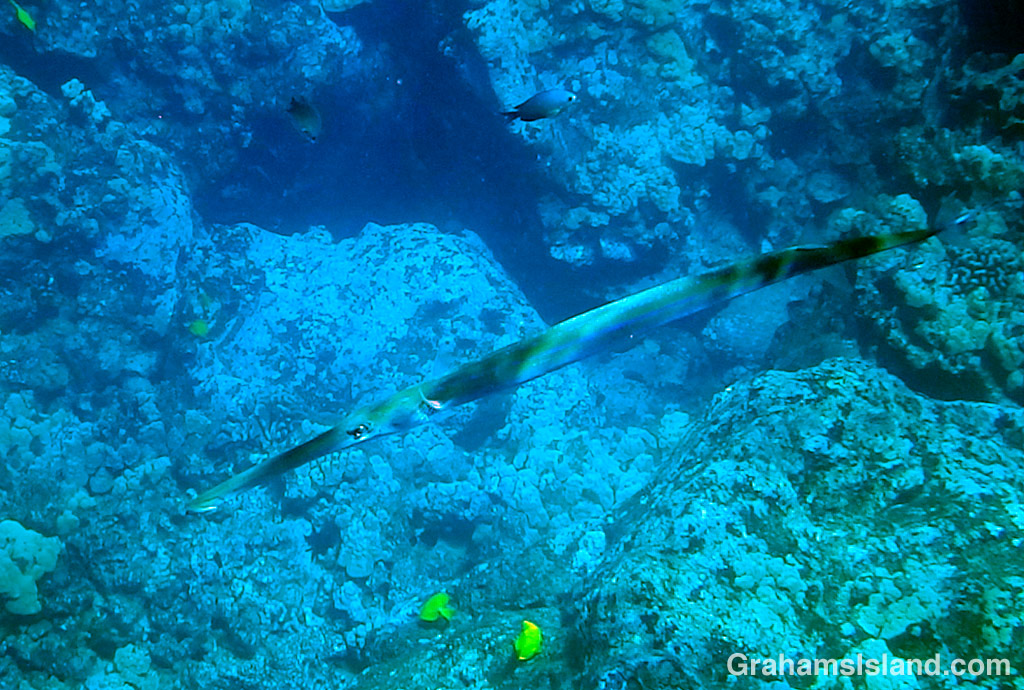
A splash of shadows helps a bluespotted cornetfish blend in with its surroundings.
Scrawled filefish

When the light catches a scrawled filefish right, its blue scribbles shine in the water.
Black triggerfish
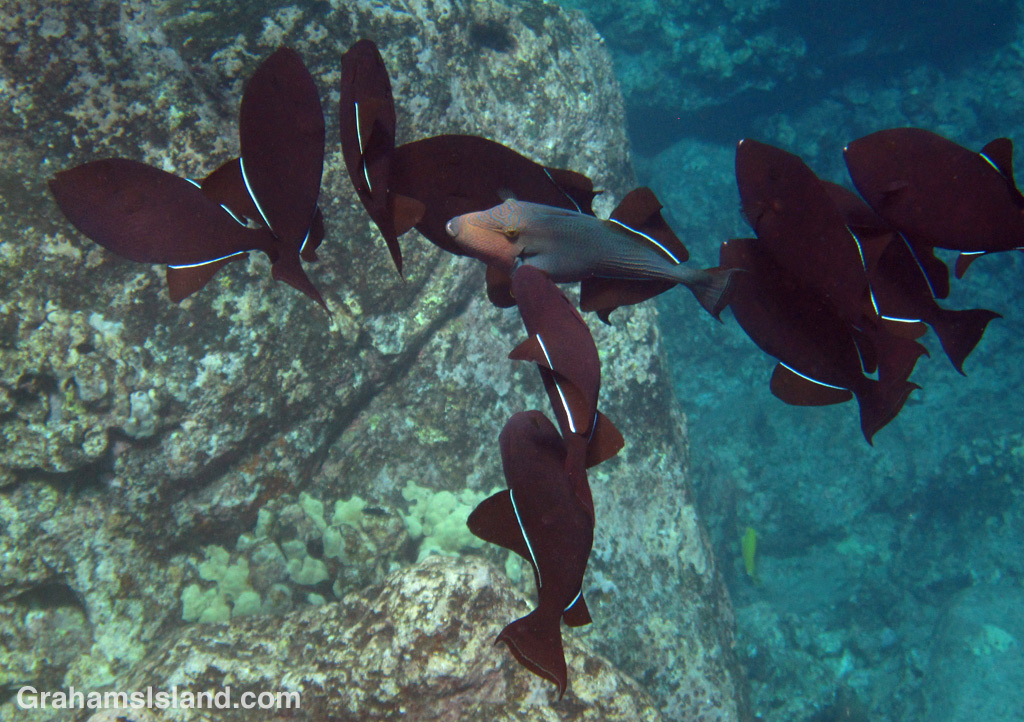
I came across this blob of black triggerfish just floating and weaving idly back and forth. Only the one had the coloration that is a sign of arousal and agitation, though it was drifting about much like the others. I suspect this was some sort of courtship/mating ritual going on, but it was quite ethereal to watch.
 Graham's Island