
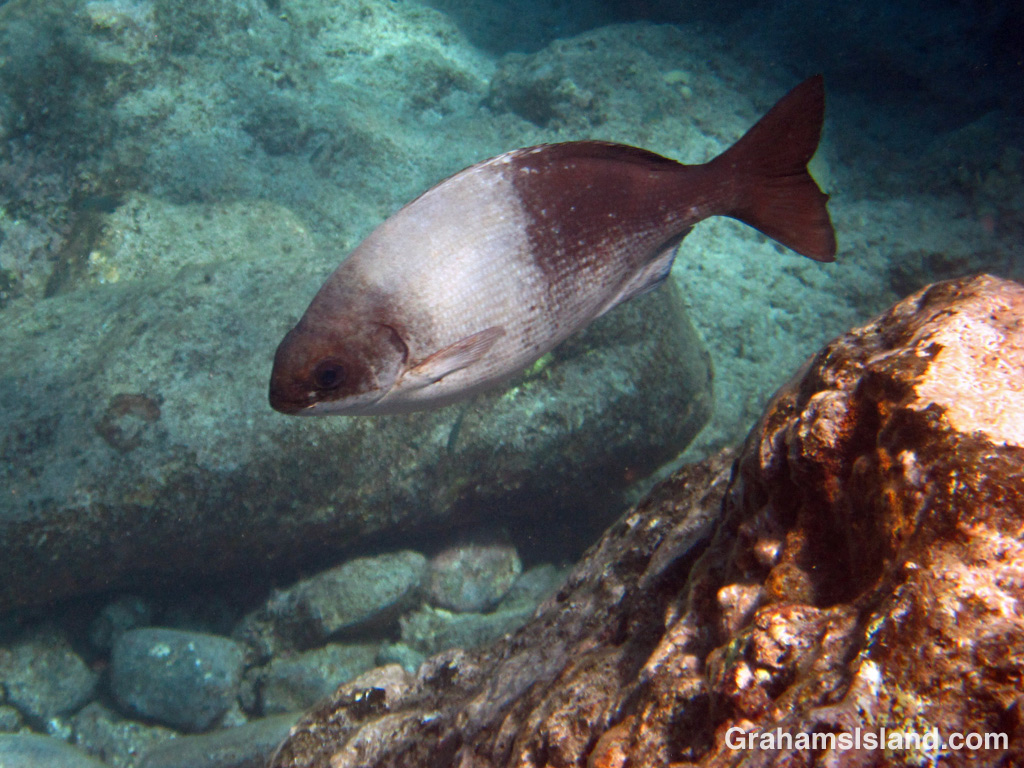
The bicolor chub’s distinguishing feature is that its rear third or half is dark. Sometimes, as with this one, the head turns dark and sometimes the back also, so only the belly is light.
Category Archives: Fish
Silver hookfish
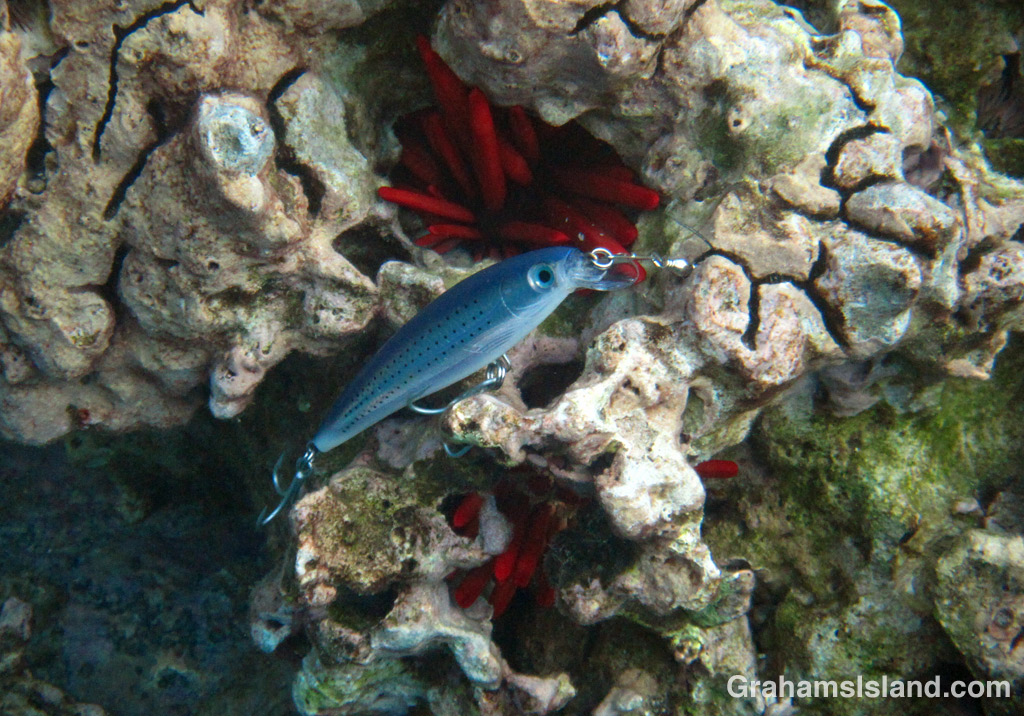
The silver hookfish is fairly common in coastal waters here. It spends much of its time slowly cruising shallow waters in search of prey, usually much larger fish than itself. On occasion, the silver hookfish will rest for an extended time on a patch of coral or rock as seen here. Sometimes they can even be seen leaping through the air like flying fish.
While humans aren’t their usual prey, curious or gullible people, lured by its glittering appearance, are sometimes snagged by one of the hookfish’s several barbs. This can be a painful experience, sometimes requiring medical treatment.
Silver hookfish are not recommended for human consumption, since they’re extremely tough and may contain concentrations of toxins, which can impair perceptivity.
Square-spot goatfish
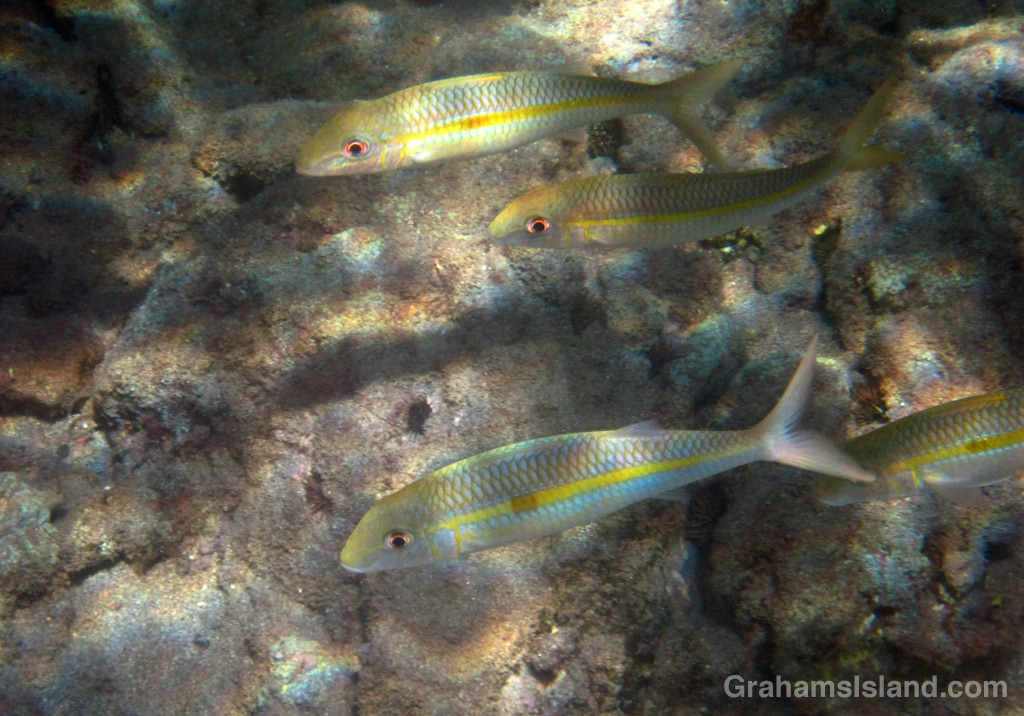
Square-spot goatfish are quite common and most easily distinguished by the square spot in the yellow stripe along their sides. However, the intensity of the square spot changes, darker during feeding, and fading (as with the fish in the photo) or disappearing altogether while resting or schooling. When the spot disappears, square-spot goatfish are hard to distinguish from yellowfin goatfish.
In my attempts to identify what I see in the water, I use John P. Hoover’s book The Ultimate Guide to Hawaiian Reef Fishes, Sea Turtles, Dolphins, Whales, and Seals. His website is hawaiisfishes.com.
Spotted coral blenny
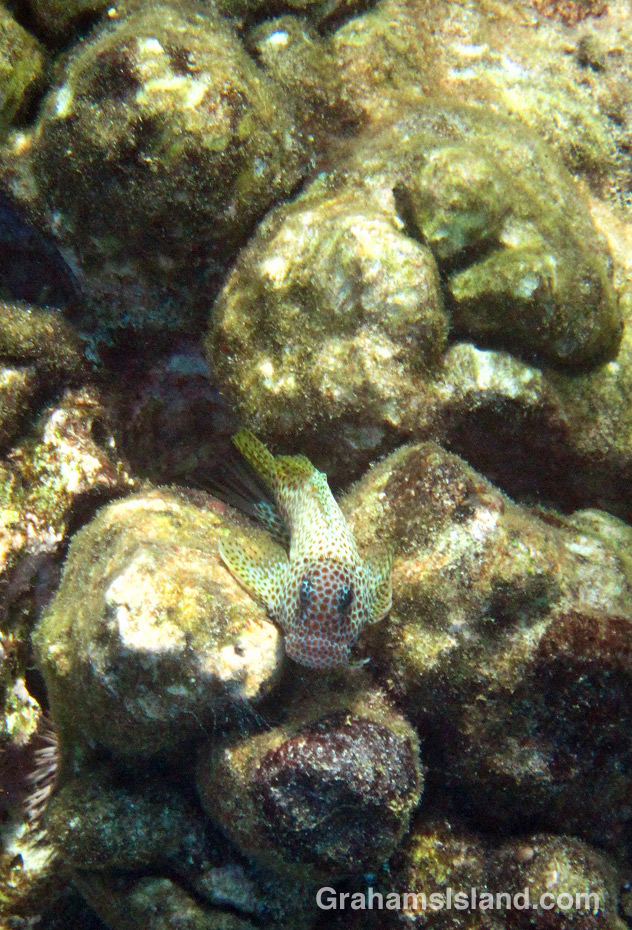
I like blennies. They have the kind of goofy expression I see when I look in a mirror. The spotted coral blenny is considered large for the species, growing to 6 inches long. This one was engaged in typical blenny behavior, sitting motionless on a piece of coral.
In my attempts to identify what I see in the water, I use John P. Hoover’s book The Ultimate Guide to Hawaiian Reef Fishes, Sea Turtles, Dolphins, Whales, and Seals. His website is hawaiisfishes.com.
Arc-eye hawkfish
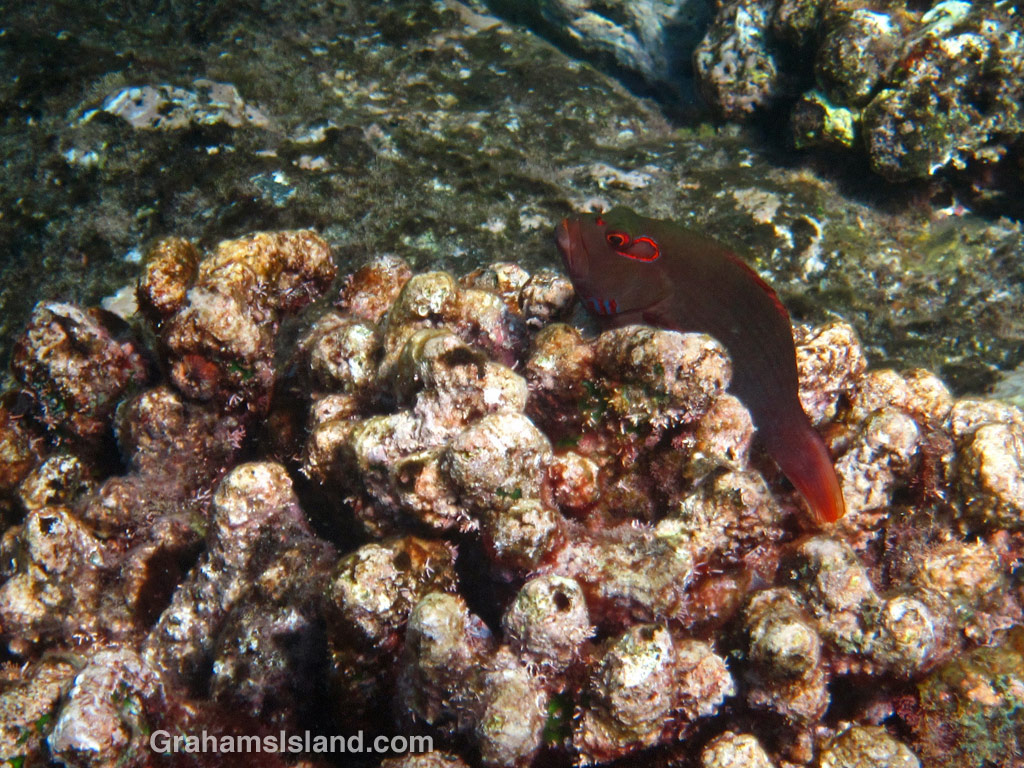
It’s a common sight to see an arc-eye hawkfish perched in a head of coral, well assuming you’re in the water that is. If a predator comes along, they slip deeper into the coral for protection.
There are two patterns to these fish. Sometimes they’re paler than this one and have a distinctive white stripe on the side. One study has shown that the lighter fish tend to inhabit slightly deeper water where the coral is spread farther apart. Both patterns have the arc behind the eyes and the blue and red bars on the gill covers.
One of these fish is not a convict tang
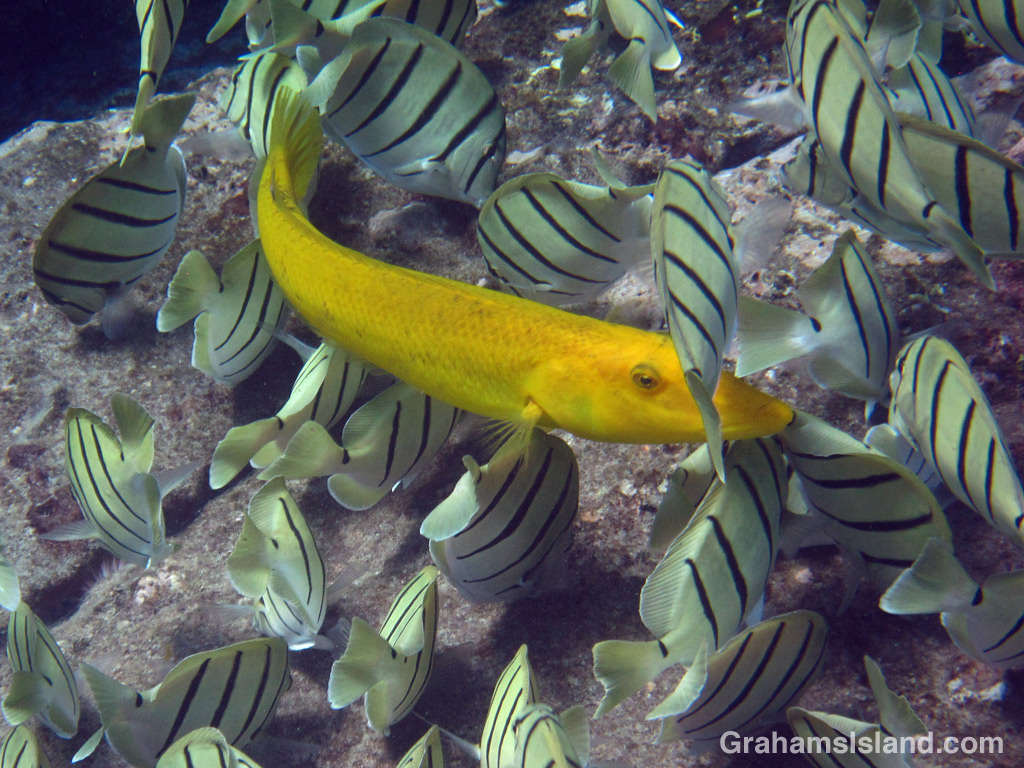
Shoals of convict tang are common in the near-shore waters of the Big Island and it’s equally common to see a bright yellow female cigar wrasse among them. The theory is that the cigar wrasse uses the cover of the harmless shoal to surprise its prey, a variety of marine invertebrates. Seems like the cigar wrasse’s prey does not have real good eyesight.
A flowery flounder vanishes

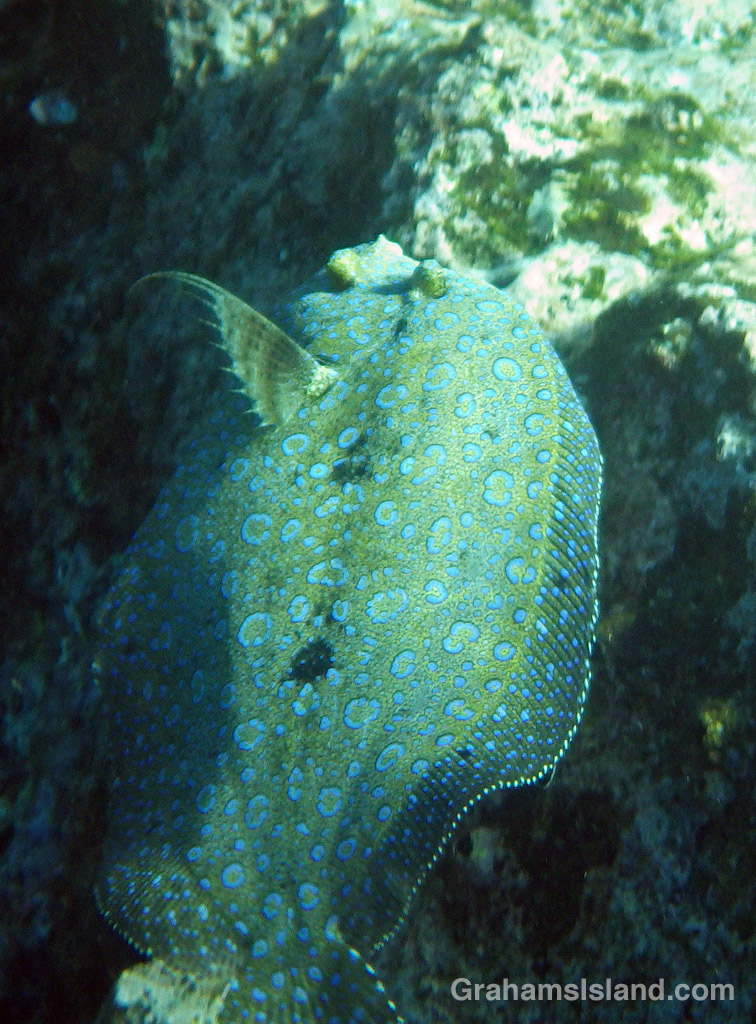
Camouflage is a creature making a good match with its surroundings. This serves to conceal it from both predators and prey. In the water, there are many exponents of this approach, from octopuses to scorpionfish.
Flatfish are masters of camouflage. It’s a fluke to see a stationary flatfish. It’s almost always necessary to see one on the move and to track it to where it settles down. Once it’s set though, it will usually stay put, making it one of the easier fish to observe and photograph.
I saw this flowery flounder on the move but once it plopped onto a rock (above) I would never have noticed it had I not known it was there.
Bright-eye damselfish
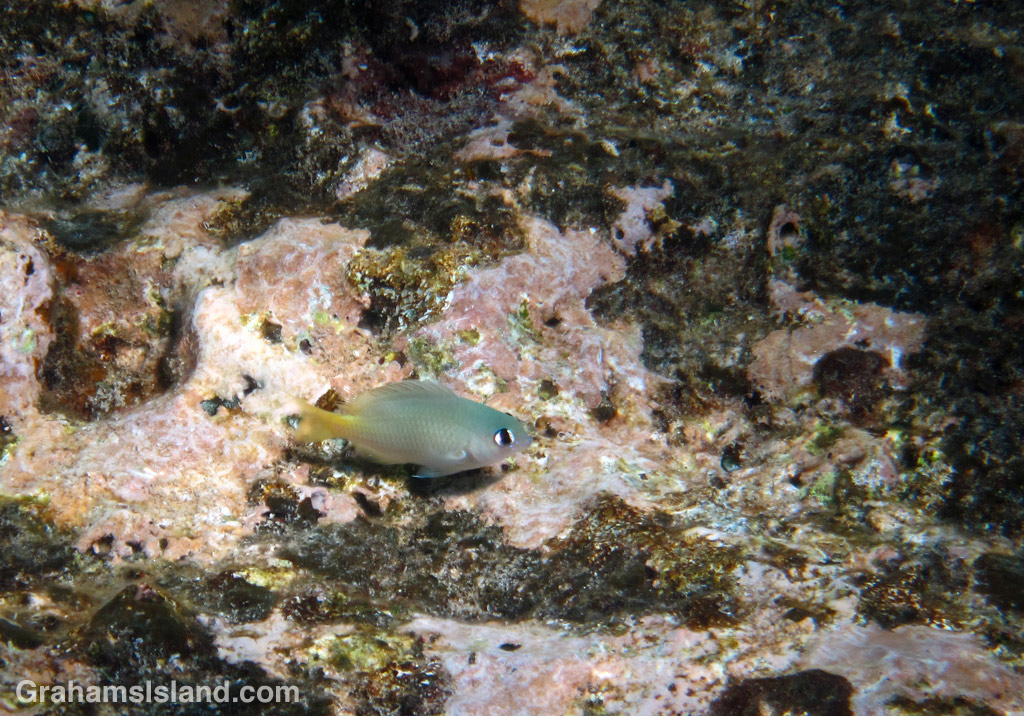
The aptly-named bright-eye damselfish is a tiny fish around 1 to 2 inches long. Despite its small size it aggressively defends its territory, usually a nook or hollow in the rock. It’s not unusual to see it come charging out at some much larger fish that has strayed too close.
Given that these fish spend all their time in one small area, often just hovering in the water, it would seem a simple matter to get a photo, but no. When they hover, they’re constantly moving, almost vibrating. And then they shoot off in one direction or another.
I’ve taken many of photos of bright-eye damselfish and the majority of them turn out to be pictures of bits of rock or coral. Locating the tiny fish on my screen is no easy matter, keeping it there, harder still. When I do manage that, often the fish is a blur or just a tail fin heading out of shot. Thus, this photo is something of an against-the-odds triumph – an entire bright-eye damselfish reasonably in focus.

