Category Archives: In The Water

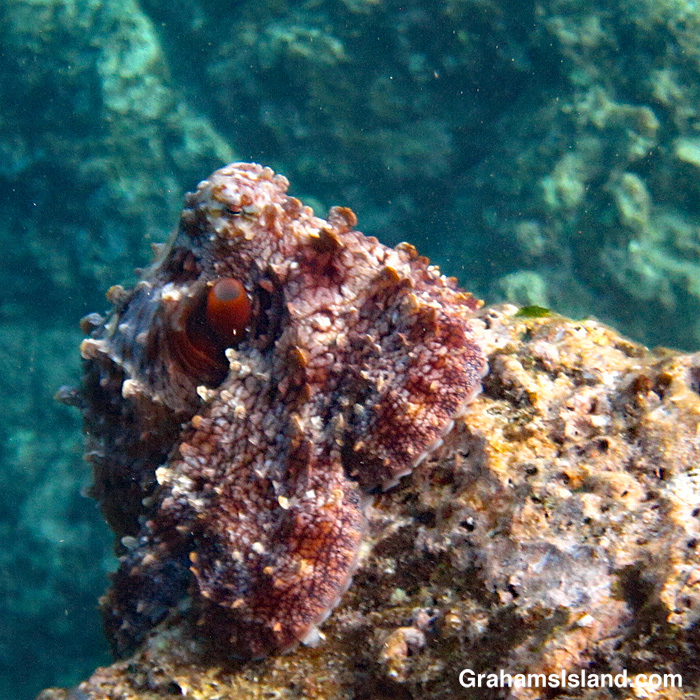
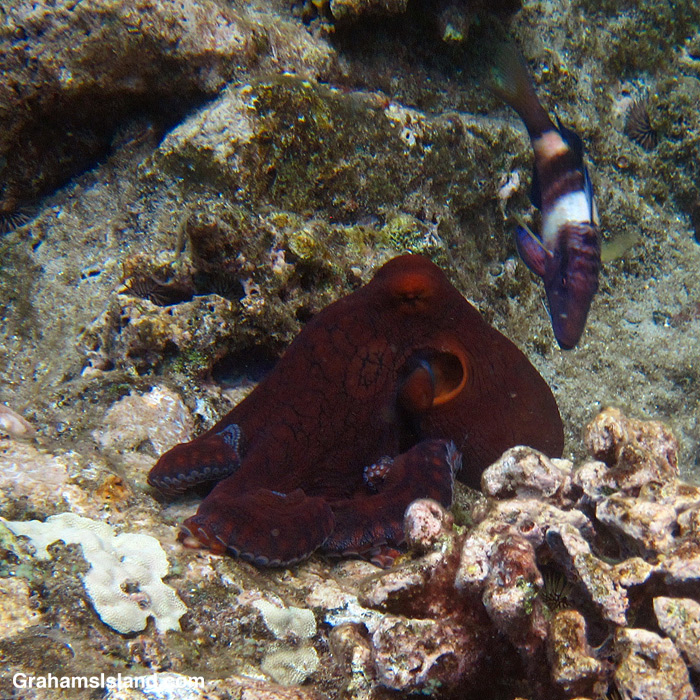
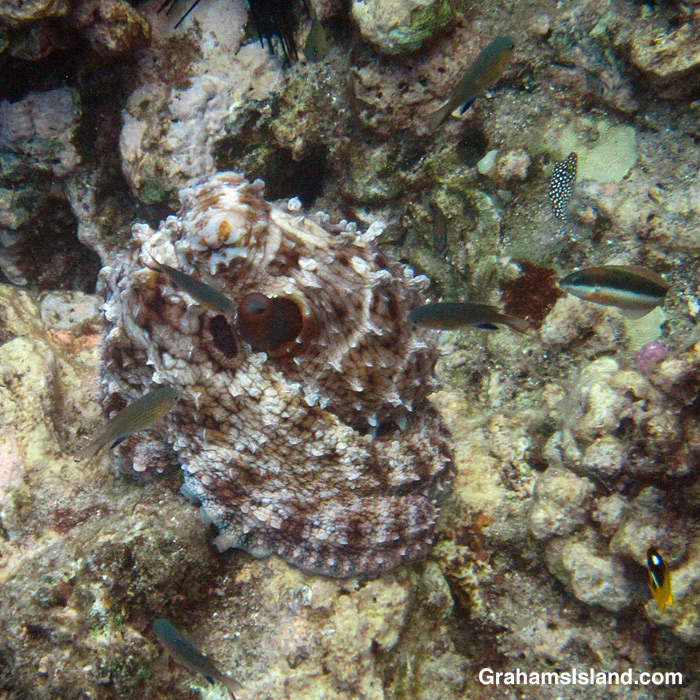
What color is this octopus?

The answer to the headline is that it depends on the moment and the background. I surprised this day octopus when I came around a corner and it instantly changed color. Then it moved and changed color again. I edged away and it moved and changed color again. It changed about five times over the course of a few minutes and each change was like hitting a light switch – one moment this, next moment that.

Their default color is a gray-brown, but I didn’t see that on this occasion. The red of the center photo is a reaction to being surprised and the two mottled patterns are camouflage attempts.

Posted in response to Becky’s July Squares challenge theme of ‘Perspective.’ See more responses here.
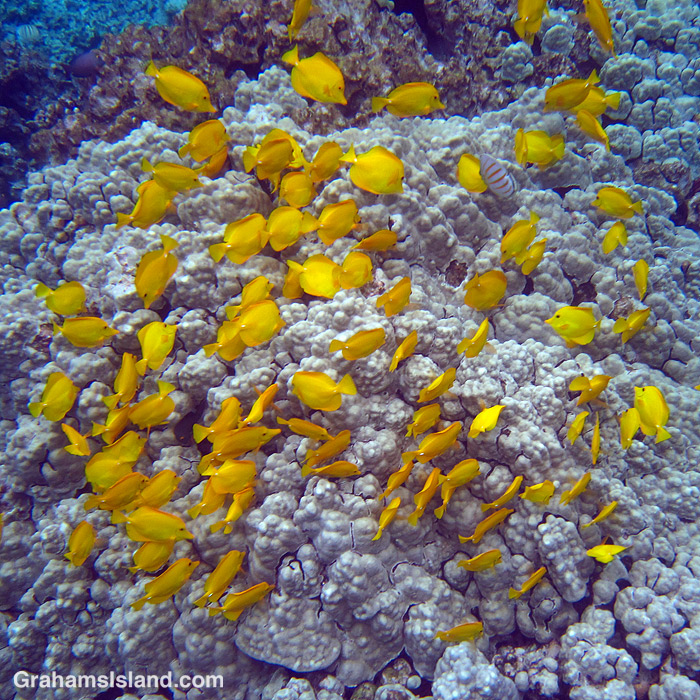
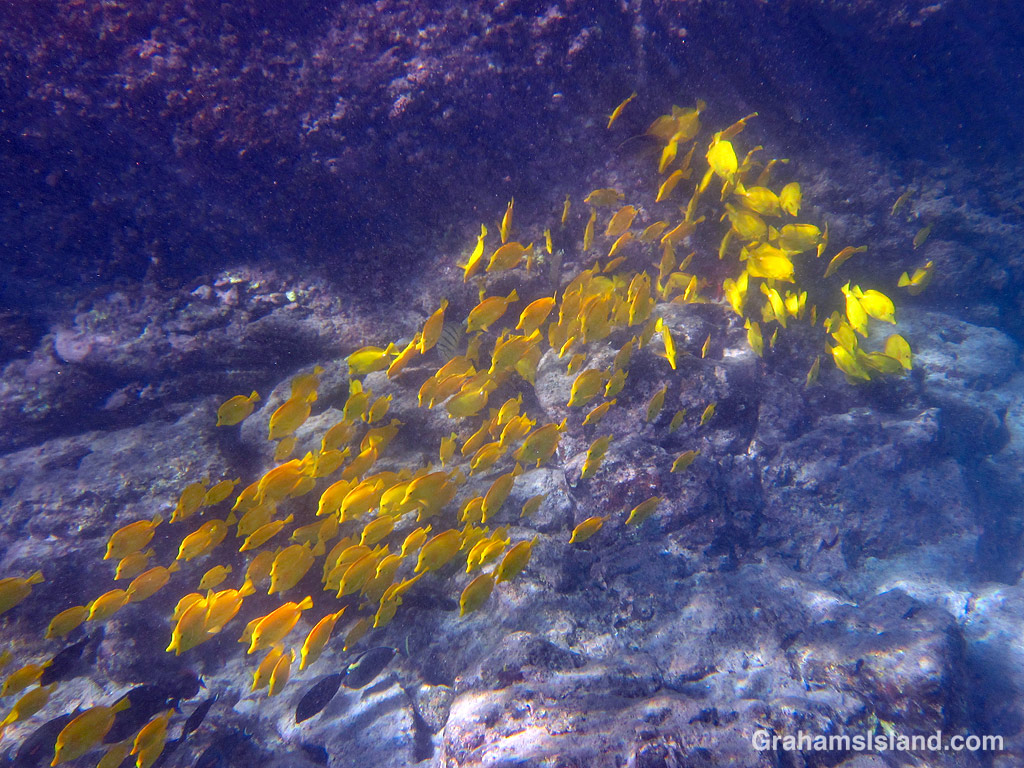
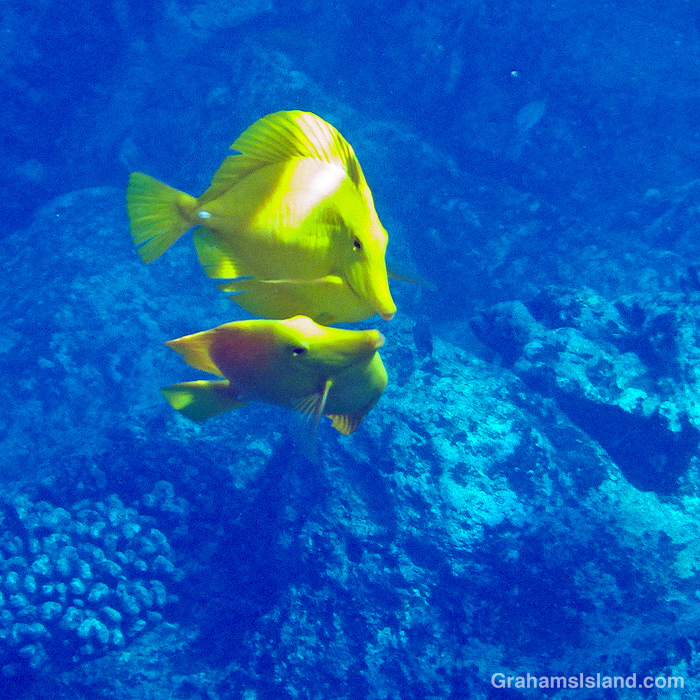
Yellow tang

This week’s Sunday Stills challenge theme is ‘Yellow.’ See more offering’s here.

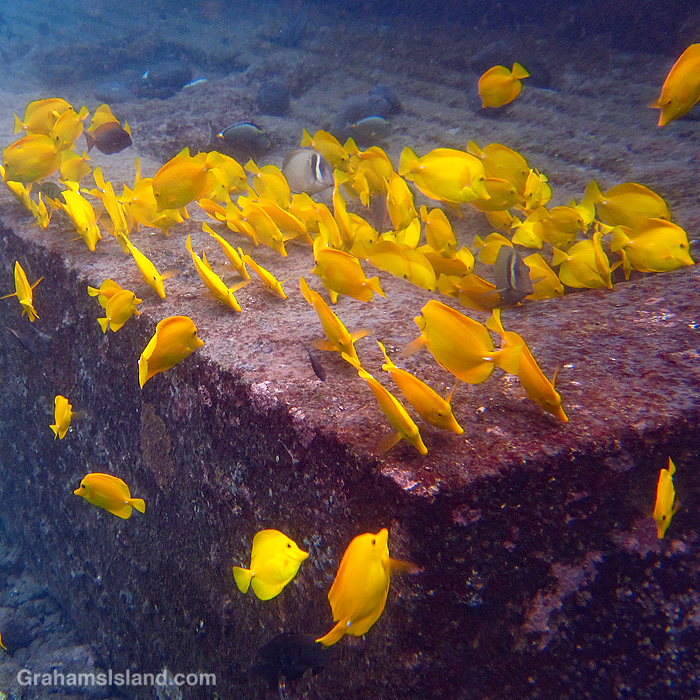
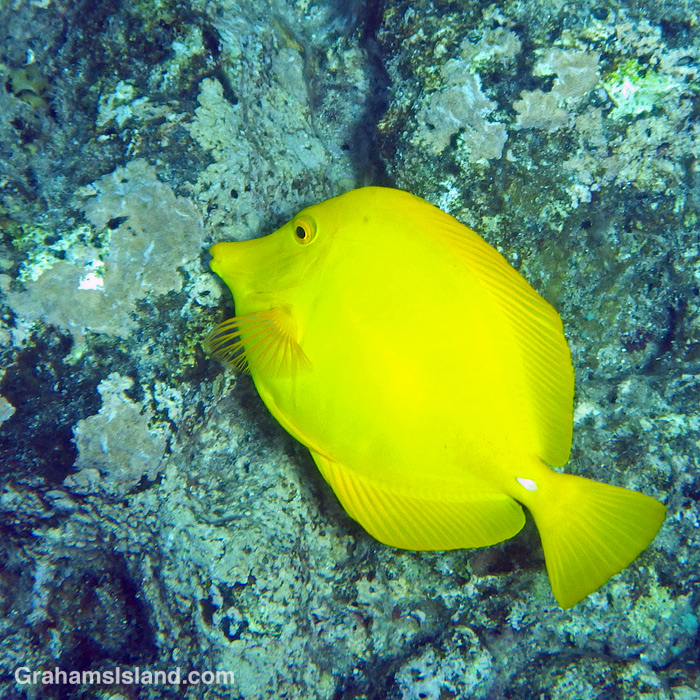
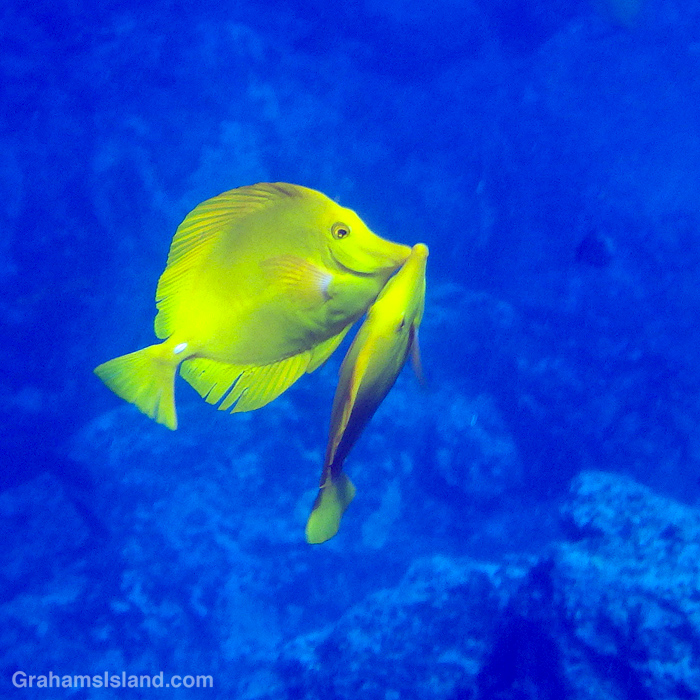
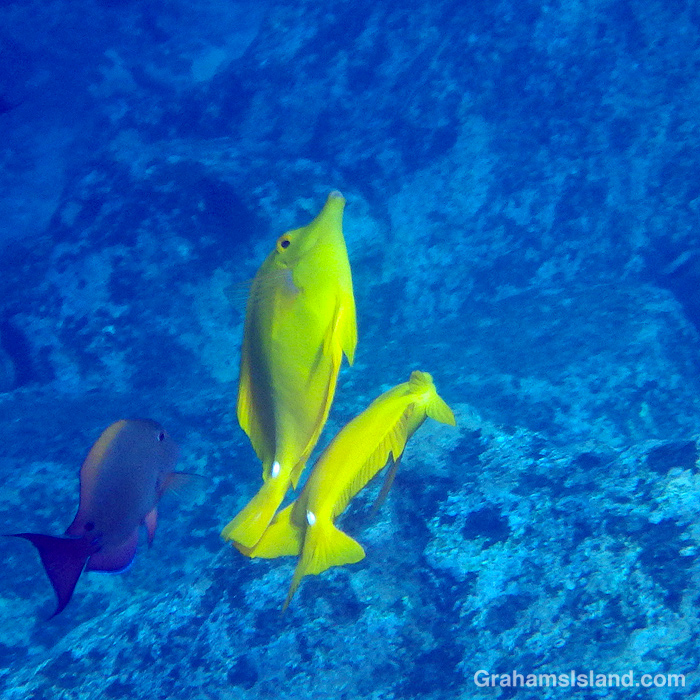
I thought I’d try the WordPress gallery feature for this post, which features yellow tangs, the first fish everyone notices in Hawaii. These bright yellow fish putter about in fairly shallow water, sometimes singly or in pairs, but often in large groups. They feed on algae, and occasionally can be seen cleaning turtles for this purpose. Unlike some fish, juveniles look the same as mature yellow tangs so shoals often contain a variety of sizes. The lower three photos show a pair of yellow tangs engaged in what I think is some kind of mating ritual.

Yellow tang are long-lived fish. They can live to be 20 or 30 years old. They’re also fish that are very popular in the aquarium trade but, since they don’t breed in captivity, all aquarium fish are collected from the wild. Currently, there’s a moratorium on the aquarium fish collection trade here, because of concerns about fish stocks and the sustainability of the practice.

Also posted in response to Becky’s July Squares challenge theme of ‘Perspective.’ See more responses here.
Yellow tang in Hawaii

A whitetip reef shark passes by

I get the impression that, for most people, if they have to see a shark, they’d prefer it to be from this perspective – going away from them. Being something of a contrarian, I’m always looking for sharks coming toward me. The qualifier in this is what kind of shark it is.

This is a whitetip reef shark, the first I’ve seen in quite a while. Whitetip reef sharks tend to be curious and will cruise up and check me out. Once they determine that I’m really quite boring, they carry on in search of something more interesting.

Now if this had been a tiger shark, well, all bets are off.

Posted in response to Becky’s July Squares challenge theme of ‘Perspective.’ See more responses here.
Green turtle diving

I first saw this turtle taking air at the surface. Then it dived an disappeared under a shelf of rock. This photo gives the impression of the sea floor sloping, but there is no horizon underwater and I like how this angle emphasizes the turtle’s descent.

Posted in response to Becky’s July Squares challenge theme of ‘Perspective.’ See more responses here.
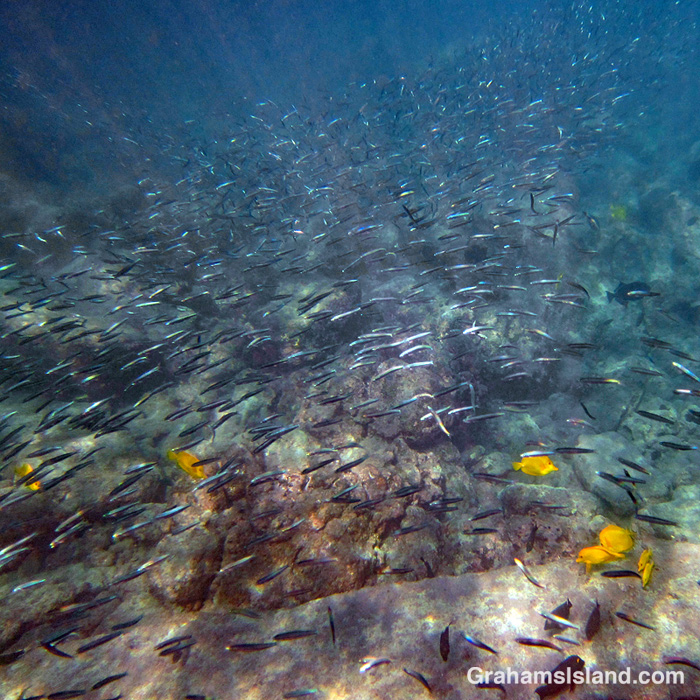
Little fish

A shoal of small fish stretch away into the distance. I think these are juveniles but I’m not sure of which fish. They’re small and silvery and zip around in a harmonious way, changing direction as if connected by invisible wires.

Posted in response to Becky’s July Squares challenge theme of ‘Perspective.’ See more responses here.
Stareye parrotfish

The magenta lines around the eye of this fish identify it as a supermale stareye parrotfish. Parrotfish have initial and terminal phases. Most adults remain in the initial phase throughout their lives as either males or females, though some parrotfish are all females.

Terminal phase parrotfish are called supermales. These are female initial phase fish which have reversed their sex. They will fertilize most of the eggs laid by initial phase females in their territories. When one of these supermales dies, another initial phase female will reverse sex and take its place.

Big and small bluespine unicornfish

Adult bluespine unicornfish, such as the one above, are liberally trimmed with blue on their fins, spines, and tail streamers. They also have a horn jutting from their brows. Juveniles are also tinged with blue, but while they have blue spines, they don’t yet have tail streamers and they don’t have a horn. Once they grow a horn, their cuteness will disappear and they will acquire the grumpy look of most unicornfish.