
When I saw this flowery flounder swimming, it promptly plopped down on this rock where it didn’t blend in quite as well as flounders usually do. It watched me as I took a few photos. I swam away and when I looked back the flounder had gone.

When I saw this flowery flounder swimming, it promptly plopped down on this rock where it didn’t blend in quite as well as flounders usually do. It watched me as I took a few photos. I swam away and when I looked back the flounder had gone.

 This week’s Friendly Friday challenge theme is ‘Comfort Zone.’ (See more responses here.) In my youth, swimming in the sea wasn’t something I enjoyed. This wasn’t because I was afraid, but rather that I was so skinny, I was instantly cold when I got in. Here in Hawaii, that’s no longer a problem. I’ve added a few pounds and the water’s warmer, so when I go snorkeling, I feel at home. There can be strong currents, big waves, and sharks with more sharp teeth than seems necessary, but I don’t worry about any of this. I try not to do stupid things in the water, but instead enjoy putting along and watching the fish.
Lately, I haven’t been able to get in as much and, because of a series of large swells, when I have, the water quality hasn’t been great. A couple of days ago I popped down hoping to cash in on some calm waters before a new swell filled in. Alas, the swell was bigger than the previous day, with some large sets rushing in and crashing ashore.
I thought the day was doomed, but got in anyway and immediately couldn’t see a thing. The water was all stirred-up sand. But visibility is often better farther from shore so I swam out. It did improve and by the time I got to one of the areas I usually visit, the visibility was OK, if not exactly great. By way of compensation, lots of fish were active, milling around near the surface and in deeper waters.
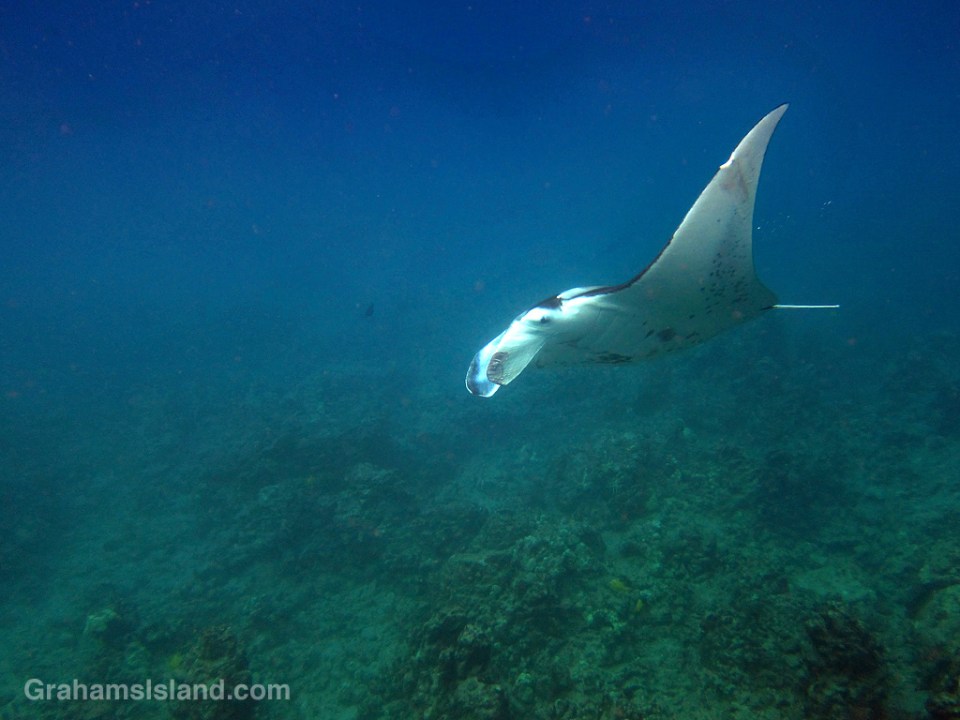
I was checking out these fish when I glanced to one side and saw this manta ray coming my way, not 20 feet away. It was a big one, with a wingspan of 8 to 10 feet. I hadn’t seen it before, but it was traveling fast enough that I wasn’t surprised by that. I snapped a couple of quick photos (including the one below) and then it was past and heading into the murk. I turned to follow.
One thing I’ve learned is that it’s mostly a futile activity chasing fish of any kind. In the water, I’m a model T Ford in a world of turbocharged Ferraris. The manta was swimming with little effort but easily outpacing me. But I noticed that it was heading into the bay and I thought that if I cut straight across the bay, I might see it again as it swung out.
Sadly, the visibility got worse the farther I went and I resigned myself to not seeing it again, right about the time the manta emerged from the gloom heading toward me. It cut across in front of me and I took the middle photo. It says something about how close the manta was that I was able to get a decent photo in such murky water.
Once again the manta disappeared with languid ease, heading south. I followed for a bit before I gave up and started looking around to see what else was in the water. Moments later the manta reappeared, again heading my way. Again it slipped by in front of me (top photo). Again, I followed, lost it, and then saw it coming toward me. The manta ray was clearly curious, checking me out, wondering this thing what in the water was that apparently could barely swim.
After it disappeared again, I waited a while but didn’t see it again and headed back to shore. When I got out, I saw another swimmer about to get in. “Did you see it?” he asked. I told him what had happened. “It’s still there,” he said, and then got in to see if he could find it.
Sure enough, the manta was visible from shore, its back showing through disturbed water, and its wingtips occasionally breaking the surface. As I watched, the manta ray swam back and forth, staying in the center of the bay, not that far from shore. I’d been in the water with it for about half an hour, and watched from the shore for another 20 minutes. When I left, it was still there.
I’ve been on a manta ray tour and there are others that take snorkelers to swim with the dolphins or to watch whales, but there is nothing quite so exhilarating or rewarding as a chance encounter. I headed out with low expectations and little enthusiasm, and returned energized. It’s moments like this that make living in Hawaii, indeed just living, worthwhile.

These are probably gray chubs, but might also be brassy chubs, or even a mixture of both. The two species look similar and are found in similar locations, in the surge zone. I like to find a safe spot, just outside this zone, and watch the swells roiling in and see chubs and other fish swish back and forth with the swell.
Chubs are quite common and they aren’t shy. They’ll pass quite close, often with a cheerful, engaging look, which makes them a fun fish to encounter.
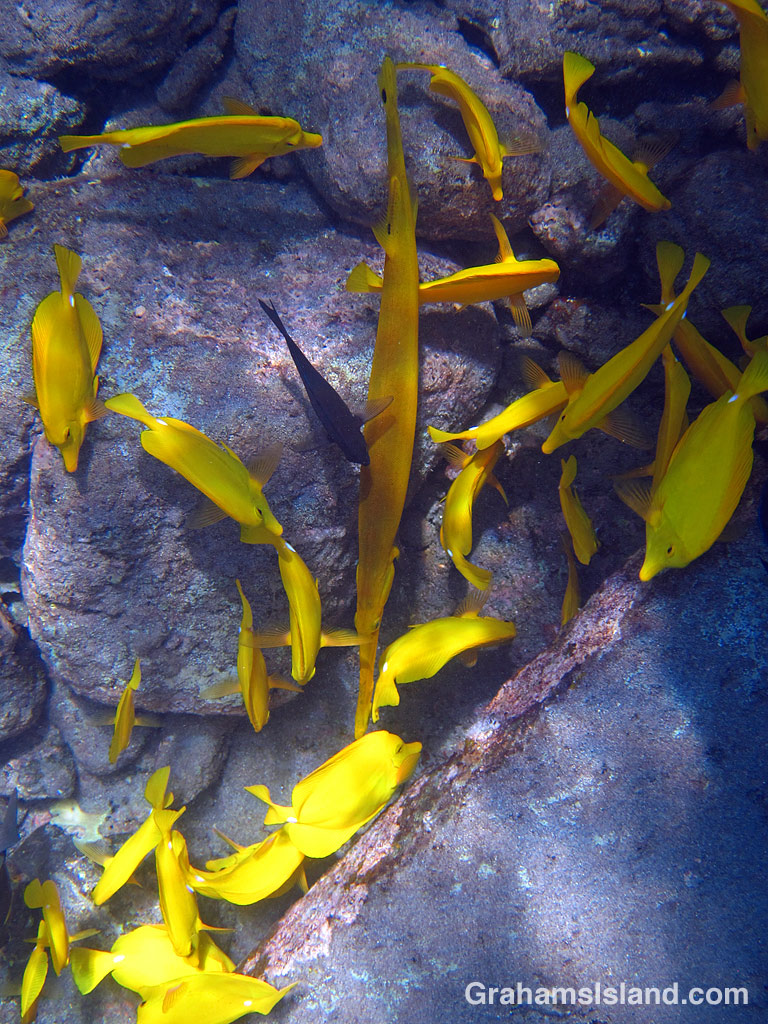
Pacific trumpetfish have the ability to change their coloration according to their surroundings. In this case, the trumpetfish has turned yellow to blend in with a shoal of yellow tang, one of the most common fish on the reef.
So why bother with this subterfuge? Trumpetfish are predators, feeding mostly on small fish and some crustaceans. Appearing to be one of the crowd allows it to sneak up on unsuspecting prey. And while the very different shape of the trumpetfish might make it seem like it’s prey would be sure to spot it, from the front, which is where the prey is going to be, trumpetfish are very hard to spot.
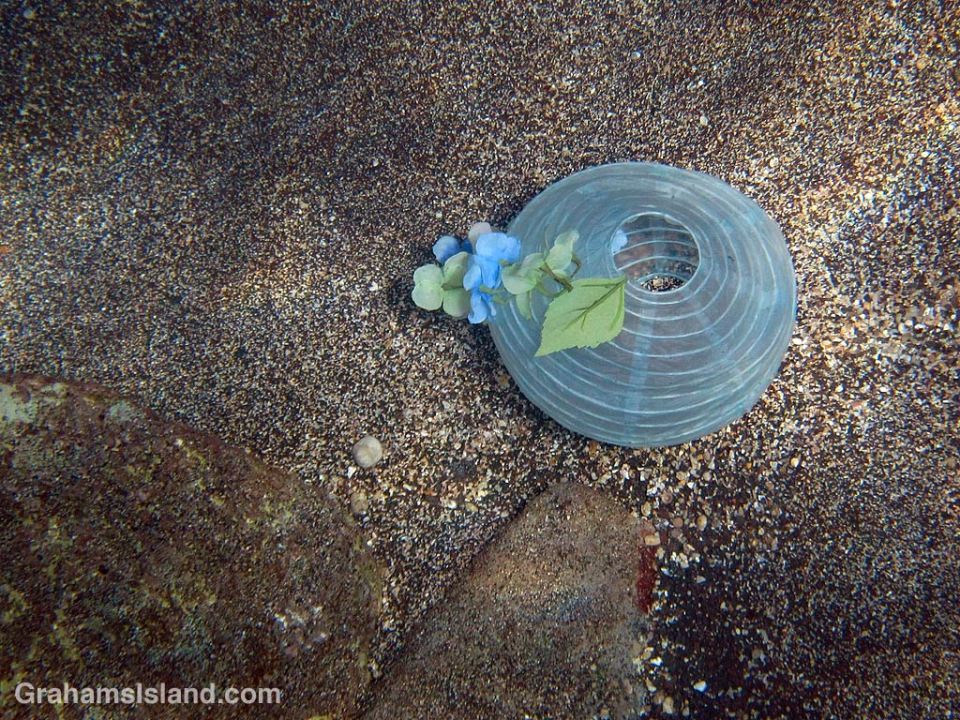
This photo makes it look like someone has placed this delicate shade on a beach. In fact, I found it in 10 feet of water in an area that is often buffeted by large swells, making it’s perfect appearance all the more unlikely. How or why the shade got there is unknown, but for me, that adds to the mystery of the scene.

 Whale season is underway again. The first Humpbacks were seen back in November, but it wasn’t until late December that I started to see them regularly, if not exactly often. Also, the whales that I did see were either not terribly active or too far away to get decent photos.
A couple of days ago, out on my regular walk along the coast, I thought I was out of luck again when I came across this mother and calf. I saw the mother make only one breach, but the calf breached multiple times as they cruised long the coast.
Above, the mother cruises alongside while her calf raises itself out of the water one more time. The other photos are of the calf breaching.
Humpback whales make the long journey from their feeding grounds in Alaska to breed and to calve in Hawaii. But researchers are concerned that the number of whales sighted in Hawaiian waters has declined between 50 and 80 percent over the last four years. A recent conference in Honolulu attributed that decline to warmer waters in Alaska affecting the whales’ food supply. However, it’s not clear exactly how widespread that disruption is, how it affects humpback behavior, and whether overall humpback numbers are affected. But it is clear, at least to this casual observer, that the numbers aren’t bouncing back this year.

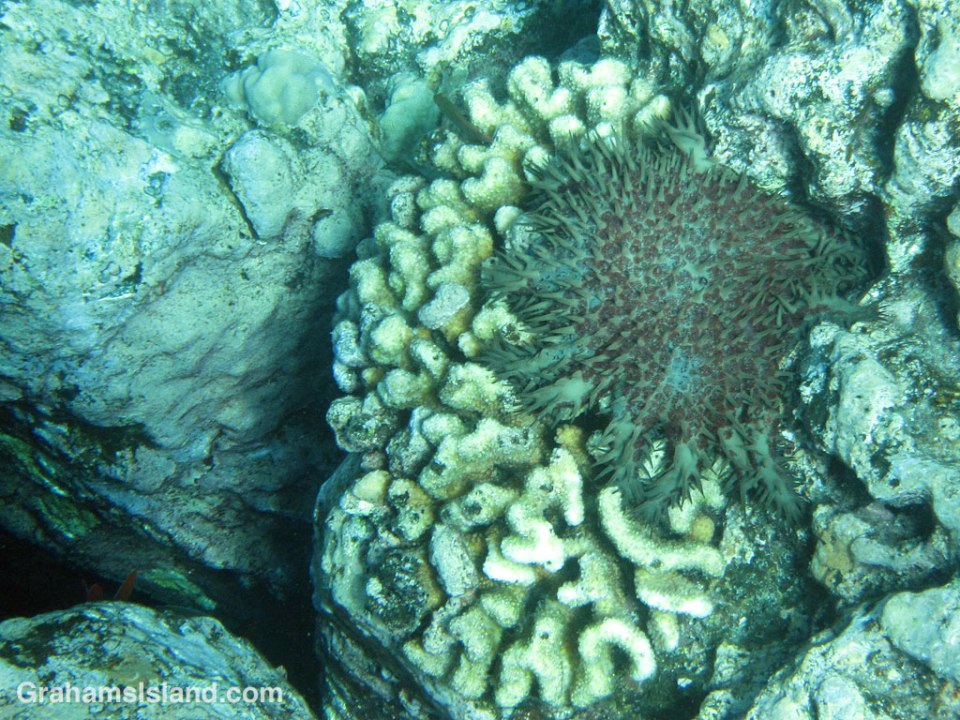
 Crown-of-thorns sea stars (Acanthaster planci) feed on coral and, because of this, are considered a menace to the health of coral reefs. Up to a foot-and-a-half across, they can have as many as 19 arms and are covered by venomous spines. If this all sounds like this creature is a nasty piece of work, the good news is that it has not caused extensive damage to the reefs here in Hawaii.
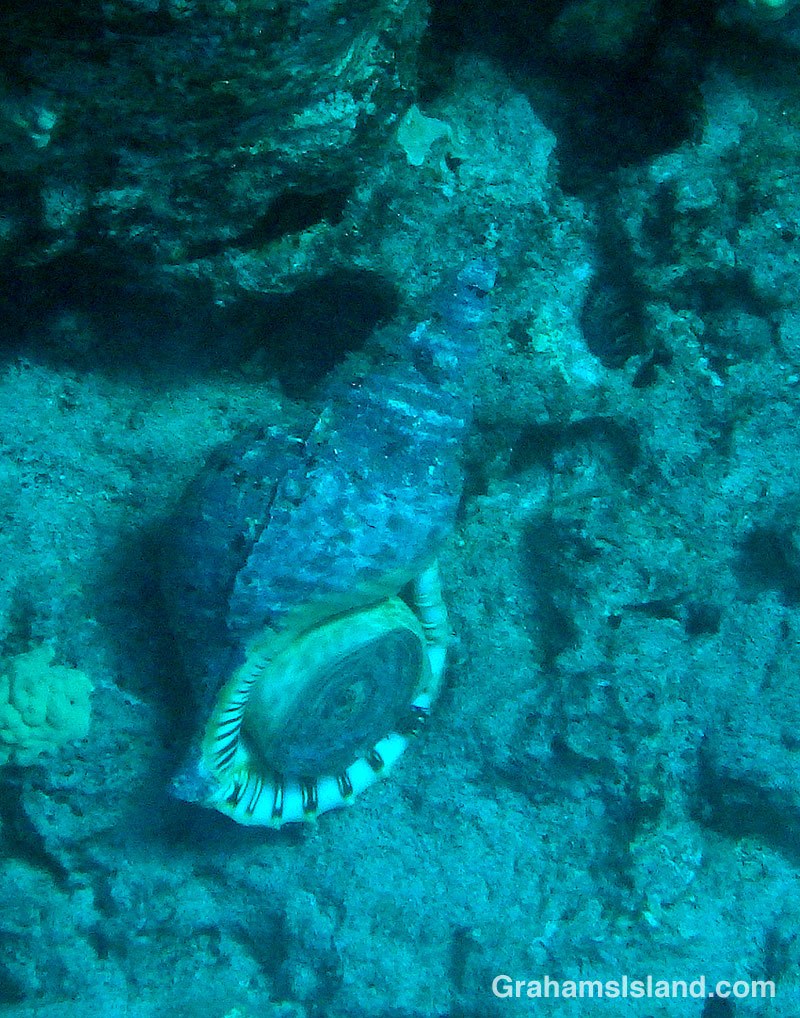
The crown-of-thorns does have predators, one of which is triton’s trumpet (Charonia tritonis). These large triton snails, up to 20 inches long, feed on echinoderms including crown-of-thorns sea stars. When they scent prey, they will take off after it and are considered speedy for a snail. When a triton’s trumpet catches its prey, it grips it with its foot and applies saliva that causes paralysis, which allows the snail to consume its meal without further drama.

On a recent swim, the water was churned up with lots of particles floating about and poor visibility. But I was taken with how the sun sent swirling shafts of light down toward deeper water.
 Graham's Island