Category Archives: In The Water

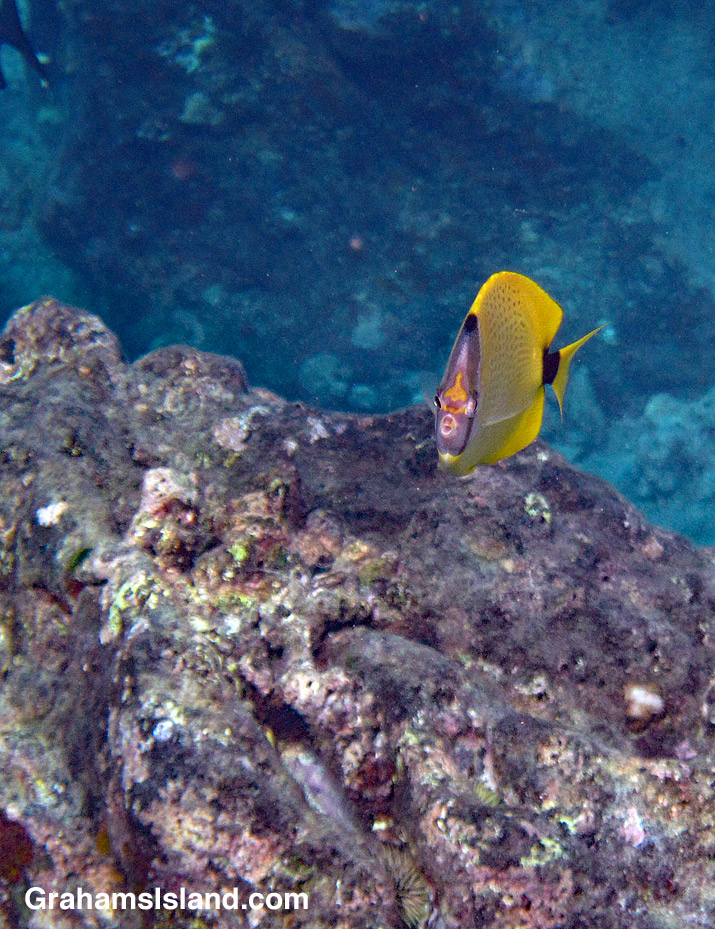
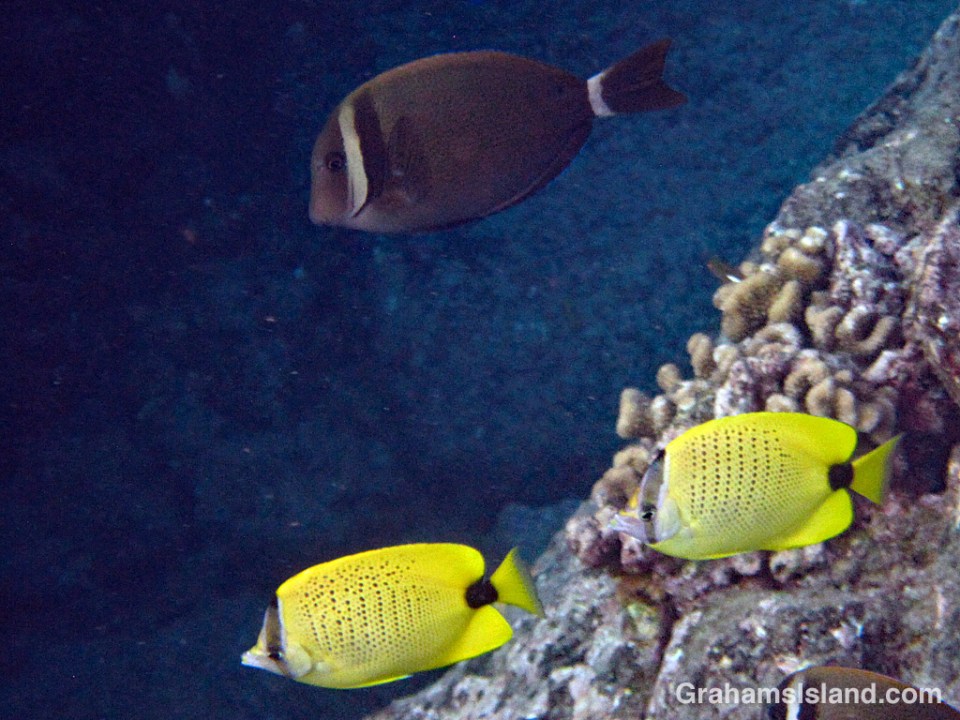
Milletseed butterflyfish

Milletseed butterflyfish and whitebar surgeonfish

Milletseed butterflyfishMilletseed butterflyfish get their name from their markings, a series of dark dots along their sides. Of course, the markings could be morse code and they could be trying to communicate something to us, if only we’d listen.

I was quite pleased to get a shot of this fish looking my way, for the fish’s expression and for how it shows how slender these fish are. When people approach, most fish, wisely, turn away.

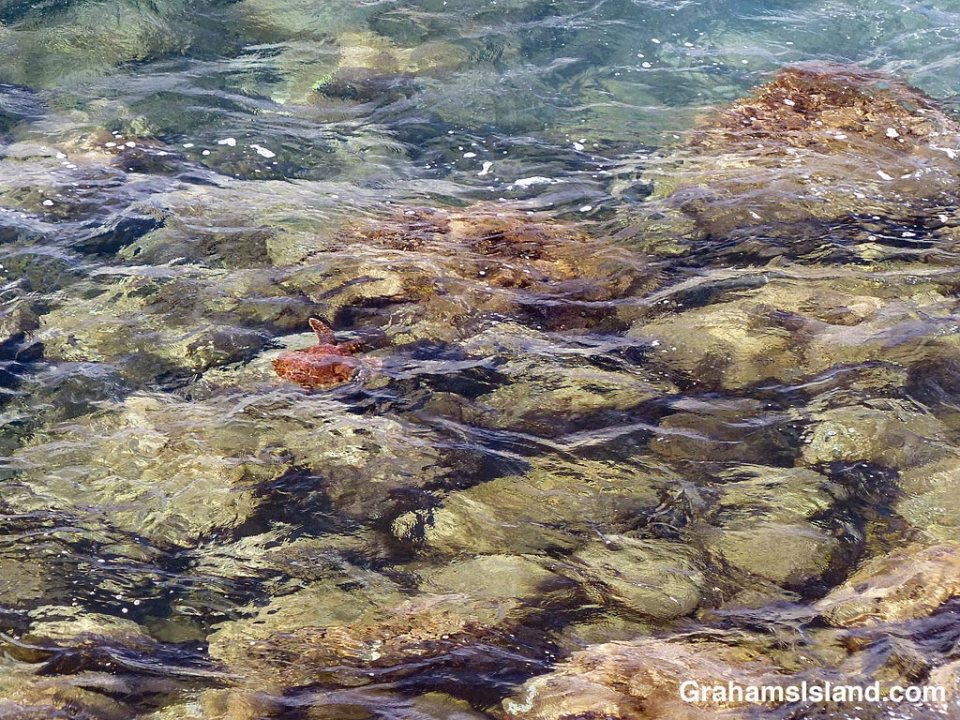
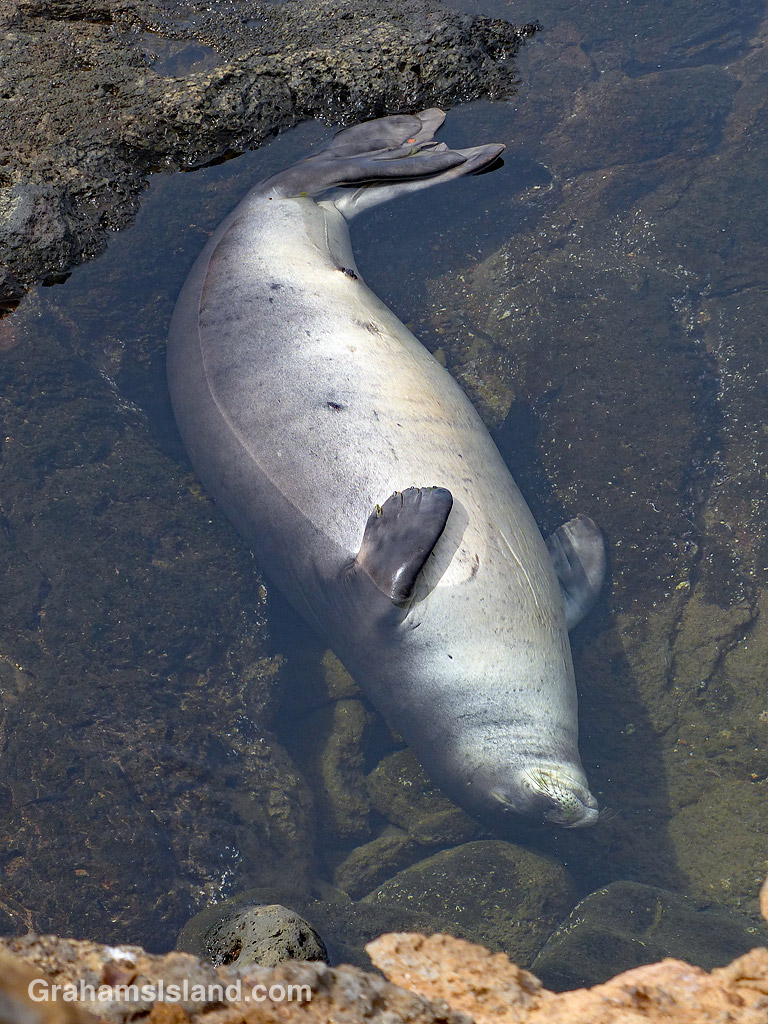
Monk seal resting in a tide pool

Monk seal resting with fish

Monk seal restingMonk seals are endangered and only a handful regularly live in the waters around the Big Island. The seal in these photos is one of these and I’m lucky enough to see him on a regular if not always frequent basis. When I do see him, it’s not unusual for him to be submerged in a tide pool as he was on this day.

Sometimes, when there’s been rain, the tide pool will be brown with runoff and all I see is this body with its head submerged. When I first saw this, I wondered if the seal had drowned, but since a monk seal can hold it’s breath for 20 minutes or more I know that’s not what’s going on.

What I like on this occasion, was the little fish (seen above) swimming around the seal’s head and through his whiskers. I like to think it was wondering what the heck this giant lump was that had suddenly taken up most of the space in its pool.

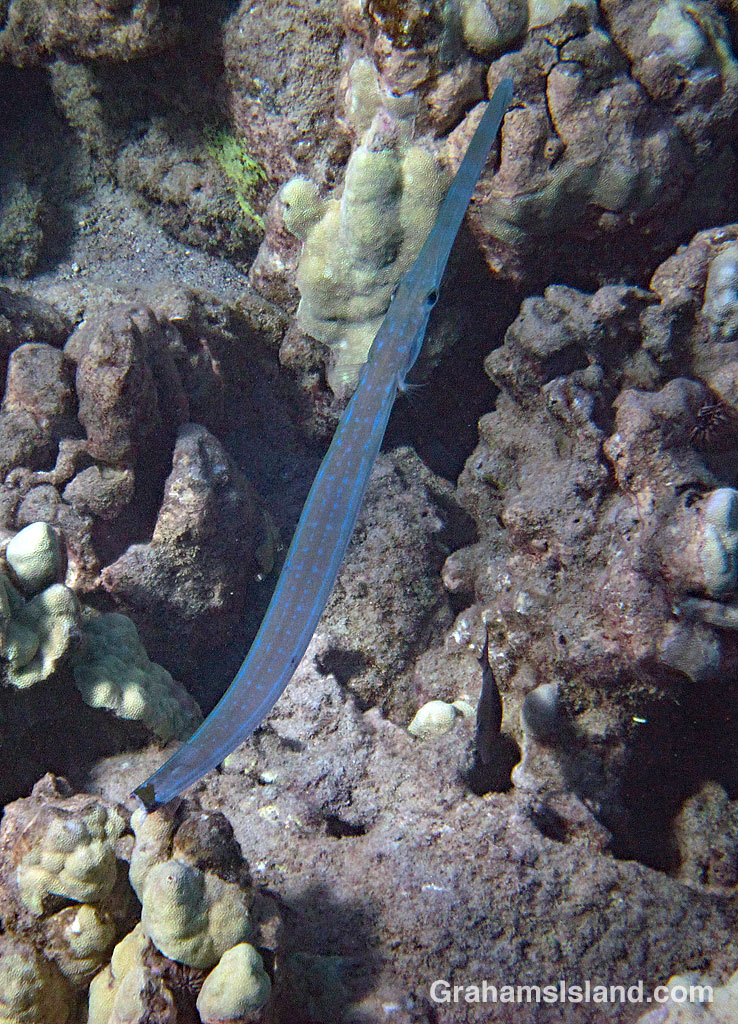
Wounded cornetfish

Wounded Cornetfish

A while ago, I posted a photo of an ember parrotfish missing a chunk from its back (here), but able to carry on quite normally.

In this photo, a bluespotted cornetfish has had its back end removed, likely by a larger predator. However, it too seemed to be getting around fine, though the tail fin is certainly one that cornetfish use a lot.

The other thing about this photo is that it nicely illustrates why this species is called the bluespotted cornetfish.


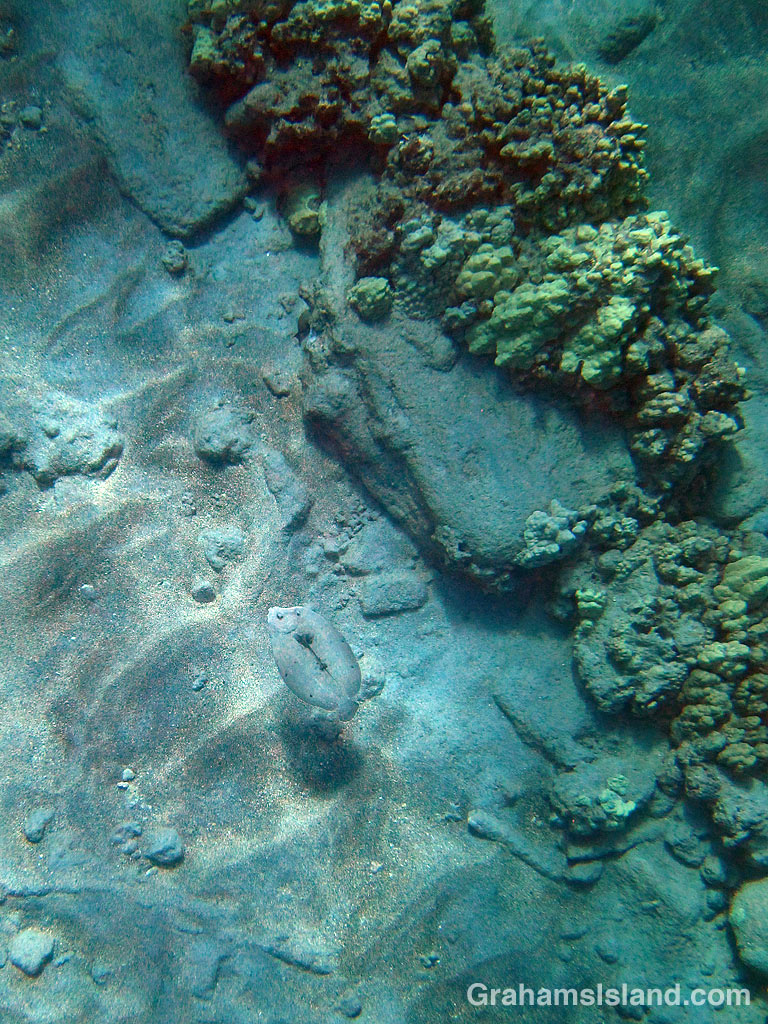
A flowery flounder on the move

Flowery Flounder

As you would expect, fish that rely on camouflage for protection are hard to spot when they’re at rest. The best bet to see them is to spot them on the move.

Sometimes I notice the final motion of one of these creatures before it settles in one spot and blends in. In this case, this flowery flounder was trucking along over a sandy bottom for quite some distance before it rested on the sand. Even in motion, and casting a shadow, it’s easy to see how hard it will be to spot this fish when it stops on the sand below.

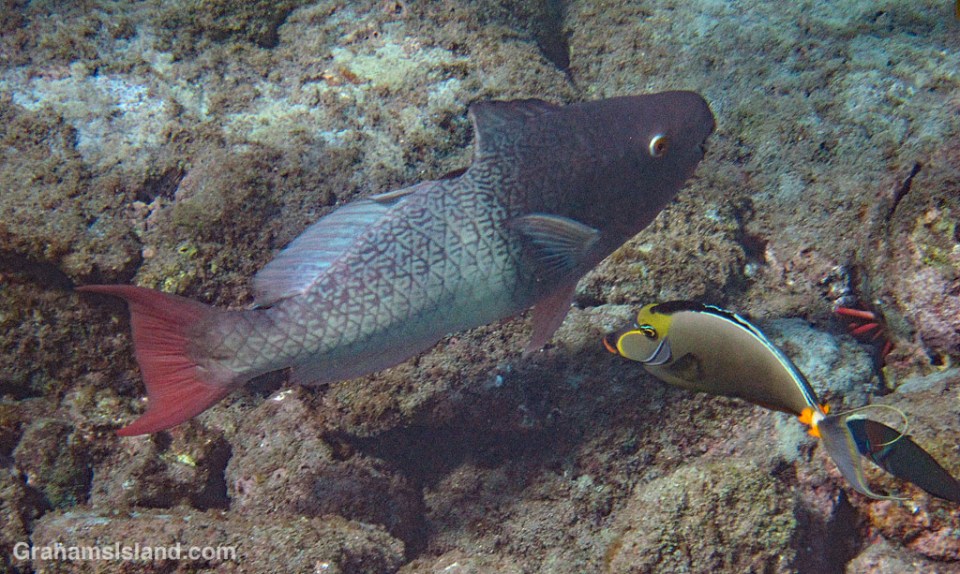
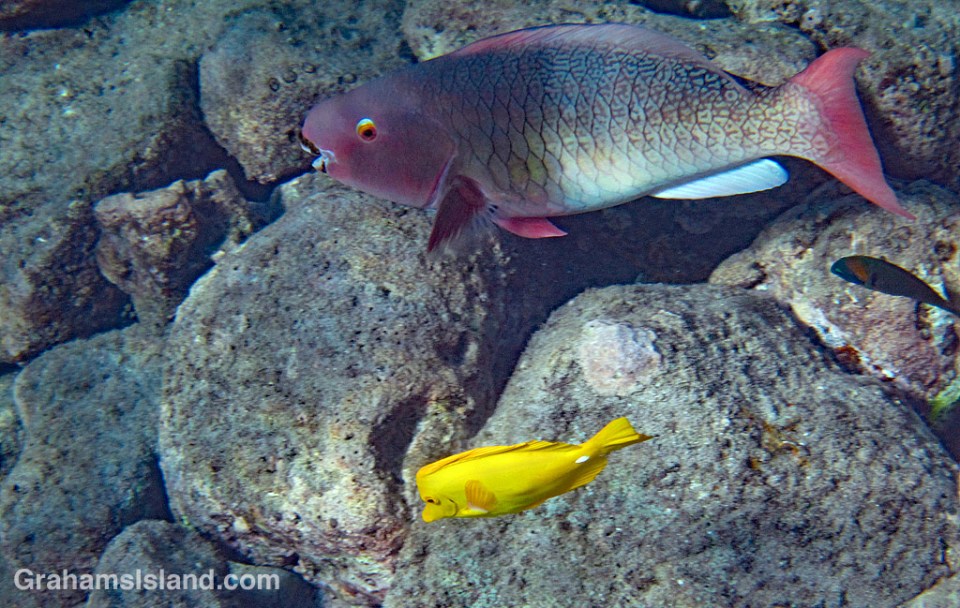
Ember parrotfish

Ember Parrotfish with bite wound

A couple of shots of ember parrotfish here.

The top one shows something of the peril of life in the ocean. This ember parrotfish is missing a chunk of its dorsal fin and back. I see it often when I go snorkeling and it doesn’t seem the least bit affected by its wound. It’s not unusual to see fish with a tail missing or a chunk removed from part of its body. If it heals, they seem quite able to carry on as normal.

In the photo below, this ember parrotfish has no wounds and is quite healthy. A couple of things of note about this fish. One is the dark algae ‘mustache.’ The other is that its eye looks exactly the same as the eyes of a teddy bear I had when I was a kid. Awww!

Ember Parrotfish