 Another response to the last edition of the WordPress photo challenge with a theme of ‘All time favorites.’
There’s no doubt that moving to Hawaii has allowed me to gain an appreciation for creatures that live underwater. Where I lived before, in Washington State, getting in the water involved a huge amount of courage, which was rewarded by hypothermia and death 15 minutes later. I still consider it something of a minor miracle that I can jump in the water here, swim around for an hour, and emerge alive!
Photographing those underwater creatures is always something of a challenge. My camera is, essentially, a little point-and-shoot and I have no special lighting. The water is often murky and it’s always moving, I’m moving, the fish are moving. So I’m happy when I get a decent shot.
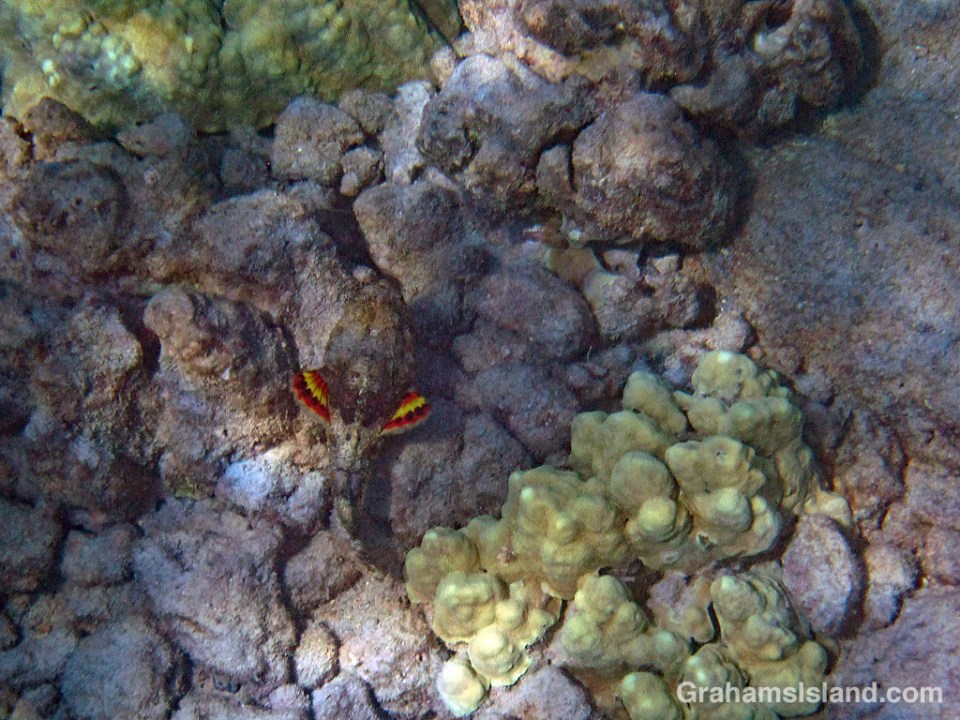
I spotted this devil scorpionfish when I was following a different fish and saw this unusual-looking ‘rock.’ It’s typical scorpionfish behavior. They have such good camouflage, that they can sit on the bottom in the open and not be noticed. After a few moments, the scorpionfish moved off and, as it did so, flashed the colorful undersides of its pectoral fins. This ‘flash’ serves as a warning to would-be predators that an encounter is not likely to end well for the attacker as the scorpionfish has venomous spines.
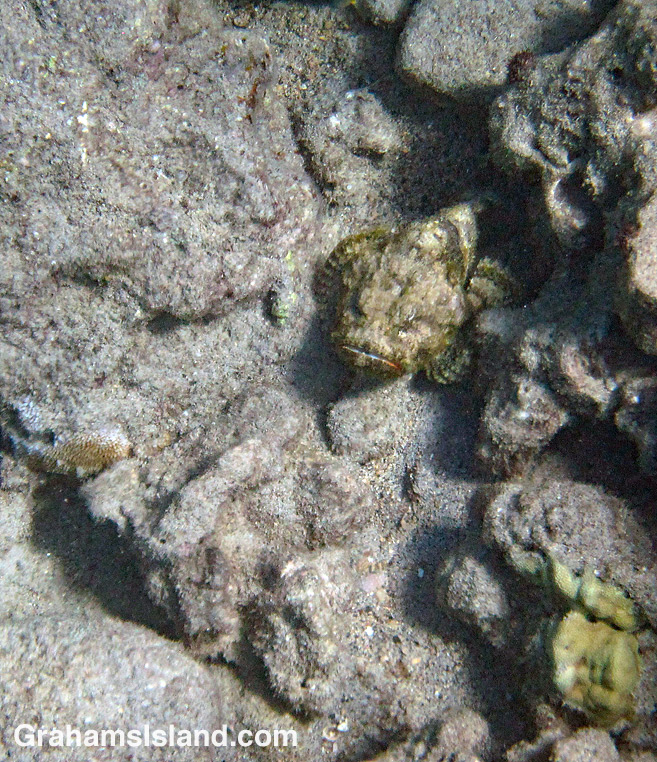
As for the other photo, I have it on good authority that his mother loves him.



 I was swimming one day when I realized I was being watched. Peeking up from a crevasse in the reef, was this giant porcupinefish. These fish do seem to be quite curious and this is a look I’ve seen before. The difference here was that the water was quite shallow, so the fish was not as deep as they usually are. If I got too close, the fish would dip deeper into the crevasse. If I moved away, it would pop up again.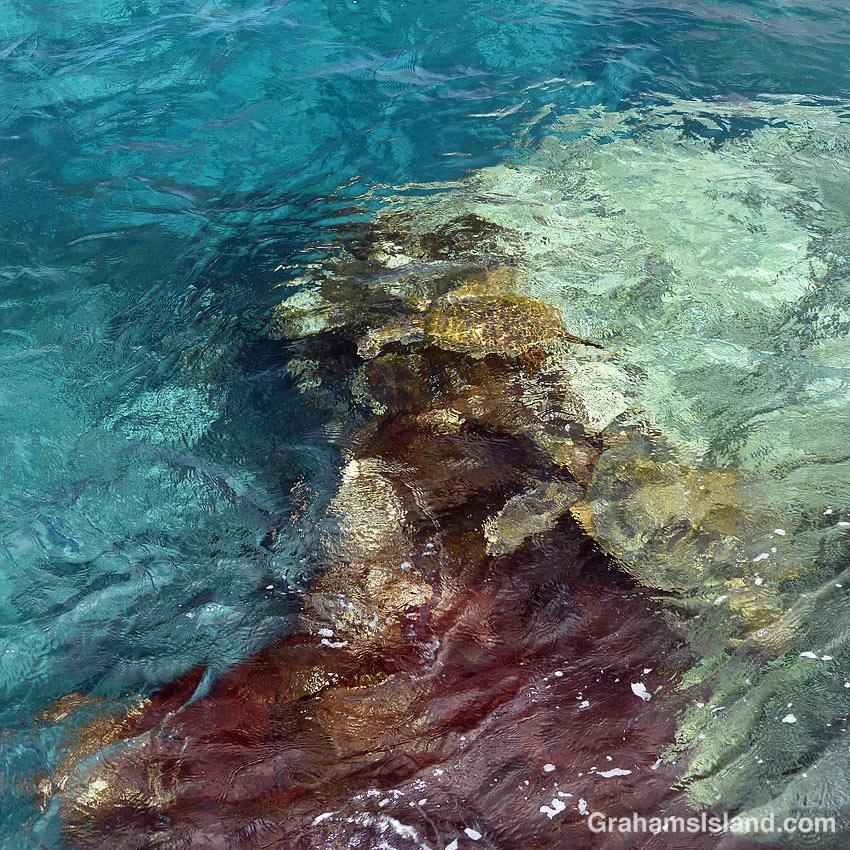
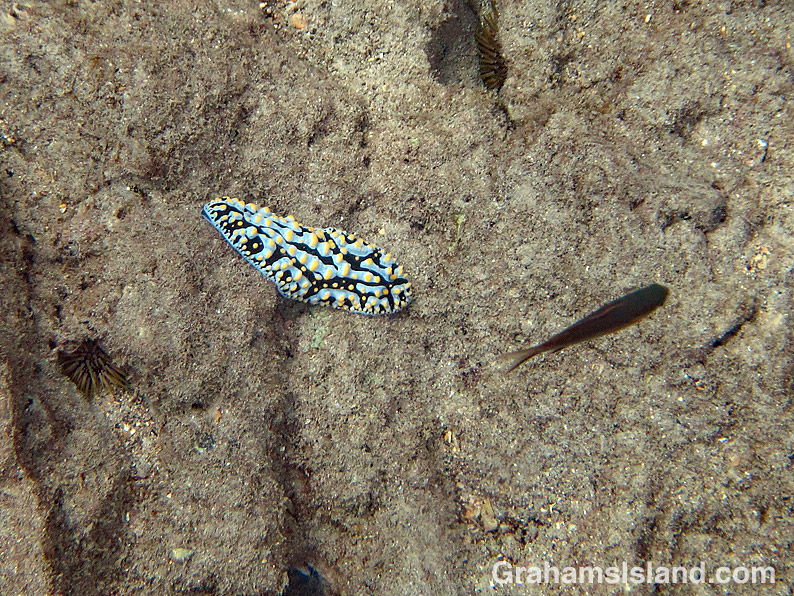
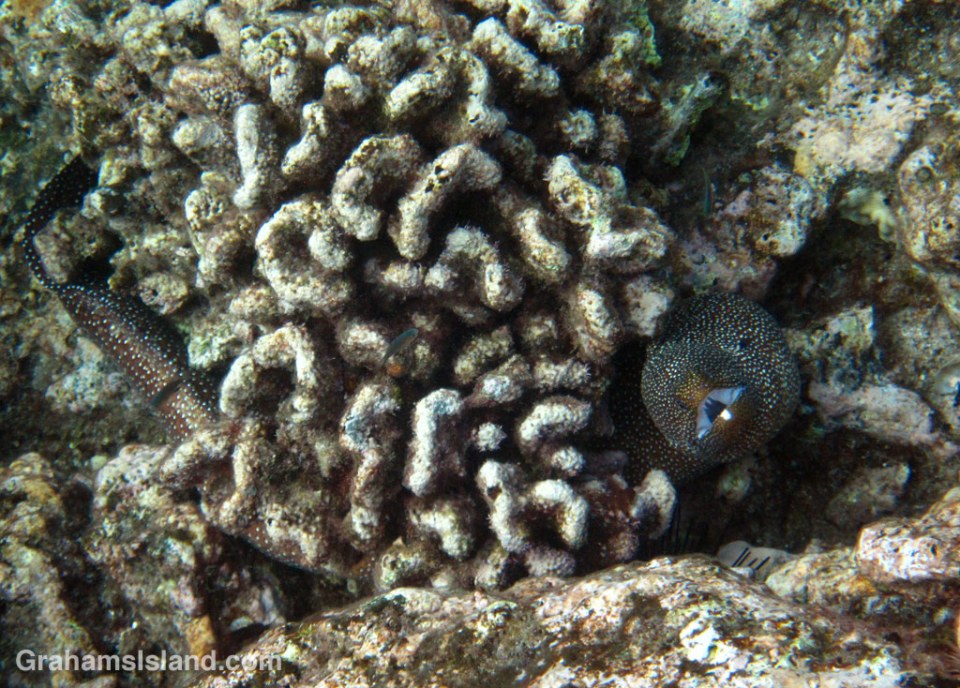
 I’m always amazed and entertained by the ability of eels to disappear into a seemingly solid lump of coral or rock and then, a few moments later, emerge from some unexpected location. I mean, how do they know they’re going to find a way out? There must not be too many claustrophobic eels in the world.
 Graham's Island