Category Archives: In The Water

Another shark

Whitetip reef shark

A couple of weeks ago I ran a post about my first shark encounter for about two years. Then, like buses, another one came along within three weeks.

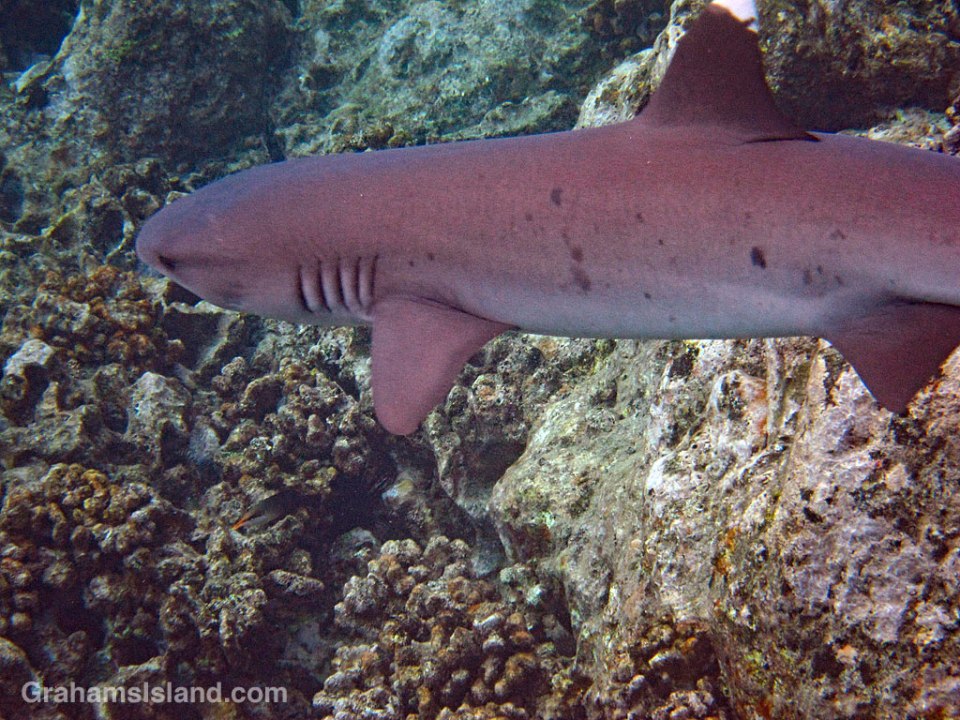
The latest was another whitetip reef shark, which are the sharks most commonly seen around here. I was swimming in shallow water, when the shark popped into view over the edge of a drop off to deeper water. It was quite close and moving fairly quickly, so I snapped this photo as it zipped by, before disappearing on the other side of me.

The photo isn’t the greatest, but I post it for two reasons. The first is that it shows the black spots on the side of the shark. These are a way of identifying individuals because the spot patterns are unique to each whitetip reef shark.

The second reason is that I usually have my camera zoomed in (it’s not a high-powered zoom) so that I’m more likely to get a quick shot of a small fish before it disappears. This photo is zoomed in, but when I first saw the shark, my immediate thought was, ‘I’m going to have to zoom out for this.’ In the photo, the shark is probably around 10 feet away. Compared to the shark in my previous post, the details of this one, such as the gills, are much more pronounced though this shark was smaller, probably about 3-feet long.

Whitetip reef sharks are not considered much of a threat to humans, though they are curious and, as this one did, will come close to take a look. When people do get bitten by whitetips, it’s usually spear fishers towing their haul, or someone provoking the shark, possibly entrants in the worldwide ‘My Dumb Selfie’ competition that so many people seem so keen to enter.
Cauliflower coral not spawning

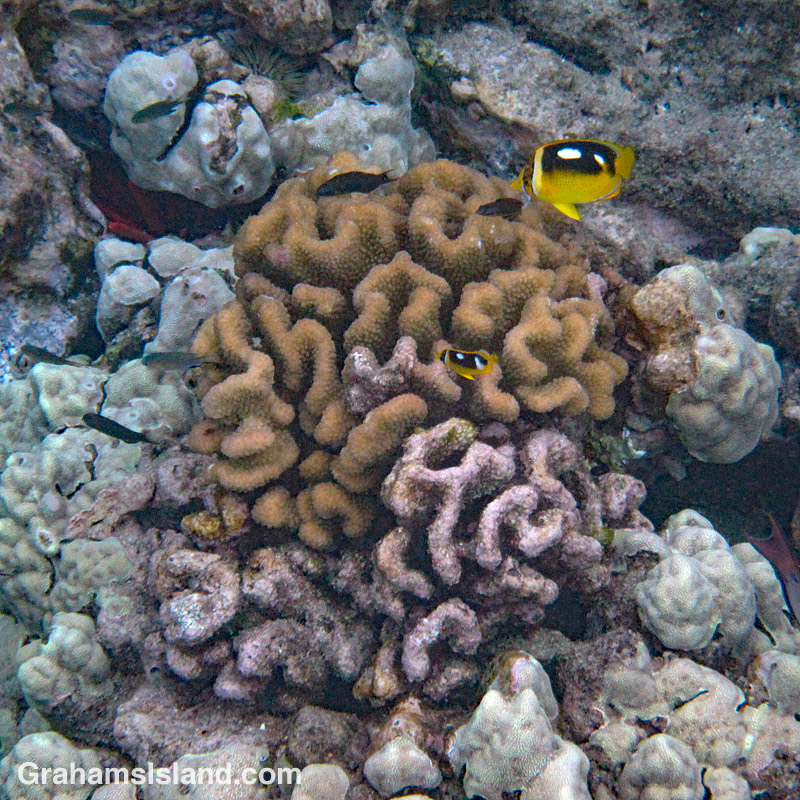
Cauliflower coral and arc-eye hawkfish

Cauliflower coral

Cauliflower coral was once a mainstay of reefs along the west coast of the Big Island, but has been in decline for a while. Then, in late 2015, high water temperatures caused a huge coral bleaching event, which resulted in a die-off of more than 90% of the area’s cauliflower coral. In some places, nothing was left. Because of this, the reproduction of surviving corals has become of increased importance.

Different corals have different methods of reproduction. Cauliflower coral reproduces in a synchronized spawning event. During this event, the corals release gametes (eggs and sperm) into the water, creating a milky cloud. For many corals, the spawning event takes place at night, but research indicates that cauliflower corals spawn shortly after sunrise, two or three days after the May full moon. At least, that’s what I was told.

Consequently, twice last week, I got up at an early hour in order to be in the water before 7 a.m. in the hope of witnessing a cauliflower coral spawning. Yes, that’s the kind of life-on-the-edge that I lead.

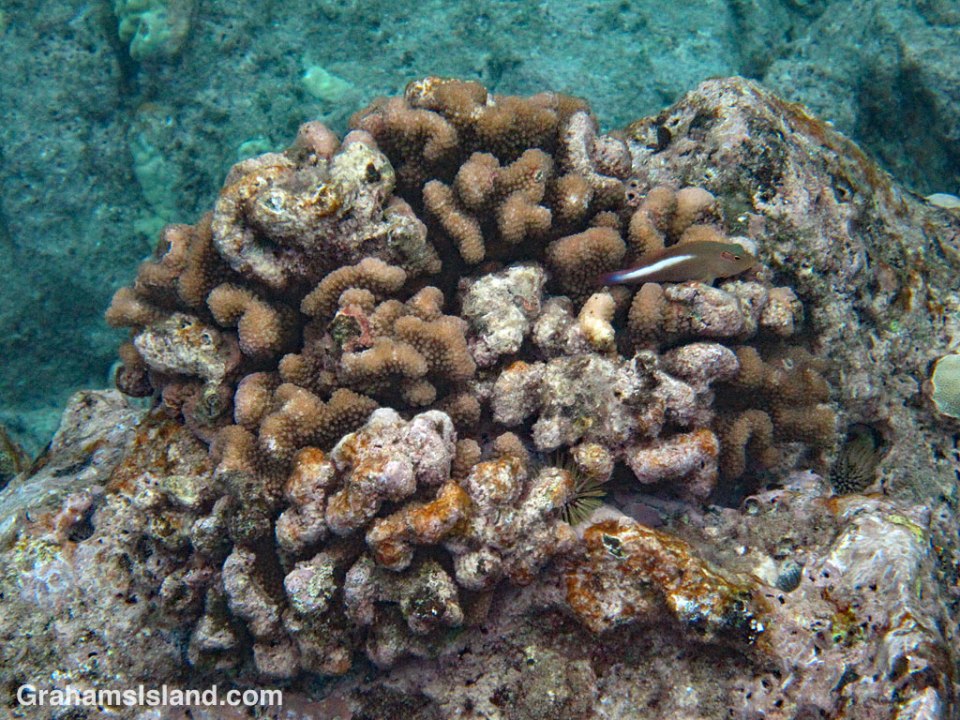
The first priority was to find some live cauliflower coral, easier said than done. There were a few patches in deeper water, but since visibility was not great, it would be almost impossible to tell if and when they spawned. After some finning around, I found a shallow spot with three small clumps and decided to pin my hopes on them. The live coral was part of a larger mass, part of which had died, as can be seen in the photos. Also to be seen in the photos are an arc-eye hawkfish (above), and two four-spot butterflyfish (second photo) among others. Corals are very important to fish stocks because many small fish, and the young of bigger fish, use the coral for protection, a place to hide when threatened.

What’s not to be seen in the photos is any evidence of spawning, because I didn’t see any. It was unlikely that I would. Conditions might not have been right for the coral or my timing could have been off. The May full moon is actually on the 29th so it might be that the spawning will be at the end of the month, not the beginning. I’ll try again then.

Posted in response to this week’s WordPress Photo Challenge ‘Unlikely.’

Better Days: Dead blenny

Better Days-Dead Blenny

Exploring tide pools one day, I found this unfortunate floating blenny. It was quite large, for a blenny, and in a small pool. The weather had been calm for a few days, without much ocean swell. I think the fish was trapped in the pool and, without fresh seawater reaching it, the pool had become stale and oxygen starved.

The macabre essence of the scene contrasted with its painterly quality, enhanced by the blenny’s coloration and the delicate creamy shells in the pool.

Updated 6-20-18

I’ve since learned that the ‘delicate creamy shells’ in the pool are actually a type of seaweed, Padina japonica. I’m also not sure about my oxygen starvation theory either since blennies are notoriously adept as jumping from pool to pool. Two things are unchanged however: the blenny is still dead and I still like the painterly quality.

Green turtle swimming

Green Turtle swimming

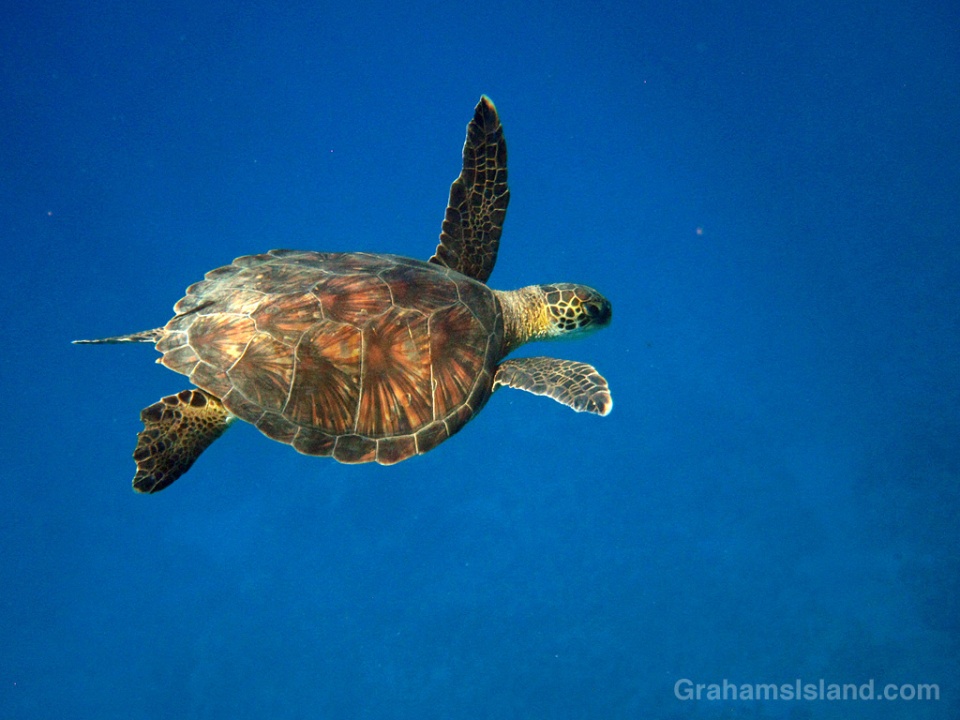
Following up on my recent shark encounter, a more serene sighting in the same general area, but on a different day.

I saw this green turtle gliding toward me and catching the light in a lovely way. Clumsy on land, turtles are a different animal in the water — graceful, effortless, and at ease in their environment.

Whitetip reef shark encounter

Whitetip reef shark

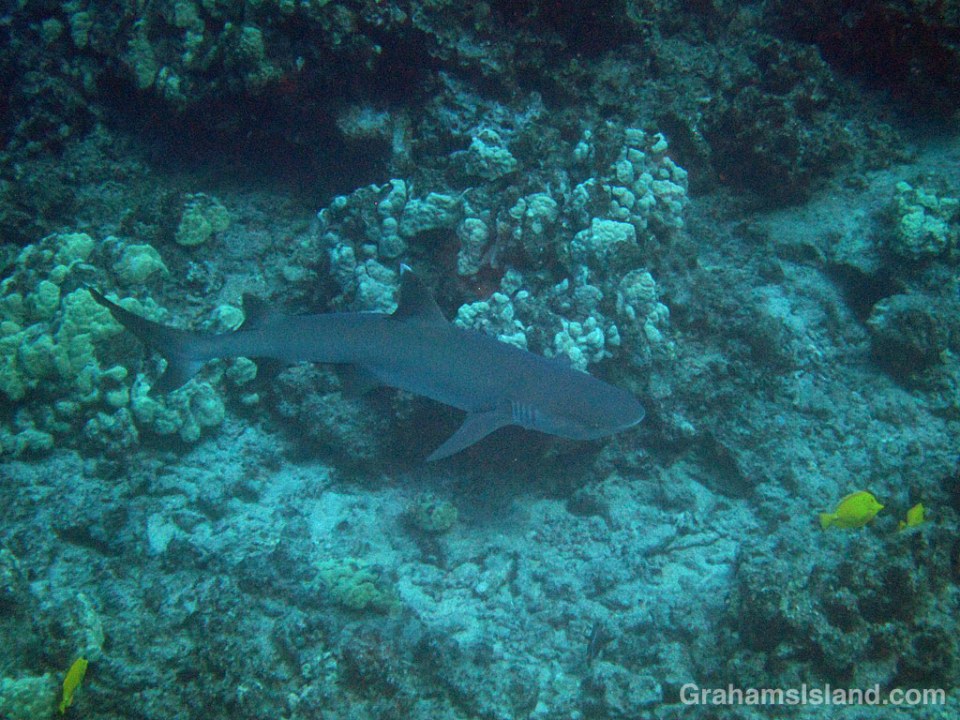
I went for a snorkel a few days ago and saw a shark for the first time in a long while. Well, I did see one a couple of months ago at Two Step, but it was tucked into a small cave, having a nap. The recent one definitely wasn’t at rest.

I was fairly far out, near where rock and coral gives way to sand, and happened to be looking out towards the sand when the distinctive shape of a shark came zipping into view. It was headed my way at speed, which was an invigorating moment, I can tell you. However, I did have the presence of mind to snap a few photos, of which this is the best. Considering the state of the water and the shark gliding across the bottom, I was pleased with how well this turned out. I think it shows the infamous lines of the shark and something of its powerful, sinuous motion and I was glad to capture the eye and lines of the gills.

I suspect it had detected my presence and was checking me out. When it saw what I was, it decided I wasn’t too interesting, cruised by, and then disappeared in the opposite direction. I headed back in, taking frequent glances behind me to make sure the shark hadn’t changed its mind.

A couple of weeks ago, a couple of paddle-boarders were attacked by a tiger shark near Hualali Resort. Tigers sharks are responsible for almost all the shark attacks that happen around Hawaii. The shark I saw was a whitetip reef shark (notice the white tip on the dorsal fin – many have white edging on other fins, too), which is capable of mischief, but mostly doesn’t. This one was around 5 feet long, maybe a bit more. For scale, the yellow tang at bottom right of the photo is probably between 6 and 8 inches long.

Posted in response to this week’s WordPress Photo Challenge ‘Lines.’

Yellow tang shoal

Yellow tang feeding

Yellow tang shoal feedingYellow tang are one of the most noticeable fish on the reef, in part because of their bright color, and in part because of their prolific numbers. These fish are also very popular in the aquarium trade, but because they can’t be bred in captivity, all aquarium yellow tang are collected from the wild.

Aquarium fish collection is regulated by Hawaii’s Department of Land and Resources, but conservationists have taken the department to court claiming it doesn’t follow Hawaii’s environmental laws. The DNLR restricts areas where fish can be collected and issues permits allowing the capture of 2,000 fish per permit. However there’s no restriction on how many permits can be issued, or where the permit will be used or what fish are intended to be taken.

Last week, a court voided all the permits and basically told DNLR to start over with its rules for fish collection. Expect this case to run and run.

Posted in response to this week’s WordPress Photo Challenge ‘Prolific.’

Yellow tang shoal

Heller’s barracuda

Heller's Barracuda

I saw this group of fish one day when water conditions weren’t very good, so I was happy to get a photo as decent as this. What caught my attention were the blue stripes, pointed front with underslung jaw, and forked tail.

It was a bit tricky to identify as most photos I found, including my fish book, John P. Hoover’s The Ultimate Guide to Hawaiian Reef Fishes, Sea Turtles, Dolphins, Whales, and Seals, show only shoals of Heller’s barracudas.

Heller’s barracudas are related to great barracudas but aren’t dangerous. They hunt by night and move inshore to rest in groups like this one by day.

Abstracts: A’ama crabs and sea spray

Abstracts-A'ama crabs and sea spray

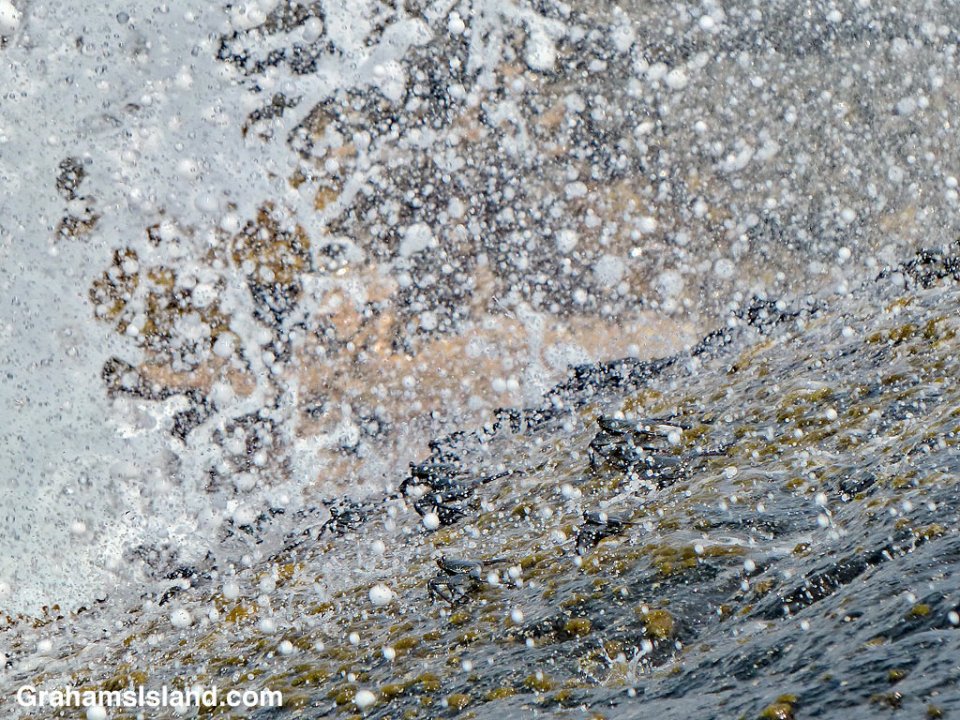
One of the first things anyone visiting a rocky seashore here will see is lots of little black shapes skittering away. Those shapes are a’ama crabs.

On this day, I had, as usual, spooked the crabs into motion, but after putting a little distance between me and them, they settled down again. Where they settled was on this sloping rock next to a blowhole. Moments later, water shot out of the blowhole creating this scene.

Where I would have been squealing and running from the sudden deluge, the a’ama crabs remained. I guess, living on these rocky shores, they are well used to this sort of thing.