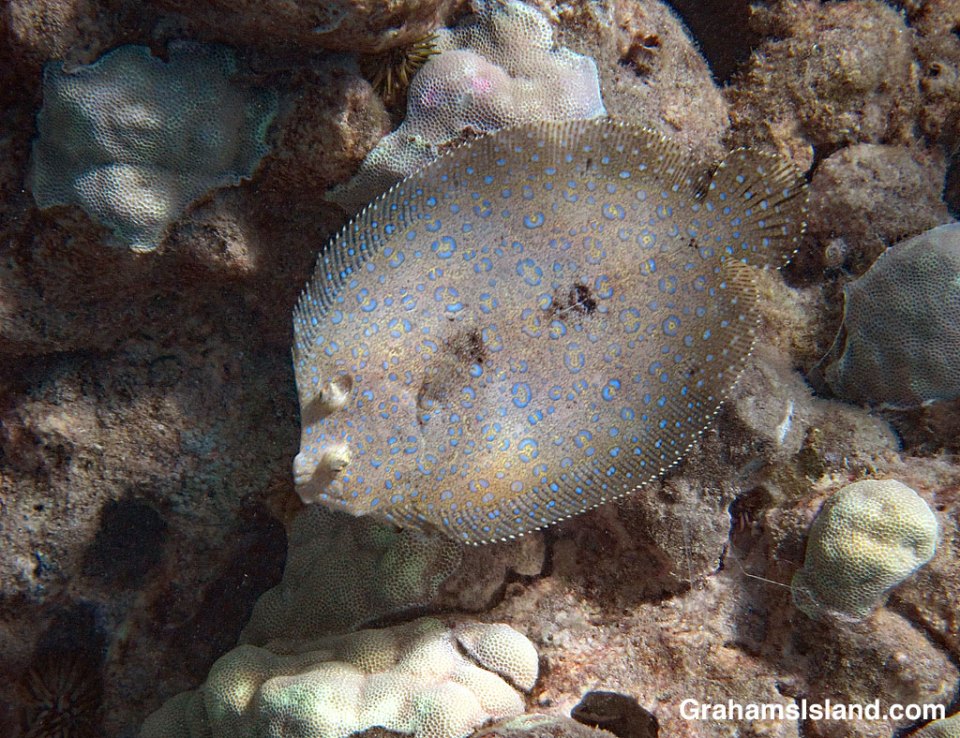
A small flowery flounder passes over what I think are patches of lobe coral. Those two bumps casting shadows on the top of the fish are the flounder’s eyes, which sit on the end of small stalks. As you can see in the photo, the two eyes are pointing in different directions. This isn’t a case of wandering eyes; they work independently.
However, flounders, like other flatfish, do indeed have the most remarkable wandering eyes. Flatfish start out looking like regular fish, with one eye on each side of the head. As they transition from the larval to juvenile stage, one of the eyes migrates over the head to join the other one on what ends up being the top side of the fish.
The eyes migrate to different places, depending on the kind of flatfish. Some are left-eyed and some right-eyed, which refers to the eyes’ relationship to the mouth. Flowery flounders are left-eyed flatfish, the eyes being to the left of the mouth when seen from head on.
There are pros and cons to photographing flounders and other fish that rely on camouflage for protection. On the plus side, once they settle, they tend not to move so it makes it easier to get a photo. On the downside, because they blend in so well, it’s not easy to get a photo where the fish is clear. The best hope is to see one on the move, as I did with this one, not only to get a photo, but also to enjoy their elegant motion as they ripple through the water.


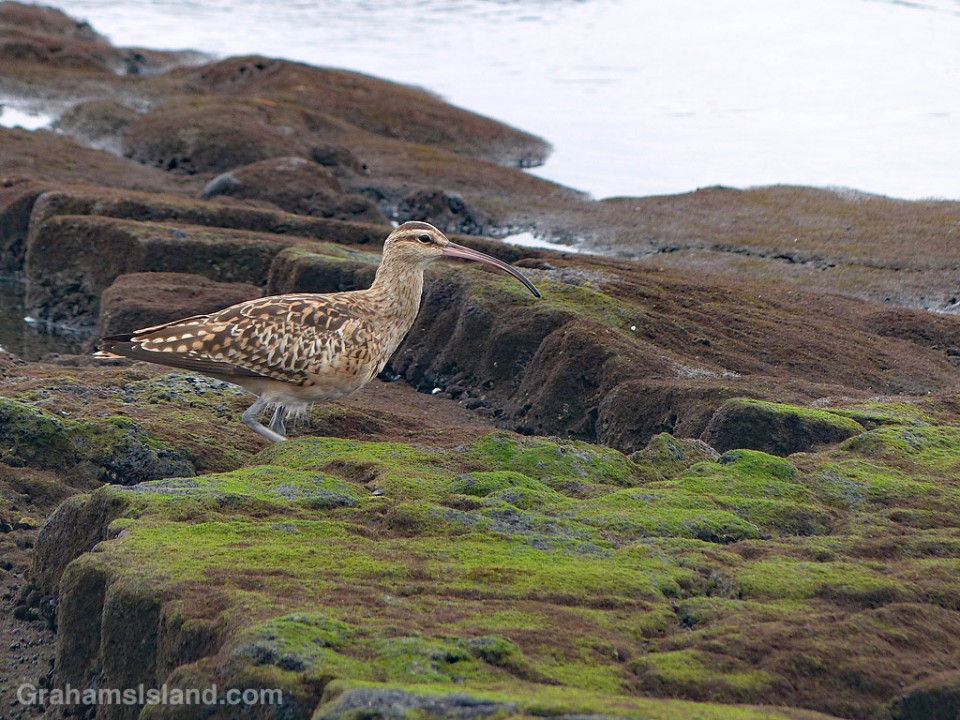
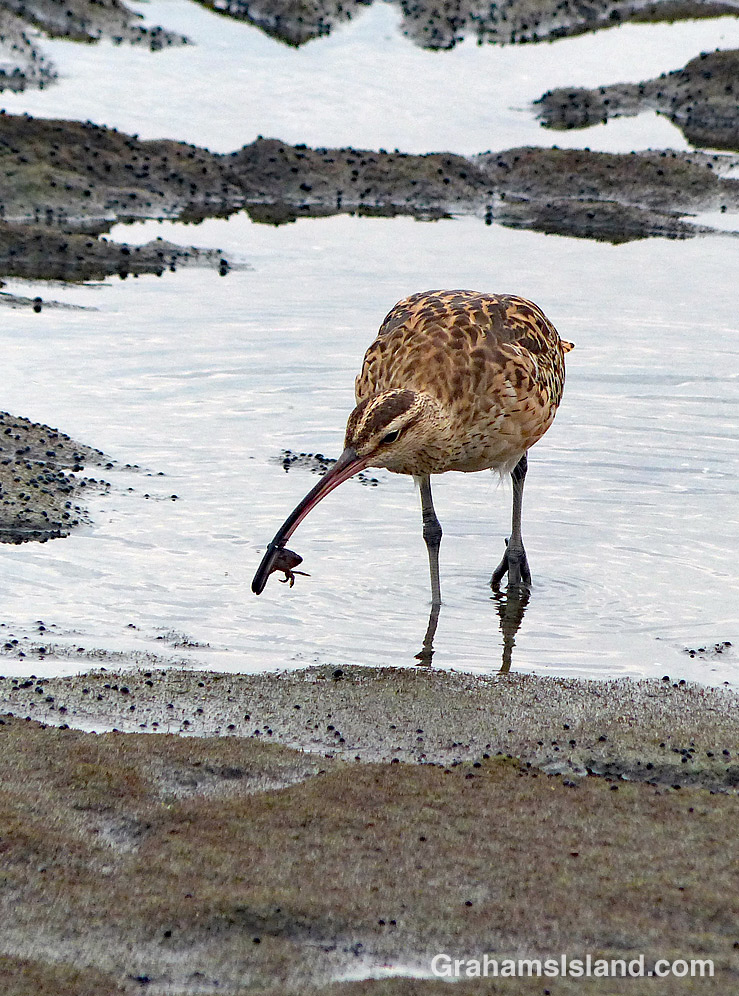 A bristle-thighed curlew making its way along the shoreline at Kiholo while searching for food. The middle photo shows it with a small crab that it plucked from one of the tide pools.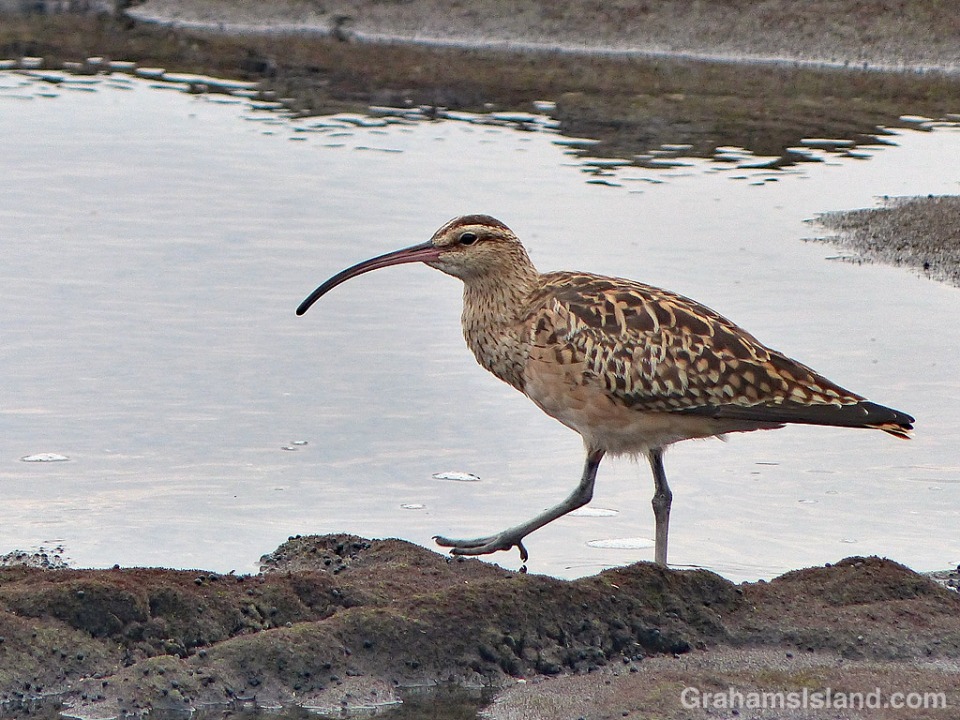

 These are older photos, but still interesting to me. I spotted this monk seal one day, not too far from a second seal that is a regular around the Big Island.
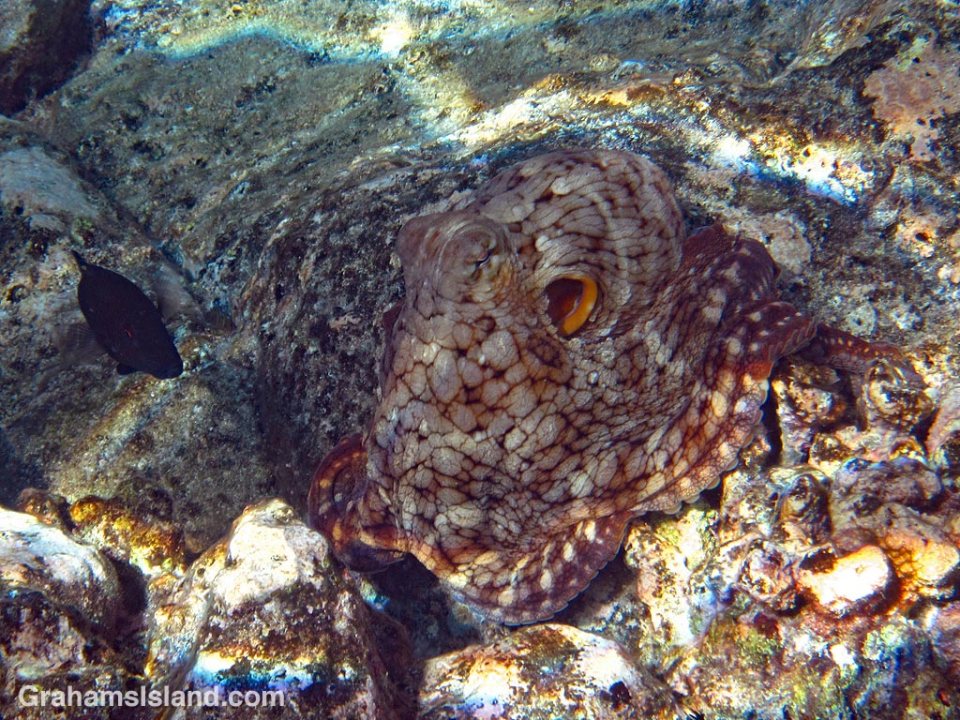
 The trick to spotting an octopus is to see it in motion. I’ve seen one or two when they’ve been stationary, but only by accident, watching something else and realizing that there was something slightly odd about that ‘rock’ next to it.