

It’s always fun to see fish active just below the surface of the water. Needlefish live in this area, but schools of sergeants also gather there to feed. The fish with the darker stripes and yellow patch on the upper back is the Indo-Pacific Sergeant. It’s a relatively new to Hawaii having arrived around 1990. The fish with less distinct stripes is the Hawaiian Sergeant, an endemic species. Apparently, the two species have been interbreeding, producing a fish with the coloration of the Hawaiian Sergeant, but with the more pronounced stripes of the Indo-Pacific Sergeant.
Category Archives: In The Water
Saddleback butterflyfish
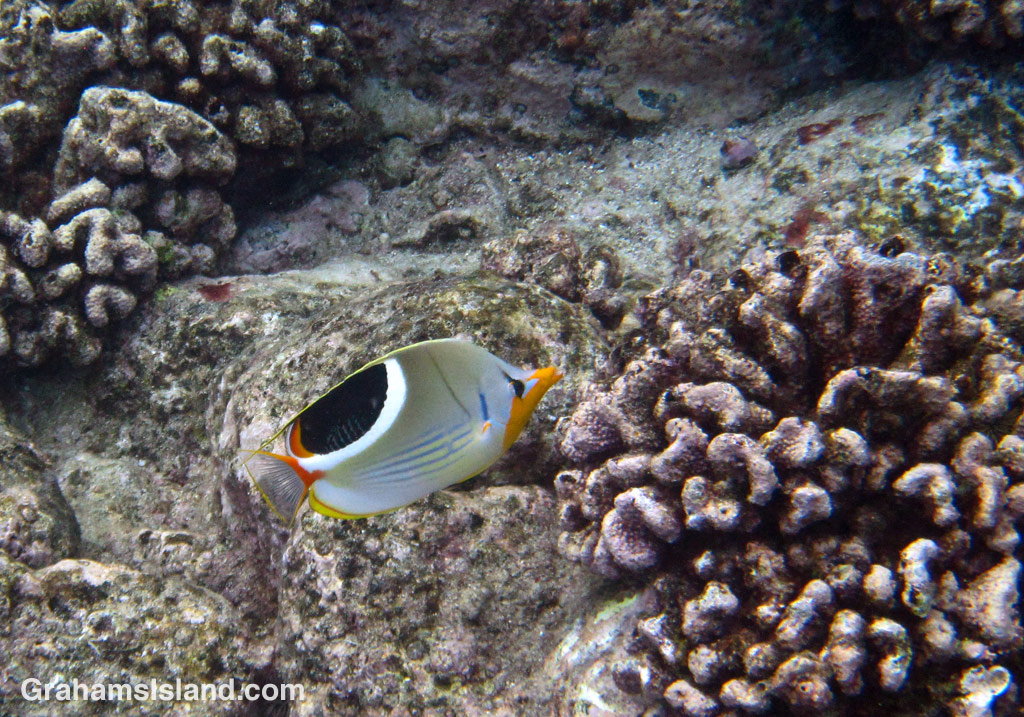
A saddleback butterflyfish cruises through coral heads. These colorful fish aren’t seen as often as many other kinds of butterflyfish so it’s always a treat to see one or, often, a pair of these striking fish.
Mongoose and dead turtle

I pondered about posting this photo. I’d emailed a contact at a marine animal facility with the news that I’d found a dead turtle with a broken shell washed up among some rocks. I asked if anyone would be interested in that information, thinking some marine biologist might want to check the remains to determine the cause of death, that sort of thing.
He asked me to send a photo, which I did. Then I got a response in which he said not to send more. He’d been expecting a ‘happy turtle photo.’ I suspect he’d missed the bit about it being dead with its shell broken in two.
This is a less graphic photo taken a day later, by which time mongooses had discovered the remains. My appearance distracted them, but not enough for them to flee. The mongoose is the poster animal for catastrophic invasive species, but in this case, it’s performing something of a service in cleaning up the remains. Probably other creatures, such as crabs, also gathered for the feast.
I don’t know what happened to the turtle. Possibly it was attacked by a tiger shark or it could have died for some other reason. I doubt the ocean caught it by surprise and swept it to its death. Turtles are very good swimmers.
Mele Kalikimaka

This group of young humuhumu-nukunuku-ā-pua-a are almost certainly wishing everyone Mele Kalikimaka as they circle their coral tree.
Zebra moray eel
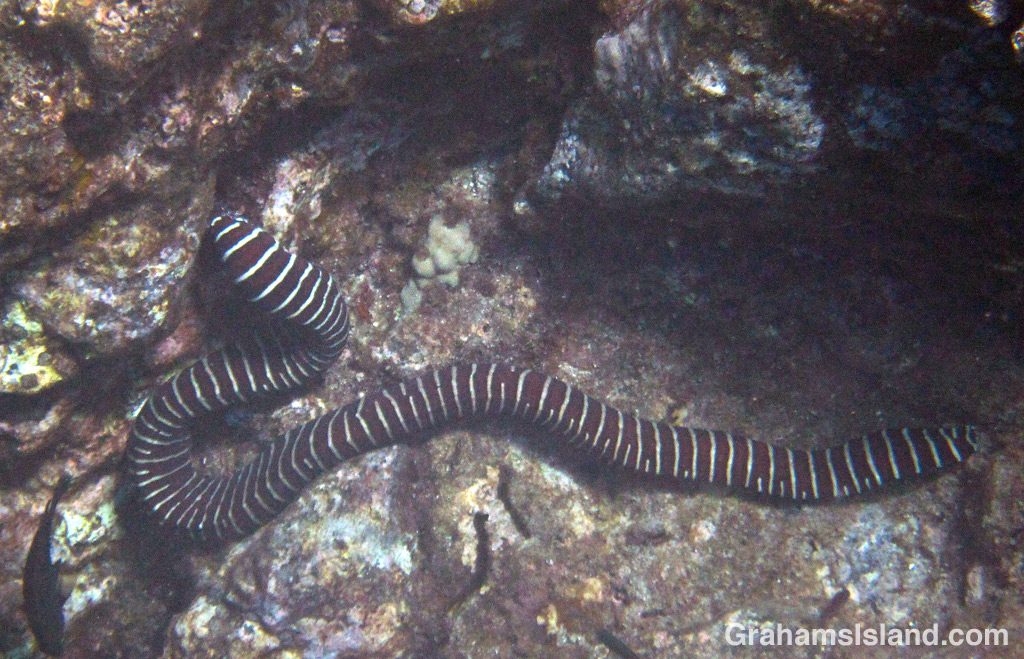
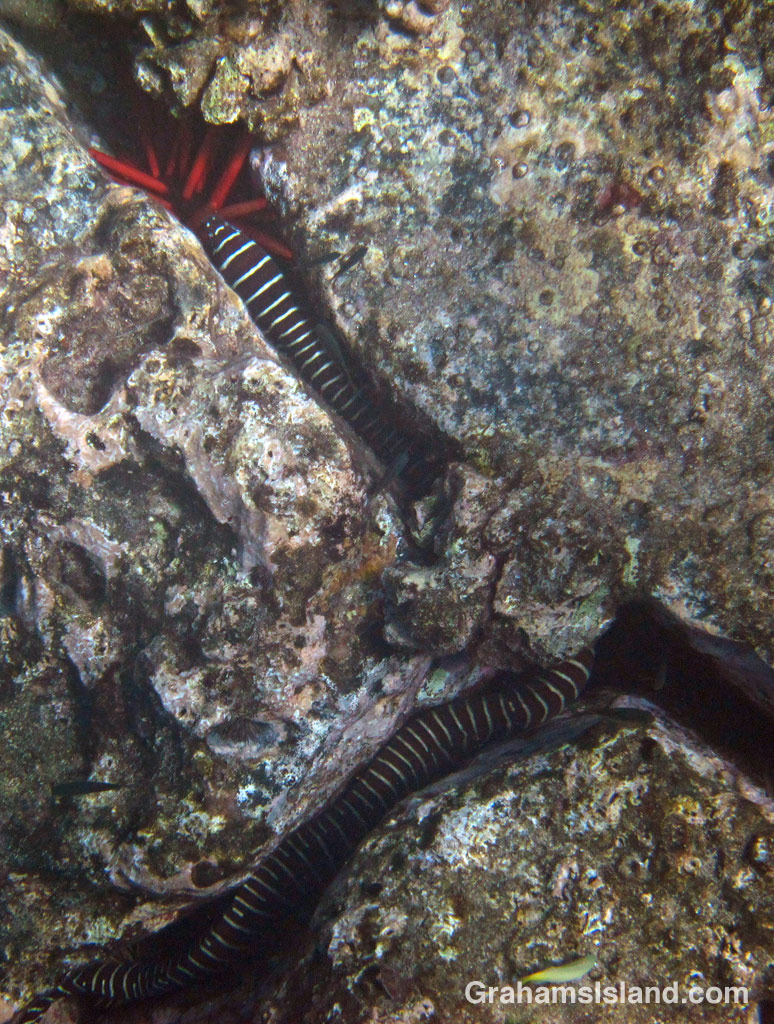
The distinctive markings of a zebra moray eel make it easy to spot when it’s out in the open, but they’re not as common as whitemouth morays. This one was in a relatively shallow area, working through cracks in the rock and coral.
Abstracts: Moorish idols

A pair of moorish idols swim in shallow water at Kaloko-Honokohau National Historical Park.
Hawaiian zebra blenny
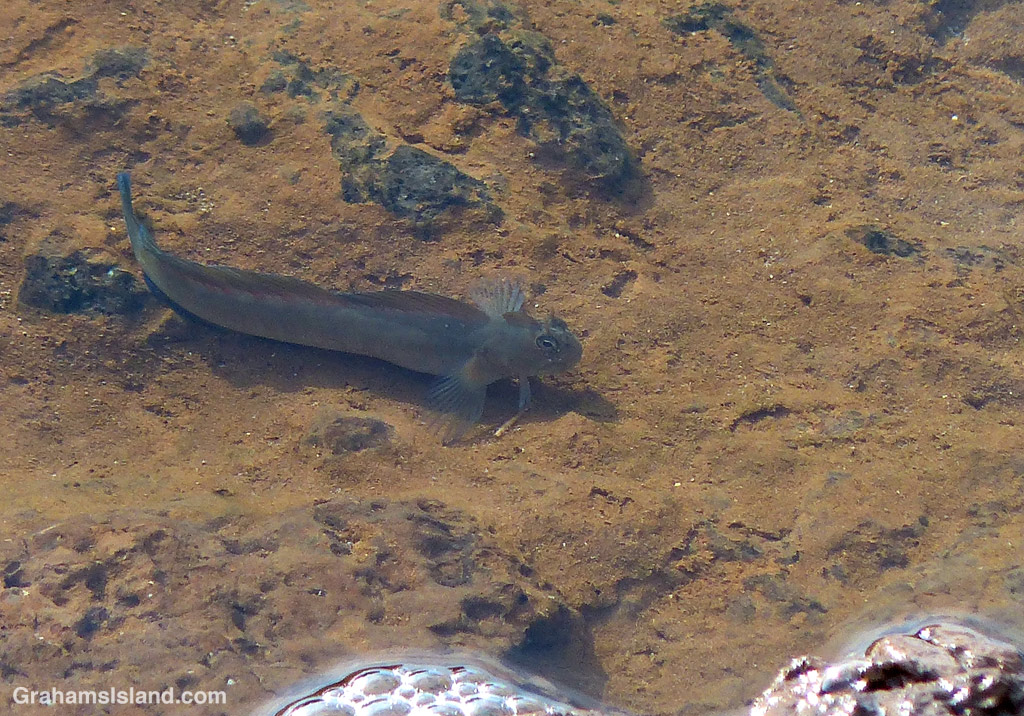
Hawaiian zebra blennies are a staple of rocky tide pools, living off organic detritus that accumulates in the pools. Taken by surprise, they’ll shoot off, over the rock, into the next tide pool.
Relaxed Hawaiian monk seal

Hawaiian monk seals tend to hunt at night. During the day, they’ll often haul out on a beach or rocky shore to rest, which is when they’re most often seen by people. This seal is a 7-year-old male with the catchy moniker of IO5 (given him by the people who track seals and look out for their welfare). He’s the monk seal I see most often and he has a few distinctive characteristics.
Thus far, he has remained unscarred by encounters with boats or sharks. He usually appears to have an air of being rather pleased with himself, perhaps a certain confidence about what a fine fellow he is. And when he’s on shore, he doesn’t just look like he’s resting, he looks like he has found a deeper, Zen-like calm. Seeing him in such a state always makes me loosen my shoulders, take a deep breath, and relax.
For more information about Hawaiian monk seals, go to www.pifsc.noaa.gov/hawaiian_monk_seal/ or www.marinemammalcenter.org/hawaii.
 Graham's Island