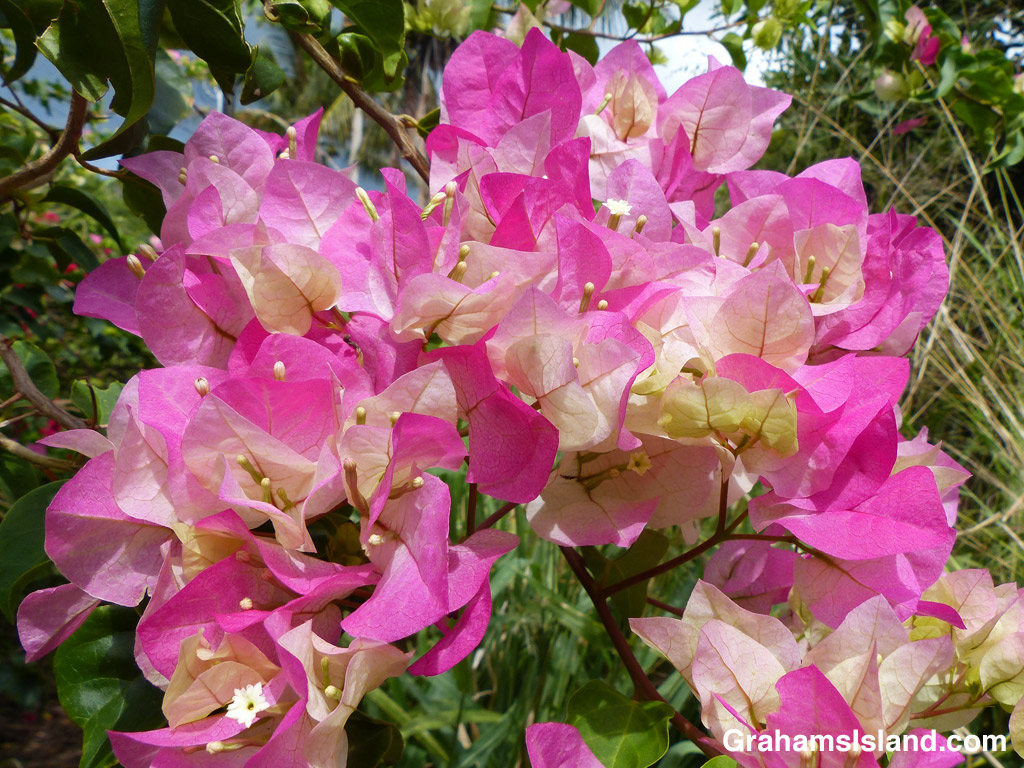
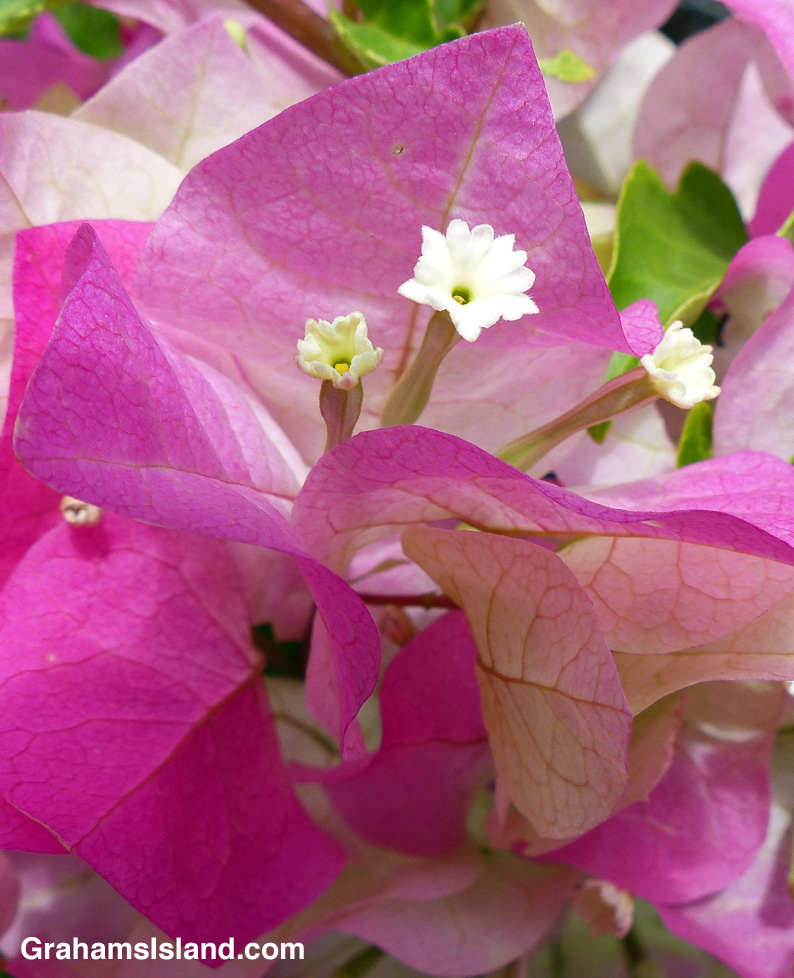
Bougainvillea have such a delicate appearance, especially the lighter colors. This one caught my eye in a neighbor’s garden.

Bougainvillea have such a delicate appearance, especially the lighter colors. This one caught my eye in a neighbor’s garden.

I’m not sure one could call cows and cattle egrets friends. When cows graze, cattle egrets snaffle bugs stirred up in that process, but I don’t know of anything the egrets do for the cows in return.
However, this photo has a friendly feel to it. I picture the cow saying, ‘So you can fly, right? Could you teach me how?’ The egrets look suitably nonplussed at the suggestion.
Feel free to suggest your own caption in the comments.
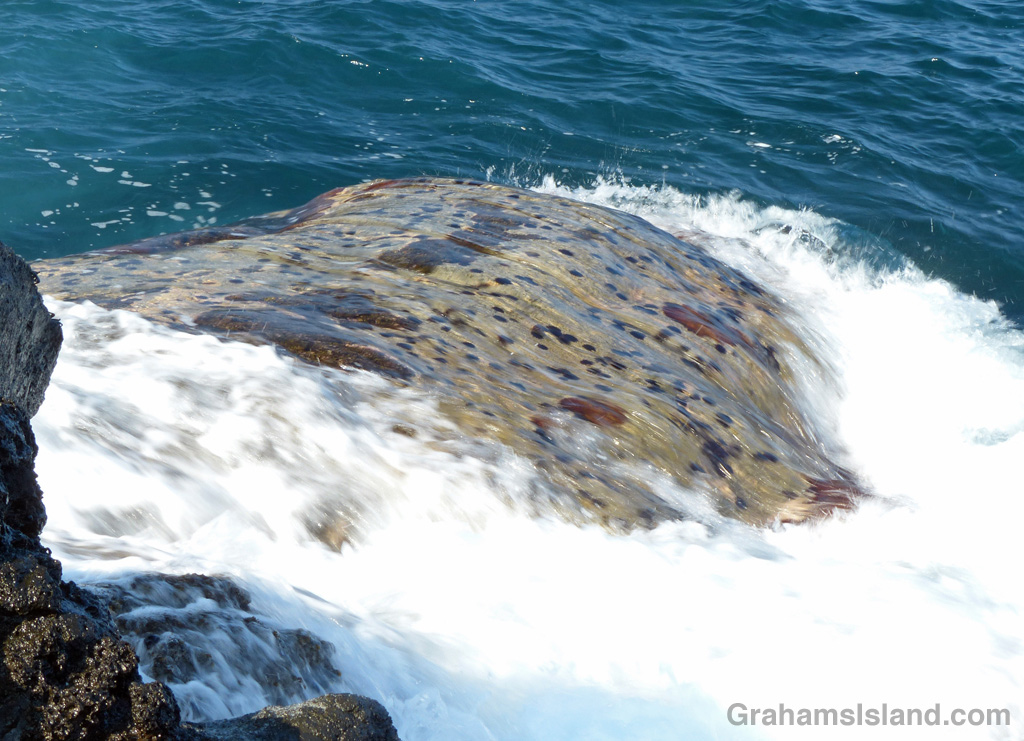
Water sluices over a rock on the North Kohala coast. The dark circles on the rock are helmet urchins, showing they have very good adhesive qualities.

Shadows play on a peeling surface of the old Bond Library in Kapaau.

At first I thought this was something straight out of Doctor Dolittle, a pushmi-pullyu eel. Alas, no. Instead, it’s two whitemouth moray eels wedged into the same space behind a clump of coral. While whitemouth moray eels are a fairly common sight in the water, this is the first and only time I’ve seen two together. I don’t know whether this proximity was related to breeding. Perhaps they were just helping each other stay warm! Looks like they must be pretty good friends.

A tropicbird wheels over an islet, and its lone, tenacious tree, off the North Kohala coast.

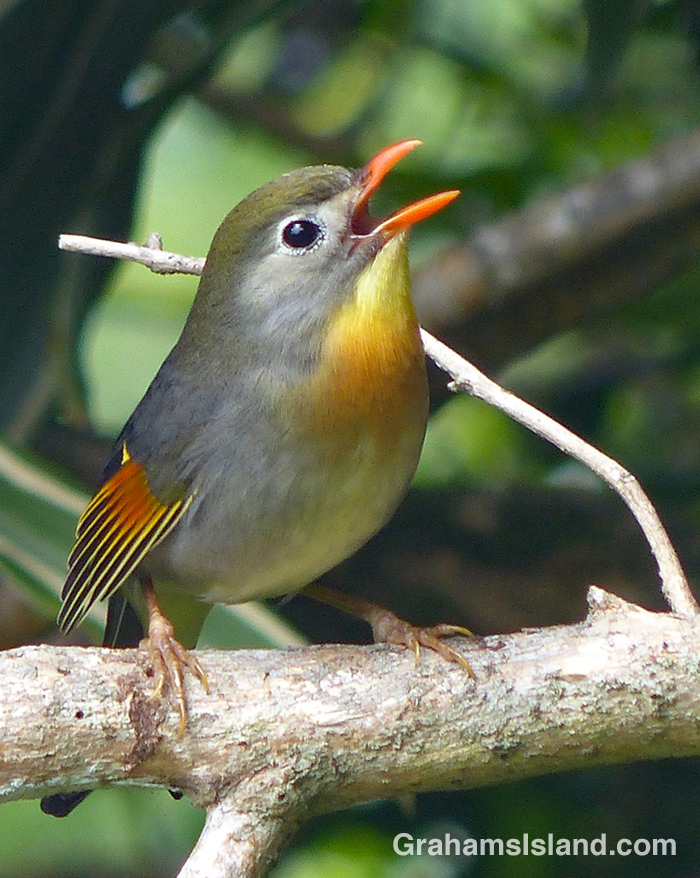
This is the last of my series of posts in response to this week’s WordPress photo challenge on the theme of ‘evanescent.’
Picture the scene: I’m sitting quietly in my living room when a small shape flits past a window accompanied by a harsh chittering. I jump up, grab my camera and rush outside. As I do so, I turn the camera on, adjust settings and figure out the best place to intercept the bird that just flew by. I go around the house and sure enough, the sound is loud. And there it is, in the hedge. I raise the camera, but its gone. Over there now. I move, refocus. There it is again. I snap a photo. Gone again. I do this a couple more times, and then it goes quiet. There’s no more movement. The bird’s moved on.
Now repeat this scene, a couple of times a week and you have my experience with the red-billed leiothrix. It’s such a beautiful bird, but all my efforts had produced was a collection of photos of bits of wing, disembodied beaks, barely discernable blurry shapes, or just bare branches and leaves. The jittery, hyperactive birds were evanescent, quickly disappearing from sight time after time.
So imagine my surprise when this one showed up. It was one of a pair. The other one, true to its kind, instantly disappeared into a bush. But this one appeared not to have read the leiothrix operation manual. It stayed on this branch, in full view, for a couple of minutes. True, it wasn’t ever exactly stationary, it’s head going from side to side every two seconds. And it called out continuously, probably wanting to know why its partner was skulking in the bush. Somewhere the message must have got through because the bird joined its partner and the two of them, true to form, flitted off from branch to branch, through the hedge and disappeared from view.
This week’s posts are in response to the WordPress photo challenge on the theme of ‘evanescent.’
A few times a year, I like to visit Hawaii Tropical Botanical Garden, which is just north of Hilo on the east side of the Big Island. It’s a wonderful garden, set in a fairly deep gully, with a wide array of plants.
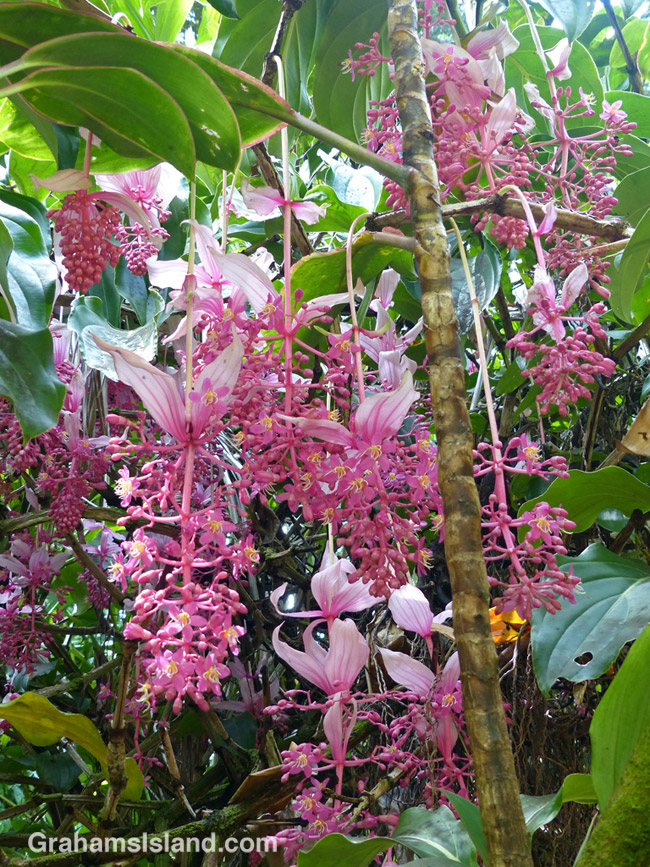
In tropical Hawaii, plants do well year round, but there are still seasons. Different plants flower at different times, so each visit is different. The nice thing about this is there’s always something new to see, such as this rose grape (Medinilla magnifica). The downside is that when I get home and look at my photos, I realize I don’t know what half of the plants are. So I figure I’ll see if I can find a tag next time I visit. But next time, the plant’s not flowering so I have trouble locating exactly what I was looking at.
Ultimately it boils down to me making a mental note to come back, same time next year, when it will be flowering again. Unfortunately, my mental notes have no chance of surviving that long, so the next year I see the flower again, take a new photo, and it’s not until I get home that I realize I already have a photo, still don’t know what it is, and will need to return next year etc., etc., etc.
But the thing is, I don’t really mind this. I just enjoy being at the garden, and appreciating the moments while I’m there.
For more information about Hawaii Tropical Botanical Garden, go to htbg.com.

