The fruit and leaves of the Autograph Tree (Clusia rosea) are toxic to humans and animals. When the fruit is ripe, it opens to reveal red seeds, which are dispersed by birds, animals and the weather. This is a spent fruit after that process is finished.
Posted for Becky’s Squares: Seven. See more responses here.
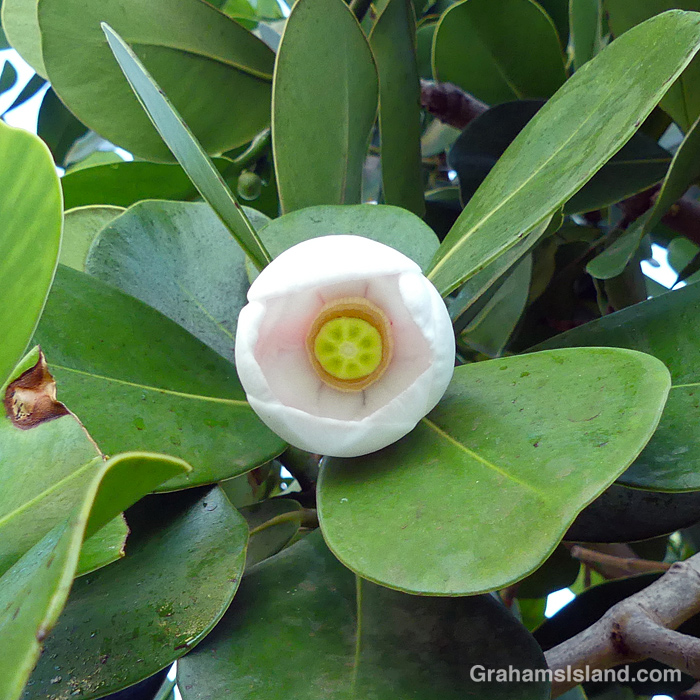
I was at Spencer Beach Park when I heard bees. Looking up, I saw them all over an open flower on one of the trees. I’ve never seen so many bees on the same flower at the same time. As they left, others would be moving forward to join the party.
The tree was an Autograph Tree (Clusia rosea), which is native to the Caribbean and is something of an invasive species here. It gets its name from its thick leaves with a thin green covering. Kids scratch their names into the leaves and watch as they grow with the leaves!
Posted for Becky’s Squares: Move Forward, Reconstruct, Renew, and/or are Burgeoning. See more responses here.
The Autograph tree (Clusia rosea) is native to Florida and the Caribbean. Its curious name stems from the fact that, when its leaves are scarred, the marks remain visible for a long time. So if someone scratches their name into a leaf, it will stay there!
In Hawaii, it’s popular with commercial landscapers because it’s hardy and salt tolerant, so does well on the coast and in other difficult areas. But like all popular things it has a downside. It’s considered an invasive species here because it spreads prolifically and can crowd out native plants. It often starts out as an epiphyte and strangles its host plant. Anything else? Oh yes, the fruit and sap are poisonous, so getting rid of them requires considerable care.



 Graham's Island