I encountered this Gosline’s fang blenny recently while snorkeling. It seemed to be curious about me, swimming in my direction and then turning away. Perhaps it was thinking about taking a bite out of me, because that’s what these fish do. They bear a resemblance to juvenile Hawaiian cleaner wrasses, which clean larger fish. These blennies use this similarity to sneak in and take a bite out of the bigger fish.
And what about the name? These blennies have fangs on their lower jaws that they use to bite the inside of the mouth of any predator that grabs them. It’s usually enough to cause the predator to spit them out.
In November, I posted the photo below, showing a gargantuan blenny resting in a recess in some rocks. The top photo, taken at the end of December, shows a gargantuan blenny in the exact same spot. It’s probably the same fish and this is part of its territory.
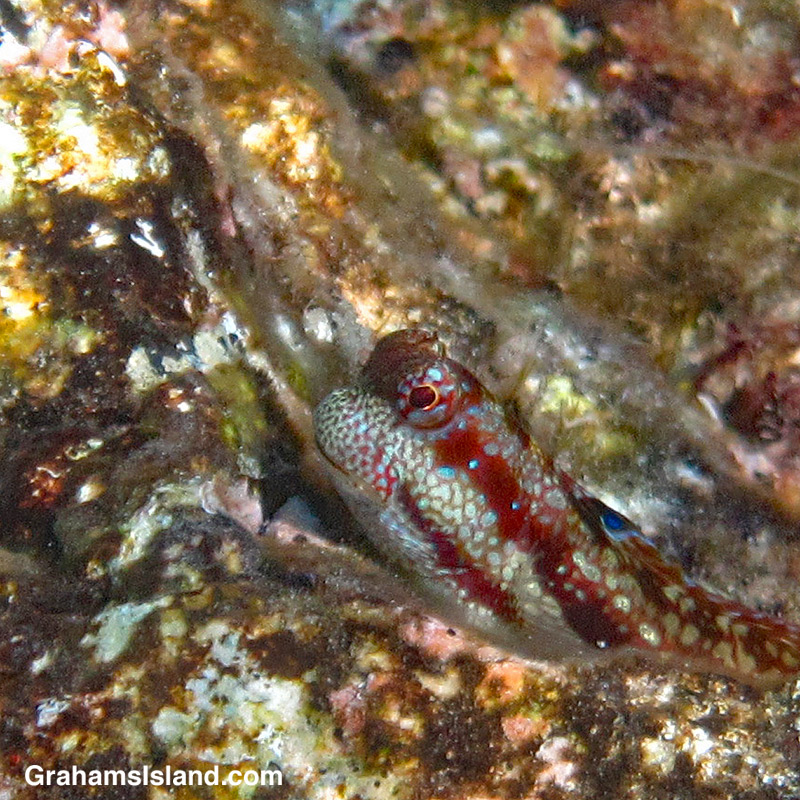
But astute observers will note that the fish now looks completely different. That’s because it’s the start of blenny spawning season and this male has changed into its nuptial colors for the occasion. He looks rather dashing, I think.
Posted in response to Becky’s January Squares challenge theme of ‘Up.’ See more responses here.
Blennies are the kind of fish that it’s hard not to like. They always appear to be smiling and their willingness to stay put when being observed is appreciated. This one is a female and its behavior is typical of spotted coral blennies in Hawaii. Here, they often sit out in the open, but elsewhere in the Pacific, they almost always shelter in branches of coral.
Posted in response to Becky’s October Squares challenge theme of ‘Kind.’ See more responses here. Also posted in response to this week’s Friendly Friday challenge theme of ‘Smiles.’ See more responses here.
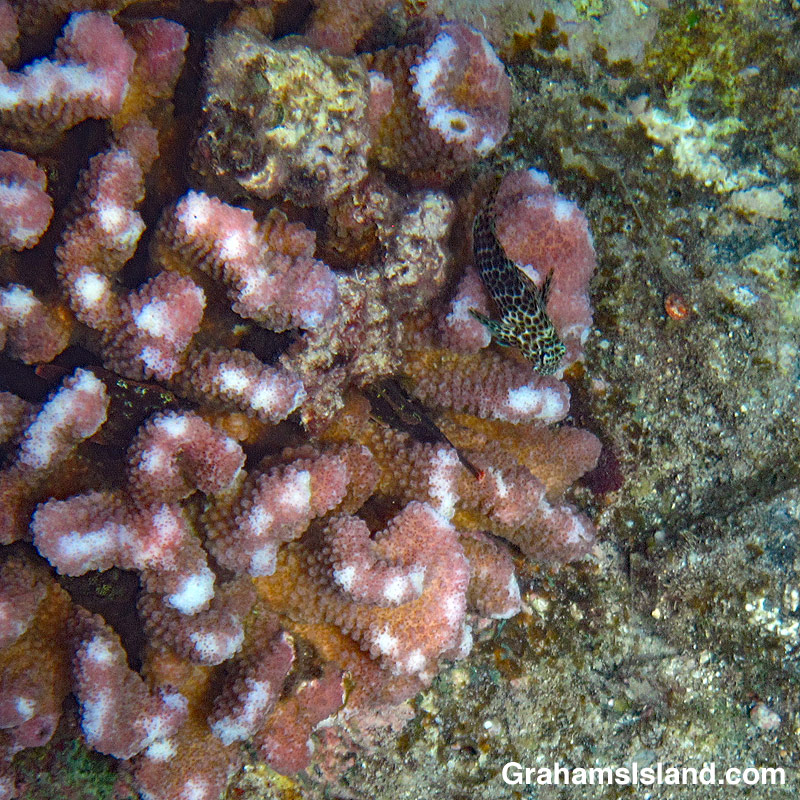
I think this is a spotted coral blenny on a head of purple cauliflower coral, and possibly a small trumpetfish.
This is a second response to this week’s Sunday Stills challenge theme of ‘Waterworld.’ (See more responses here.) Yesterday, I posted about the movie Waterworld. Today, it’s a probably more expected response.
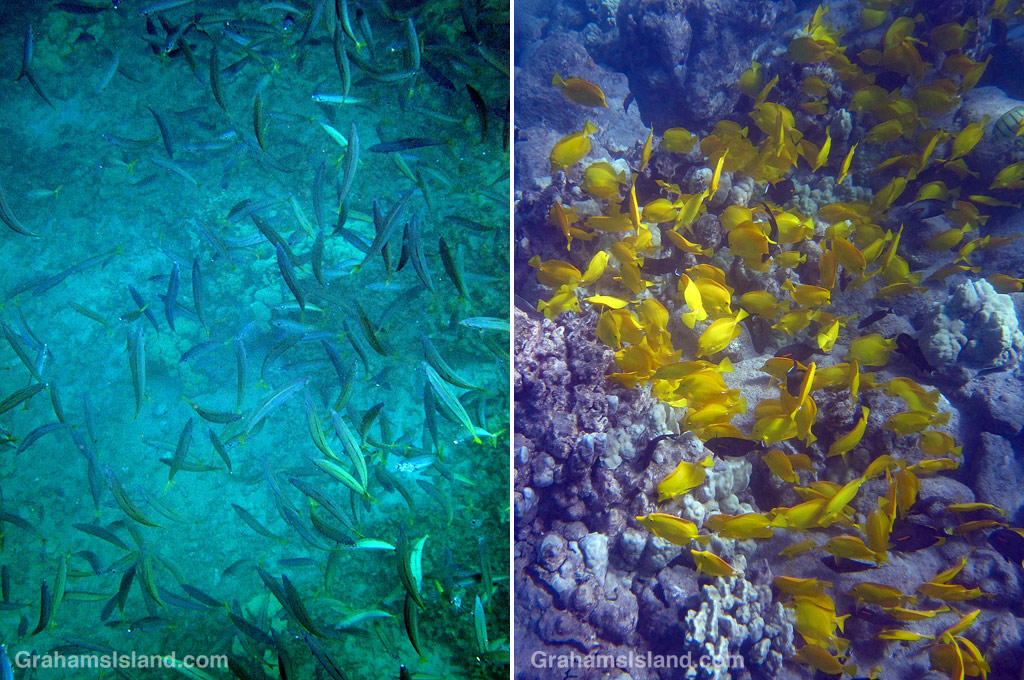
These are photos I took during my swim yesterday. Visibility in the water was patchy with some good areas and some not so good. I didn’t see anything startling, though the mackerel shads aren’t a common sight. Last time I saw such a shoal there was a great barracuda lurking on the other side. I looked around and, sure enough, there was another one looking interested as it cruised low down, too low for a decent photo.
The other oddity was in the photo at left. I saw what I think is a spotted coral blenny on this patch of cauliflower coral, and snapped a quick photo before it took off. But it was only when I processed the photos that I saw something else, to the left and slightly below the blenny. I think it’s a small trumpetfish, but it could be something else. A lot of small fish and other creatures hide in coral heads so I must pay more attention from here on.
In short, it was a fairly typical swim.
A shoal of mackerel scad on the left with yellow tang on the right.Little fish enjoy the comparative safety of the shallow water in the surge zone.On the left, a fourspot butterflyfish and a cushion star. On the right, black triggerfish are cleaned by a Hawaiian cleaner wrasse.Just before getting out I saw this small Pacific trumpetfish with goldring surgeonfishes.
I watched a trio of bullethead blennies zipping back and forth, apparently in some sort of territorial dispute. This one appeared to be the winner and when it rested, momentarily, on its laurels, I snapped this photo.
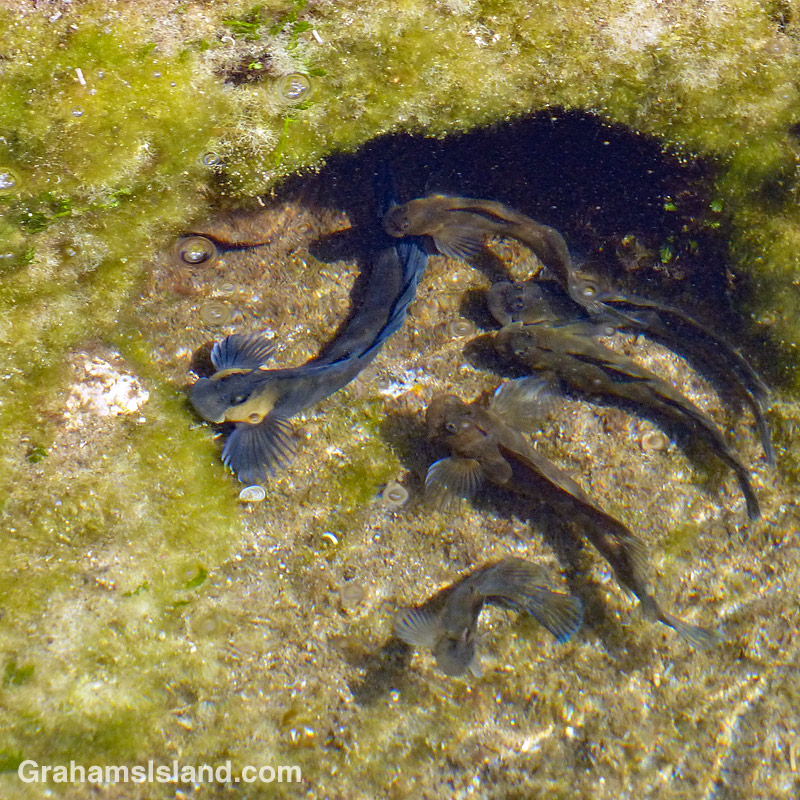
This is a group of Hawaiian zebra blennies that I came across in a tide pool one day. The largest of them, with the blue highlights and yellow cheeks is the breeding male. The others are likely females that he has won over.





 Graham's Island