
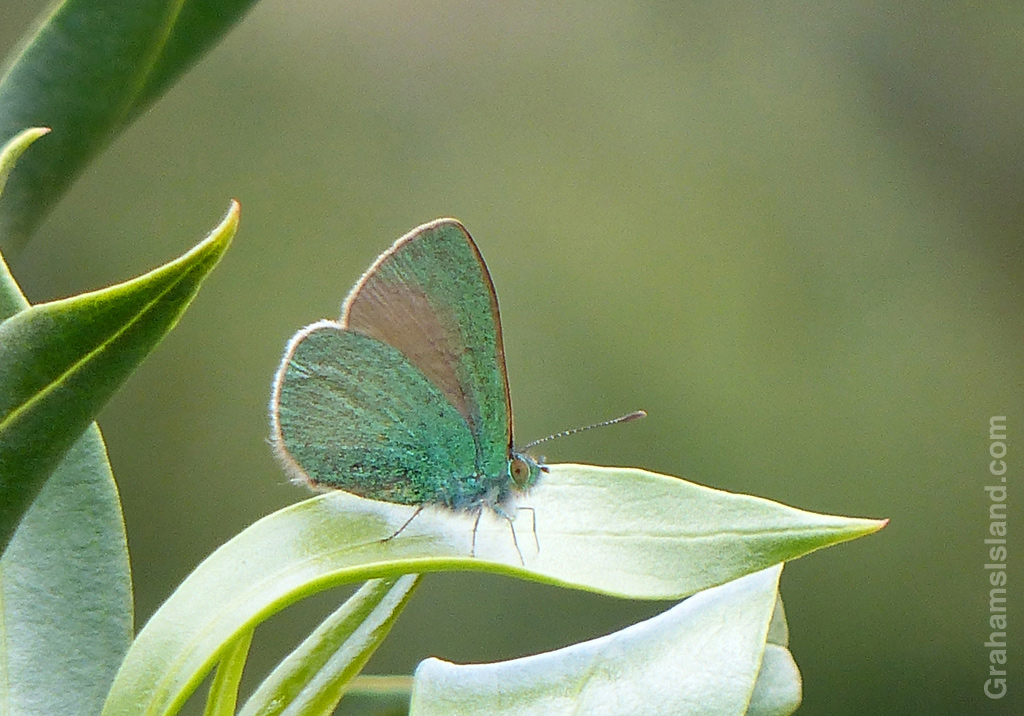
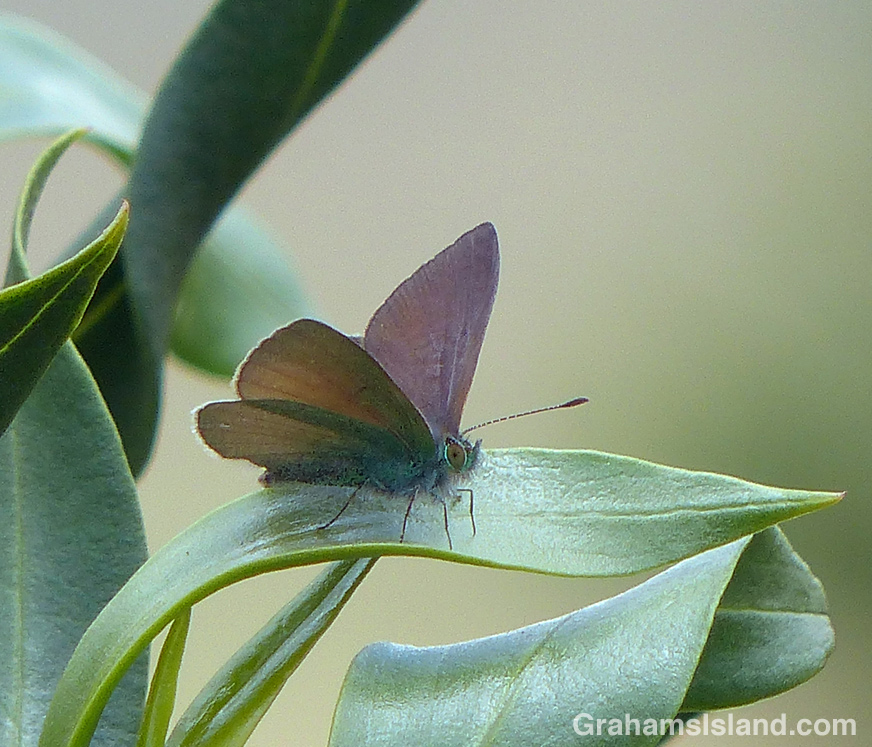
The Hawaiian Blue butterfly (Udara blackburni) is also known as Blackburn’s Blue butterfly, Blackburn’s Little Blue butterfly, and the Koa butterfly. It is one of two butterflies that are endemic to Hawaii (the other is the Kamehameha butterfly). The caterpillars feed on Acacias, including Koa leaves, hence one of the names. It’s a small butterfly, only an inch or so long, but quite striking.
Tag Archives: Butterflies and Moths
Secusio extensa – fireweed biocontrol moth


While out on a walk, I came across a patch of yarrow (Achillea millefolium) and thought the patterns made by the flowers would make a good photo. So I chose an individual plant to focus on and by good fortune found this moth hanging off the side.
The moth is Secusio extensa (I’ve also seen it referred to as Galtara extensa) and it hails from Madagascar. While this begins to smack of another invasive species, in fact this moth was deliberately introduced to the Hawaii in 2012. The reason for that is that the moth’s larvae feed on fireweed (Senecio madagascariensis) and fireweed is a truly bad invasive species here. Besides spreading in a prolific manner, it’s poisonous to livestock.
What I particularly liked about this individual was that it appeared to be enraptured by the yarrow plant, bobbing its head up and down continuously. I also loved its comb-like antennae, which are more properly known as pectinate antennae.
Passion vine butterfly
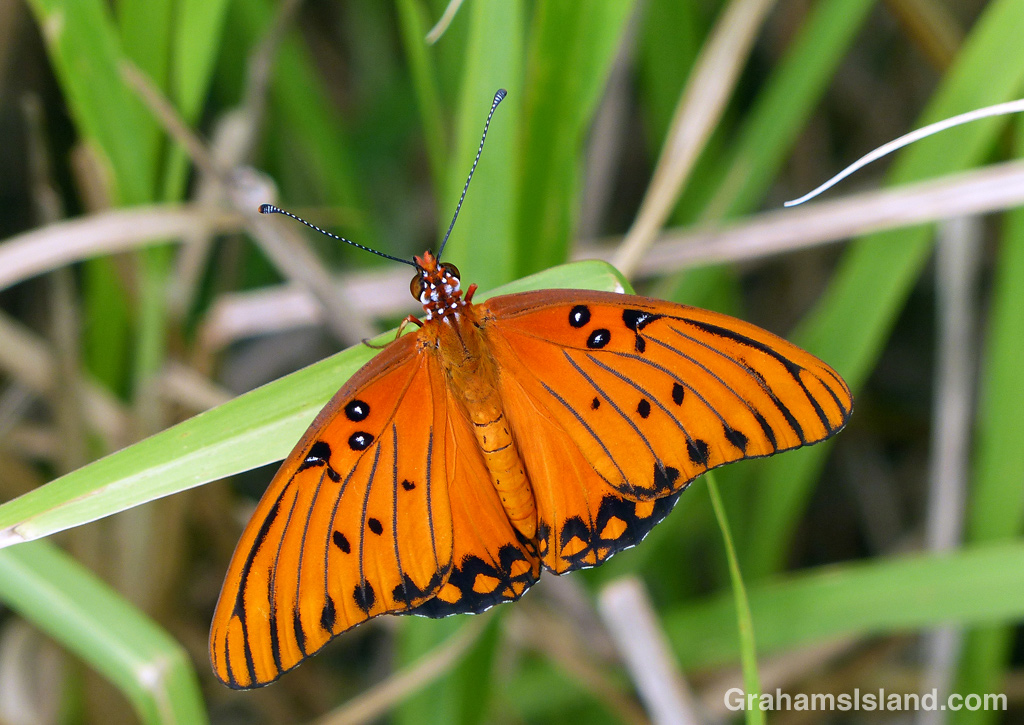
A passion vine butterfly takes a break on a windy day in Kohala.
Lesser grass blue butterfly
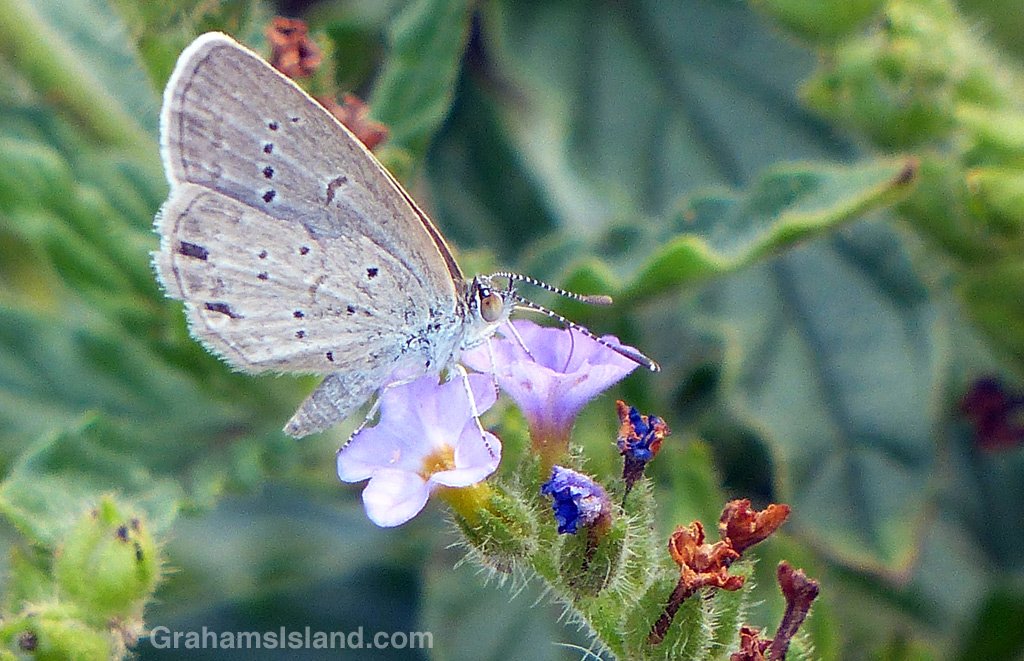
A lesser grass blue butterfly takes a drink from a small purple flower.
Tree tobacco

Tree Tobacco (Nicotiana glauca) heralds from South America, but in Hawaii, it’s an invasive species. The chances of eradicating it are slight. Controlling its spread is a more realistic possibility. But tree tobacco is one invasive species in Hawaii that does have something going for it.
Enter Blackburn’s sphinx moth (Manduca blackburni), a large, endemic moth, once thought extinct, and a long-time resident on the endangered species list. Among its problems is that its host species, ‘aiea, (Nothocestrum spp.) has been on the decline for a while. ‘Aiea belongs to the nightshade family (Solanaceae) as does tree tobacco.
It seems that the moth, in the interests of survival, decided tree tobacco is not so bad. So we have an endangered species becoming reliant on an invasive species. Hmm. As I said, control is the most likely approach with tree tobacco and that will undoubtedly involve checking to see whether Blackburn’s sphinx moth is present before removing areas of tree tobacco.
That’s good news for the plant in this photo. I found it at Pu’u Wa’awa’a, a State Forest Reserve on the northern slope of Hualalai. Pu’u Wa’awa’a is home to a variety of endangered plants and animals including Blackburn’s sphinx moth.
For more information about tree tobacco, go to cabi.org/isc/datasheet/36324.
For more information about Blackburn’s sphinx moth, go to fws.gov/pacificislands/fauna/bsmoth.html.
For more information about Pu’u Wa’a Wa’a, go to puuwaawaa.org.
Abstracts: Moth wing

I like these colors and patterns on the wing of a black witch moth.
Prepare to pupate


This Hawaiian monarch butterfly caterpillar was getting ready to pupate. It attached itself to the underside of a ti leaf with a silk pad. Just a few hours later it had molted into the blue-green chrysalis to the left.
Only a small percentage of monarch eggs make it all the way to adulthood, so I hope the geckos don’t get to this one. I’ll keep an eye on it over the next week or so.
Passion vine butterfly caterpillar
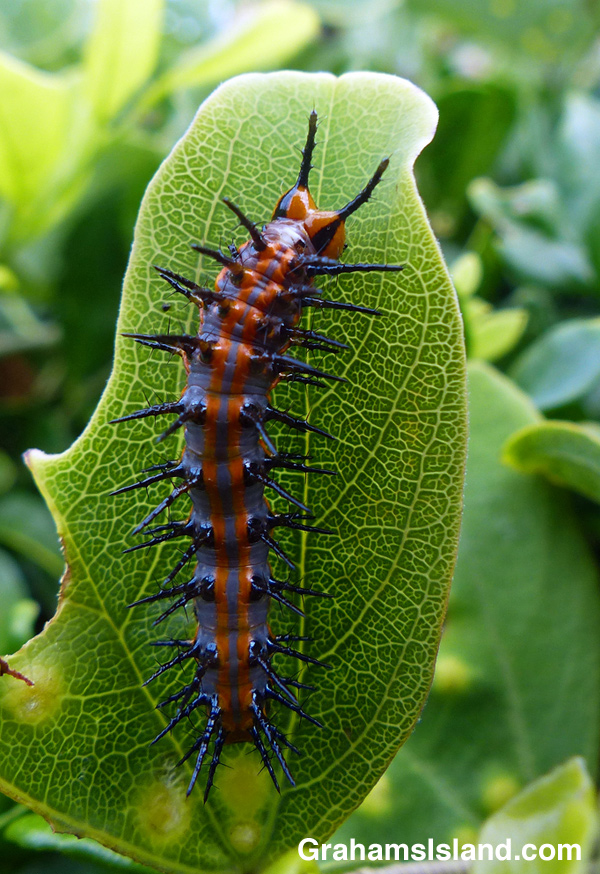
I took some photos of a passion vine butterfly flitting around a hedge and when I looked at them at home I noticed a distinctive caterpillar in the background. So next day, I returned, hoping it might still be there. Not to worry. The hedge was literally crawling with them. That’s when I noticed the passion vine twining through the hedge.
The spines and orange and black coloring are nature’s way of saying ‘watch out.’ This caterpillar is poisonous if eaten, not that I was tempted. They also have a voracious appetite and can defoliate a plant, especially a young one. Certainly, the ones I watched munched their way through leaves with great thoroughness.

 Graham's Island