Tag Archives: Coral

Whitemouth moray eel in a tight spot

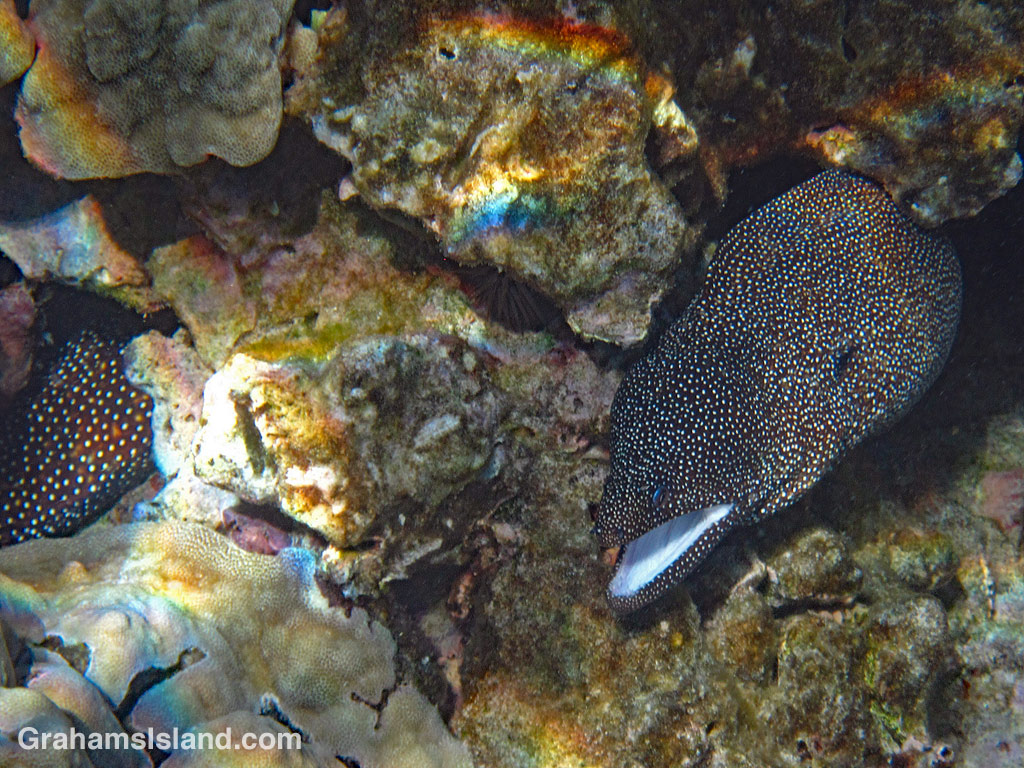
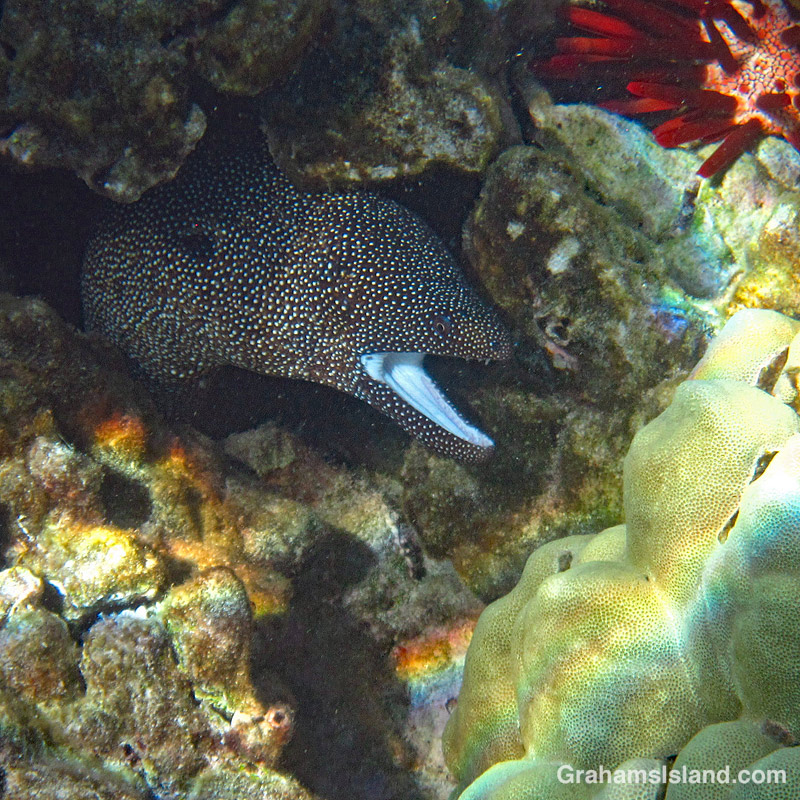
Whitemouth moray eels can squeeze into the tightest spots on the reef and are often seen with just the head sticking out. They’re easy to identify with their bright white mouths, which they’re constantly opening and closing. While this activity looks somewhat menacing, they’re actually forcing water over their gills in order to breathe. That’s not to say that, if you waggle your finger in the face of an eel, it won’t bite it off so, as with most creatures in the water, it’s best to keep at a reasonable distance and be respectful of them.

Crunchy parrotfish

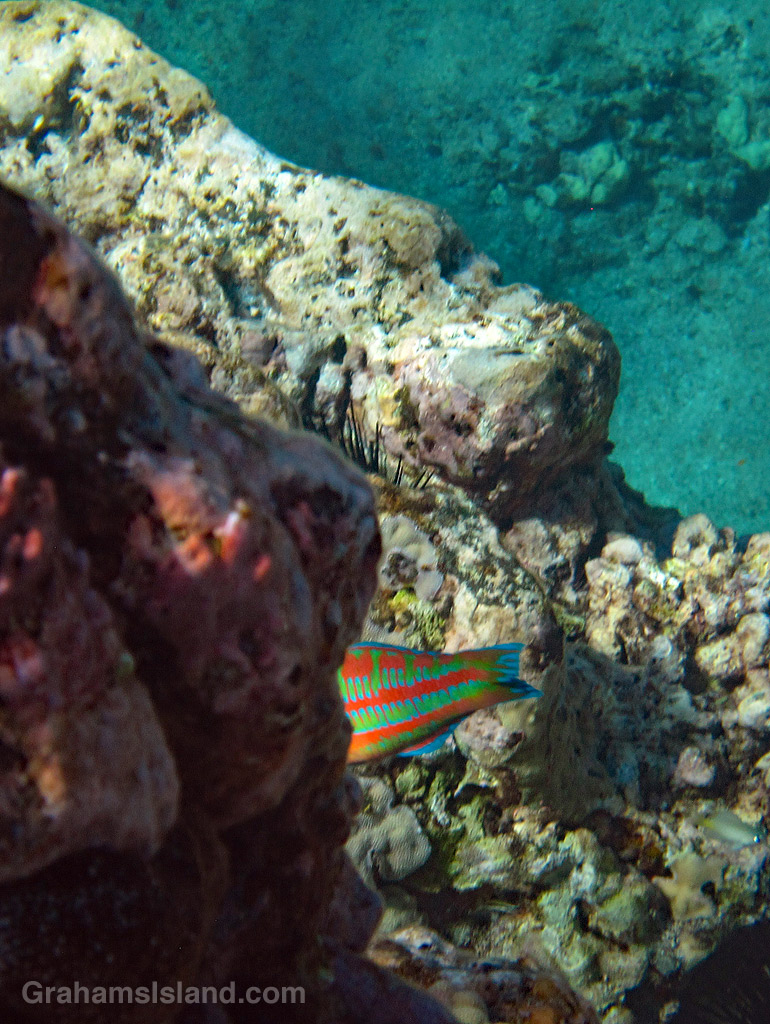
This is, I think, an initial phase bullethead parrotfish. Parrotfish can go through several phases and look quite different in each one. Some also change sex.

So why is this titled ‘crunchy parrotfish?’ Well, I was watching this fish feed and when it feeds, it uses that big, white-rimmed beak to scrape algae and coral polys off the rocks. While it was doing so, I could clearly hear the quite loud crunching noise it made.

A mackerel scad school draws attention

Mackerel Scad shoal

Mackerel Scad shoal over coralMackerel scad are schooling fish, the kind that make ‘bait balls’ which end up being decimated by large predators. They’re members of the jack family, not that this does them much good. Some of those large predators are other members of the jack family such as greater amberjacks and almaco jacks.

I came across this school not far from shore. There were probably two or three hundred fish in the school and it was fun watching them twirl and circle in harmony. They encircled me, went past and I popped out the other side. It was then I noticed they weren’t alone. One the other side of the school, a medium-sized great barracuda cruised around.

The barracuda came toward me to take a look, but I was clearly less interesting than the scad and it moved away again. The barracuda can be seen in the bottom photo. See if you can spot it.

Mackerel Scad shoal and a great barracuda

Brown water

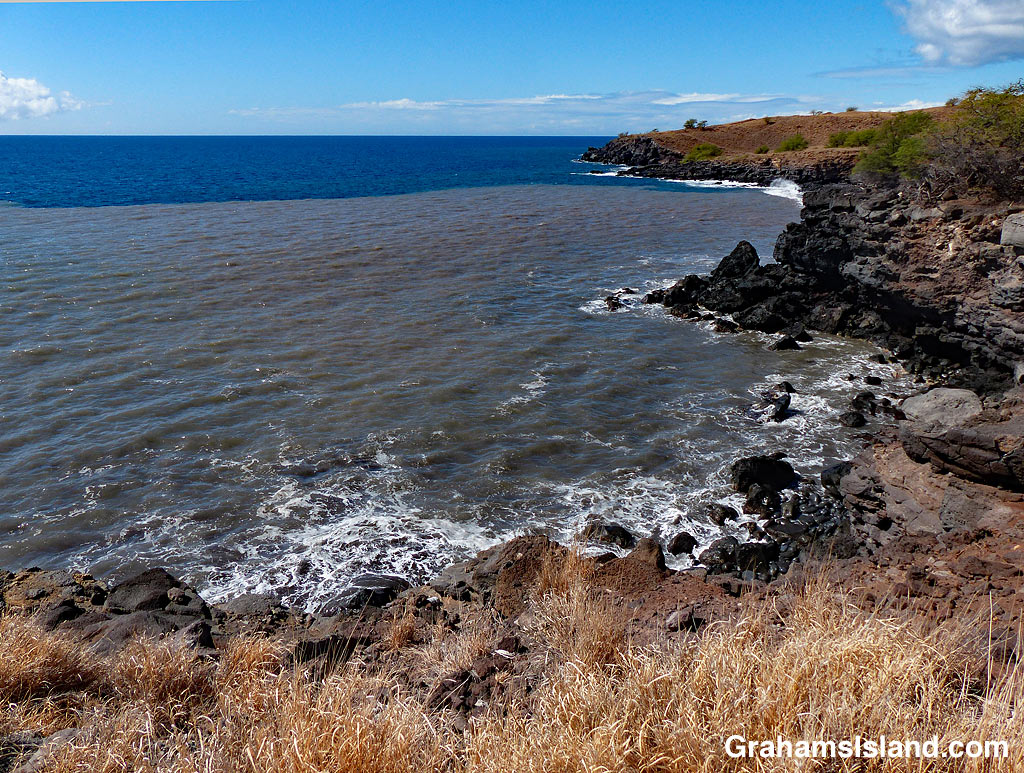
Brown water

After something of a dry spell, during which I was able to drive my truck out of the yard without sliding about, there’s been a lot of rain lately. My truck is back to sliding, but that’s a minor issue compared with what happens to all that rainfall.

What happens is that the rain hits the land and runs downhill. It channels into dry gullies. If the rain is heavy enough, flash floods occur and wash all before them – dirt, rocks, trees. But any kind of heavy or prolonged rain will wash earth and debris down the gullies. All those gullies lead to the ocean, channeled under roads by culverts (bottom photo).

When the runoff reaches the ocean, it forms a distinct area of dirty brown water in the blue Pacific Ocean (top photo). The contrast is striking and easily visible from miles away. Over time, the brown and blue water will begin to mix until the delineation is gone, but part of that process is the dirt from the brown water settling to the ocean floor.

This kind of runoff is one of many threats to coral reefs around the Big Island. It’s not just dirt in the runoff, but also pesticides and other chemicals that can be washed down into the reefs, damaging the coral. There are hundreds of gullies and only a few places have erosion prevention measures to help mitigate this pollution.

So while Hawaii may be considered paradise, it has its share of challenges. And the problems associated with runoff and pollution are more visible and obvious than most.

Posted in response to this week’s Friendly Friday challenge on the theme of ‘Contrasts.’ See more responses here.


Brown water and culvert

Kawaihae dirt storm

Kawaihae dirt storm

The winds were blowing here last week, 30+ mph on a consistent basis. But one afternoon the winds picked up even more and triggered dirt storms off the hills above Kawaihae.

The wind whistled down the slope from Kohala Mountain and dry dirt was gathered up, whirled around, and blasted down the slope toward the ocean. This happened for an hour or so. Sometimes, white sand from the beach in Kawaihae harbor was similarly stirred up.

The unfortunate aspect of this display was that it visibly demonstrated the problems with erosion when the ground is dry. If it’s not the wind, then any rainfall washes the soil down gullies and into the ocean. All this dirt being deposited in the relatively shallow waters off the coast degrades the water quality and can have a seriously adverse effect on corals in the area.