Tag Archives: Damselfish

Here’s looking at you

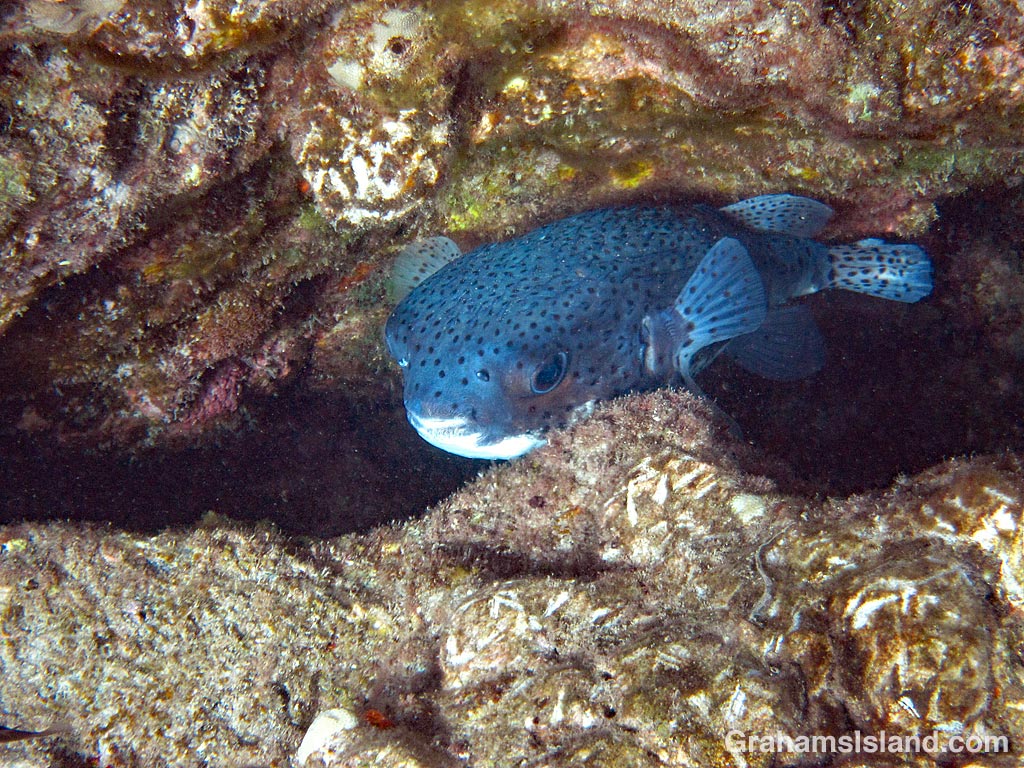
Giant Porcupinefish

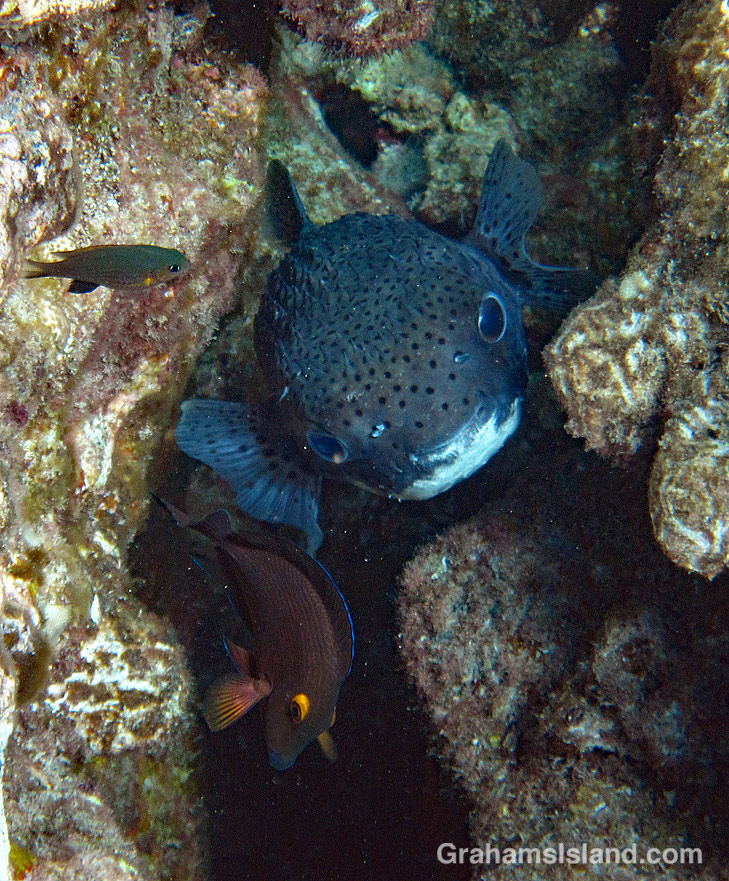
Giant Porcupinefish with Blackfin Chromis and Goldring surgeonfishI was swimming one day when I realized I was being watched. Peeking up from a crevasse in the reef, was this giant porcupinefish. These fish do seem to be quite curious and this is a look I’ve seen before. The difference here was that the water was quite shallow, so the fish was not as deep as they usually are. If I got too close, the fish would dip deeper into the crevasse. If I moved away, it would pop up again.

Porcupinefish are not to be messed with. They have strong beaks (fused teeth), which they use to break mollusc and crustacean shells, and which have been known to sever fingers, too. In addition, like pufferfish, they can inflate themselves with water into a large, round ball when threatened. Unlike pufferfish, porcupinefish have sharp spines which normally lie flat, but which become erect when inflated. Finally, they’re extremely poisonous.

The other fish, in the second photo, are a goldring surgeonfish and, above it, a small blackfin chromis.

Fish feeding

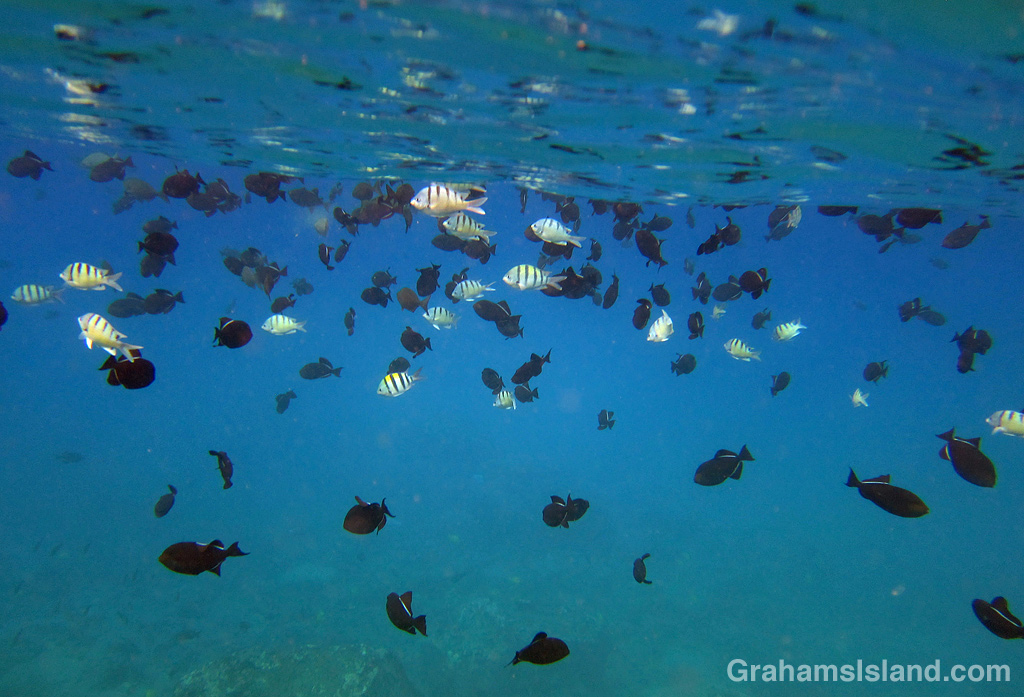
Fish feed near the surface of the water off the Big Island of Hawaii.Fish feed near the surface of the water off the Big Island of Hawaii.

Another post based on the theme of this week’s WordPress Photo Challenge, which is ‘Silence.’

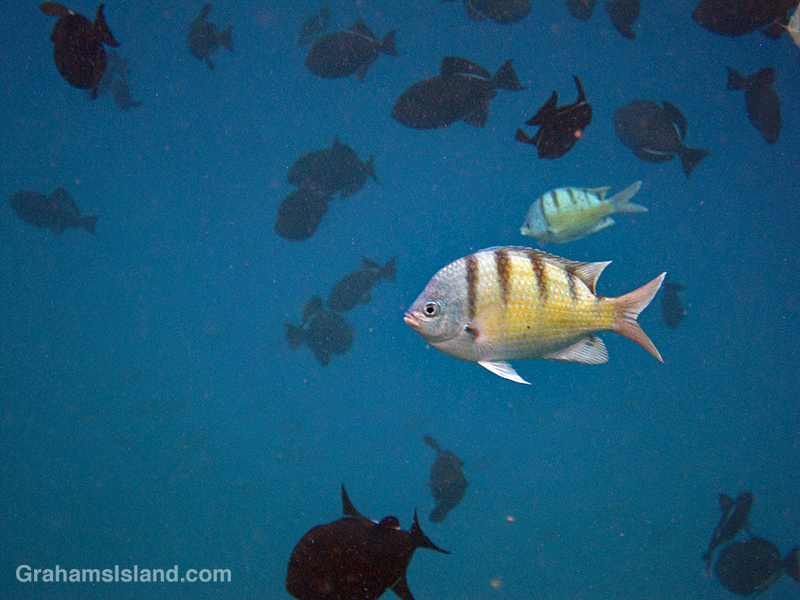
It’s not unusual to see fish feeding while snorkeling, but on this day the numbers doing so, up near the surface, were large. These are mostly Hawaiian sergeants and black triggerfish, with a few indo-pacific sergeants amongst them.

By easing myself slowly toward them, they weren’t unduly concerned, parting as I got close and returning as I passed. I felt like I was swimming in an aquarium, a quiet environment without the usual noises of everyday life.

Fish feed near the surface of the water off the Big Island of Hawaii.

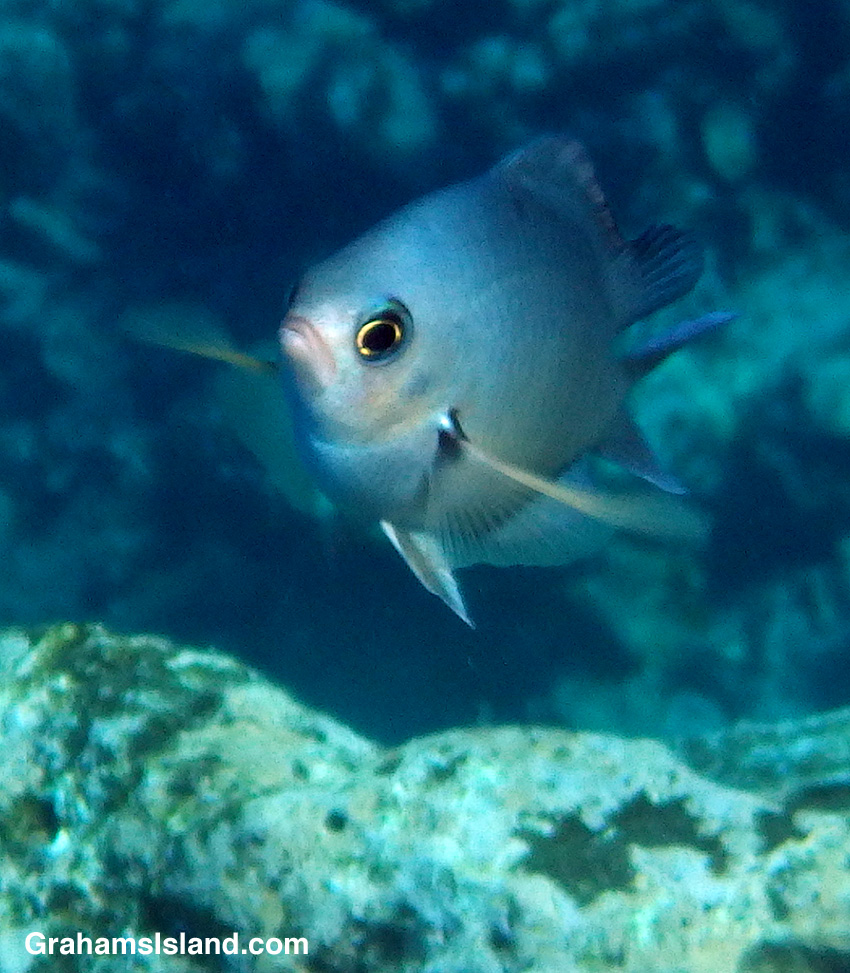
Bright-eye damselfish

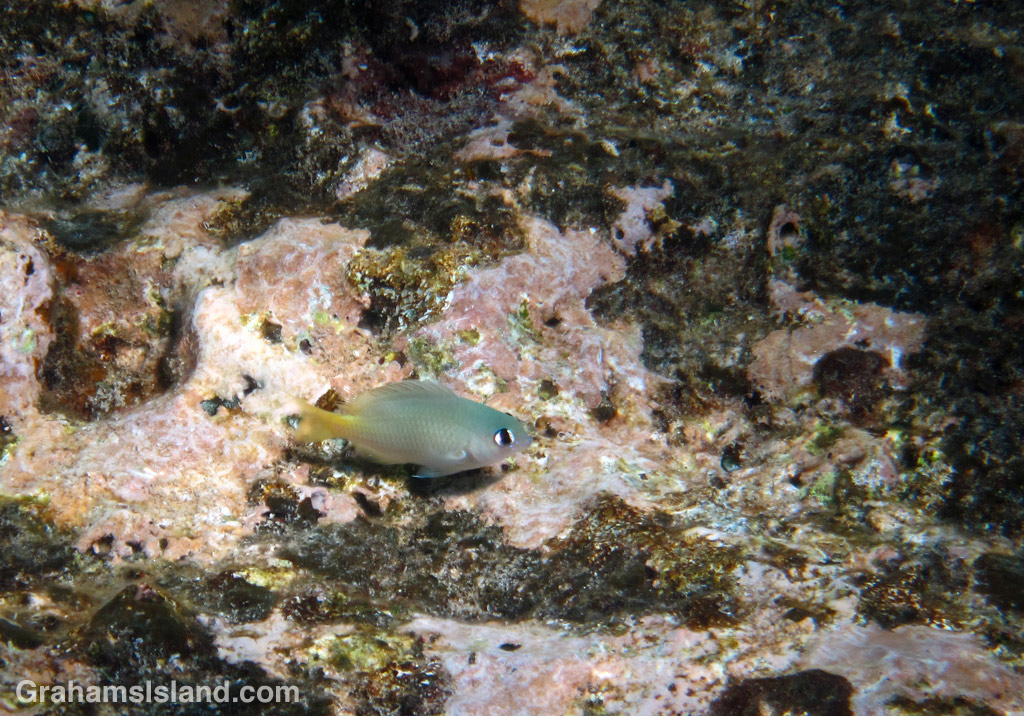
A bright-eye damselfish in the waters of the Big Island
The aptly-named bright-eye damselfish is a tiny fish around 1 to 2 inches long. Despite its small size it aggressively defends its territory, usually a nook or hollow in the rock. It’s not unusual to see it come charging out at some much larger fish that has strayed too close.

Given that these fish spend all their time in one small area, often just hovering in the water, it would seem a simple matter to get a photo, but no. When they hover, they’re constantly moving, almost vibrating. And then they shoot off in one direction or another.

I’ve taken many of photos of bright-eye damselfish and the majority of them turn out to be pictures of bits of rock or coral. Locating the tiny fish on my screen is no easy matter, keeping it there, harder still. When I do manage that, often the fish is a blur or just a tail fin heading out of shot. Thus, this photo is something of an against-the-odds triumph – an entire bright-eye damselfish reasonably in focus.

Sergeants feeding

Sergeant fish feeding off the Big Island
It’s always fun to see fish active just below the surface of the water. Needlefish live in this area, but schools of sergeants also gather there to feed. The fish with the darker stripes and yellow patch on the upper back is the Indo-Pacific Sergeant. It’s a relatively new to Hawaii having arrived around 1990. The fish with less distinct stripes is the Hawaiian Sergeant, an endemic species. Apparently, the two species have been interbreeding, producing a fish with the coloration of the Hawaiian Sergeant, but with the more pronounced stripes of the Indo-Pacific Sergeant.

Oval Chromis

A male oval chromis fish in spawning colors

Oval chromis fish

These little fish can have quite different coloration. The silvery one to the right is a common sight. The one above is a male in his courtship and spawning colors. Later, when he’s guarding the eggs, he’ll be a more silvery blue with an orange patch on the lower jaw. Juveniles can vary from silvery blue to yellow.

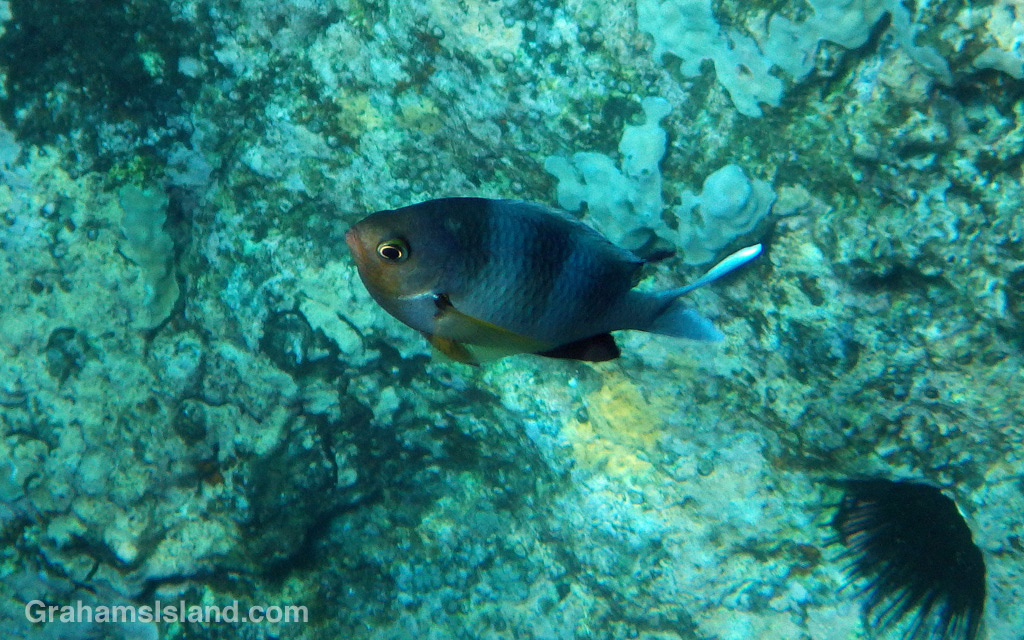
Many other fish also have extensive color variations, which can make it difficult identifying individuals. Oval Chromis are one the larger family of damselfishes. While their colors and patterns vary quite a bit, they all have a similar ‘look,’ which, in this case, helped narrow down what I was looking at.

In my attempts to identify what I see in the water, I use John P. Hoover’s book The Ultimate Guide to Hawaiian Reef Fishes, Sea Turtles, Dolphins, Whales, and Seals. His website is hawaiisfishes.com.

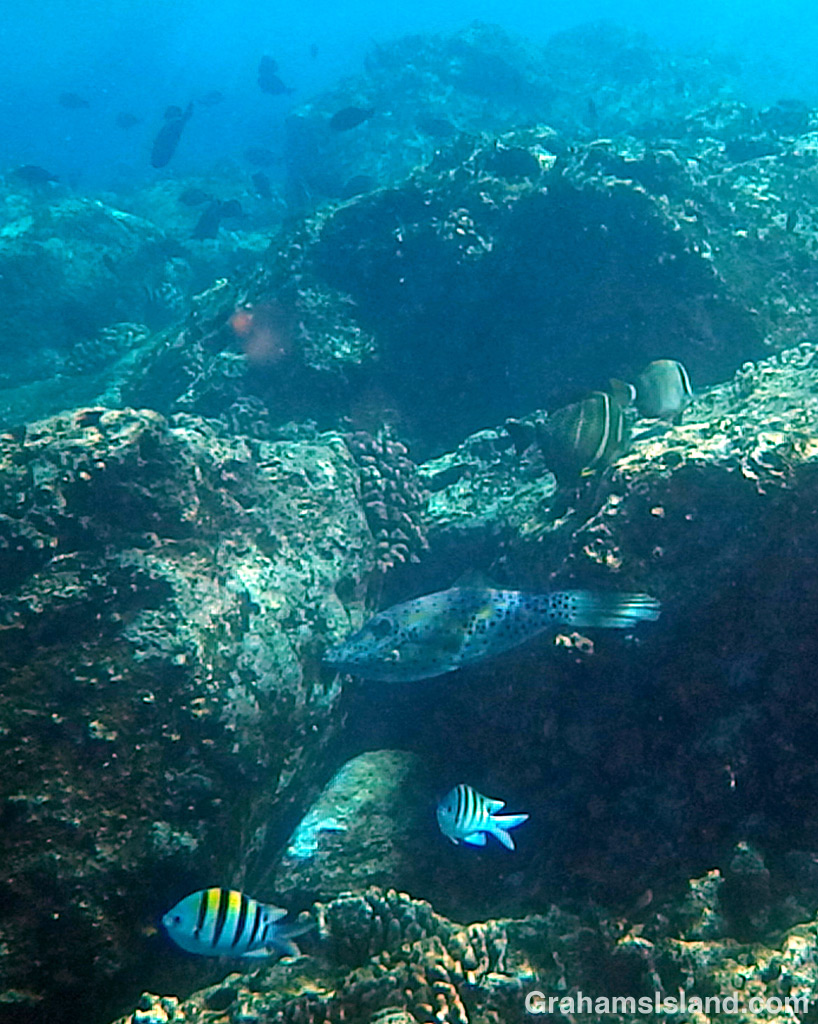
Reef fish

Many fish make the reef homeA great variety of fish make their home among the rocks and coral on the coast. From the bottom these are: two indo-pacific sergeants, a scrawled filefish, two or three whitebar surgeonfish, and in the background, a number of black triggerfish.

One of the pleasures of snorkeling here is that there’s always something to see and every day is different.

In my attempts to identify what I see in the water, I use John P. Hoover’s book The Ultimate Guide to Hawaiian Reef Fishes, Sea Turtles, Dolphins, Whales, and Seals. His website is hawaiisfishes.com.