Tag Archives: Lobsters

Showdown at Viper Rock

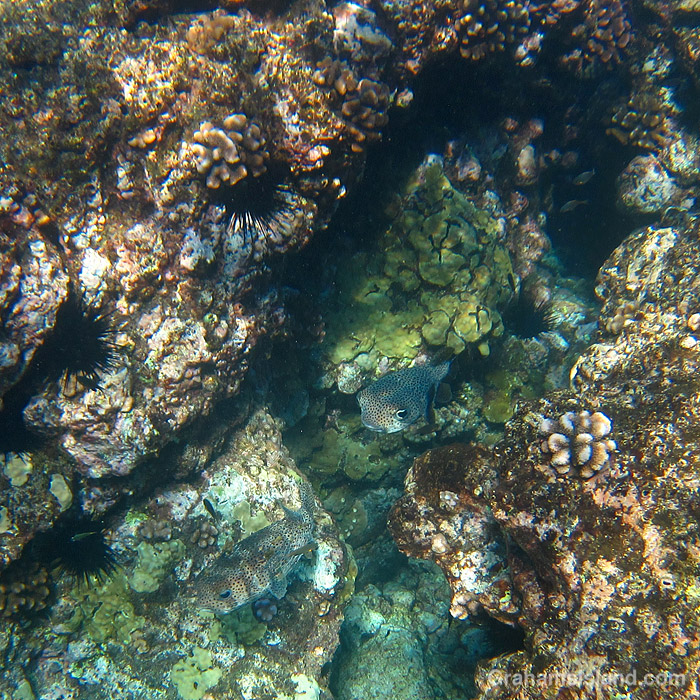
Giant Porcupinefishes in the waters off Hawaii

When I go snorkeling, I often go by a place known as Viper Rock. It got this name because in this rock is a small cave that was often occupied by a large Viper Moray Eel. I haven’t seen the eel in a long time, but the cave often has other occupants.

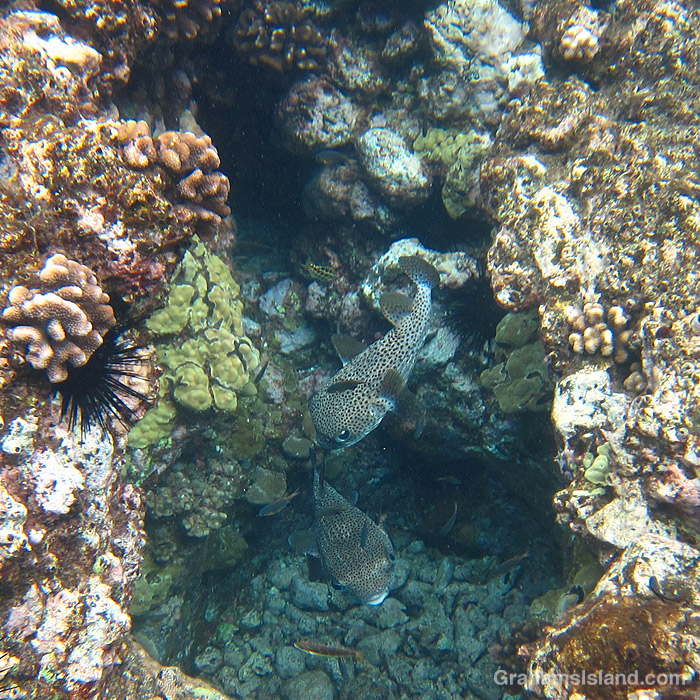
On a recent swim, a Giant Porcupinefish had claimed the spot and it rebuffed the approach of a smaller Giant Porcupinefish several times (top photo).
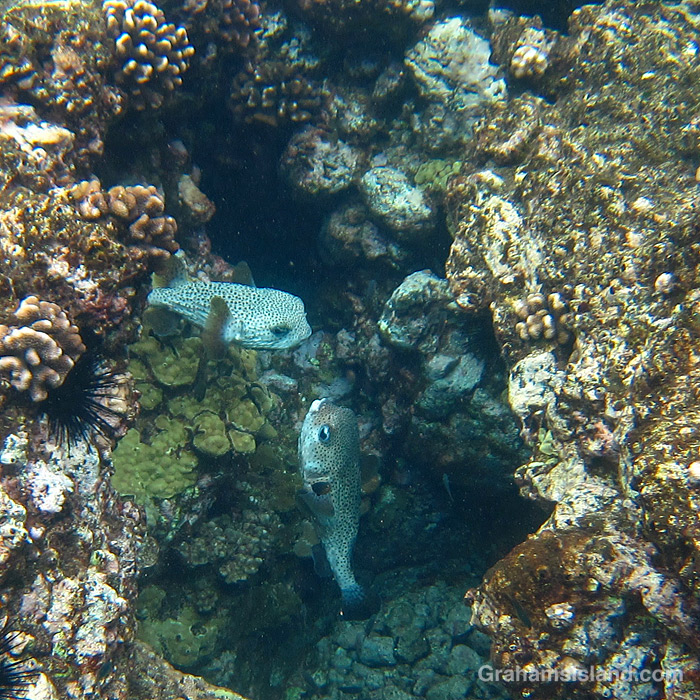
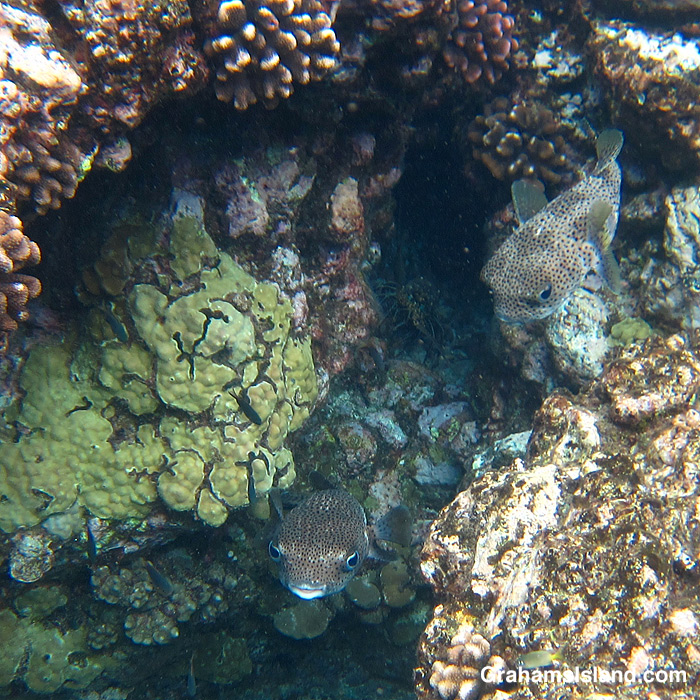
Next day when I got there, there were two Giant Porcupinefishes outside the entrance to the cave. Several times they swam towards the cave, then came back towards me (middle photos). It was only when I shifted my position a bit that I could see, inside the cave, the shape of a large lobster (bottom photo). It’s just to the left of the top porcupinefish, in the shadowy cave. Clearly the two fish did not relish the prospect of trying to evict the lobster!
Giant Porcupinefishes and lobster in the waters off Hawaii

Posted for Becky’s Squares: Shadows. See more responses here.
Encountered in the water

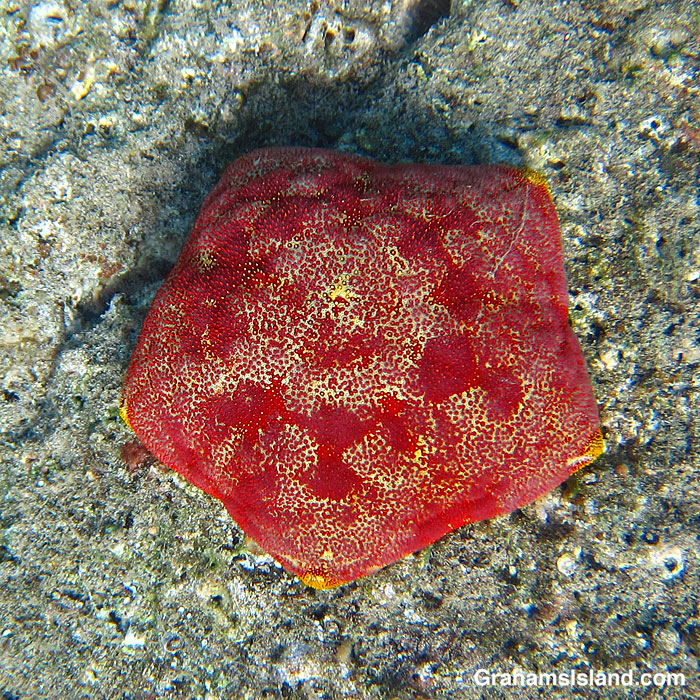
A Cushion Star in the waters off Hawaii.
Cushion stars look like their namesake and are often just as colorful.

This week’s Sunday Stills challenge theme is ‘In the Swim.’ See more responses here. These photos are from my swim two days ago.

Also posted for Becky’s Squares: Simply Red. See more responses here.

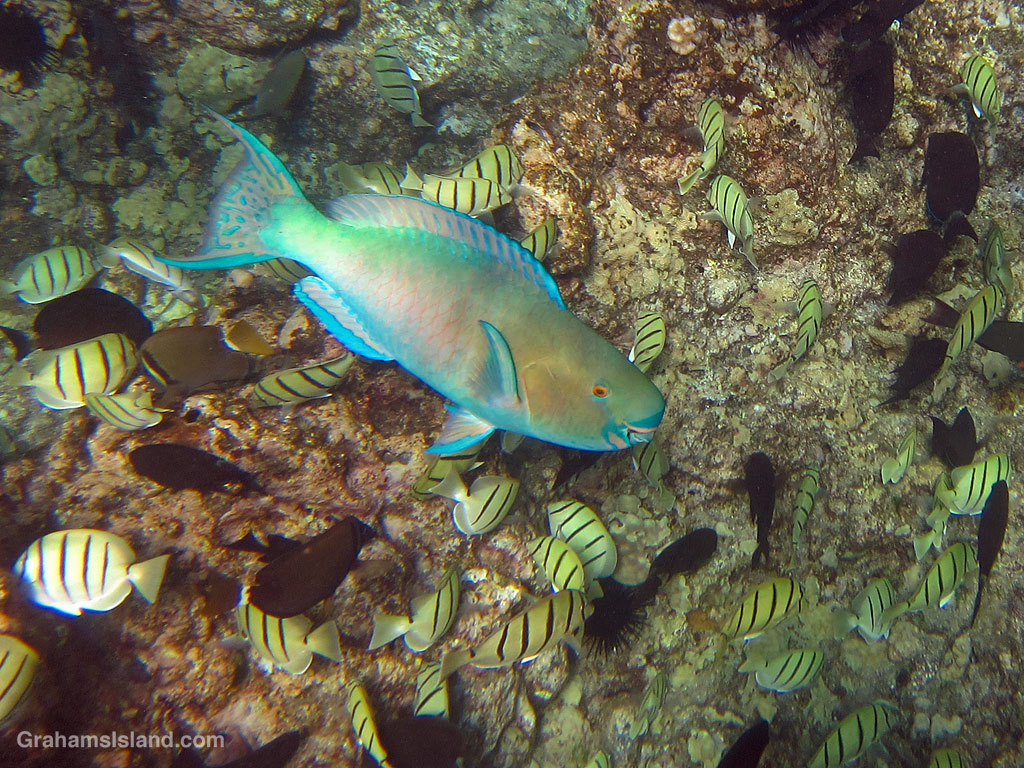
Top left: This Ember Parrotfish was passing over a school of Convict Tangs.

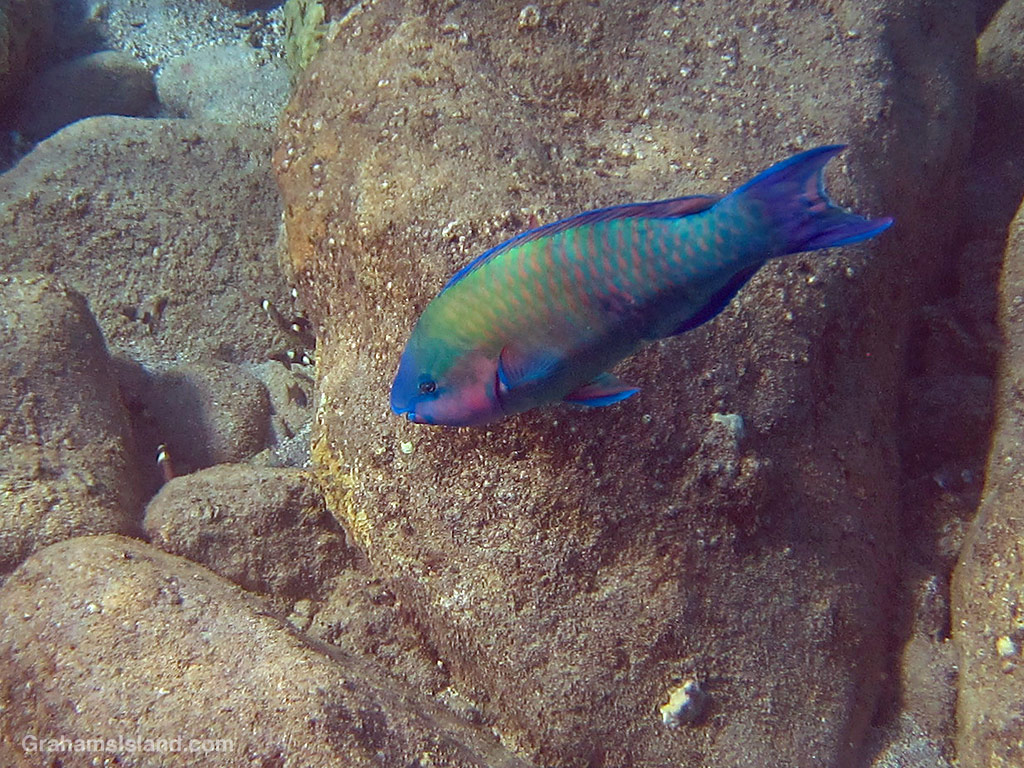
Top right: A Palenose Parrotfish caught the light, which really brought out its colors.

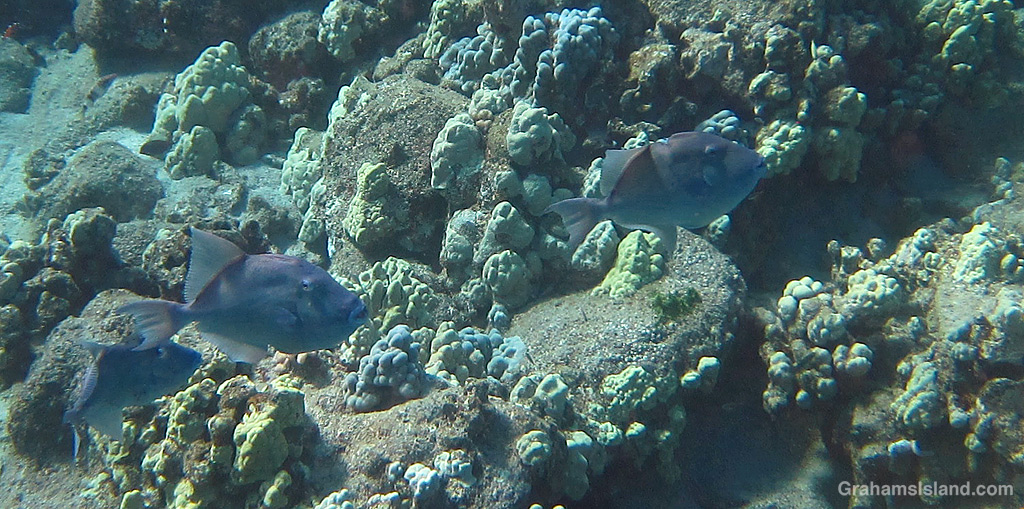
Bottom: I often see Finescale Triggerfishes, but rarely get decent photos as they seem to shimmer away like ghosts. These three were juveniles, in shallow water, and curious, as younger fish often are.

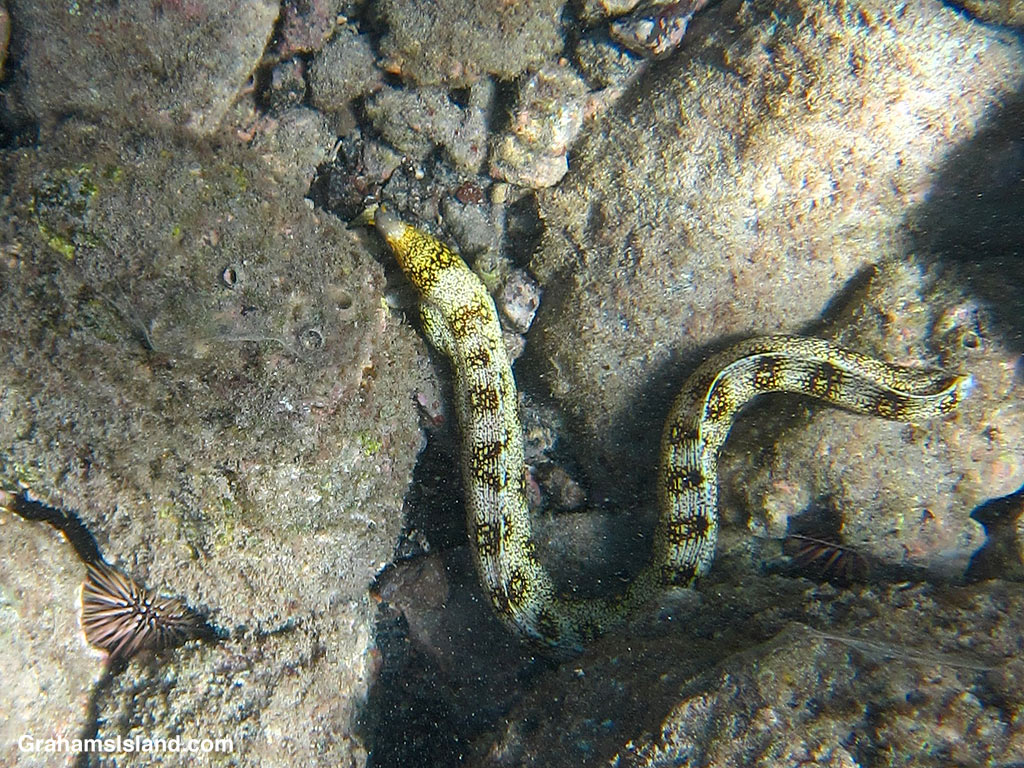
Top left: Last year, I posted (here) about a Peppered Moray Eel swimming towards me and then rearing up when it saw me. This one, probably the same eel, repeated the performance.

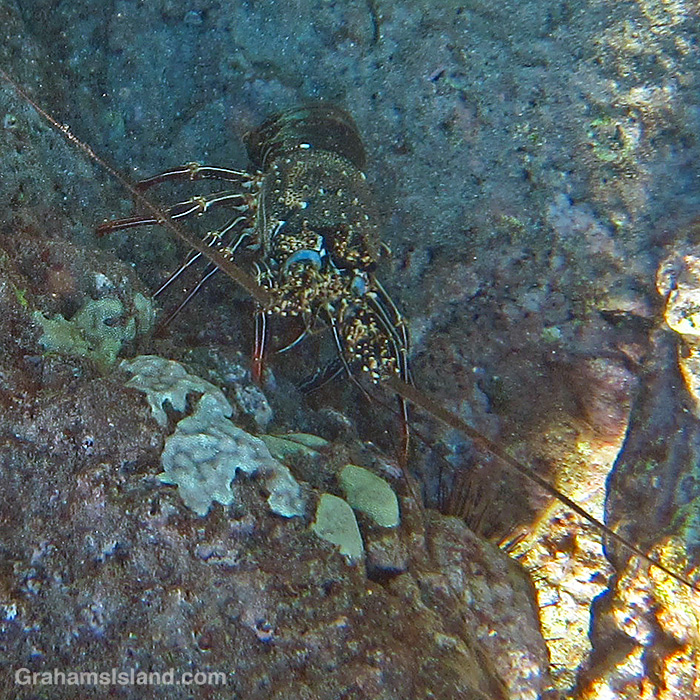
Top right: I hadn’t seen a lobster in a long time and then saw two on this day. This one is a Tufted Spiny Lobster.

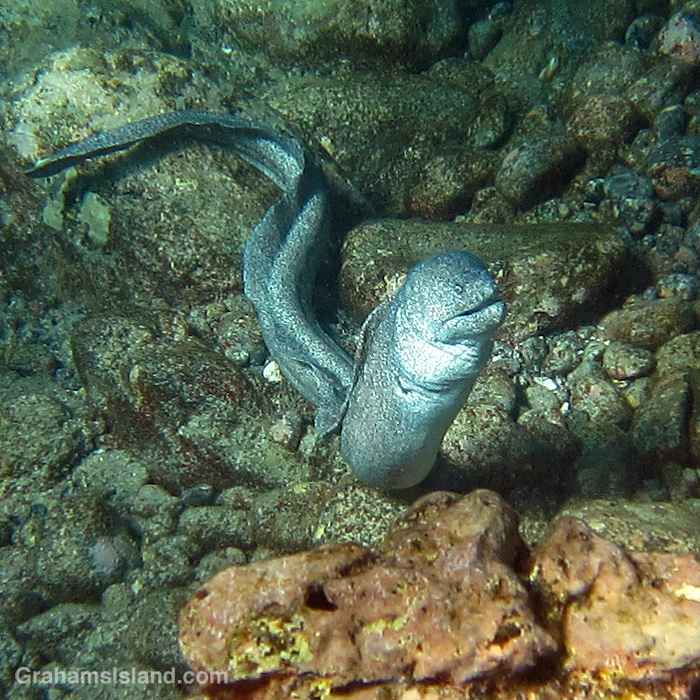
Bottom: I spotted this Snowflake Eel just a few feet before reaching the spot where I get out of the water. It was poking around looking for food and, fortunately, did not disappear under a rock as eels often do.

Tufted Spiny Lobster

A Tufted Spiny Lobster scurries along in the waters off Hawaii

It’s fairly common to see lobster molts while snorkeling, but not live lobsters, since they’re mostly active at night. On a recent swim, I got down to the water earlier than usual and was rewarded by seeing two fairly lively Tufted Spiny Lobsters. The smaller of the two scooted amongst the rocks and never really came out into the open, but this larger one traveled a good distance over the sea floor before scuttling backwards under a ledge.

These lobsters are notable for the patches of blue at the base of their antennae and the pale stripes on their legs.

Red Reef Lobster molt

A Red Reef Lobster molt in the waters off Hawaii

I saw this scene almost immediately after getting in the water, the bright red catching my eye. At first I thought it was some kind of garish fishing lure, snagged in the rocks. Then I saw other details and figured it must be some kind of marine invertebrate and probably a molt.

When I got home, checked the photos, and consulted my marine invertebrates book, I realized it was the molt of a Red Reef Lobster. Its sensory hairs can clearly be seen on the claw. These lobster are active at night and so rarely seen, but they can live in shallow waters and they molt every 6 weeks or so.

I doubt I’ll ever see a live Red Reef Lobster, so this is probably as close as it gets.

The morning dip

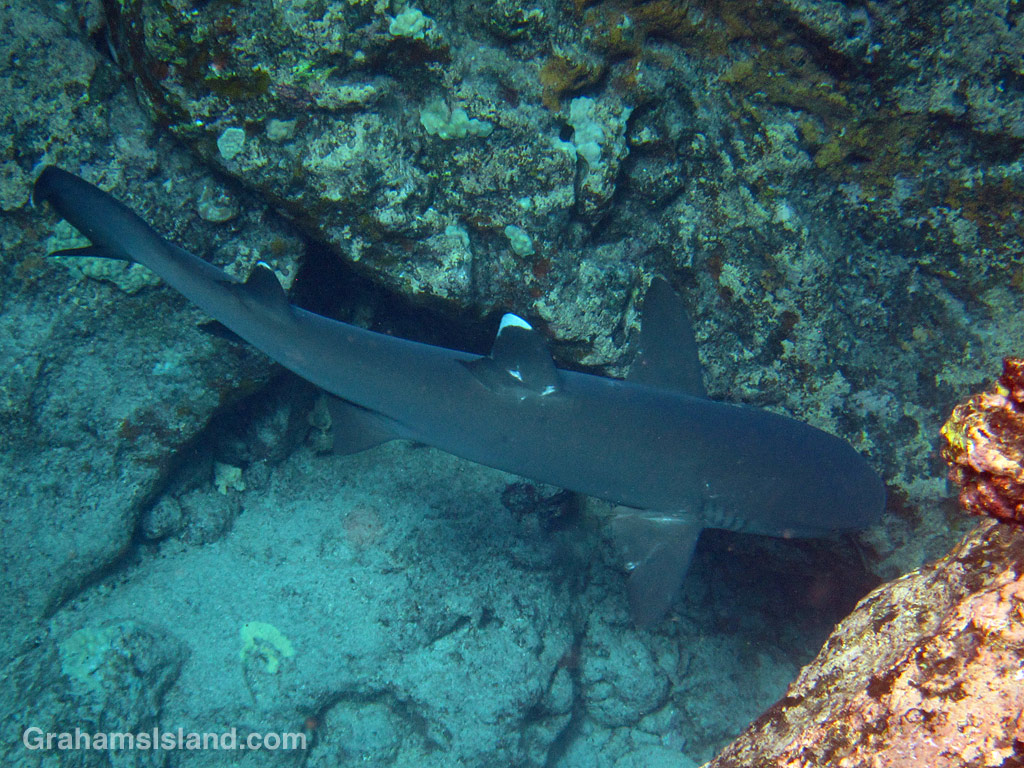
A whitetip reef shark passes below looking, I think, for a quiet place to get some rest.
A fourspot butterflyfish swims by a patch of cauliflower coral, some living, some dead. There are two spots on each side, but this fish was very small so the second spot was still filling in as space allowed.
A blue goatfish cruises by.
A green linckia sea star and lobster molt. Most green linckia have five arms but can have four or six. They’re able to reproduce by detaching an arm which will eventually develop into a new star.

This week’s Friendly Friday challenge theme is ‘Morning Rituals.’ See more responses here.

Most mornings, I try to get in the water, as conditions and schedules allow. Morning is the best time for snorkeling as the water is usually calmer before the wind picks up as the day wears on. Visibility can vary from day to day and it can help to check surf reports to see if there are any swells moving in. But calm water doesn’t guarantee good visibility just as swells don’t always mean bad visibility. There’s only one way to be sure and that’s to jump in.

My favorite thing about snorkeling is that every day is different and I never know what I’ll see. Going to the same spot means I become familiar with some of the regulars, but there are always transient creatures passing through including rays and dolphins. And while those big creatures are great to encounter, it’s equally interesting to watch the activities of smaller fish and marine invertebrates.

It’s a rare day indeed that I don’t emerge prattling on about something I saw while I was in the water. And on those rare days, well, I’ve still had a good swim to set me up for the day ahead.

It wasn’t until I processed this photo of a goldring surgeonfish that I noticed the stocky hawkfish resting motionless below it.

Lobster molt

Until I moved to Hawaii, I was not aware that lobsters molt. I only learned this when a local diver presented my wife with a lobster molt he’d recovered.

I’d seen live lobsters here, scuttling around on the sea floor, and others looking like the one in the photo. This one was moving, but only because of the action of the water on it. I used to think these were either dead or resting lobsters. In part this was because adult lobsters, which molt once or twice a year, discard a remarkably complete exoskeleton. It then takes them a few weeks for their new exoskeleton to fully harden.

This is probably a molt from a banded spiny lobster. True lobsters and their relatives have enlarged pincers on their front pair of legs. Spiny lobsters (family Palinuridae) are among the lobster varieties that don’t have those enlarged pincers.