Tag Archives: Orchids

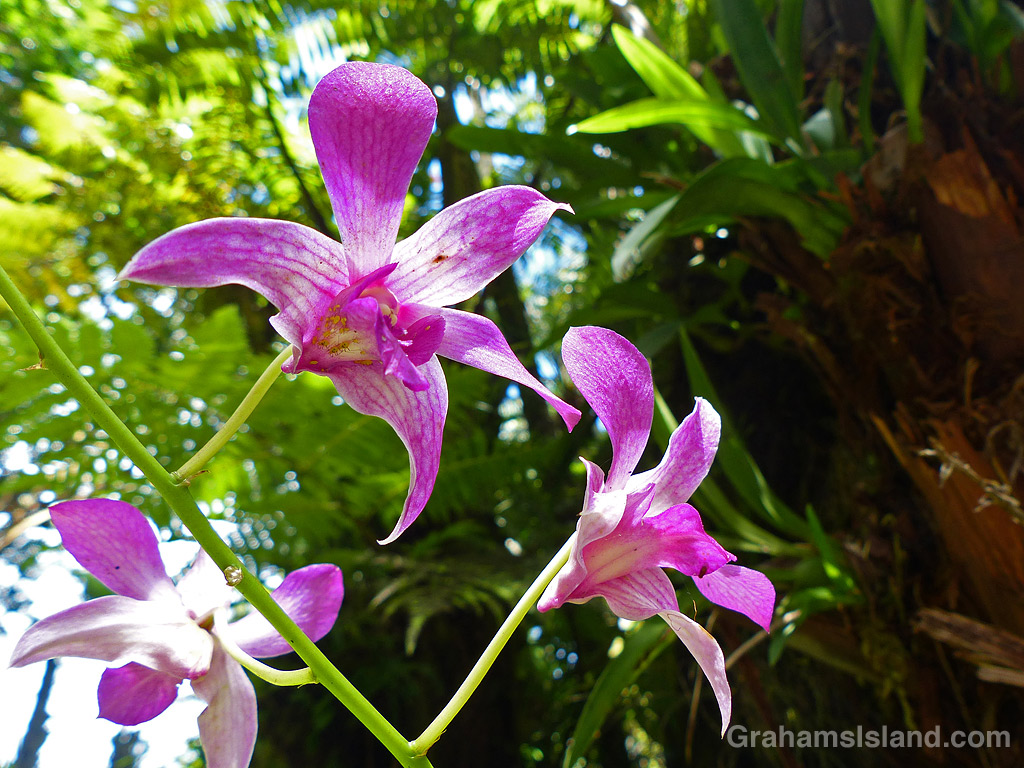
Spathoglottis orchid

Spathoglottis orchid

Spathoglottis orchid flowersThis spathoglottis orchid is probably spathoglottis picata, though it could be spathoglottis kimballiana. This one was at Hawaii Tropical Botanical Garden, which lists the kimballiana but not the picata in their plant database. However, that database doesn’t list all their plants, so it’s not conclusive. The closest images I found online looked more like the spathoglottis picata.

Bottom line is that it’s a beautiful flower whatever its exact name (but I’m always open to help in getting the correct identification for plants or anything else on the blog).

For more information about Hawaii Tropical Botanical Garden, go to htbg.com.

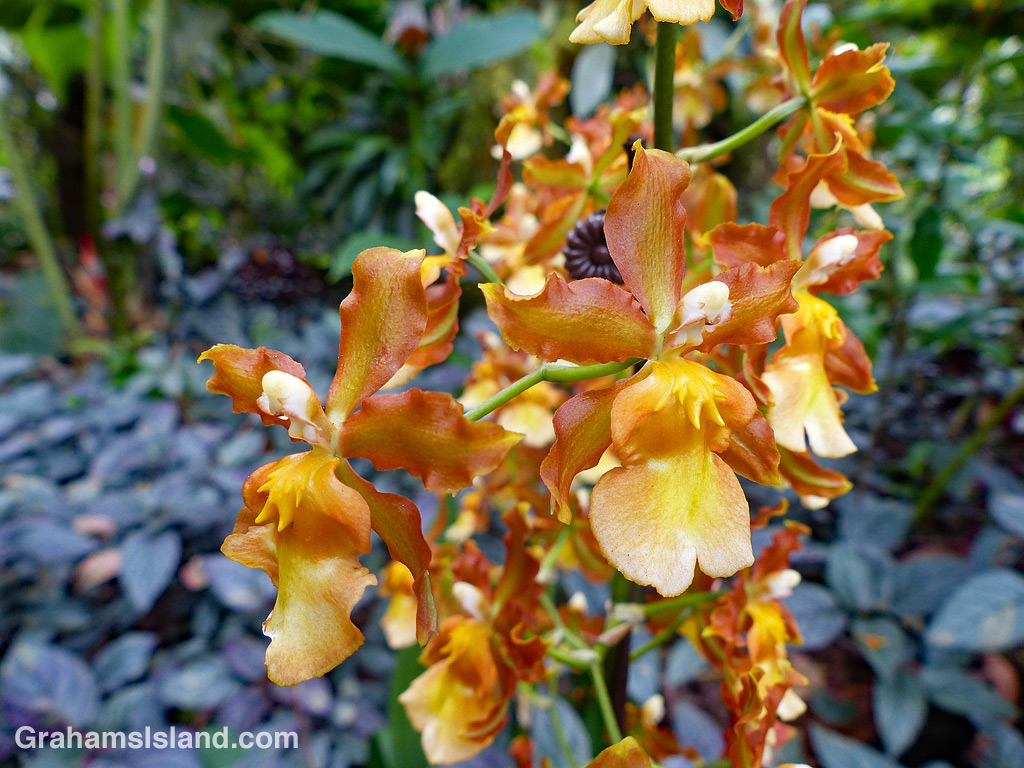
Arpophyllum spicatum

Arpophyllum spicatum

Arpophyllum spicatum is not a typical-looking orchid, but it is a member of the orchid family, originally from Central America. It’s sometimes called the candlestick orchid because of its tendency to form a dense column of flowers. This one, at Hawaii Tropical Botanical Garden, is a little looser.

For more information about Hawaii Tropical Botanical Garden, go to htbg.com.

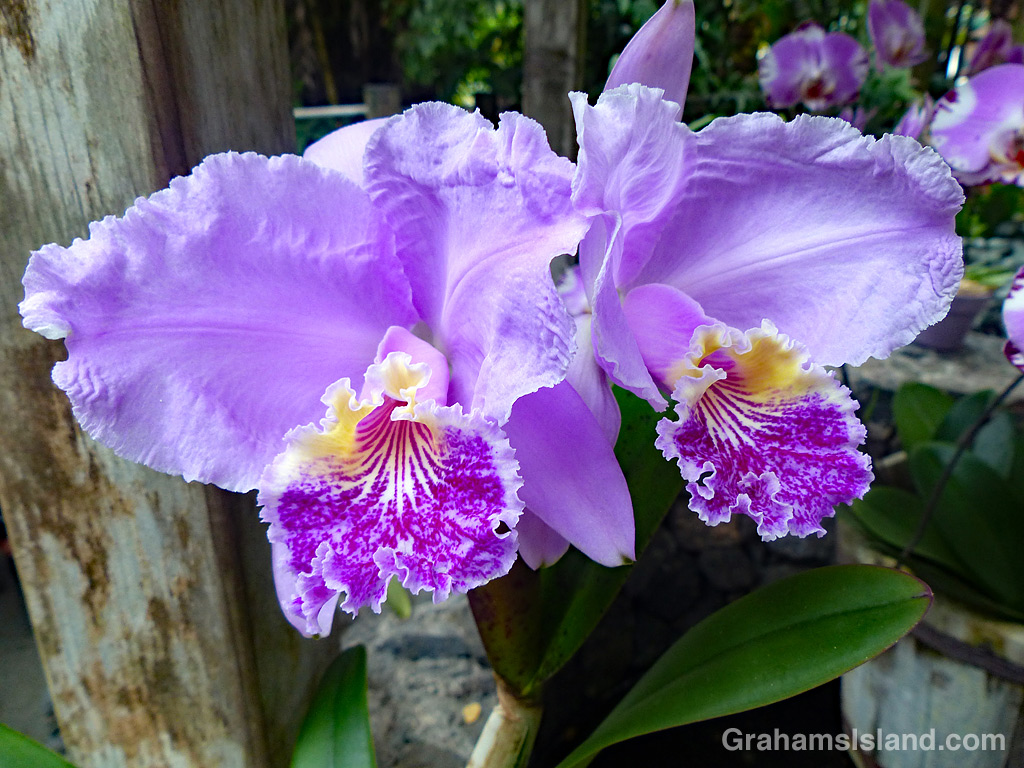
Cambria orchid

Cambria Orchid

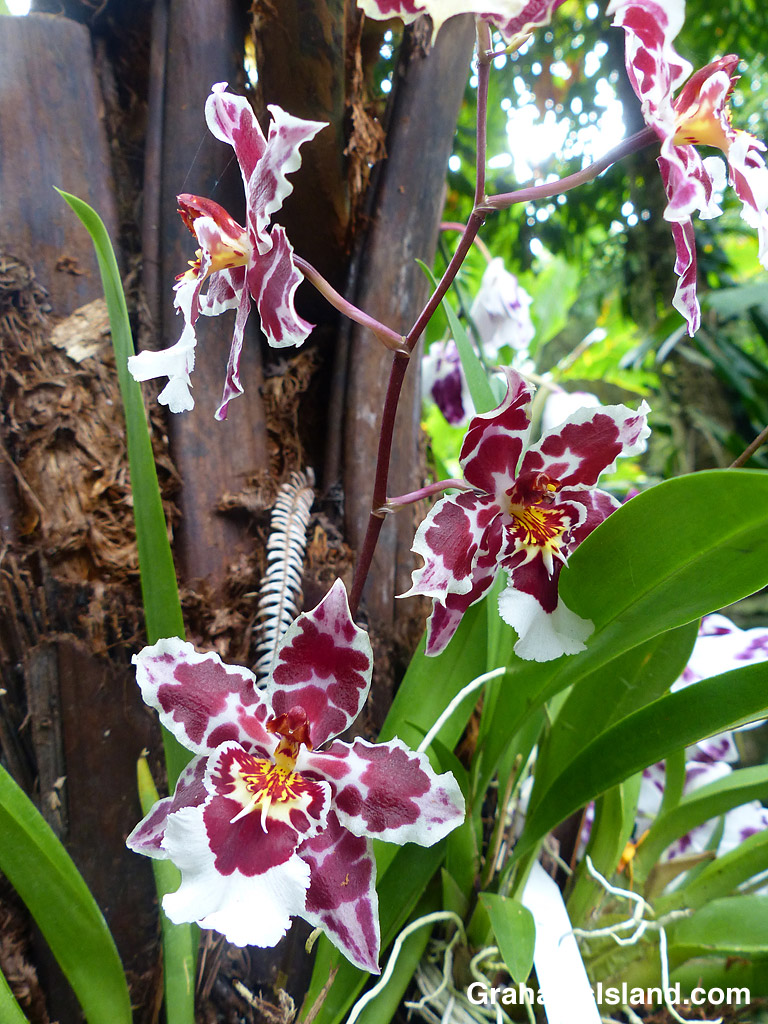
A favorite place I try to visit several times a year is Hawaii Tropical Botanical Garden, north of Hilo. There’s always something different in bloom, something new for me to see, such as this orchid.

As usual with orchids, I offer an identification with some trepidation. I think this is a cambria orchid, though exactly which type, I couldn’t say. Regardless, it’s a most striking and beautiful flower and that’s enough for me.

If anyone knows of a good orchid identification site online, please let me know.

For more information about Hawaii Tropical Botanical Garden, go to htbg.com.

Posted in response to the WordPress photo challenge, ‘Favorite place’.

Dendrobium spectabile orchid

The dendrobium spectabile orchid is sometimes referred to as the alien orchid, and no wonder. The curly, twisted flowers are very different from the usual orchid look. In addition, the flower is hinged, which prevents it from being fertilized by flying insects but allows crawling insects access.

A strange, but beautiful orchid, it hails from Papua New Guinea and the Solomon Islands.

Posted in response to this week’s WordPress Photo Challenge, ‘Out of This World.’

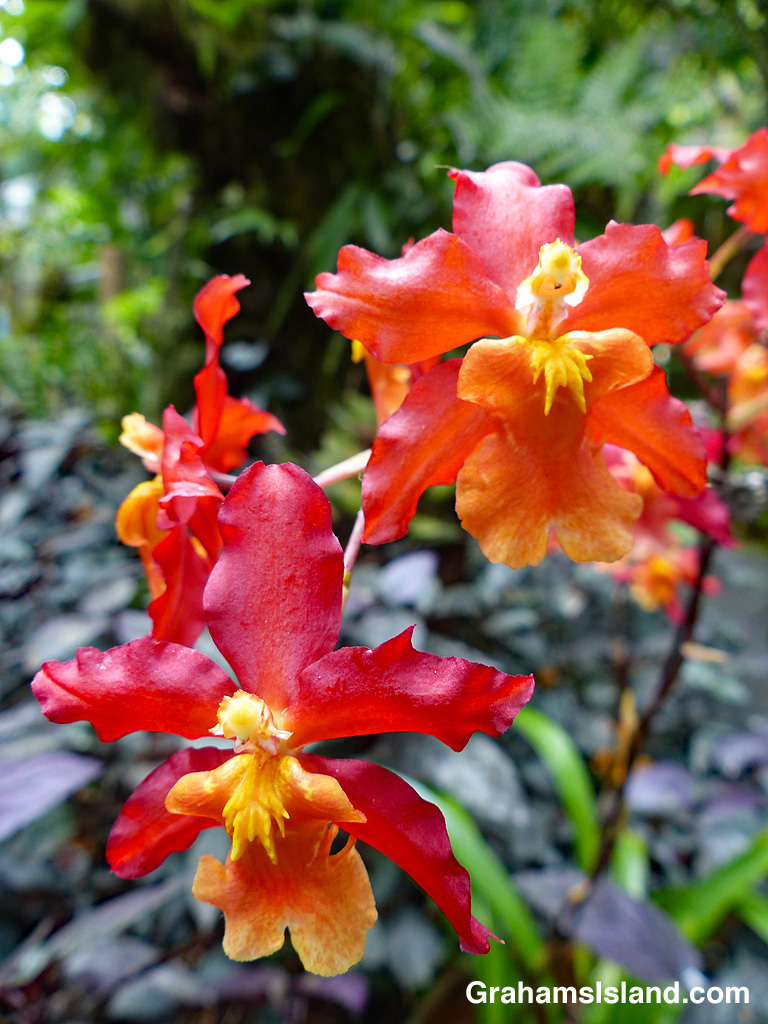
Orchids

This week’s WordPress photo challenge is ‘Variations on a theme.’ One of my first thoughts was orchids. It’s a family of flowers that is constantly changing as one plant is crossed with another to produce something a little different. So this is a collage of some orchids I’ve photographed at Hawaii Tropical Botanical Garden.

For more information about Hawaii Tropical Botanical Garden, go to htbg.com.

Zygonisia cynosure orchid

A Zygonisia Cynosure Orchid blooms at Hawaii Tropical Botanical Garden

In Hawaii, plants grow year-round so there is no ‘spring’ where the first new growth sprouts from the ground. But there are still seasons, times when certain plants come into bloom and then seed. This is one of several reasons why I like revisiting Hawaii Tropical Botanical Garden, north of Hilo. There’s always something new to see by visiting at different times of year.

On my most recent visit, I found this orchid, Zygonisia Cynosure ‘Blue Birds,’ blooming. It is, apparently, about as close as it gets to a blue orchid. It does have a certain ethereal quality about it.

For more information about Hawaii Tropical Botanical Garden, go to htbg.com.

A Zygonisia Cynosure Orchid blooms at Hawaii Tropical Botanical Garden

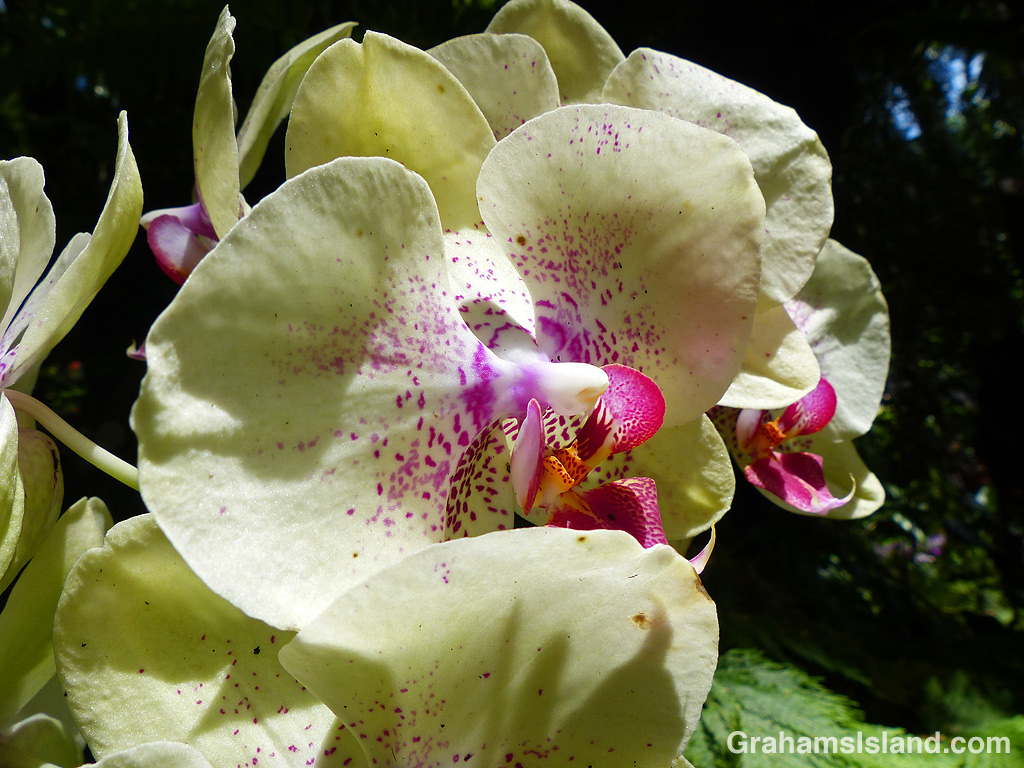
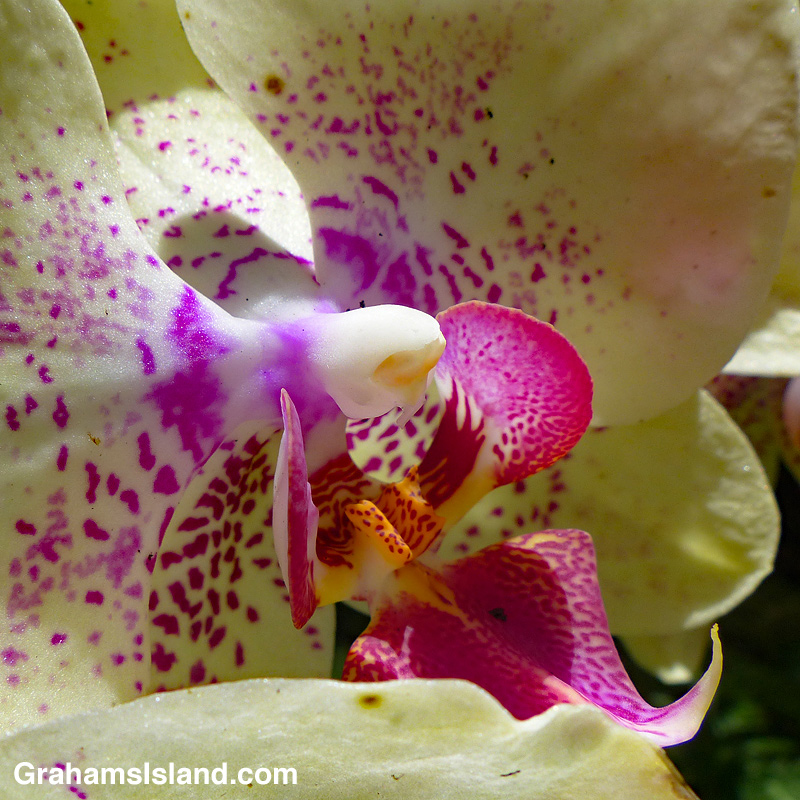
Phalaenopsis Yu Pin Star Dancer Orchid

This Phalaenopsis Yu Pin Star Dancer Orchid shows the unique structure of orchid flowers.This Phalaenopsis Yu Pin Star Dancer Orchid shows the unique structure of orchid flowers.

Orchids have a unique flower structure, which this Phalaenopsis orchid shows off.

They’re bilaterally symmetrical, the left and right halves being mirror images. The column in the center of the flower is a fusion of the male and female parts. They have three petals in an inner whorl and three sepals, usually as big as the petals, in an outer whorl.

The lower petal is the lip on which pollinators land. When the flower is in the budding stage, this lip starts out at the top. In most orchids, as the flower opens, it rotates until the lip is at the bottom, a process called resupination. Not all orchids do this. Some remain in the original upside down position and some rotate a full circle until they’re back where they started.