
This rainbow appeared when I was snorkeling and conveniently arranged itself over a rock I was swimming by. Even a couple of water spots on the camera housing were artfully arranged on either side of the rock.

This rainbow appeared when I was snorkeling and conveniently arranged itself over a rock I was swimming by. Even a couple of water spots on the camera housing were artfully arranged on either side of the rock.
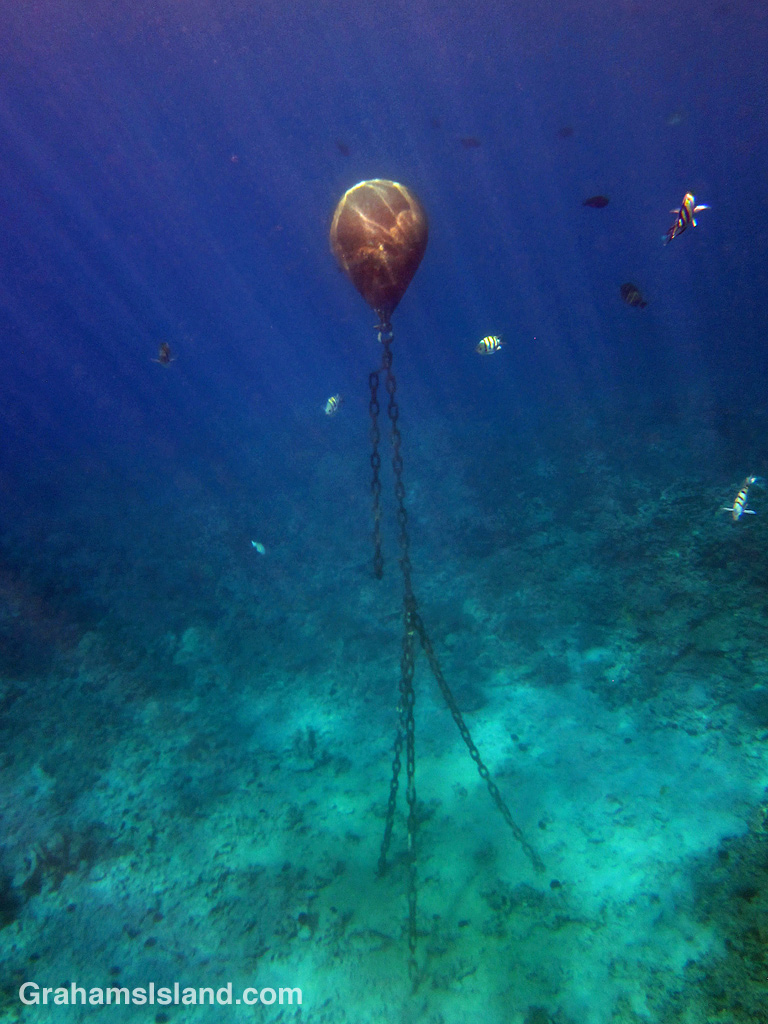
At the northern end of Kealakekua Bay, near Captain Cook’s monument, is an area that has good snorkeling. People can hike down to the place or take a boat trip there with one of several companies.
Many of the tour boats are small runabouts. The skipper can just drift with the boat in the bay while the clients snorkel. The largest boat is Fair Wind II, a catamaran that features has two 15-ft waterslides and a high-jump platform! This is not a boat suited to drifting around a bay lined with shallow, coral rich waters and crowded with snorkelers. So they have a mooring buoy in the bay.
Mooring buoys are basically floating balls with a length of chain tethering them to something heavy, usually a large concrete block. The chain is long enough to allow for the ebb and flow of the tides so that the buoy is always available for use. The idea is that a boat ties a line to the buoy, which holds it in a relatively restricted area so that it doesn’t crash into underwater obstructions, land, or other boats.
The Fair Wind II buoy in Kealakekua Bay is different in that its length of chain keeps it permanently below the water, regardless of the state of the tide, as the photo shows. The idea is that when the boat arrives in the bay, a crew person jumps overboard with a mooring line and attaches it, not to the buoy, but to the length of chain hanging below the buoy. The line is then hauled in and the boat is secure and held in place. I think that the reason for this slightly different arrangement is that there’s no buoy floating on the water day in, day out, regardless of whether it’s being used or not. In this historically important bay, this might be regarded as an unwelcome sight.
The last time I was there, the eerie appearance of the buoy was augmented by movement of the water causing the loose length of chain to clank, loudly, against the fixed length. It was a scene straight out of scary movie where the ominous quiet is shattered by the terrifying … well, you get the idea.
Posted in response to this week’s Friendly Friday challenge on the theme of ‘Ebb and flow.’ See more responses here.
For more information about Fair Wind II, go to fair-wind.com/.
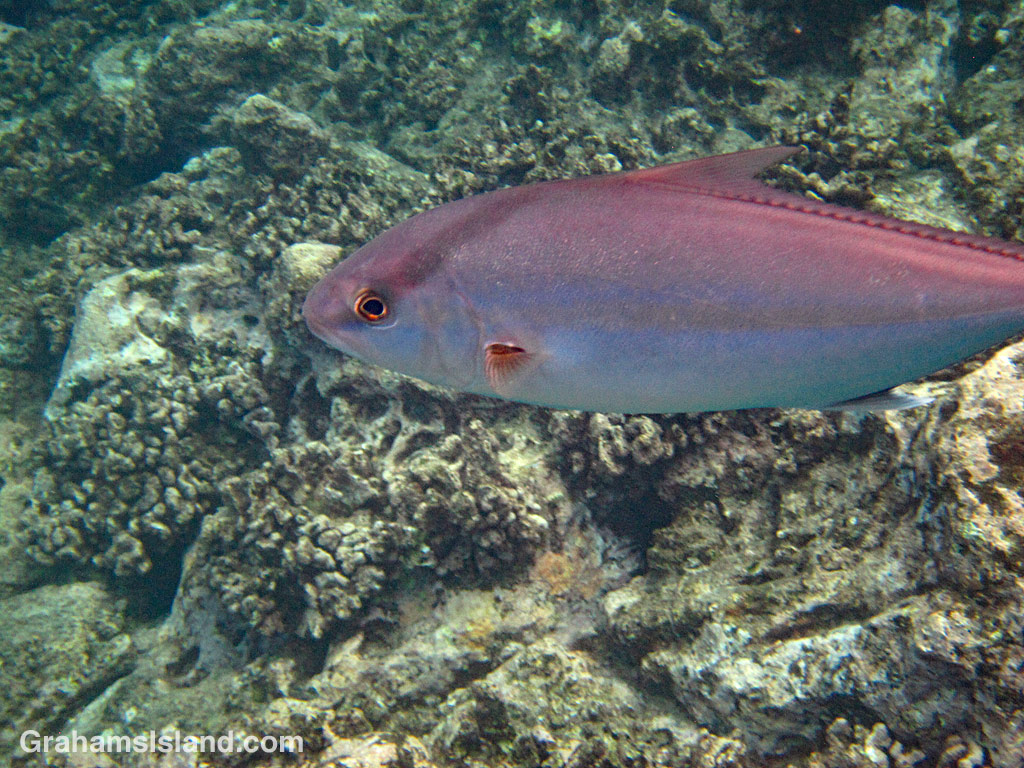
Nearing the end of a long swim, I noticed these two fish swimming towards me. At first I thought they might be bluefin trevallies, but I could see the coloration was wrong. The other thing I noticed is that the two fish never deviated in their course, which took them right by me. Most fish, when they see someone coming their way, will zip away or at least cautiously ease around the interloper. Because they passed so close to me, I was caught by surprise and only managed to get these two shots before they were gone.
The fish are greater amberjacks, which spend most of their time in deeper waters, but occasionally venture in shallower waters as these two did. The fish are easily identified by the dark diagonal bar through the eye and the yellow stripe along the sides, though that isn’t always visible.

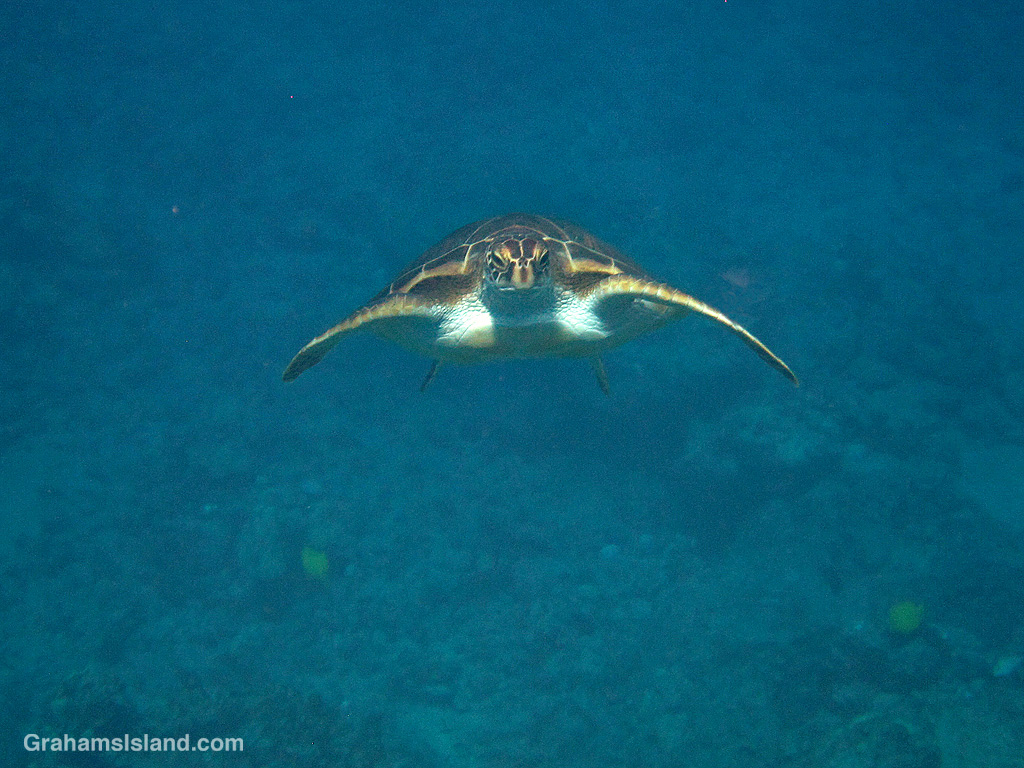
During a recent snorkeling trip, I happened to turn around and saw this turtle heading toward me. Usually they will head off in a different direction when they see something as strange as me, but this one came up quite close before sliding off to the side and gliding away again.
As you can see, there’s nothing green in the appearance of green turtles. The name comes from the color of their fat, found between their organs and carapace.
Posted in response to this week’s Sunday Stills challenge on the theme of ‘Green.’ See more offerings here.
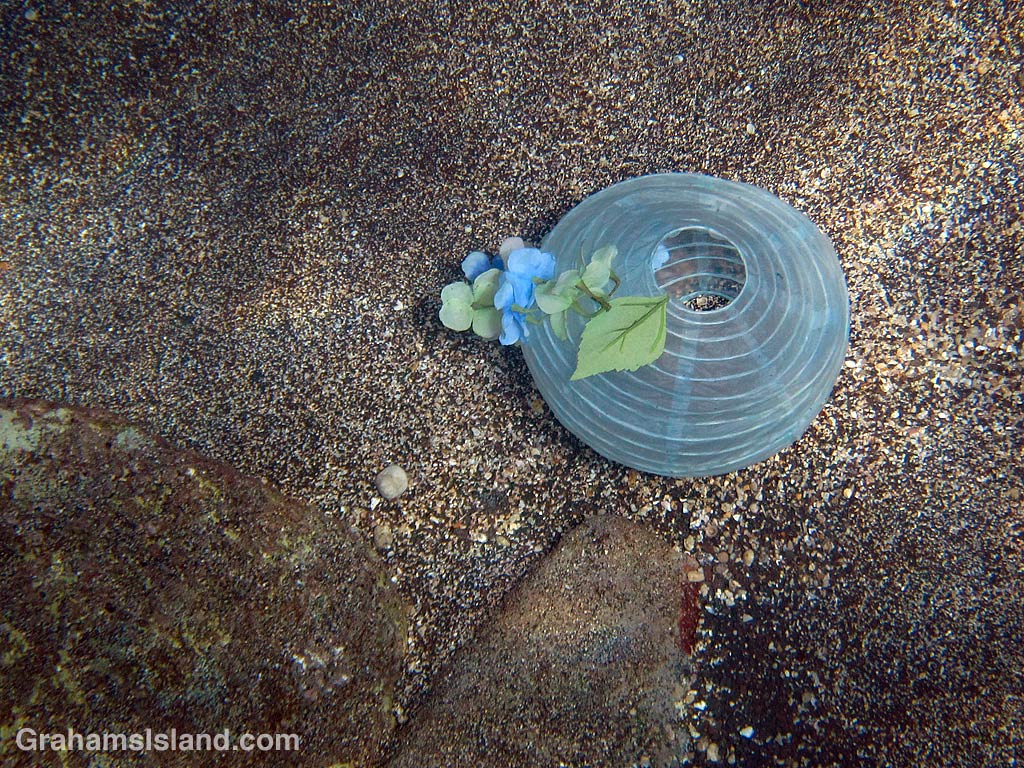
This photo makes it look like someone has placed this delicate shade on a beach. In fact, I found it in 10 feet of water in an area that is often buffeted by large swells, making it’s perfect appearance all the more unlikely. How or why the shade got there is unknown, but for me, that adds to the mystery of the scene.

This is a view of Pu’uhonua o Hōnaunau National Historical Park, otherwise known as Place of Refuge. The pu’uhonua or place of refuge was a place that offered sanctuary to those who had broken laws or been defeated in battle. Reaching this spot meant they’d be spared and allowed to go home.
So this view is one that a young frightened warrior might see while trying to reach that spot. Hale o Keawe, the small structure with the steeply pitched roof, can be seen in the center of the photo. It sits on the edge of the pu’uhonua. To the right of it is safety; to the left death.
Fortunately that wasn’t my choice. I was just looking at fish.
 This week’s Sunday Stills challenge theme is ‘Objects over 100 years old.’ (See more responses here.)
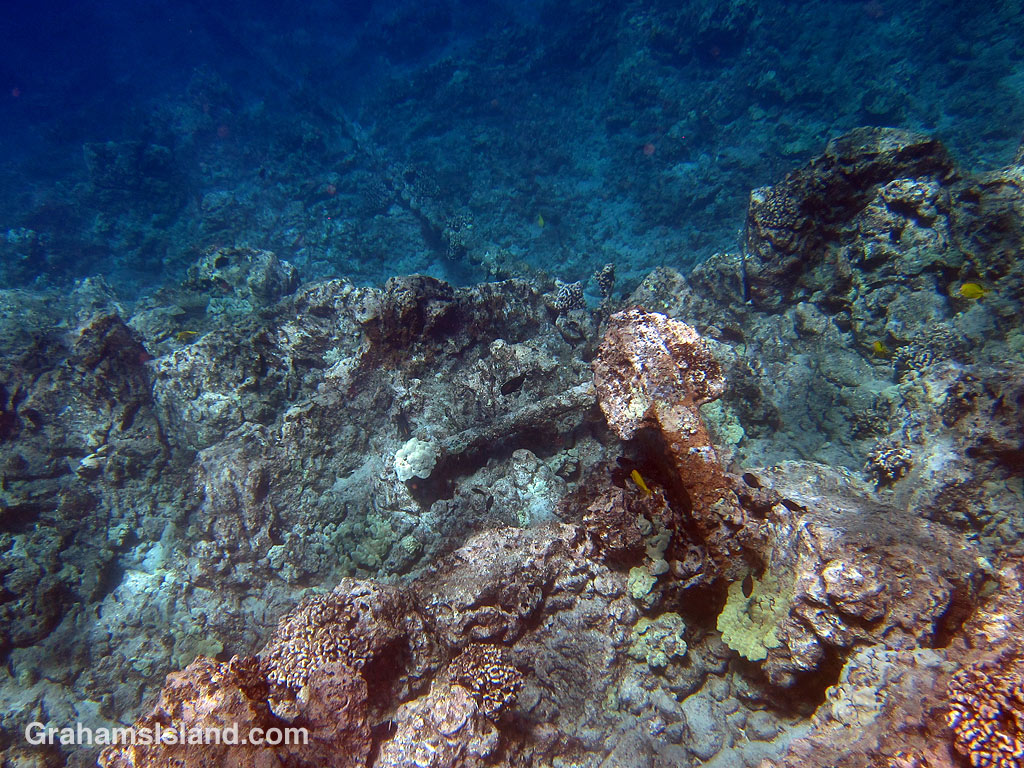
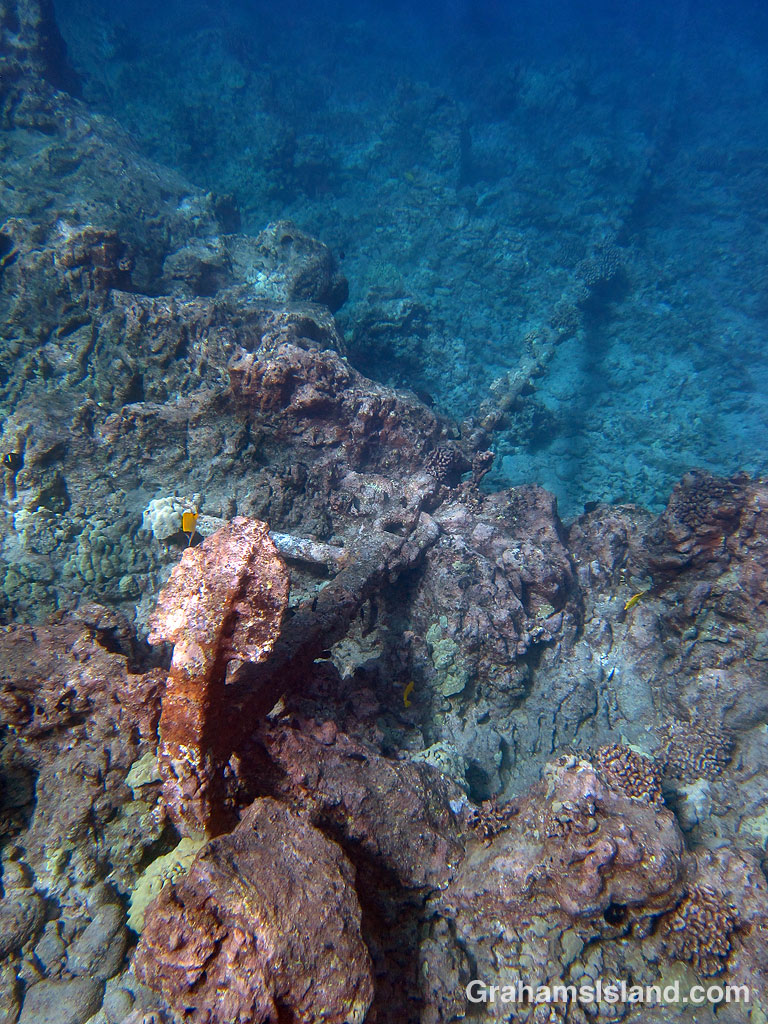
I can’t say for certain that this anchor and chain is more than 100 years old, but it almost certainly is. In the late 1800s and early 1900s, North Kohala was the center of the sugar industry with many plantations and several mills. This anchor likely dates from that time. It’s located in the bay where sugar used to be loaded onto ships.
I suspect the anchor isn’t lost from a ship, since it’s located in shallow water close to shore, with the chain leading out to deeper water – the opposite arrangement of how a ship would normally anchor. Instead, I think the anchor and chain were part of an offshore anchoring system used at the harbor. A ship would drop its anchor from the bow in deep water and attach to the anchoring system from the stern. This would keep the ship fairly stable and make the transfer of cargo, from small boats, easier.
After the sugar industry shut down, a lot of buildings and equipment were abandoned, and in the water, the anchoring system was left to rust.
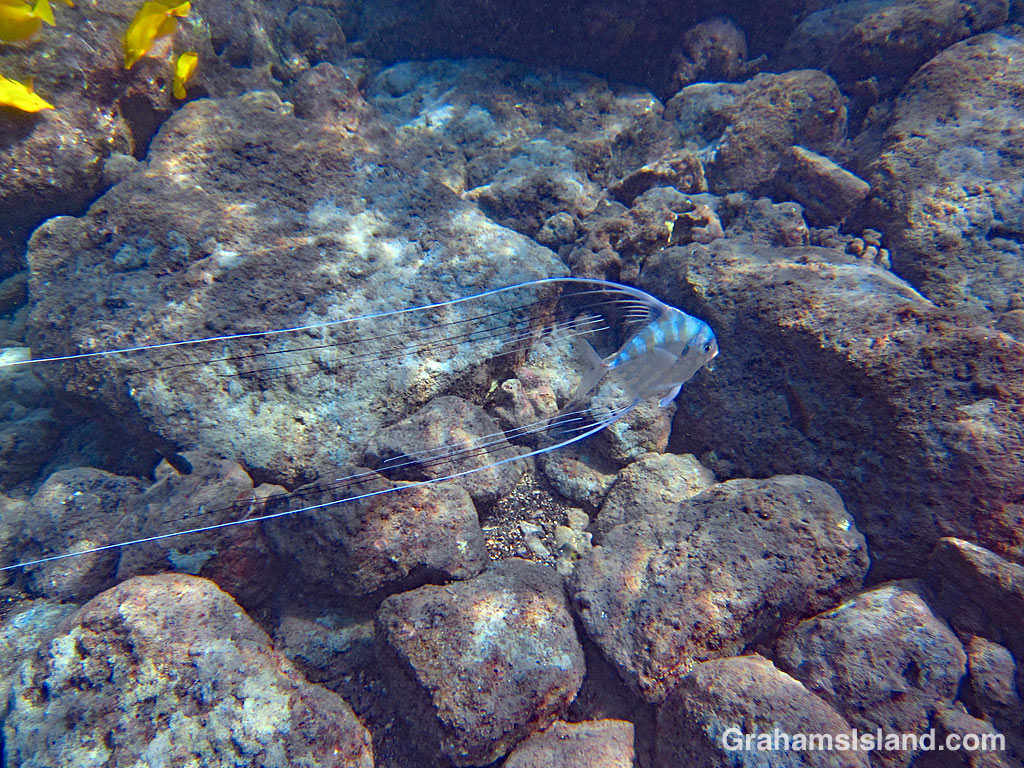
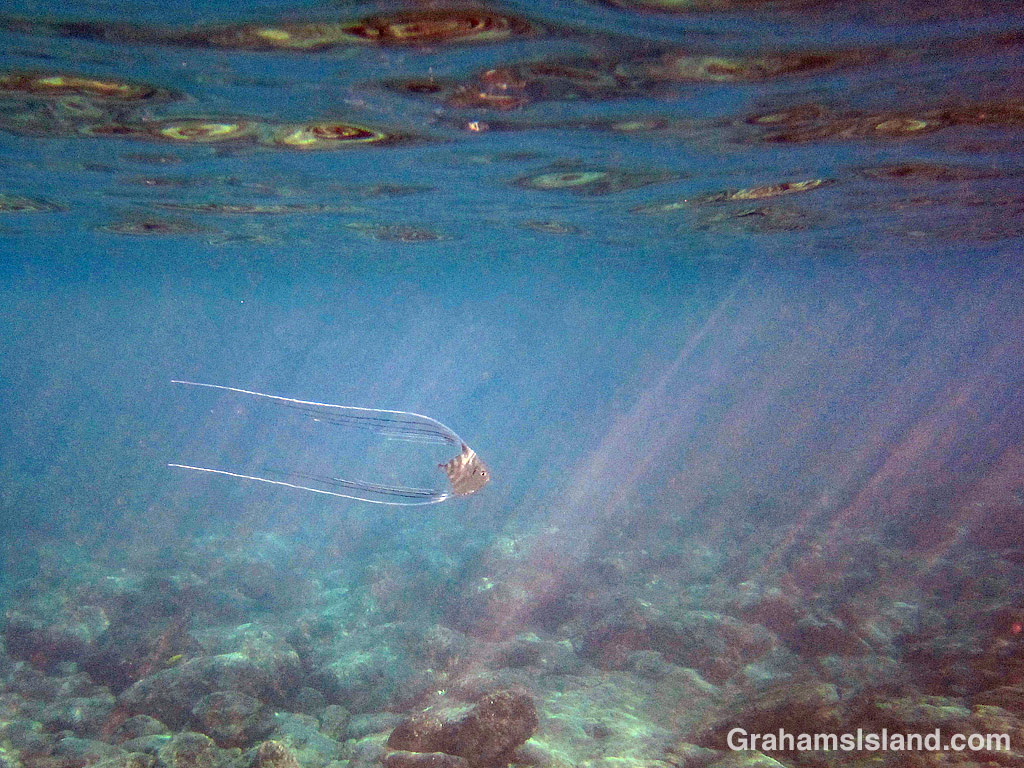
This is the time of year when juvenile threadfin jacks can sometimes be seen in inland waters. I’ve been on the lookout for them since May, but haven’t seen any. This doesn’t mean they’re not there; so small and shimmery, they’re easy to miss in murky shallow water.
Last week, my vigilance was rewarded. While the water wasn’t too clear, the swell was low so I headed among the rocks near the shore and saw my first threadfin of the year. I took the bottom photo which, while not great, does show the shallow area it tends to inhabit and the sun filtering through that water.
Next day, I went back to the same spot but didn’t see the fish. So I turned and headed out toward deeper water and almost bumped into it coming the other way. I quickly snapped the top photo as it went by, not sure if it was even in the frame, before it disappeared into the shallows.
In the past, these juveniles have stuck around for several weeks, so I’ll hopefully get to see this one a few more times. Ultimately, it will head out to deep water and grow up to be a stocky four-footer living up to 200 feet down.
 Graham's Island