Tag Archives: Wrasse

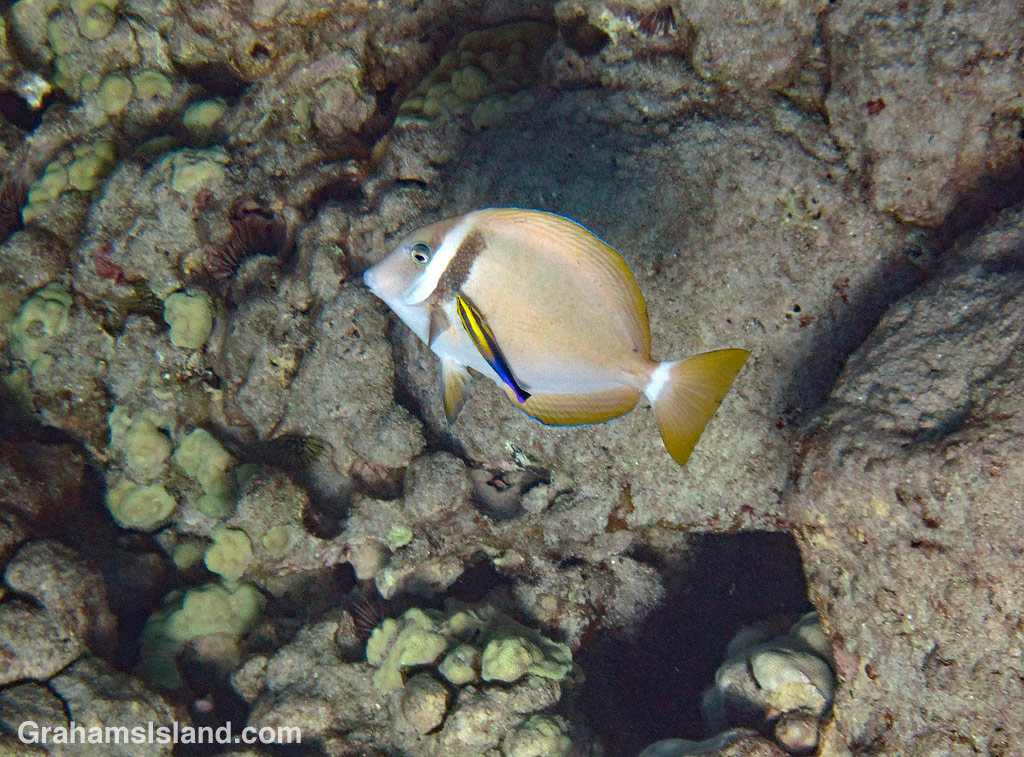
Cleaner wrasse and whitebar surgeonfish

A cleaner wrasse performs its service on a whitebar surgeonfish. Cleaner wrasse establish stations where other fish can visit to be cleaned of mucus and parasites.

When I’m snorkeling, I enjoy visiting these stations to see what’s going on and which fish are availing themselves of the services offered. Some of these fish are predators who, in other circumstances, might be expected to make a meal of a cleaner wrasse. But because of the beneficial service they offer, cleaner wrasse get a free pass with predators.

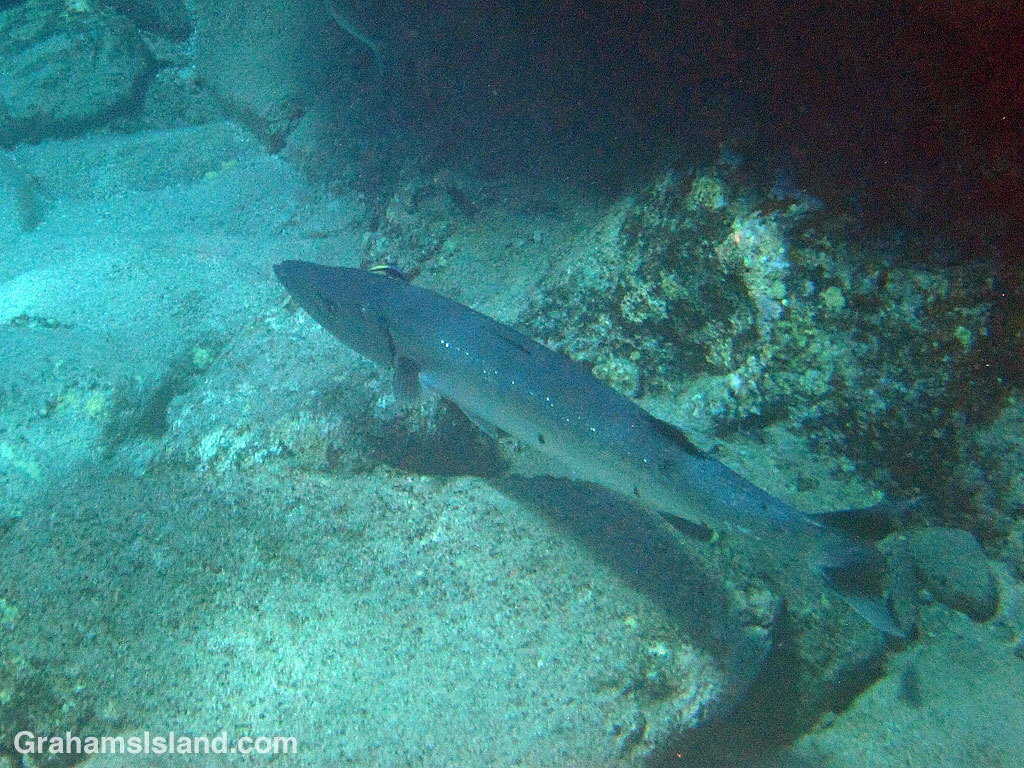
Great barracuda being cleaned

Great barracudas give me the willies, more so than sharks or most anything else in the ocean. There’s something about their appearance and how they hang motionless in the water that I find unnerving.

A little way south of my usual snorkeling spot, there’s a concentration of these fish that always rattles me as I swim through. Most of the barracudas I see are two feet long or less, but there a few among them that are much bigger than that. When I run into them, I’m leery about pointing my camera at them in case that upsets them in any way, because they don’t look like fish that would take kindly to being upset.

On this day, I was swimming with a friend when we came upon this very large great barracuda, just hanging in the water. Turned out it was being cleaned. The little blue and yellow fish above the head of the barracuda is a cleaner wrasse. These little fish set up store in different areas and clean mucus, dead tissue and parasites off other fish, which make regular visits to take advantage of this service.

Many fish being cleaned have an aura of great contentment while it’s going on, and this barracuda also looked quite relaxed, to such an extent that I lost my trepidation about it and got a bit closer than I normally would.

The wrasse is probably around 3 inches in length which would mean this barracuda is probably around 4 feet long.

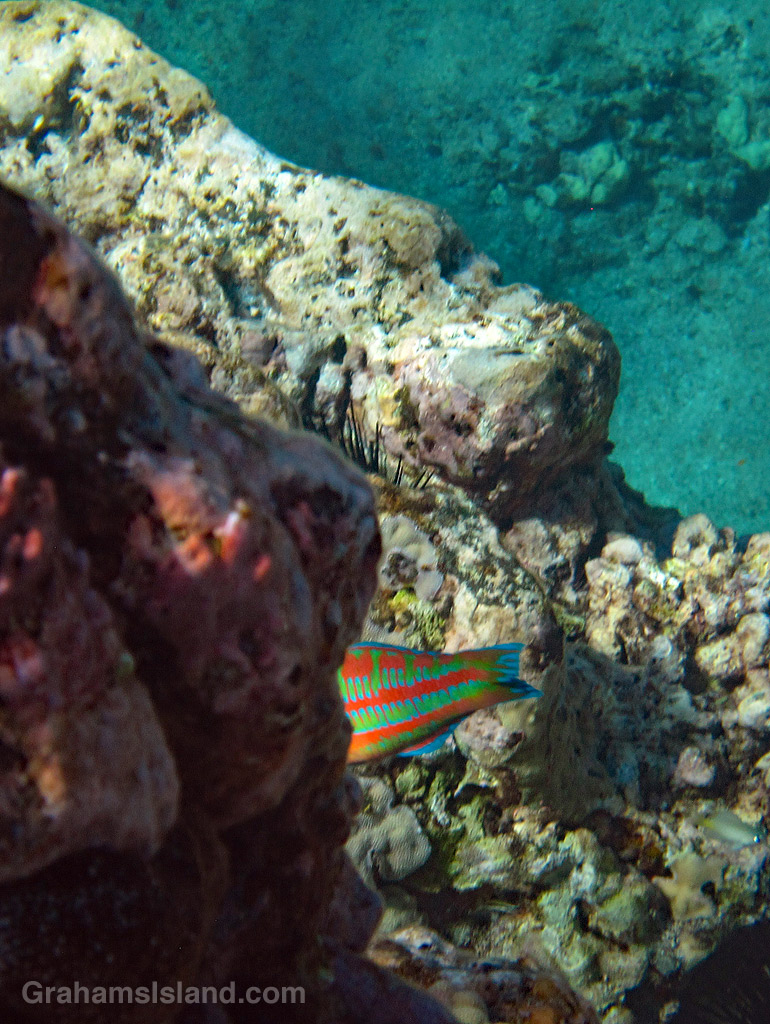
Fivestripe wrasse

Fivestripe Wrasse

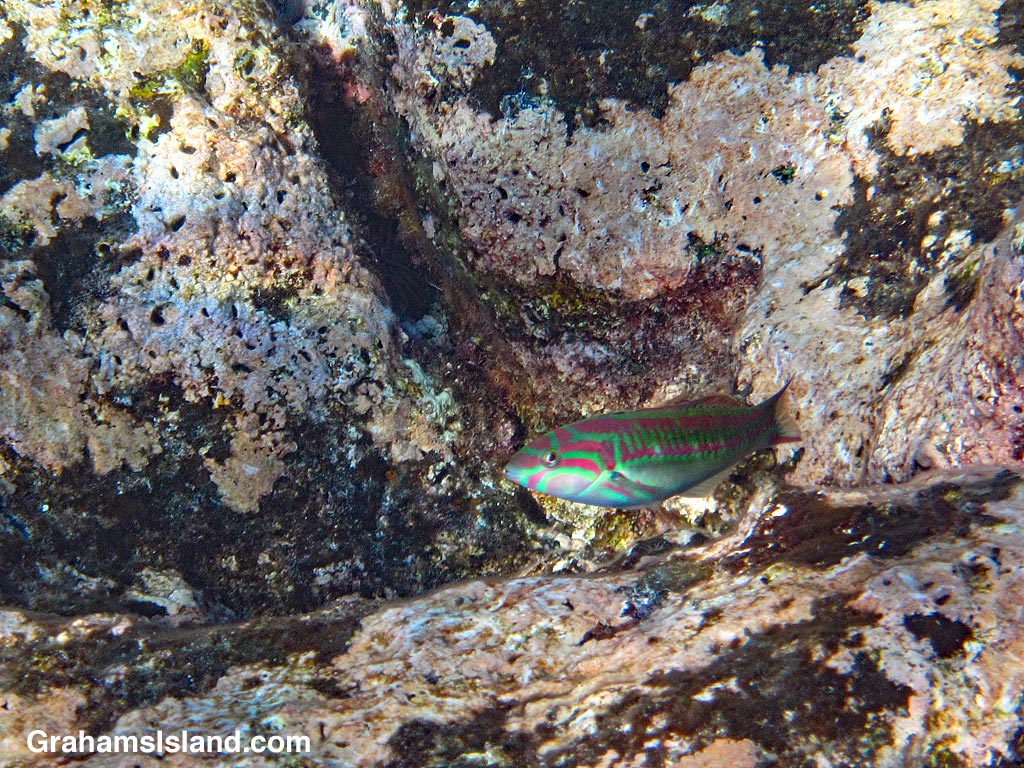
This is a supermale fivestripe wrasse. There are many colorful wrasses in Hawaii, but the fivestripe wrasse is one of the less common varieties. Despite the impressive name, it’s less than five inches in length.

Bluespine unicornfish being cleaned

Bluespine Unicornfish and cleaner wrasse

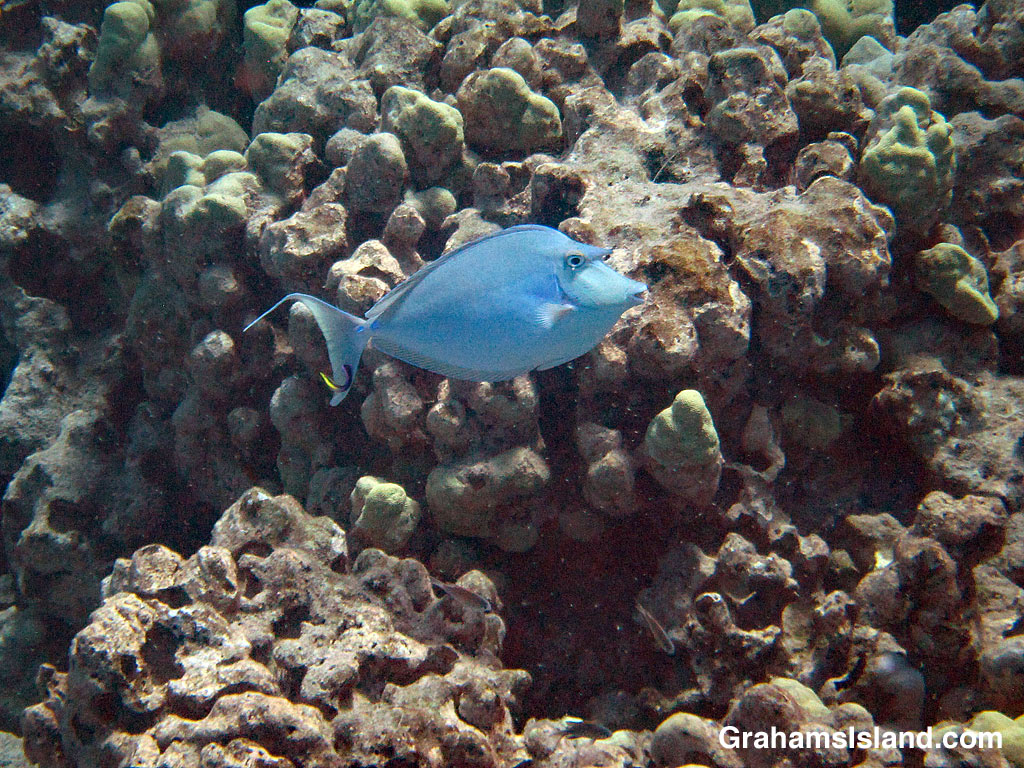
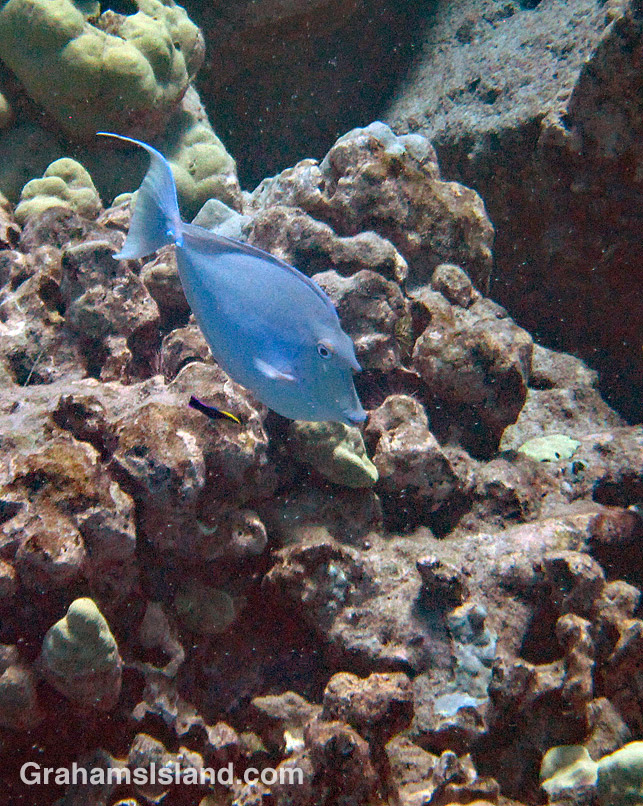
Bluespine Unicornfish being cleanedThe bluespine unicornfish must be a contender for any ‘Grumpiest Looking Fish’ awards. This one though was enjoying the attention of a small yellow and blue Hawaiian cleaner wrasse.
Cleaner wrasses establish territories where other fish come to be cleaned, removing mucus, dead tissue, and parasites from their customers. This service is obviously valued by other fish. They will line up to be cleaned, waiting their turn. Often times, their expressions are quite blissful during the process. But most significant, cleaner wrasse perform their services on bigger fish, including predators, without becoming prey.

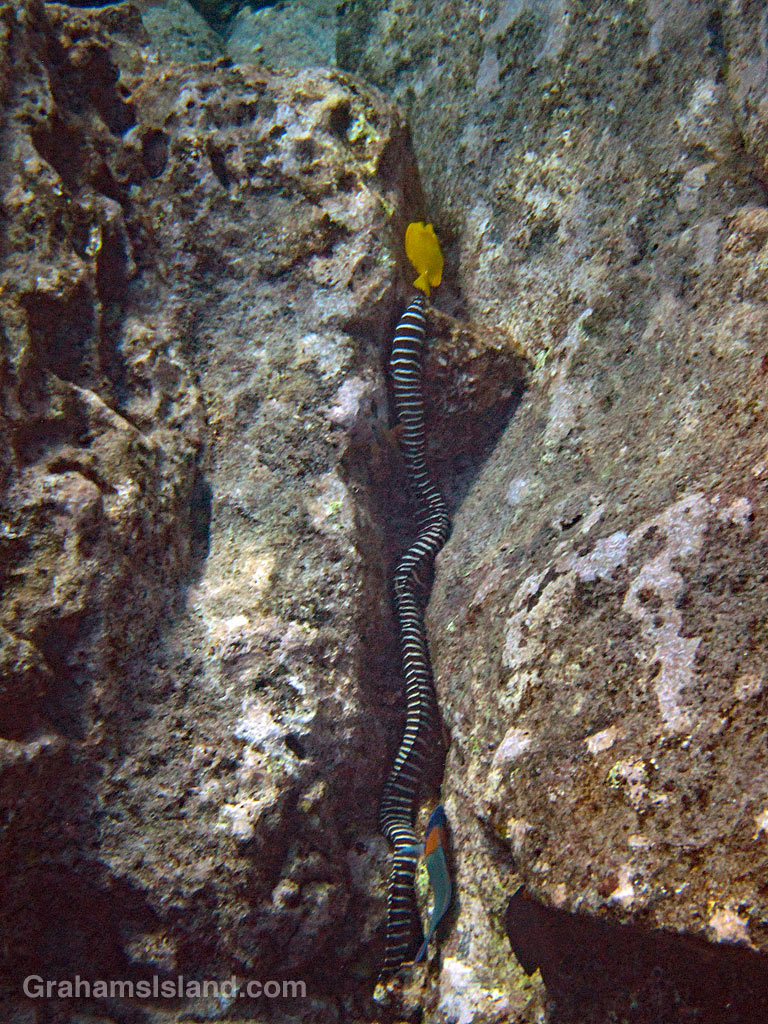
How long is a zebra moray eel?

Zebra Moray Eel

Zebra moray eels are one of the easiest eels to identify, their circular stripes differentiating them from any other eel. They feed mostly on crabs, which they crush with their blunt teeth.

These eels can grow to five feet in length, but are usually smaller. This one though is probably about as large as they get. The yellow tang near its head could be as long as six or seven inches, while the saddle wrasse at its tail tops out at ten inches. That would make this eel somewhere between four and five feet long. It’s certainly the biggest zebra moray that I’ve seen.

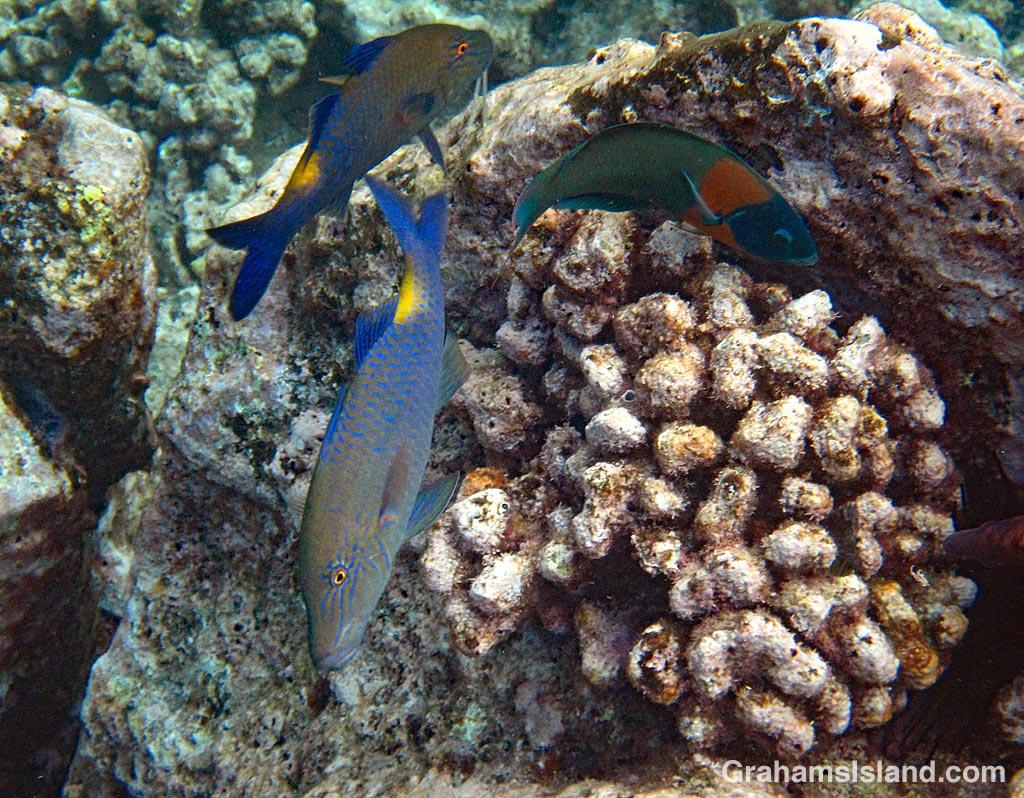
Gang activity

Bird Wrasse, Bluefin Trevally and Blue goatfish

I happened upon this little gang of fish while I was swimming. At the top is a bluefin trevally, in the center a pair of blue goatfish, and at the bottom a male bird wrasse. Trevallies and goatfish regularly hunt together, often in the company of an eel or octopus. They try to flush out or ambush small fish as their prey. The bird wrasse eats mostly marine invertebrates but will also take small fish .

I often see fish like these hunting, but have yet to see any of them snag a meal, though they clearly are reasonably successful hunters.