

This very small katydid gave me a wary look as I descended the front steps. It had good reason to since katydids have been one of the main munchers of the basil plants. But since those plants are now safe under netting, I tiptoed past without so much as a nasty glare.
Category Archives: Insects
Grasshopper shadow

A grasshopper casts a shadow on a glass windshield.
Bee on ulei

Ulei (Osteomeles anthylidifolia) has lovely, fragrant flowers. It’s indigenous to Hawaii and is a member of the rose family. Speaking of which, correct pronunciation is important (oolayee). Otherwise, it will likely sound like the aforementioned part of the male anatomy!
Sleepy orange butterfly
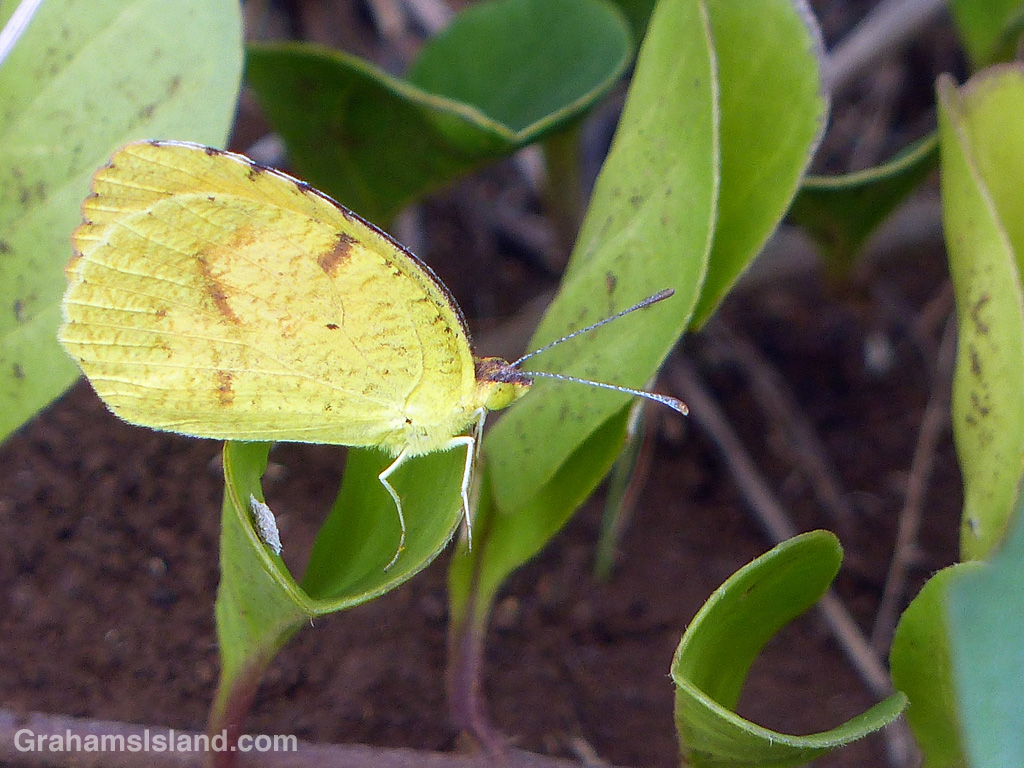
The sleepy orange butterfly (Abaeis nicippe) is one of the newest introductions to Hawaii. It was first seen on Oahu in December 2013 and is already established on all the main Hawaii islands, an unusually rapid spread. Part of its success in thriving here might be that has a wide range of habitats where it can live. It’s been spotted from sea level all the way up to 6,800 feet.
While its name is sleepy orange, like most of the butterflies I see here, it’s a rapid flier, jitterbugging around in such a way that it’s hard to capture in flight. Fortunately for me, this one was jitterbugging in 30 m.p.h. winds and seemed happy to take any opportunity to find a sheltered spot to rest.
Baby praying mantis
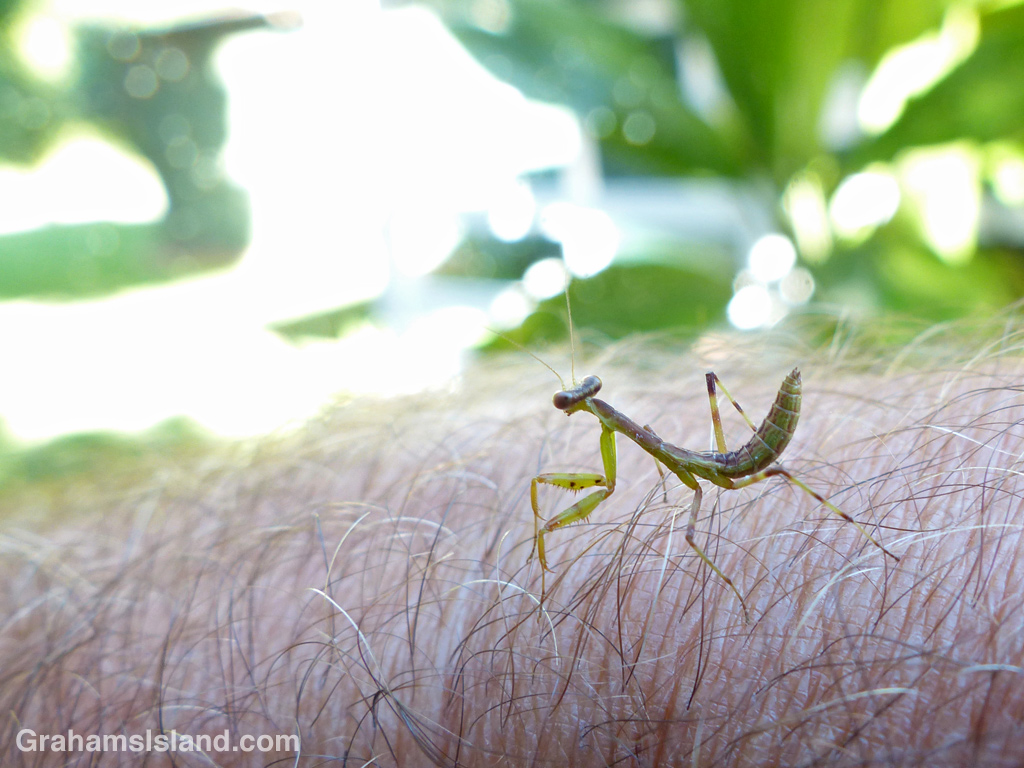
I was out in the yard taking photos on a windy day when I felt something tickle my arm. I thought it was a leaf, but looking down found this baby praying mantis on the move. I watched it for a while before setting it down on a leaf in a sheltered spot.
Ground beetle fine dining

This ground beetle, possibly Carabus nemoralis, might not have anticipated finding a butterfly or moth squashed on a dirt road, but it wasn’t about to pass up a free meal.
Pinkhead smartweed

This cheerful, but somewhat weedy plant grows along roadsides. It’s particularly striking on Saddle Road where it adds color to the otherwise lava-rich landscape. Also, I like the name. It sounds like the not-too-bright son of a moneyed family on the east coast.
Sphecid wasp
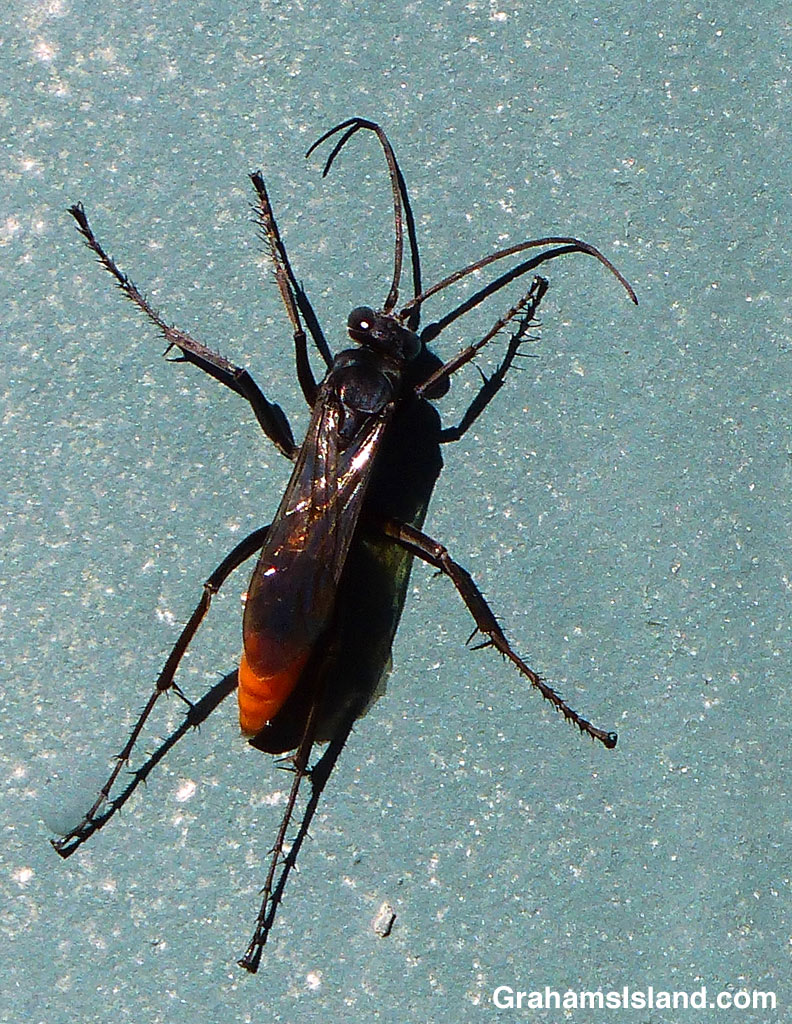
I saw this creature on a wall being eyed by a gold dust day gecko as a possible meal. Eventually the gecko thought better of it, which is probably just as well. This is a sphecid wasp and they can pack a sting, though they aren’t aggressive.
From searches on whatsthatbug.com and bugguide.net, it appears that this sphecid is in the genus Prionyx, probably P. fervens.
 Graham's Island