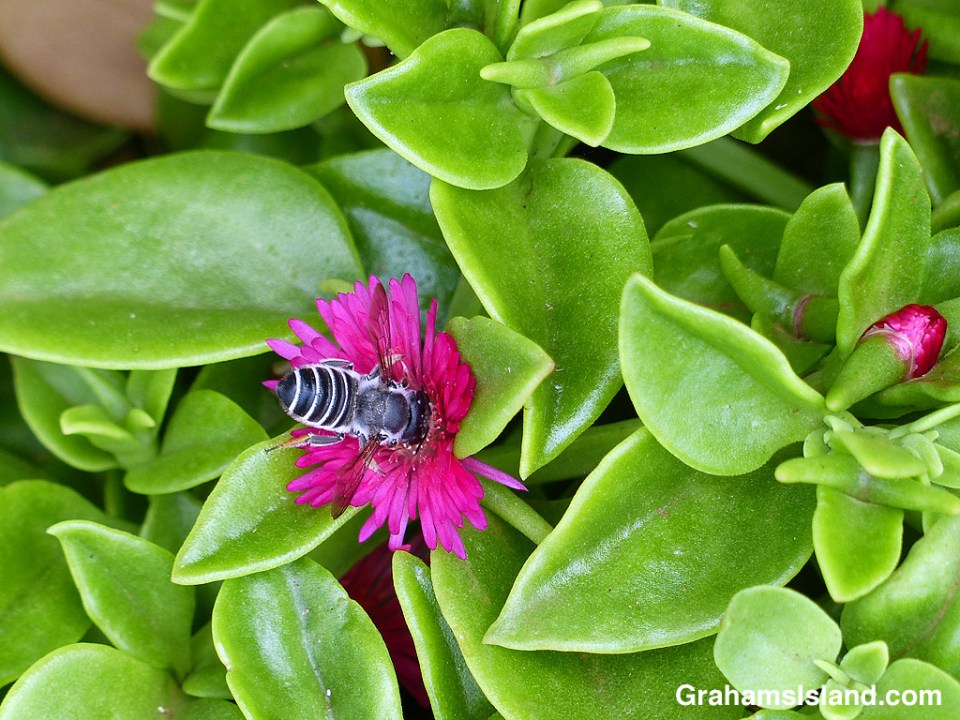
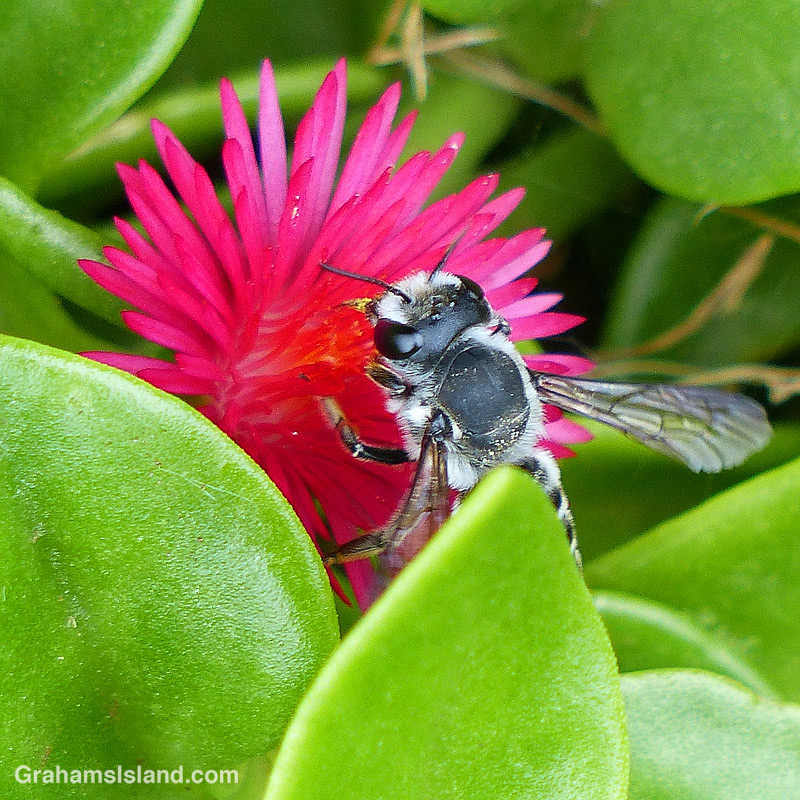
 A busy leafcutter bee forages on aptenia cordifolia flowers. Aptenia cordifolia is an iceplant that comes from southern Africa.

A busy leafcutter bee forages on aptenia cordifolia flowers. Aptenia cordifolia is an iceplant that comes from southern Africa.

When I see mourning geckos out and about during daylight hours I worry for them. They’re nocturnal and daytime is the domain of the gold dust day gecko, which has winnowed the numbers of other geckos in Hawaii.
I like mourning geckos for the patterns on their skin and their eyes, which are metallic-looking. This gecko has, at some point, lost its tail, and grown a new one, but the new colors haven’t quite filled in and the break point is clearly visible.
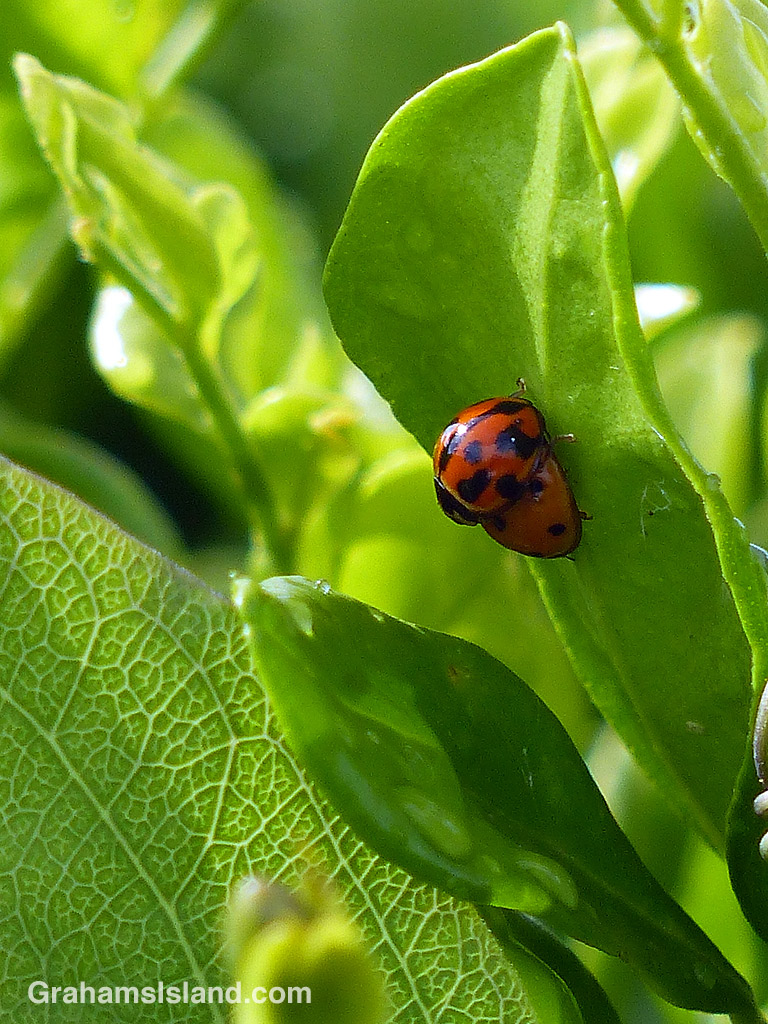
When I took this photo, I thought it was of two variable ladybugs mating. However, when I processed the photo, I noticed that the lower ladybug didn’t look the same as the top one. I think, instead, it’s a seven-spotted ladybug. I also noticed that that top ladybug is climbing up the side of the other one, which is not the usual mating approach.
So now I don’t know what’s going on. It could be that the top ladybug is trying to mate and has just got things seriously wrong. Or it could be a ladybug traffic accident, with the one bug getting in the way of the other. Perhaps they’re fighting. I guess I’ll never know.
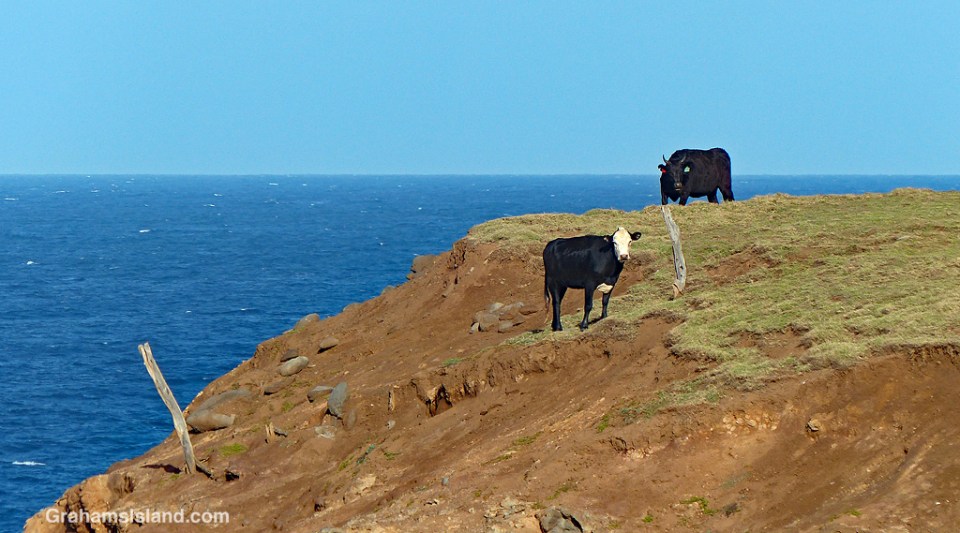
I used to live in the same town as Jim Whittaker, the first American to reach the summit of Mount Everest. He duly published an autobiography titled, ‘A Life on the Edge.’ As someone who lives close to the flat center surrounded by fluffy pillows, I use that phrase as a punchline for many things.
“I think I might have another cookie.” “Ooo, life on the edge.”
“I bought new shorts that are a slightly different tan shade than my previous pair.” “Life on the edge.”
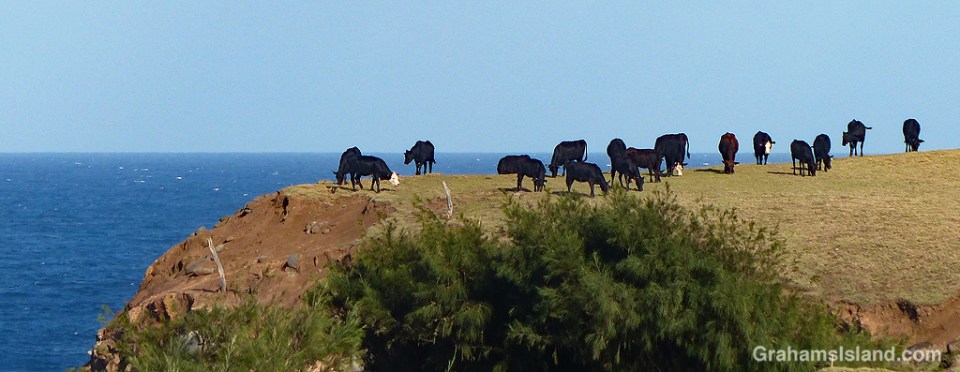
You get the idea, which has nothing to do with anything really except that, on this day, the cattle in these photos really were living life on the edge.

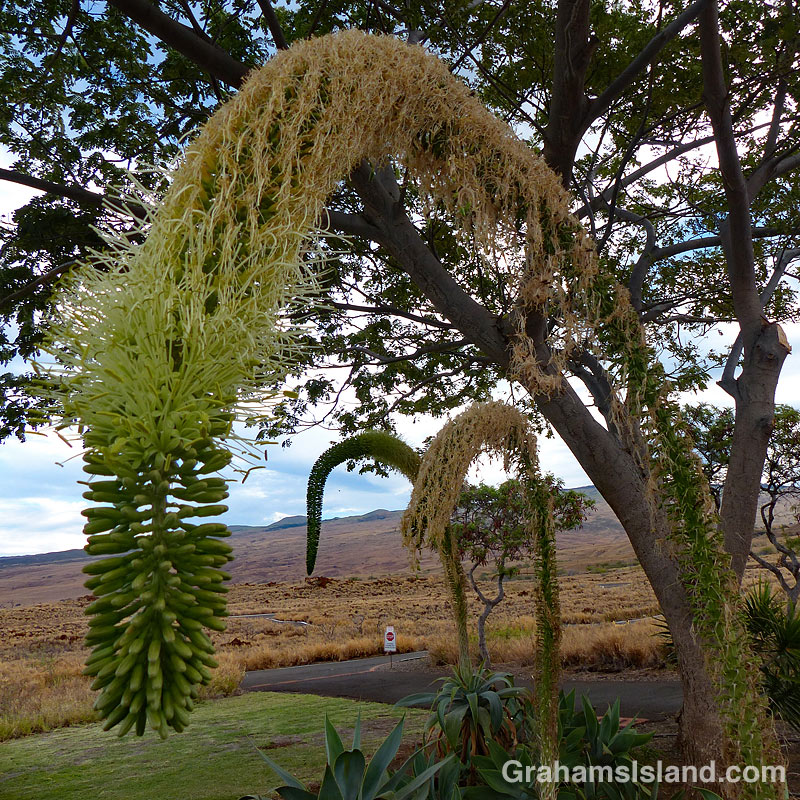
 Agave attenuata is native to Mexico, but is commonly seen in Hawaii. It’s also known as lion’s tail agave, swan’s neck agave, or fox tail agave. These names stem from its long flower stalk which rises from the center of the leaves and arches over. Most agaves bloom and die, but agave attenuata blooms annually without dying. Also, unlike many other agaves, agave attenuata leaves don’t have leaves with sharp points or spiky edges.
The progression of the flowering process can be seen on one agave attenuata plant. In the second photo, starting at the base of the flowering stalk, there is a bare section where the flowering process has finished. Above that is a brownish section where small brown pods have been set. Some of these, that remain attached to the stem, will turn into green fruits. Near the end is the portion of the stalk that is currently flowering and at the end are buds that have yet to flower.
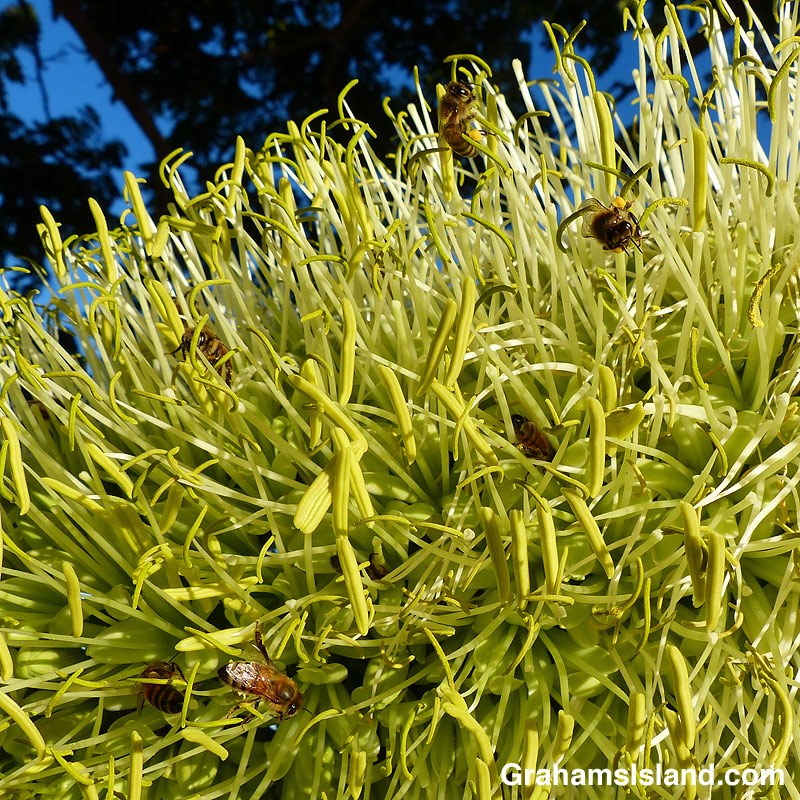
I was drawn to these plants, not just because of their striking flower stalks, but because in the mornings, bees were all over the plant. The top photo shows a bee clambering through a tangle of stamens and pistils. In the third photo, there were lots of bees working along the flowering portion of the inflorescence. Below, sometimes it’s hard work getting to grips with the task in hand.


 When I saw this goat, chomping on some bushes, my first thought was that it looked like a pirate. That’s certainly a mean-looking pair of horns. The curly one has pinned its left ear down, probably affecting its hearing. But the look in the second photo is hardly menacing. I wouldn’t mess with him though.
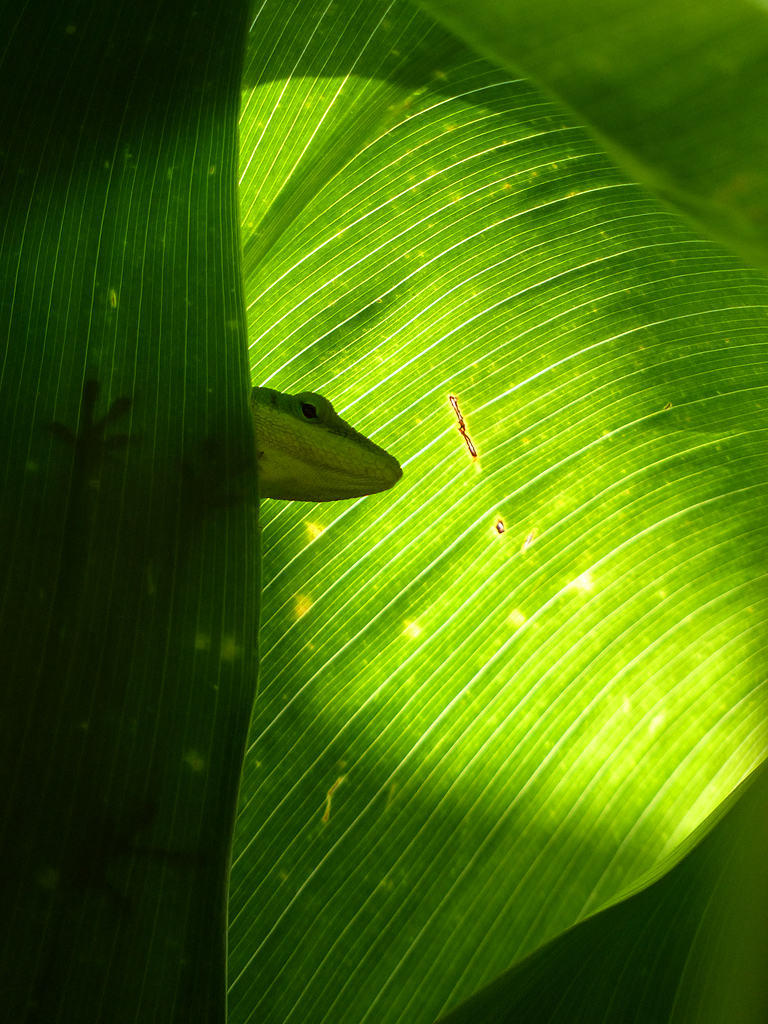 Ti plants grow well in Hawaii, so well that they can get out of hand. If they look like doing so, the prudent thing is to prune, but that has one drawback. Where you cut a stem of a ti plant, two new shoots will form. This means that trimming a ti plant is a temporary fix prior to it coming back stronger.
Despite this drawback, I like them quite a bit. The lines of the leaves make for interesting patterns and shapes, especially when the sun shines on them, or through them. They’re also popular with wildlife. Geckos and anoles spend a good deal of time sunning themselves on ti leaves, or resting on the edges with one eye peering over to see what else is around. In this photo, a green anole was doing just that, but found nothing worthwhile, just me pointing my camera at him.

A bee forages on a thistle flower.
 Graham's Island