
A bee forages on a thistle flower.

A bee forages on a thistle flower.
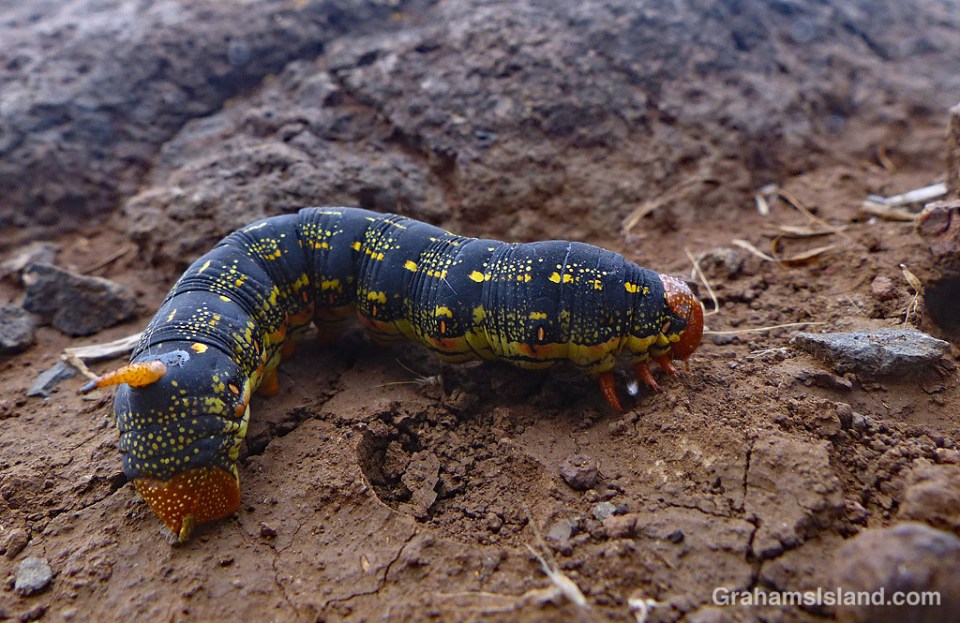
This handsome fellow is the caterpillar of a white-lined sphinx moth (Hyles lineata). This caterpillar’s color can vary quite a bit. The markings on this predominantly black caterpillar can be green or orange, but the main color can be bright green or yellowish with black markings or red dots.
One consistent feature of these caterpillars is the orange horn on their back ends. This is also a good way to distinguish front and back. The horn looks like it could sting, but it can’t. It’s probably more of a visual deterrent to would-be predators.
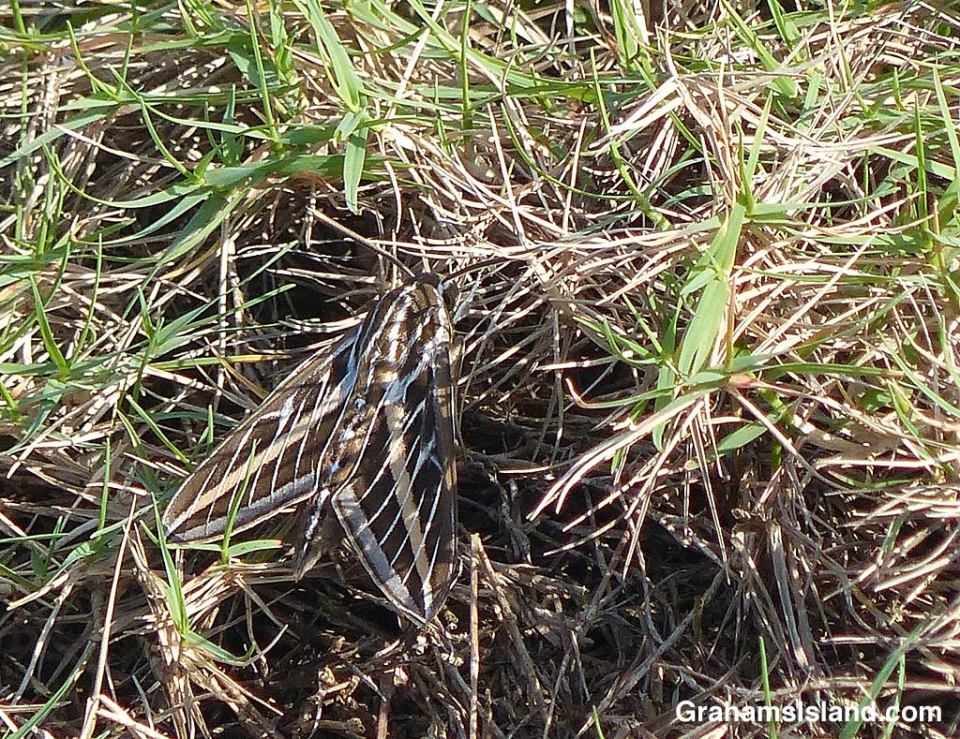
The adult moth (below) has more uniform coloration. These moths and caterpillars are quite common but I rarely see then. This isn’t surprising considering how the adult moth blends in, but the caterpillar is quite striking and I’m surprised I haven’t seen more of them.

Stick insects rely on camouflage for protection, sitting stationary on a branch or stem and looking indistinguishable from their perch. This stick insect was hanging out on this uniformly blue fabric, which is just about the polar opposite of its preferred strategy.
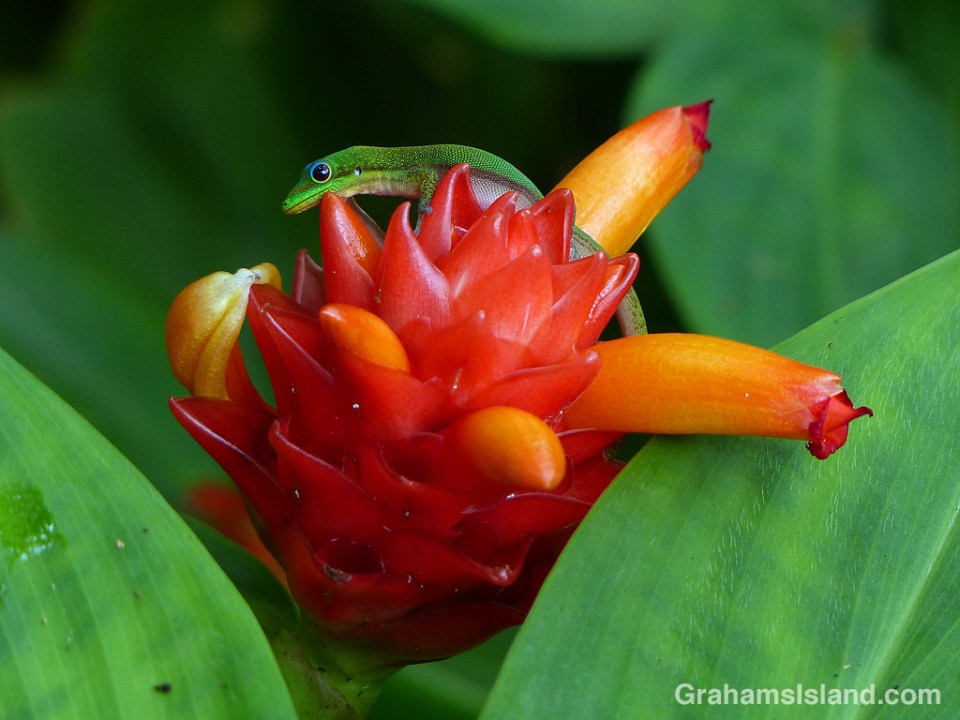
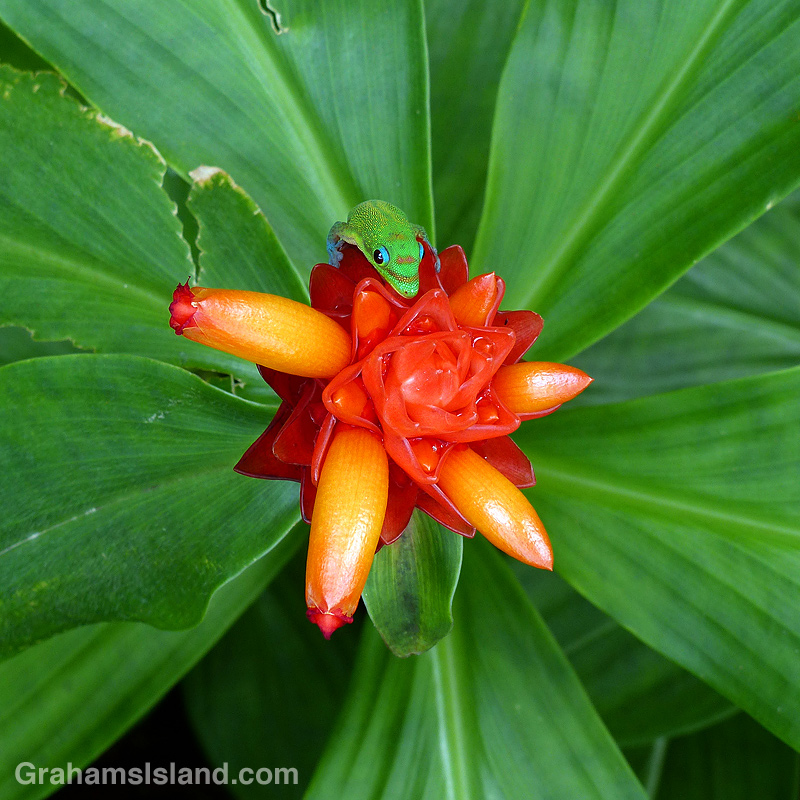 Costus curvibracteatus is also known as orange tulip ginger and hails from Costa Rica and Panama. In these photos, the overlapping red parts are the bracts and the longer orange tubular forms, emerging from between the bracts, are the flowers. However the bracts can also be orange, and the flowers a similar length as the bracts.
The plant was being explored by a gold dust day gecko, which was likely searching for something sweet or possibly seeking water trapped in the bracts.
This one was at Hawaii Tropical Botanical Garden. For more information about Hawaii Tropical Botanical Garden, go to htbg.com.

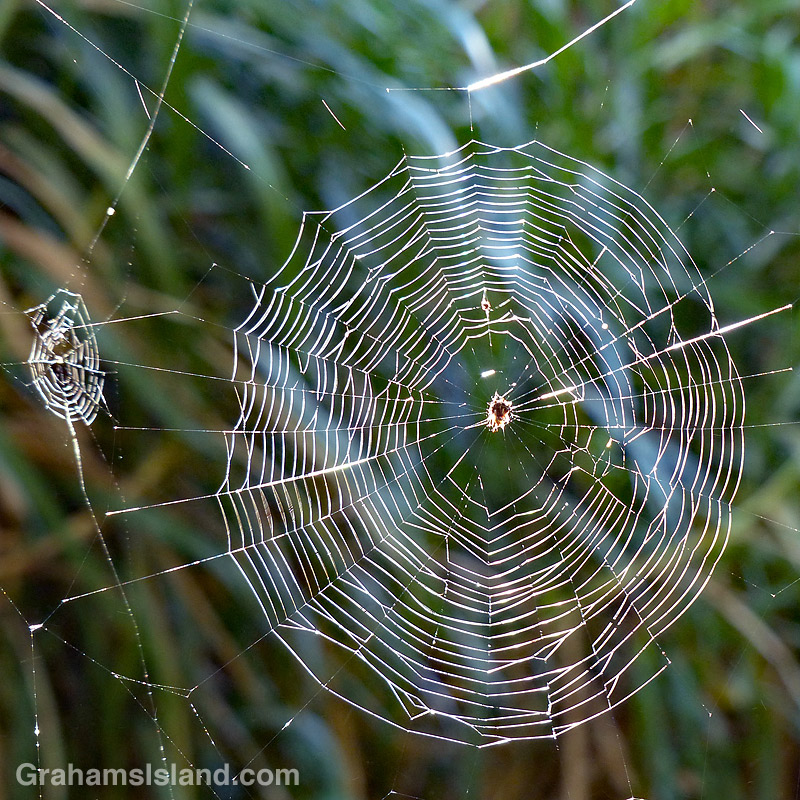 Crab spiders tend to proliferate in the fall and dwindle in the spring. That means winter is prime time for encountering lots of them, usually in the form of blundering into their webs. This is easy to do for two reasons.
One is that the webs can be large. While the circular centers aren’t that big, the anchoring strands often span 10 feet or more, and are hard to spot. The second reason is that crab spiders build connected webs, meaning there are often a dozen or more covering a large area.
Crab spiders will bite, usually after they’ve got caught in someone’s clothing. This is why, when I run into a web or webs, my first response is to locate the spider. If I find it on a remnant of its web, I don’t worry too much. If I don’t see it, then I usually do my flailing crab spider dance, which serves no useful purpose other than to likely irritate the spider if it is on my person.
On the plus side, crab spider webs, like most webs, are quite beautiful when they catch the sunlight.
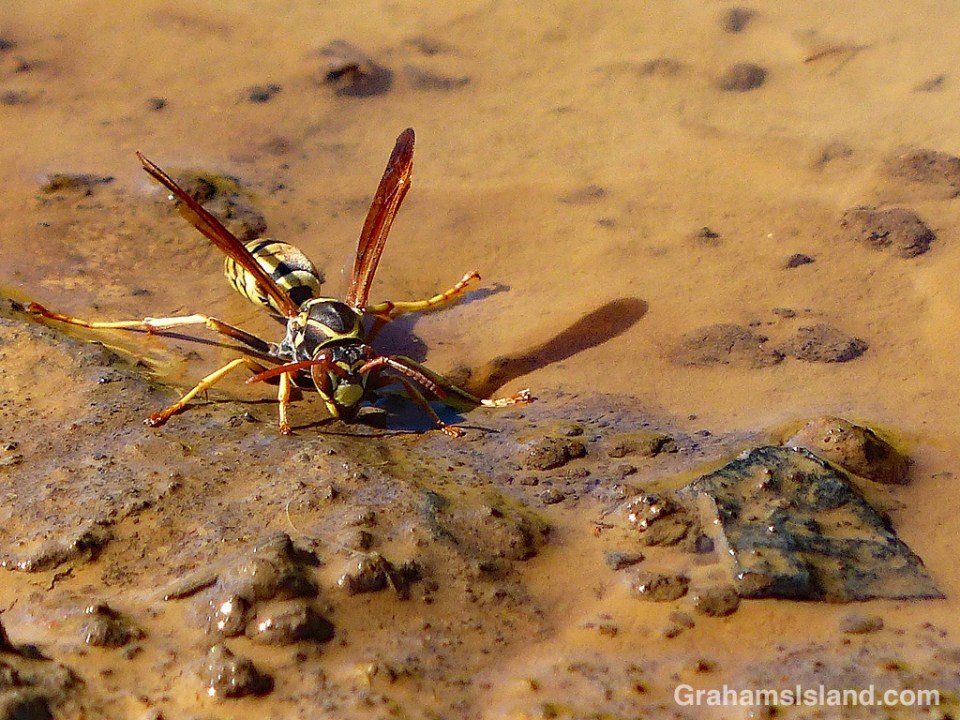
A paper wasp drinks from a mud puddle.
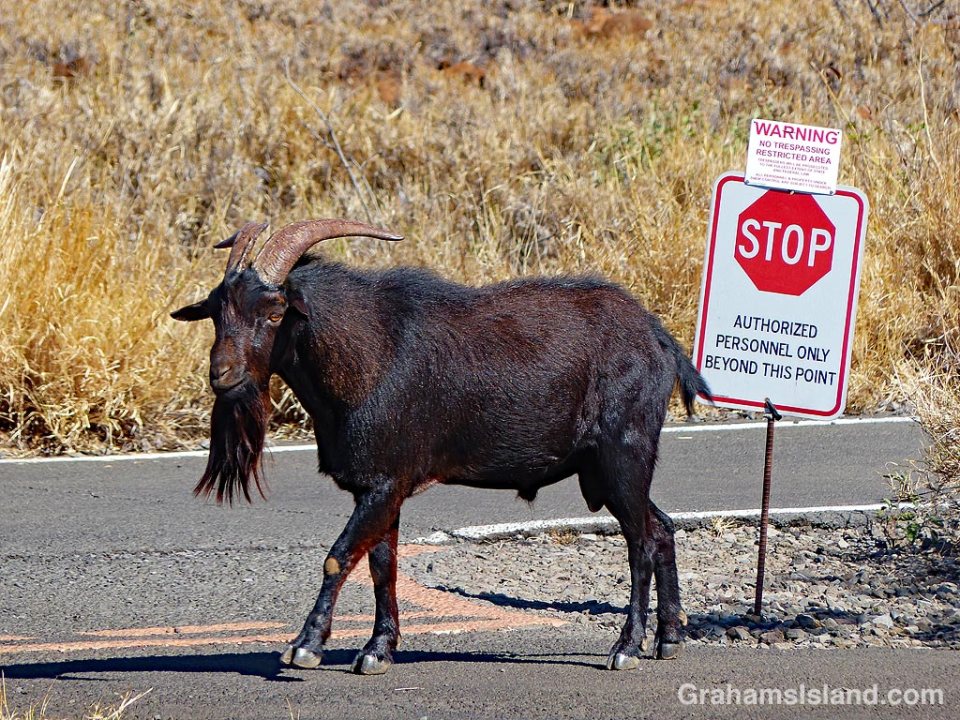
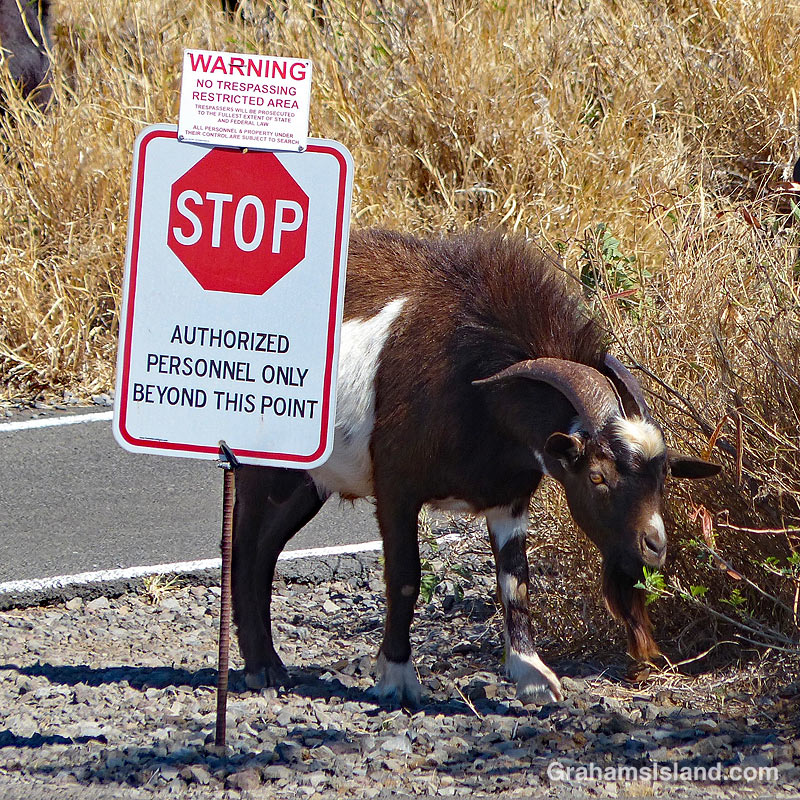 These goats, part of a large herd wandering in the environs of a heliport, weren’t authorized personnel. I wasn’t about to go out and point that out to them, in case they didn’t take kindly to the message.
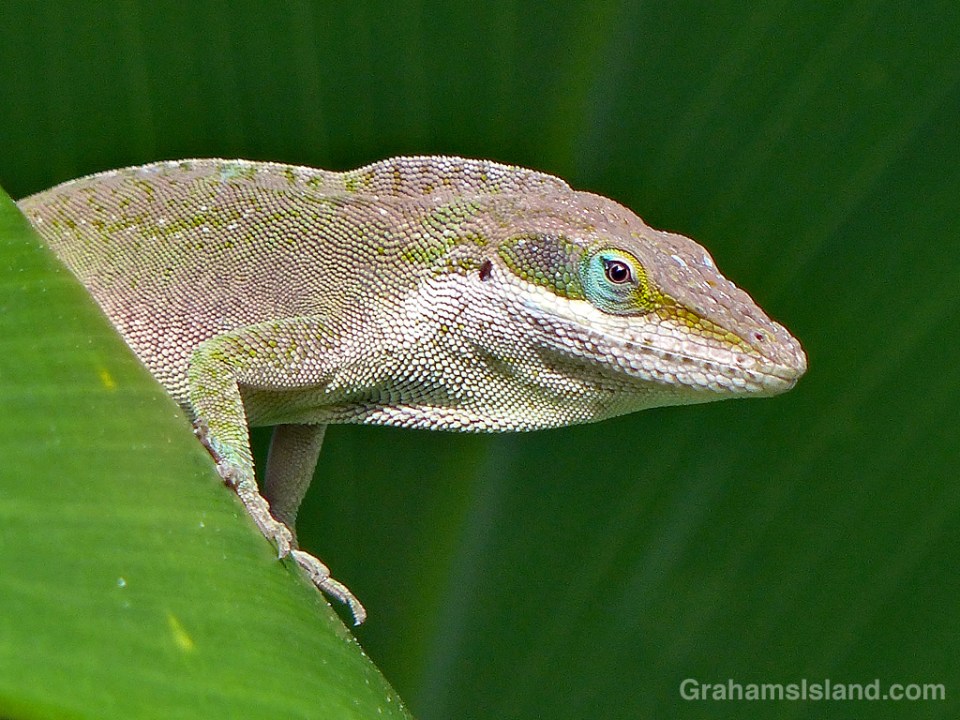
A green anole keeps watch from the leaf of a ti plant. I like the reptilian look of anoles, the details of their scales, and the colors around their eyes.
 Graham's Island