
I came across this bird during a hike. Hunched on the branch with feathers fluffed up, I thought it wouldn’t look out of place on a Christmas card, if snow coated the branch and leaves. Not the case here though. The temperature was in the high 70s and I was sweating accordingly.
Category Archives: Birds
African silverbill

These birds were first seen in Hawaii back in the 1970s. No prizes for guessing where they came from originally.
Sheep herding

I just like the anxious look over the shoulder as if the sheep is seeing if that pesky cattle egret is still following them.
Bristle-thighed curlew
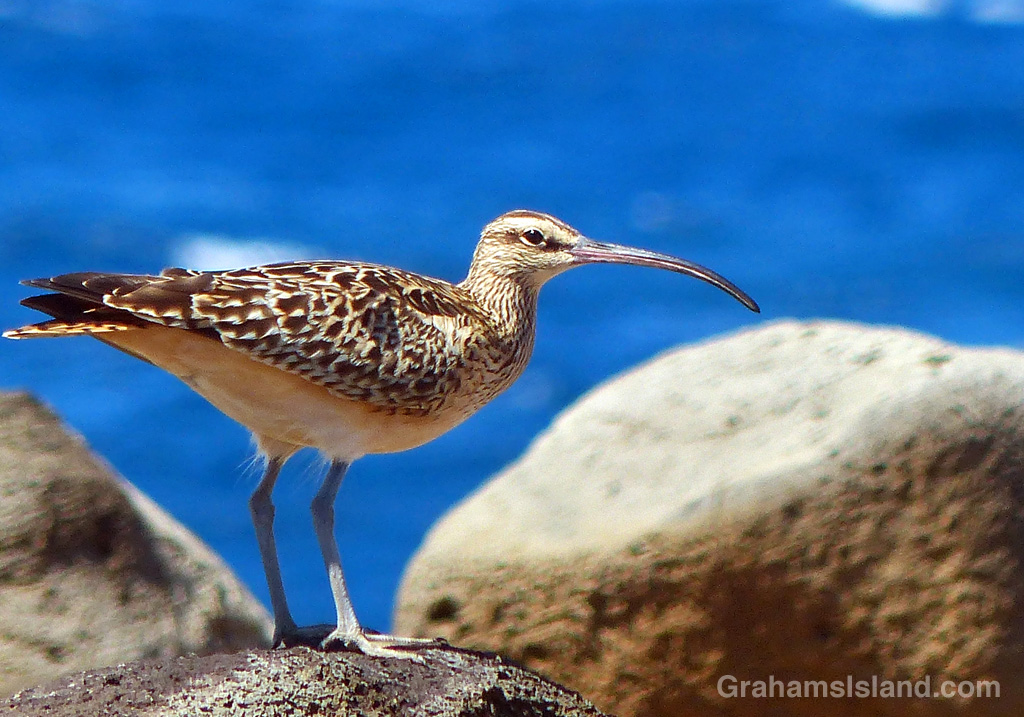
Bristle-thighed curlew (Numenius tahitiensis) isn’t the most flattering bird name I’ve ever heard. In Hawaii it’s called Kioea, which sounds nicer. In May, these curlews migrate to Alaska (a jaunt of 2480 miles) to breed. They return to Hawaii (and other Pacific islands) in July and August. Since this particular bird was still around at the end of May, it may not be making the trip north this year.
For more information about bristle-thighed curlews, go to dlnr.hawaii.gov/wildlife/files/2013/09/Fact-Sheet-Bristle-thighed_Curlew.pdf.
Northern Cardinal
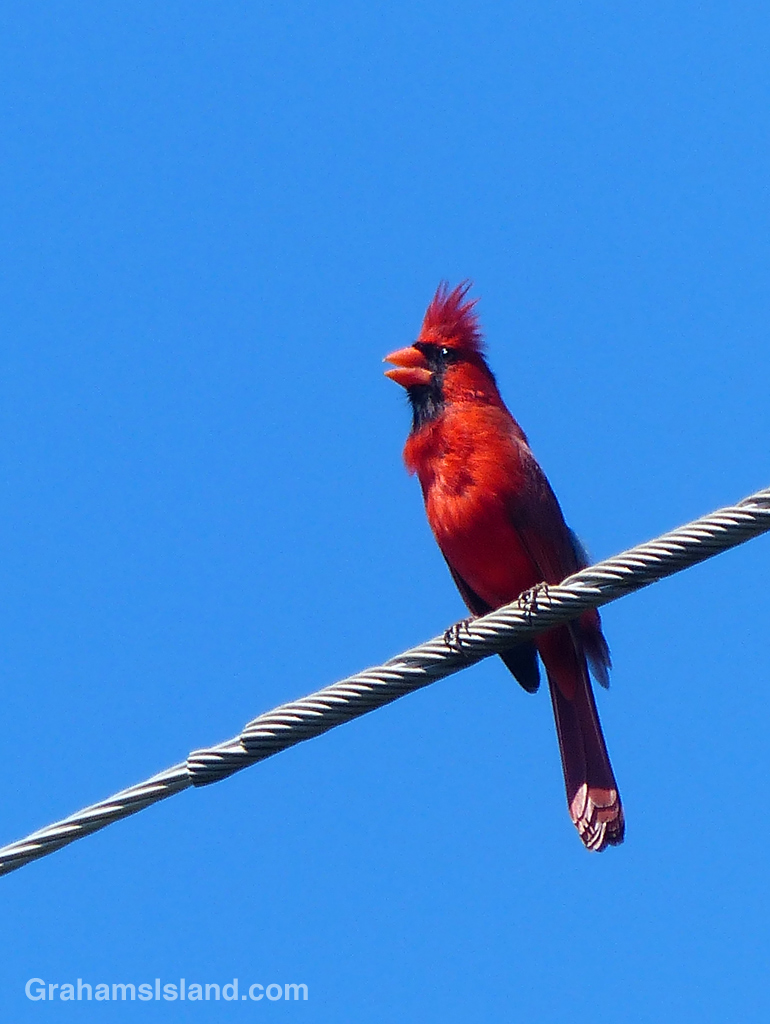
Northern cardinals are an easy bird to identify, especially the males, which are a vibrant red. They are also distinctive in their calls, which are loud and varied. I know this because the pair that live near the house are among the first birds to rise and, around five in the morning, their calls cut through the relative quiet like tsunami warning sirens.
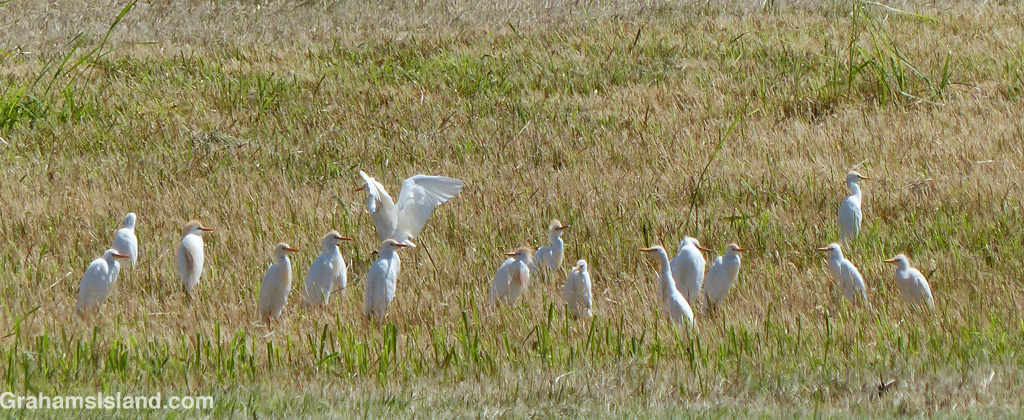
Cattle egrets
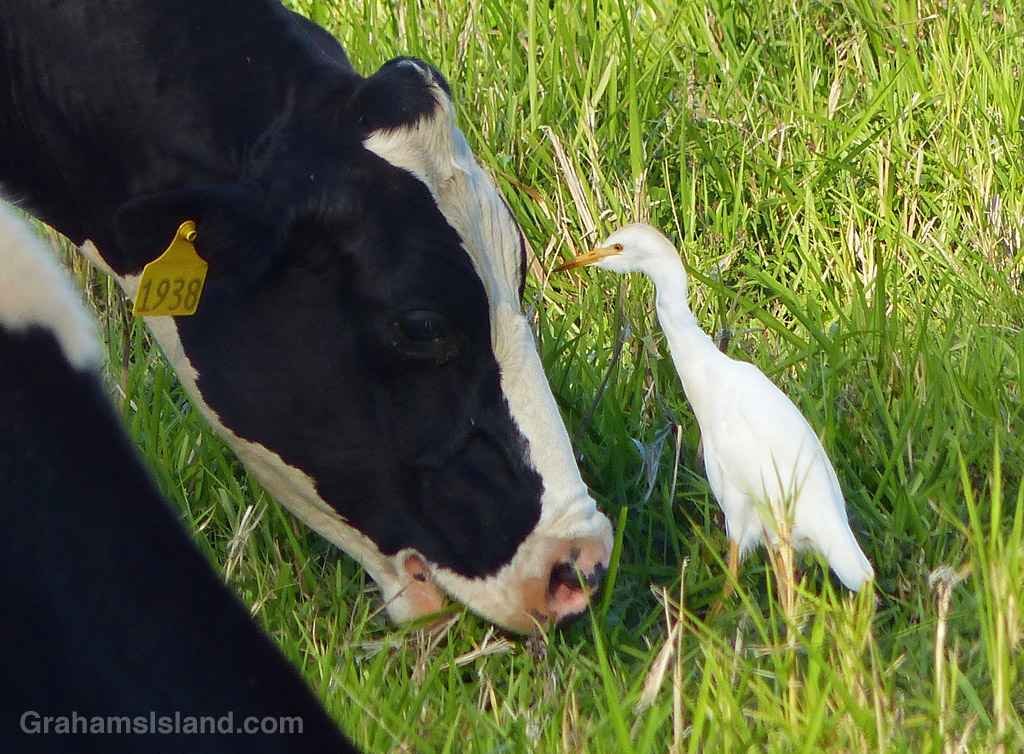

Cattle egrets are a common sight, particularly in rural areas. The name comes from their tendency to spend a good deal of time with cattle and other large mammals. Not only do they feed on insects and other small creatures disturbed by the cattle, but they also eat ticks and flies on the cattle themselves.
They’re not tied to cattle though. I’ve seen them trailing people mowing lawns for the same reason. That’s to snap up the insects disturbed by the activity, not peck for ticks on the person driving the mower.
When I see them in a field, by themselves, such as in the photo below, I always imagine them saying something along the lines of, ‘Hey, where did the cattle go?’
Japanese white-eye in a silk oak

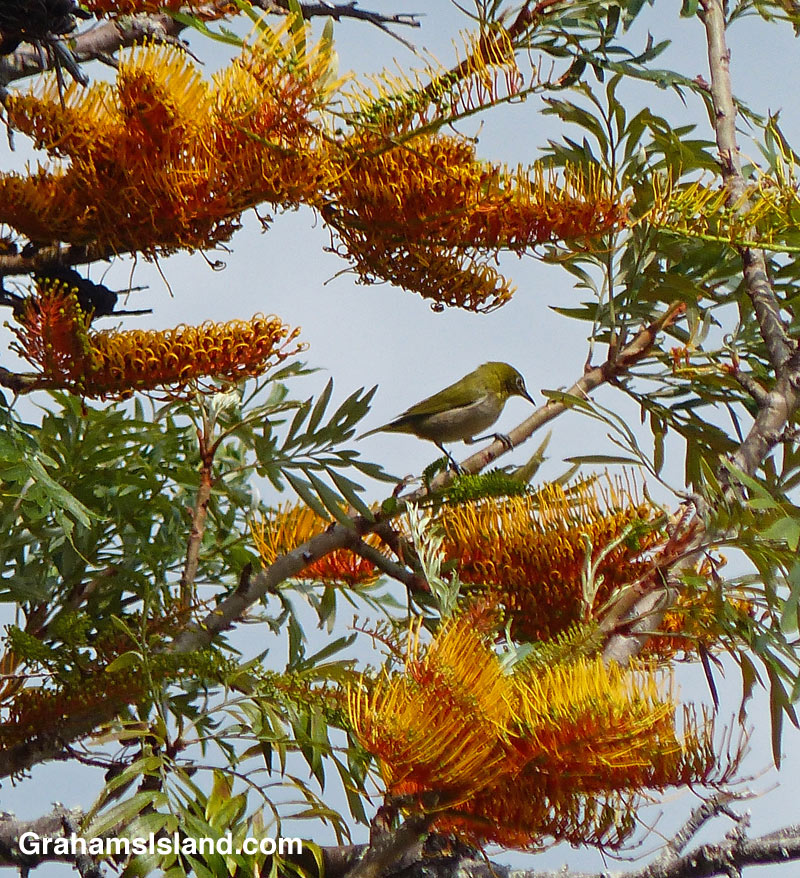
The brilliant orange flowers of silk oak trees not only catch the eye, but are rich with nectar, making them a favorite of birds such as Japanese white-eyes. There were several flitting through this particular tree.
For more information about silk oaks, go to wildlifeofhawaii.com/flowers/1368/grevillea-robusta-silk-oak/.
Saffron finches
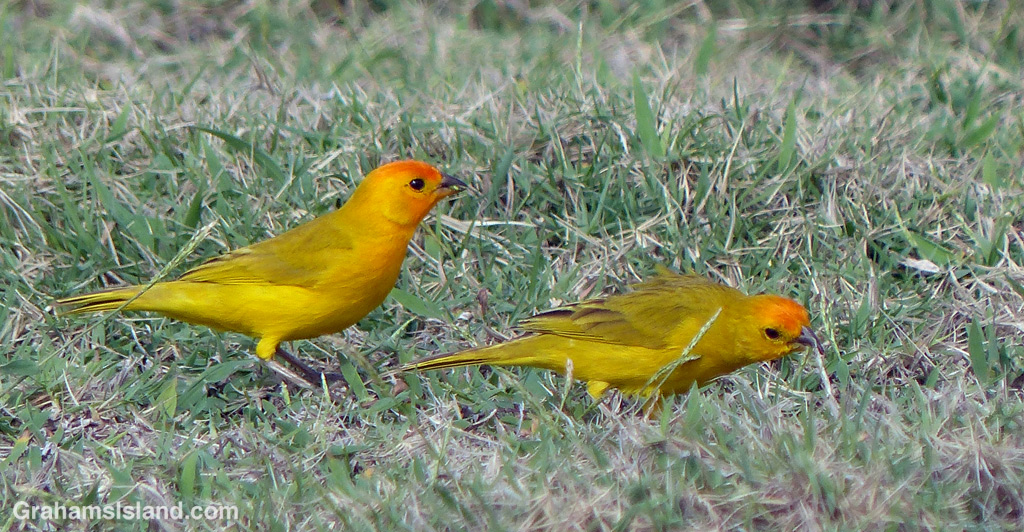
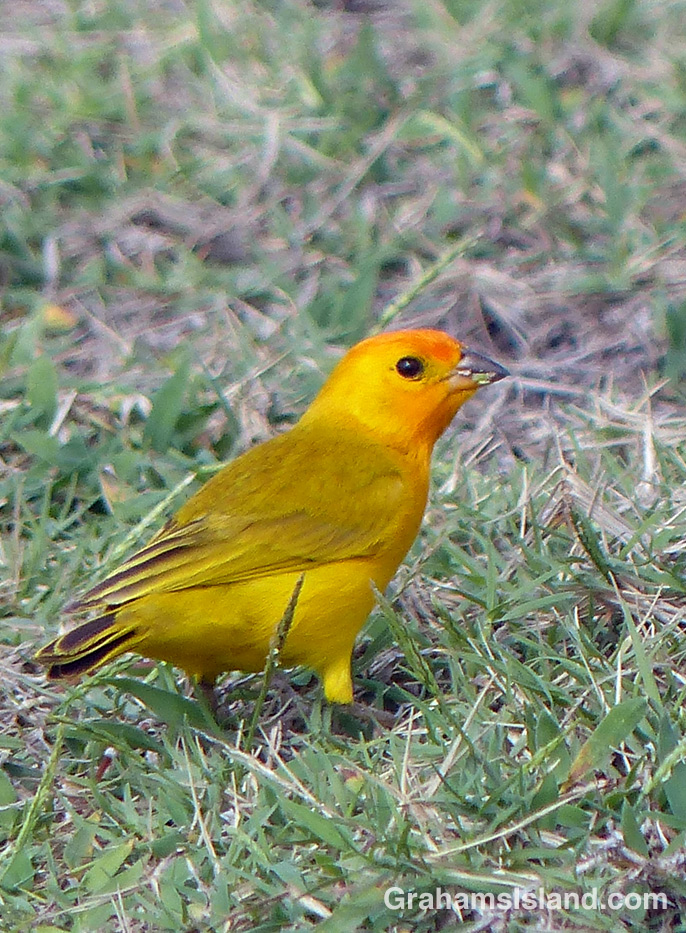
I saw this pair of saffron finches hopping through the grass near Upolu Airport. They’re an introduced species that are commonly seen, especially on the west side of the island.

