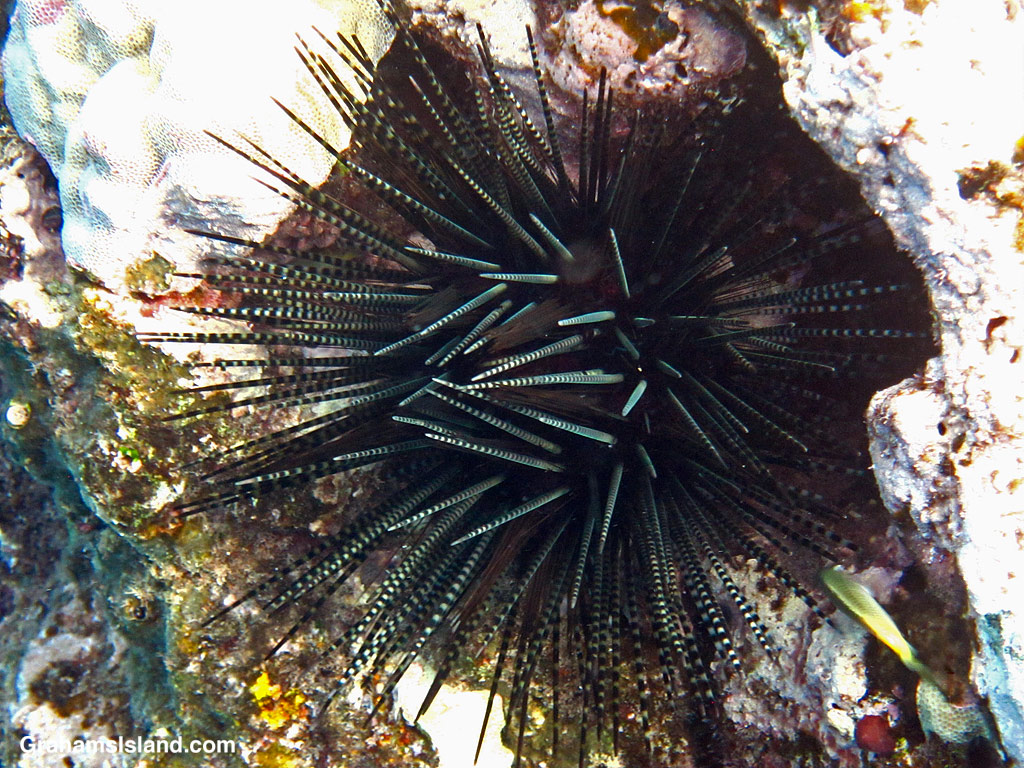
This Banded Urchin is one that actually looks like its name. The most common long-spined urchin here, it’s generally a uniform dull black. Long-spined urchins provide a refuge for small fish, such as the Bright-eye Damselfish seen scooting for cover here.
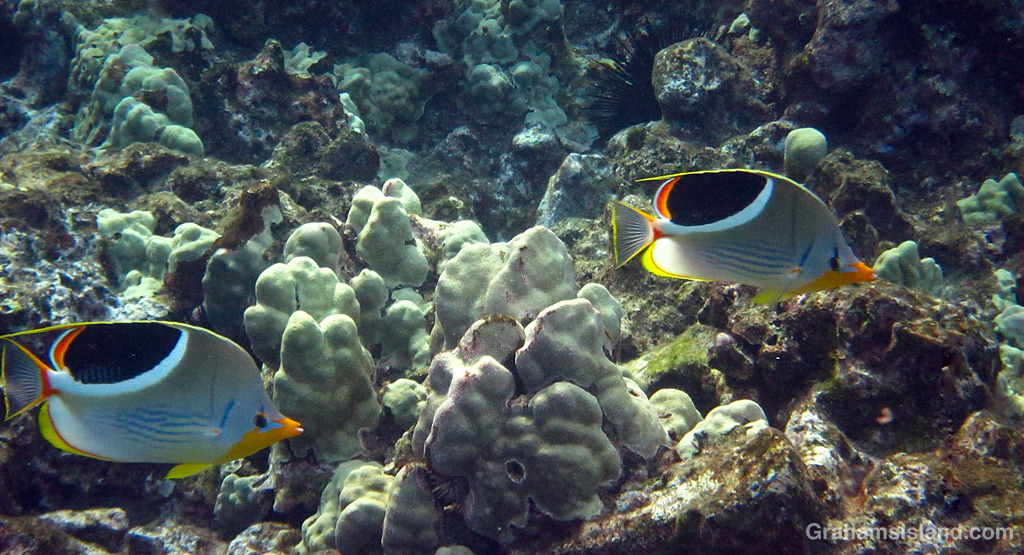
Saddleback Butterflyfish are easily identified with their bold and colorful markings. They’re almost always seen in pairs, and have a fairly wide range when it comes to the depths of water they inhabit. They feed mostly on coral polyps and, like Yellow Tangs, don’t do well in captivity.
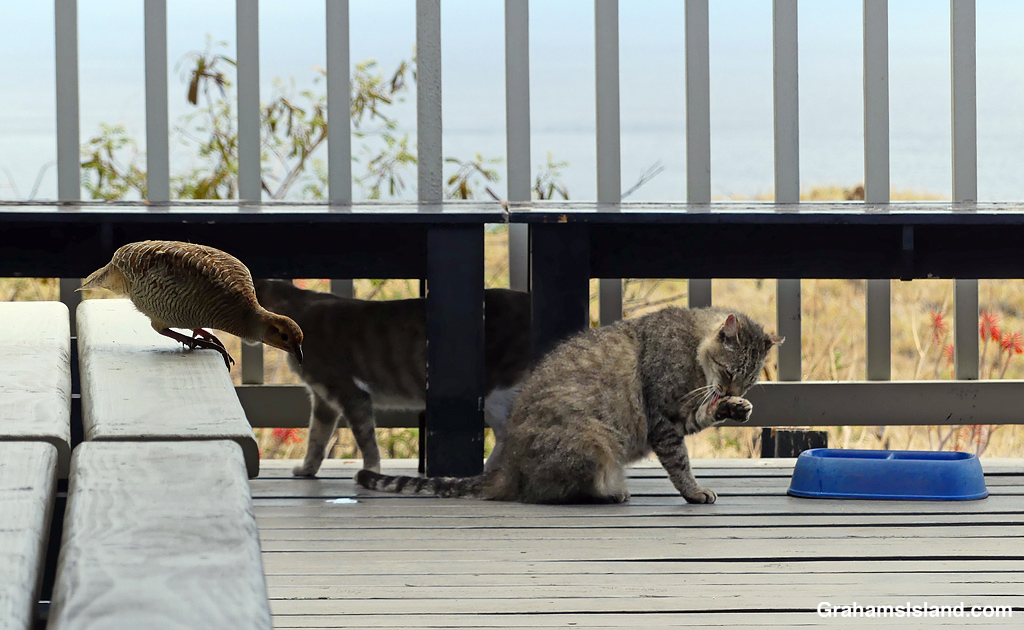
A Gray Francolin ventures into the territory of some cats.
The idea of The Numbers Game is to enter a number into the search bar of your computer and then post a selection of the photos that turn up. This week’s number is 128. You can see more responses here.
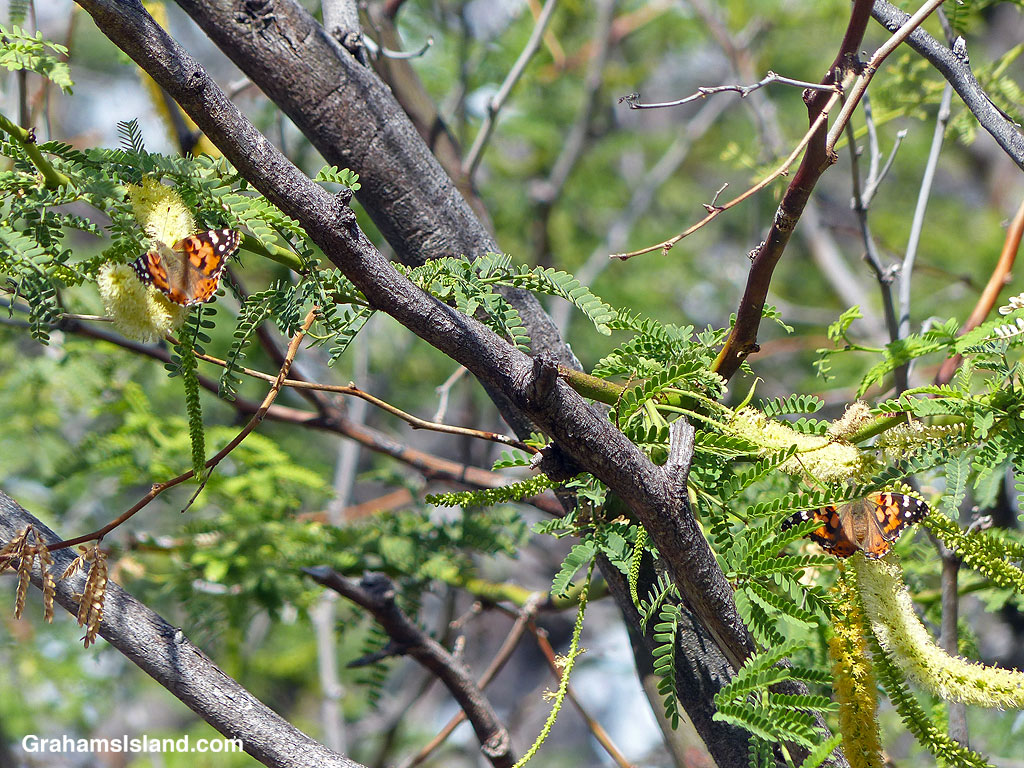
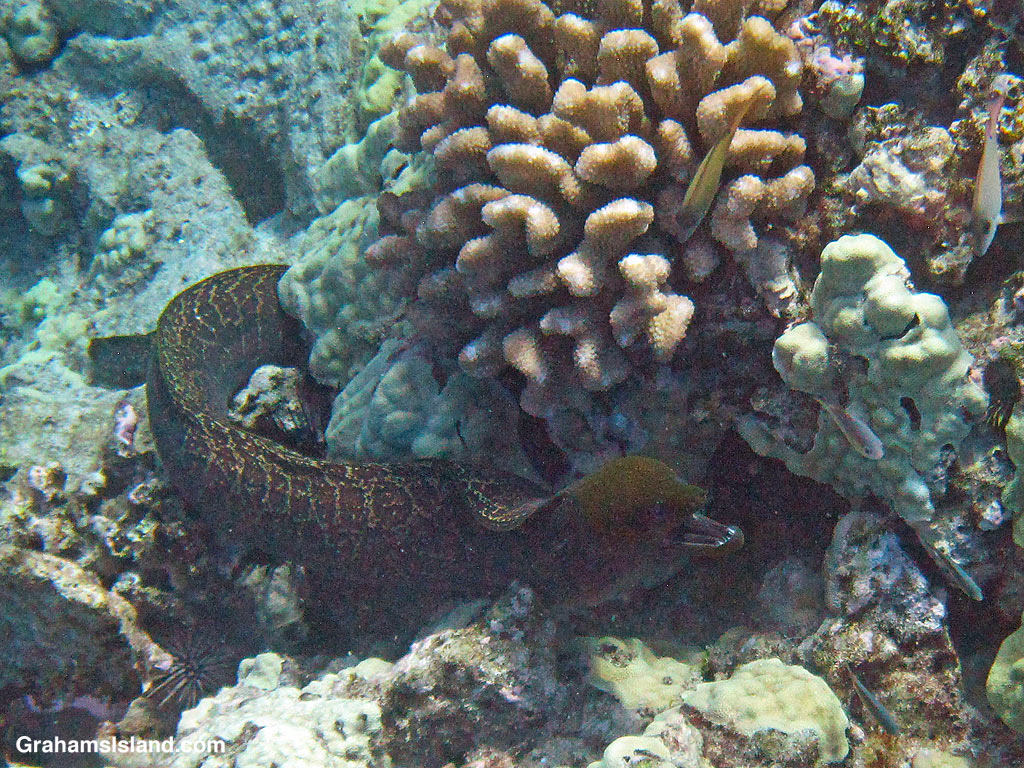
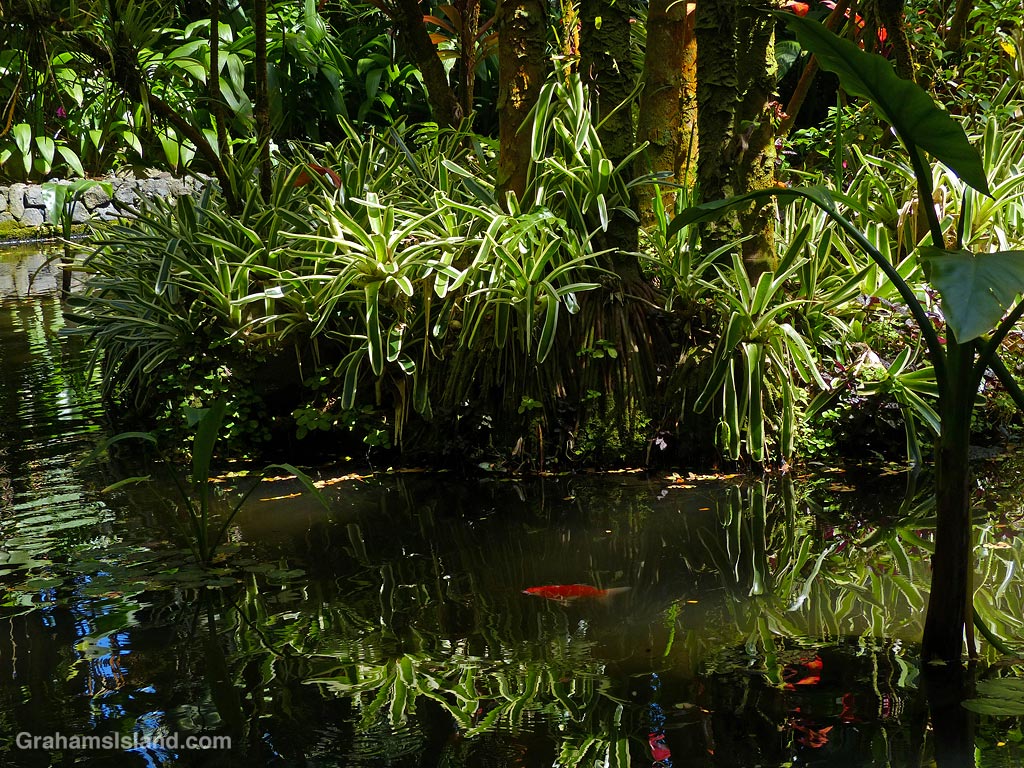
Two Painted Lady Butterflies in a Kiawe tree.An Undulated Moray Eel looking grouchy, as per usual.Koi swim in Lily Lake at Hawaii Tropical Bioreserve and Garden.
Sea urchins can have a wide variety of looks as illustrated by these two I saw on a recent swim. That’s a Collector Urchin in front and a Red Pencil Urchin behind it.
This is Hawaii’s largest nudibranch and can reach a foot long. Mostly active at night, the best chance for snorkelers to see signs of this nudibranch, is to see one of their egg sacs, such as the one in the top photo, attached to a rock. These rose-like sacs are quite beautiful and waver as the water swirls around them.
I’ve only seen an actual Redmargin Spanish Dancer once (second photo). My marine invertebrate book says it resembles fatty ground beef, which is a pretty good description!
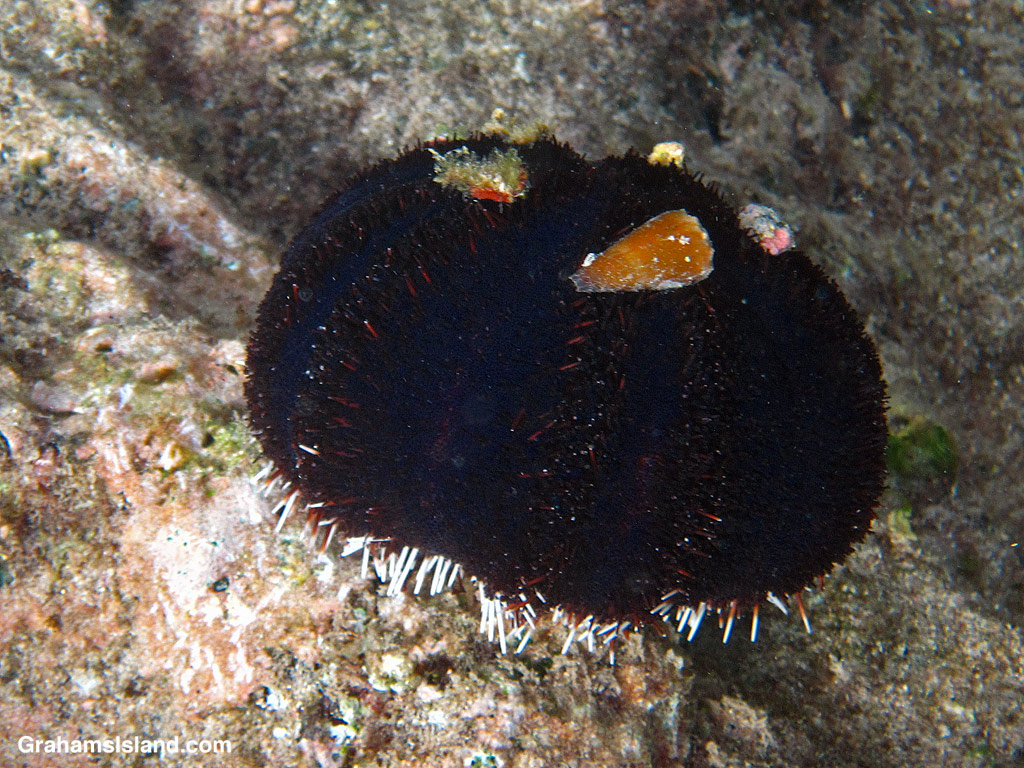
I like to keep an eye out for Collector Urchins to see what bits and pieces they have found to attach to their spines (here). What caught my eye with this one is that the shell on its back is that of a Yellow Cone. They do attach shells so I expect this was one of those rather than a living cone.
For some reason, on many recent swims I’ve seen a variety of cones in the water. Cones are marine snails and many have a venomous sting, which can be dangerous to humans, though not likely fatal.
The Hebrew Cone gets its name from its distinctive markings, which supposedly bear something of a resemblance to Hebrew letters. It’s quite common here, though this was the first one I’ve seen. Apparently, the largest Hebrew Cones are found in Hawaii, though that only means a length of around 2.5 inches, which this one might have been close to.
On a recent swim, I happened to pass over this Pacific Day Octopus, wedged into a crack, not far below the water’s surface. It didn’t have a good, quick escape route so waited out my intrusion into its world. On the left is a red pencil urchin that it was butted up against.