
This group of young humuhumu-nukunuku-ā-pua-a are almost certainly wishing everyone Mele Kalikimaka as they circle their coral tree.

This group of young humuhumu-nukunuku-ā-pua-a are almost certainly wishing everyone Mele Kalikimaka as they circle their coral tree.
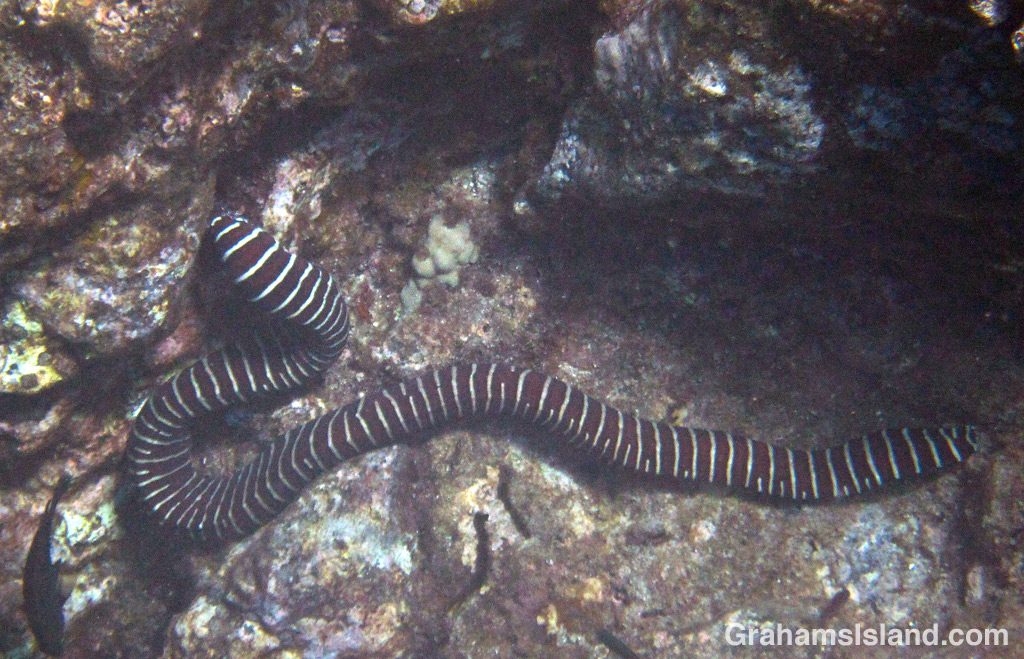
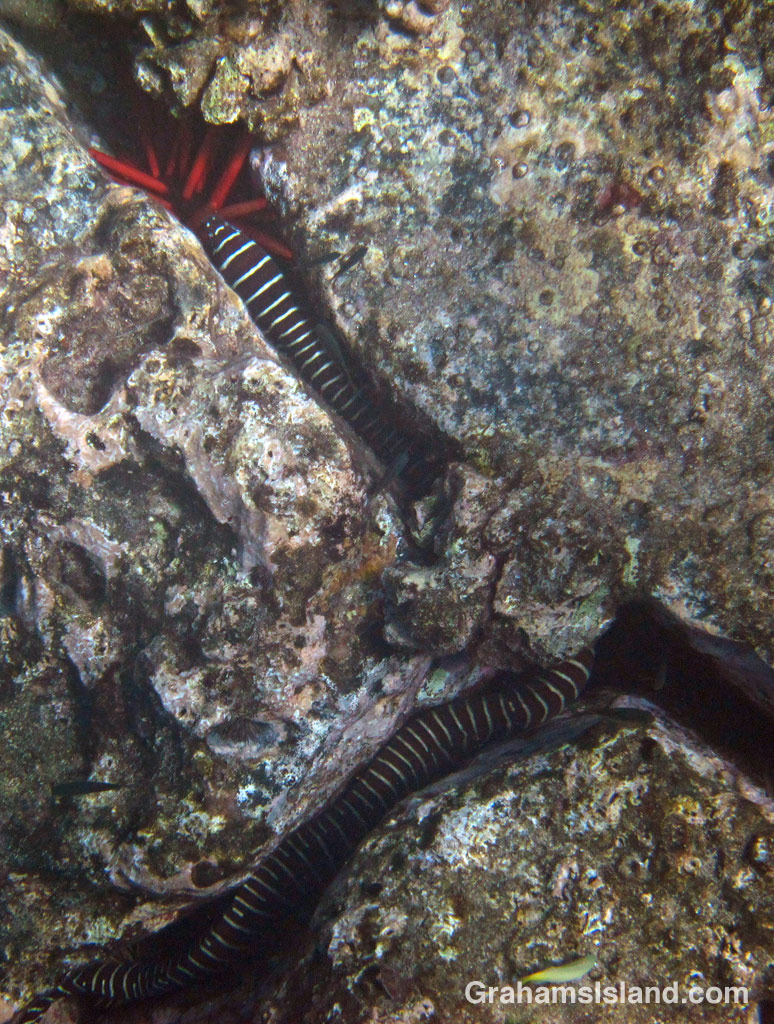
The distinctive markings of a zebra moray eel make it easy to spot when it’s out in the open, but they’re not as common as whitemouth morays. This one was in a relatively shallow area, working through cracks in the rock and coral.

A pair of moorish idols swim in shallow water at Kaloko-Honokohau National Historical Park.
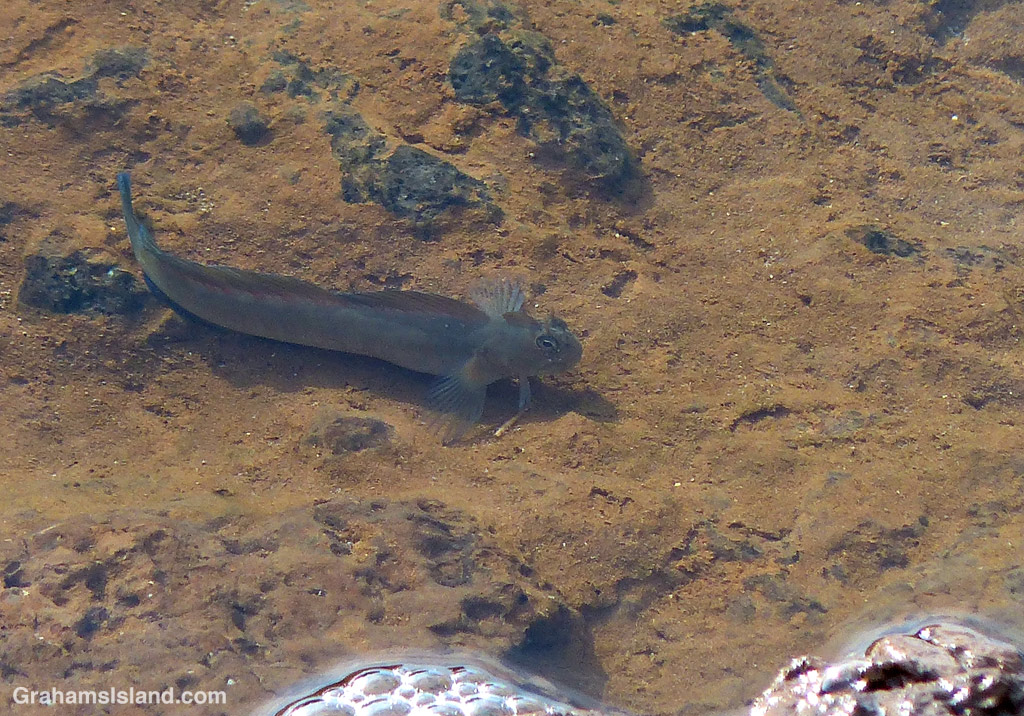
Hawaiian zebra blennies are a staple of rocky tide pools, living off organic detritus that accumulates in the pools. Taken by surprise, they’ll shoot off, over the rock, into the next tide pool.

Hawaiian monk seals tend to hunt at night. During the day, they’ll often haul out on a beach or rocky shore to rest, which is when they’re most often seen by people. This seal is a 7-year-old male with the catchy moniker of IO5 (given him by the people who track seals and look out for their welfare). He’s the monk seal I see most often and he has a few distinctive characteristics.
Thus far, he has remained unscarred by encounters with boats or sharks. He usually appears to have an air of being rather pleased with himself, perhaps a certain confidence about what a fine fellow he is. And when he’s on shore, he doesn’t just look like he’s resting, he looks like he has found a deeper, Zen-like calm. Seeing him in such a state always makes me loosen my shoulders, take a deep breath, and relax.
For more information about Hawaiian monk seals, go to www.pifsc.noaa.gov/hawaiian_monk_seal/ or www.marinemammalcenter.org/hawaii.

It’s not this time of year without the return of humpback whales to the waters around the Big Island. The whales return to give birth and to mate. It’s still early in the season, but the first returnees appeared off Kailua Kona in late October. In November, I saw four whales off North Kohala. The numbers should start to increase this month while the peak numbers tend to be January through March.
For more information about humpback whales, I recommend Jim Darling’s book, Humpbacks: Unveiling the Mysteries or go to whaletrust.org or hawaiihumpbackwhale.noaa.gov/welcome.html.
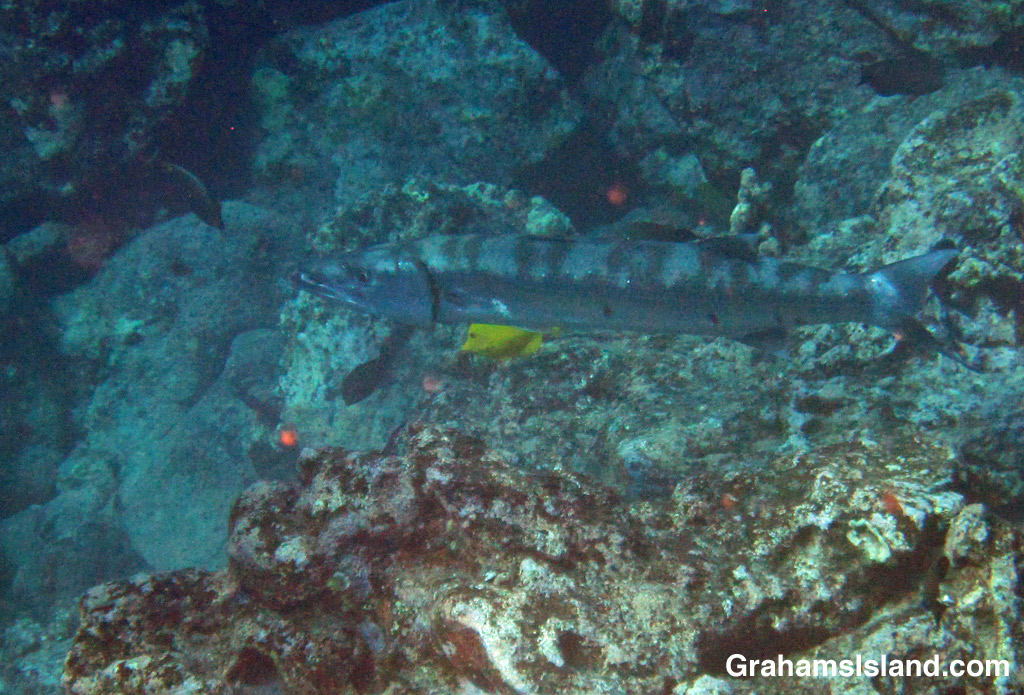
Great barracudas are a fish I see every once in a while when I’m snorkeling. They’re generally about two feet long, with a somewhat menacing look, and a languid swimming style. They tend to keep their distance, easing away until they melt into the distance, which is fine with me since they’ve been known to attack humans.
Recently, I was snorkeling at a regular spot and approaching a shallower area where I usually find a variety of reef fish. I spotted the fish above from quite a distance. It was hanging motionless in the water. As I closed in I could see that this barracuda was huge, twice the size of any I’d seen previously in both length and girth.
I wanted to get closer for a photo, but I was also wary. Previous barracudas that I’d seen had looked capable of inflicting a nasty bite. This one looked like it could remove a limb. I snapped a few photos as the fish drifted out toward deeper water. Then it swished its tail and vanished at warp speed.
John Hoover says that great barracudas “grow to about 5½ feet, but are usually half this size in Hawaii.” I’d estimate this one was around four feet long, so a big one for these waters. (The yellow tang just behind it is probably six to eight inches long.) He also notes that “large individuals tend to increase in girth rather than length,” which was certainly true in this case.
In my attempts to identify what I see in the water, I use John P. Hoover’s book The Ultimate Guide to Hawaiian Reef Fishes, Sea Turtles, Dolphins, Whales, and Seals. His website is hawaiisfishes.com.
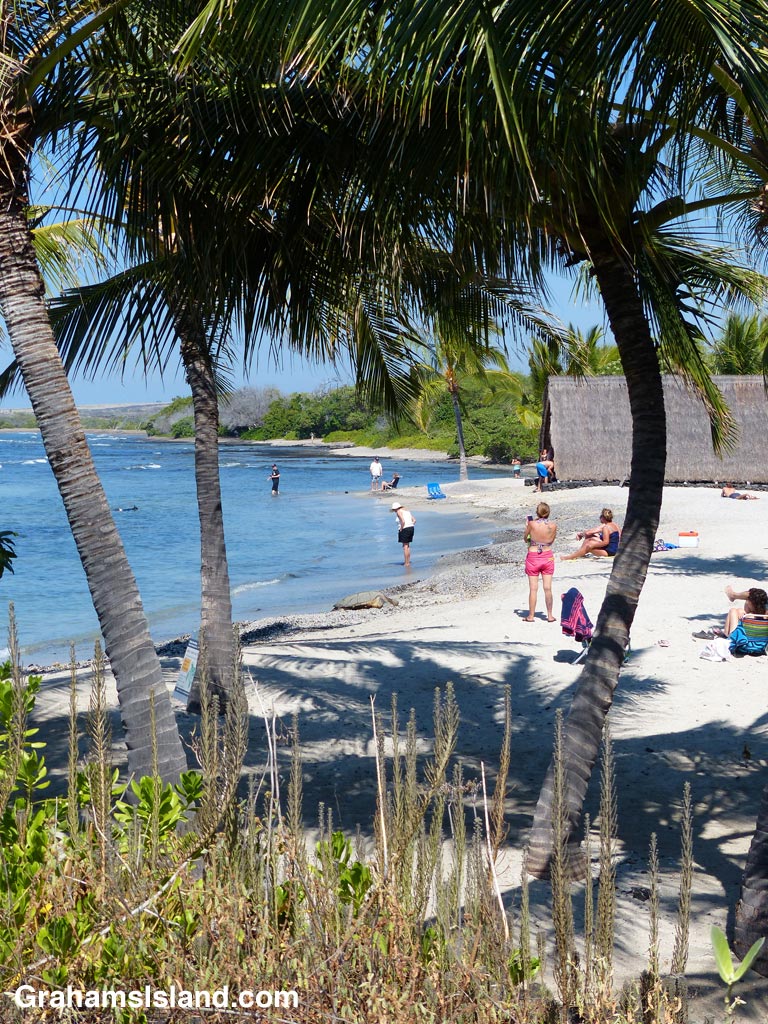
A view of the beach at the Aiopio Fishtrap in Kaloko-Honokohau National Historical Park. There’s a large turtle in the center of the photo at the water’s edge, not the best spot in the world to get some undisturbed rest.

