Category Archives: In The Water

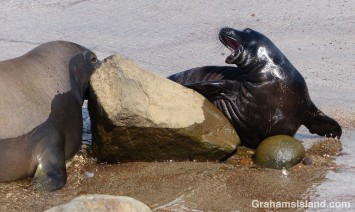
The short, lively life of Elua

Gotta get some rest.
I'm watching out for you.
I’m watching out for you.
Always got to keep an eye on him.
Mom's quick to get Elua's attention.
Mom’s quick to get Elua’s attention.
On the beach.
On the beach.
Tired out again.
Tired out again.
Elua's not shy about making himself heard either.
Elua’s not shy about making himself heard either.

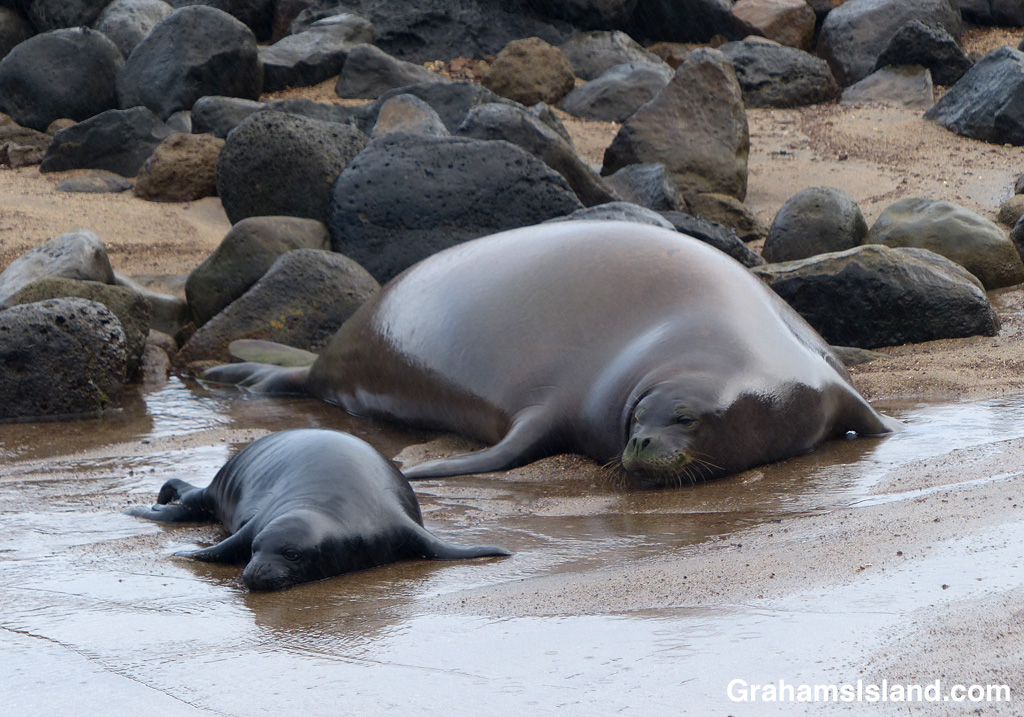
These photos are from November of last year. Not being on social media or especially well connected, it wasn’t until late November that I heard a monk seal pup had been born at Keokea Beach Park. The pup was born November 2 and was named Elua by the local community.

Elua means ‘two’ or ‘twice’ in Hawaiian. He was given the name because his mother, Waimanu (named after the valley where she was born), had given birth to another pup at the same spot two years previously. That pup was named Keokea, after the park. He died in his first year after swallowing a fishhook, a major hazard for monk seals around the islands.

I first stopped by on November 22 and returned on November 25 with a view to joining the volunteers who take shifts to monitor the pup. The idea is that these volunteers provide information about the pup, and monk seals in general, to people visiting the park and try to ensure that the seals aren’t unduly disturbed.

The general consensus was that Elua was doing very well and seemed to be picking things up fast. There was hope the pup would be ready to leave earlier than Keokea had when he was here. Indeed, Elua did seem livelier and more adventuresome, even at this early stage.

On November 26, Thanksgiving Day, Elua was found dead. My understanding is that a necropsy was unable to determine exactly what happened. I heard the cause was ‘blunt trauma’ resulting in edema (abnormal accumulation of fluid) in the lungs. As far as I know, what caused the ‘blunt trauma’ is unknown.

The loss of any pup is serious because there are so few monk seals. They’re a critically endangered species, with a current population of around 1,100. Most live in the northwestern atolls with about 200 around the main Hawaiian islands. In addition, the Hawaiian monk seal has a very low genetic diversity, which makes it potentially very vulnerable to disease and environmental changes.

For more information about Hawaiian monk seals, go to www.pifsc.noaa.gov/hawaiian_monk_seal/ or www.marinemammalcenter.org/hawaii.
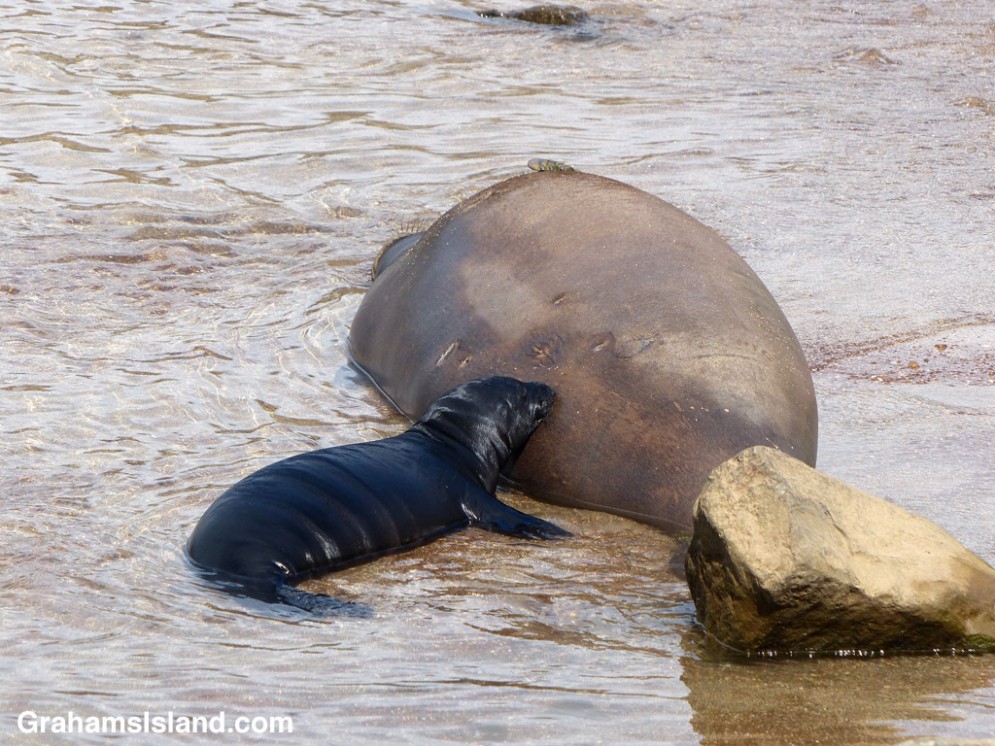
Lunch time at last.
Lunch time at last.

Sharpnose mullet

Sharpnose Mullet
I’ve seen this shoal of sharpnose mullets several times, always in the same area. They hang out where a ledge borders deeper water. On this day, breaking surf washed them back and forth over the ledge, along with an assortment of other fish and me if I’m not careful. It’s important to pay attention in these situations as it would be easy to end up in too shallow water and get raked over the coral – not good for it or me. When I got out of the water I met a friend who understood that. He’d had that happen to him just a few days earlier.

In my attempts to identify what I see in the water, I use John P. Hoover’s book The Ultimate Guide to Hawaiian Reef Fishes, Sea Turtles, Dolphins, Whales, and Seals. His website is hawaiisfishes.com.

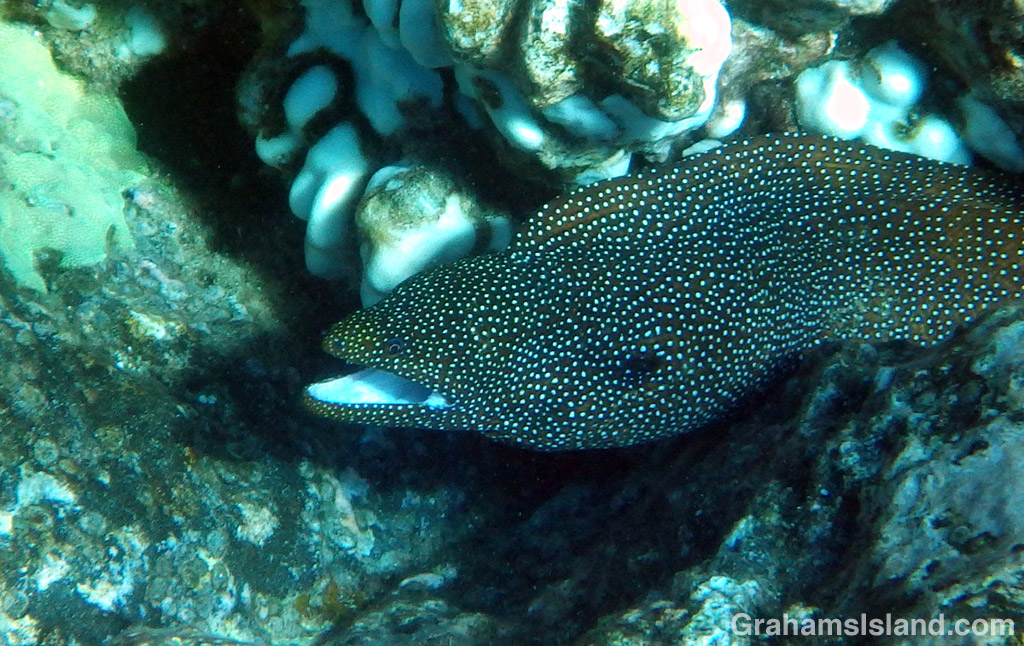
Whitemouth moray eel

Whitemouth Moray Eel

You know how it is with some people? As soon as they open their mouths, you know who they are. The same is true with the whitemouth moray eel. This one is in a fairly typical position, wedged into a crevice with its bright white mouth open. They can look menacing with the head out and mouth opening and closing, but all they’re doing is pumping water over their gills, which is how they breathe.

In my attempts to identify what I see in the water, I use John P. Hoover’s book The Ultimate Guide to Hawaiian Reef Fishes, Sea Turtles, Dolphins, Whales, and Seals and his Reef Fish Hawaii – waterproof pocket guide. His website is hawaiisfishes.com.

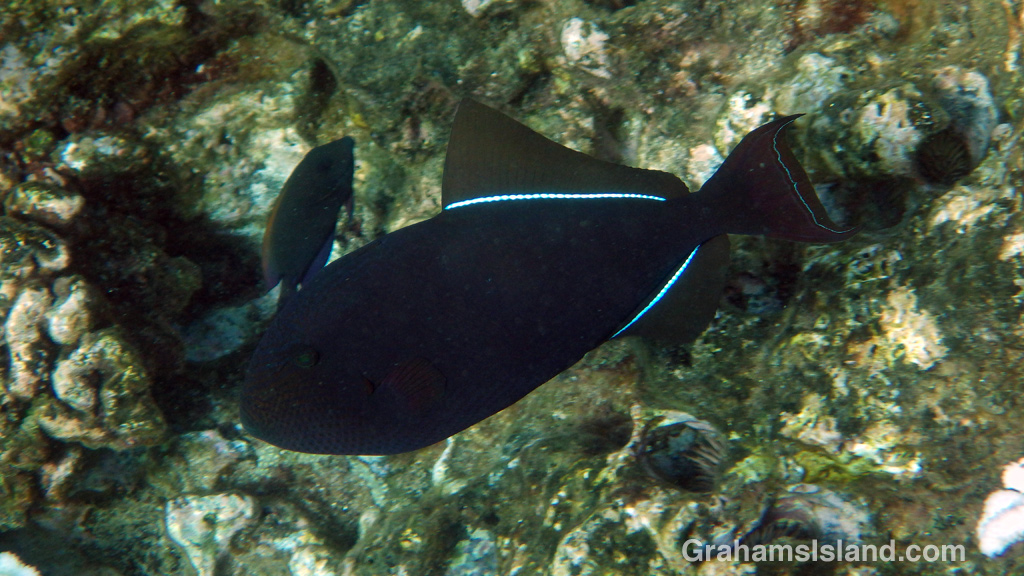
Moody black triggerfish

Black Triggerfish

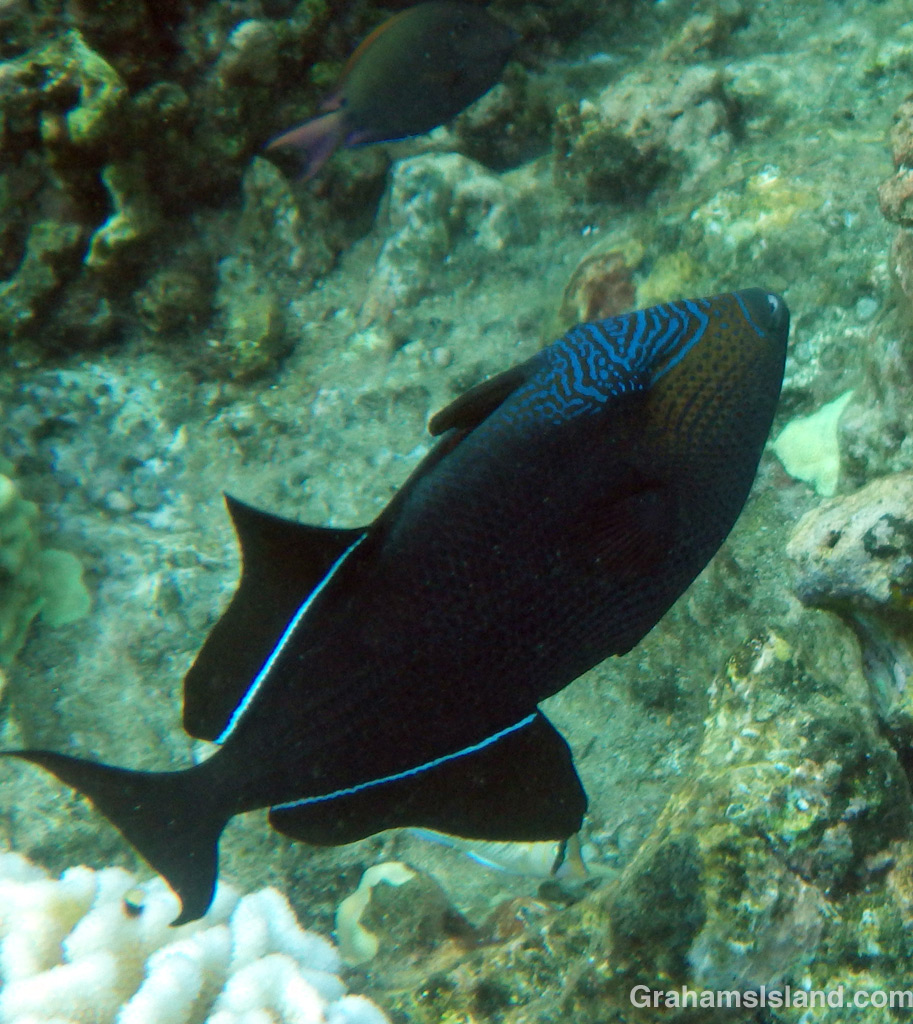
The black triggerfish is a common reef fish, not shy about showing how it feels. The top photo shows its usual color, a dark body with bright, pale blue lines along the base of its dorsal and anal fins.

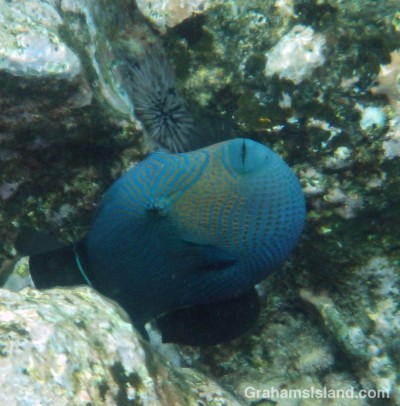
When it gets wound up like the one on the left, bright blue lines appear between the eyes. The more agitated it becomes, the more the blue expands. The one below is clearly not at all happy. I know when I’m not wanted.

In my attempts to identify what I see in the water, I use John P. Hoover’s book The Ultimate Guide to Hawaiian Reef Fishes, Sea Turtles, Dolphins, Whales, and Seals. His website is hawaiisfishes.com.

Moorish idol

Moorish Idol

The Moorish idol is one of the easiest fish to identify. Striking colors, striking shape, and no other fish quite like it. This one not only hung around while I was there, but obligingly slid into a patch of sunlight.

In my attempts to identify what I see in the water, I use John P. Hoover’s book The Ultimate Guide to Hawaiian Reef Fishes, Sea Turtles, Dolphins, Whales, and Seals. His website is hawaiisfishes.com.

Humpback whale

Humpback whale

In this composite photo, a humpback whale surges from the water off the North Kohala coast. It’s been an odd season so far. The first whales were spotted off the island back in early October, provoking thoughts of a bumper season. Since then, activity has been spotty with little apparent buildup of numbers. This month, there were more whales to be seen, but still not as many as expected. Yesterday was the first day when the numbers and activity seemed similar to previous years. On a walk along the coast, I followed two pairs who were leaping from the water with great enthusiasm. It’s always a thrill to see these huge animals slowly rise from the water, hang for a moment, and then crash back.

For more information about humpback whales, I recommend Jim Darling’s book, Humpbacks:  Unveiling the Mysteries or go to whaletrust.org or hawaiihumpbackwhale.noaa.gov/welcome.html.

Now you see me, now you don’t

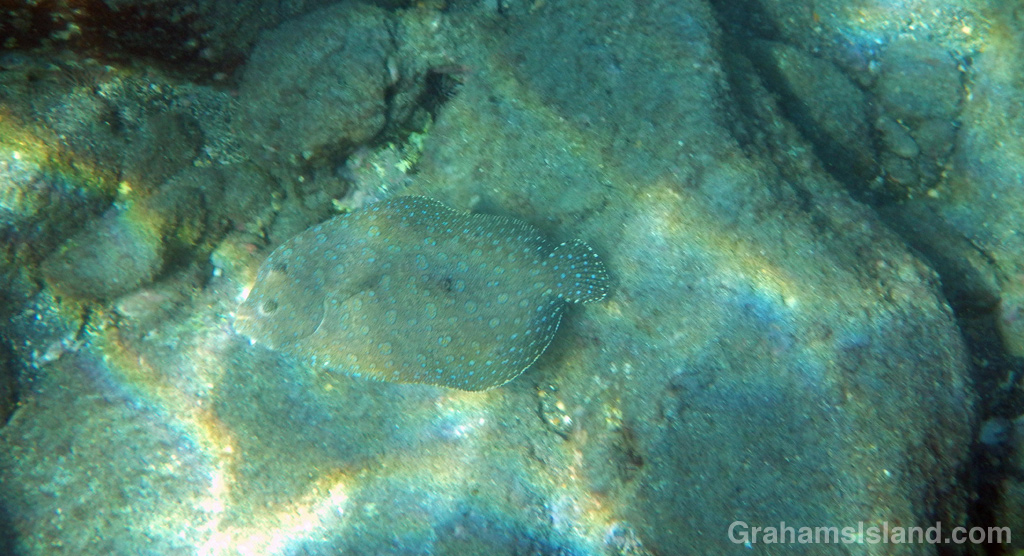
Flowery Flounder

This is a flowery flounder. What do you mean, where? It’s right there, on that rock. Truth is, if you don’t see a flounder moving, then you’re not likely to see it at all. This one was in a shallow area, hopping from rock to rock, in dappled sunlight.

A couple of times I took my eye off it and it took a while to relocate it, even though I knew where it was. Look up for too long and it will flit to a different spot. Good luck finding it them.

I particularly liked it when this fish bent itself over a little ledge in the rock (below). Not just a flatfish then, but a bendy one, too.

In my attempts to identify what I see in the water, I use John P. Hoover’s book The Ultimate Guide to Hawaiian Reef Fishes, Sea Turtles, Dolphins, Whales, and Seals. His website is hawaiisfishes.com.

Flowery Flounder

Keawaiki to Kiholo hike

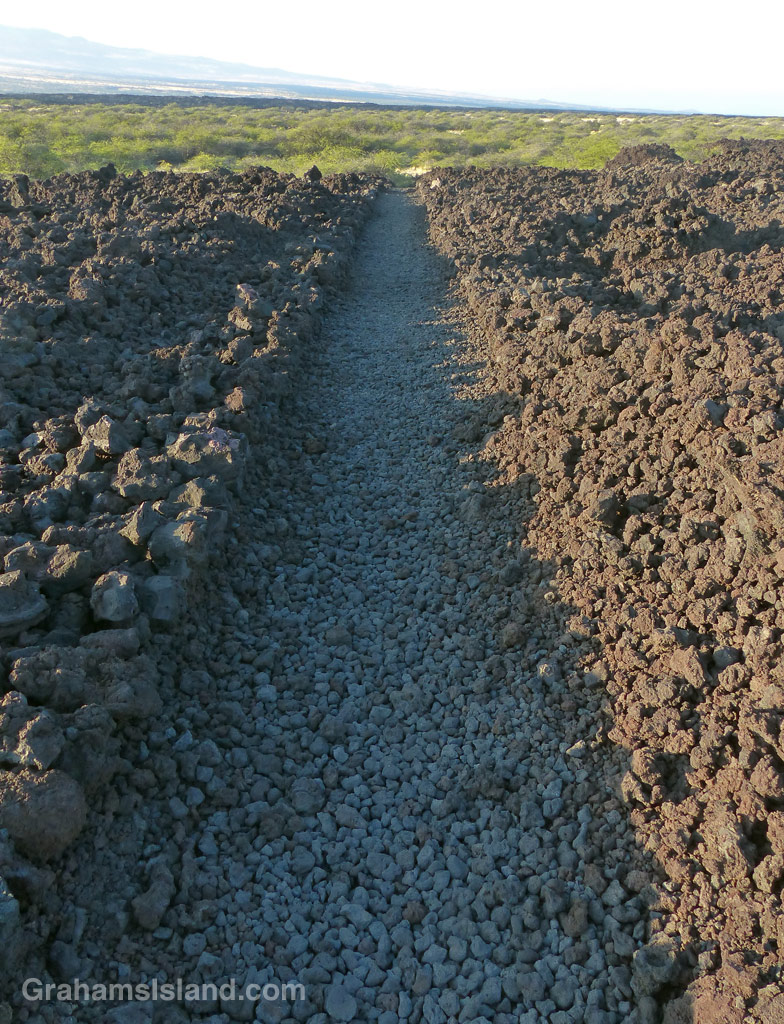
The King's Trail makes a straight shot to the south of Keawaiki.
The King’s Trail makes a straight shot to the south of Keawaiki.
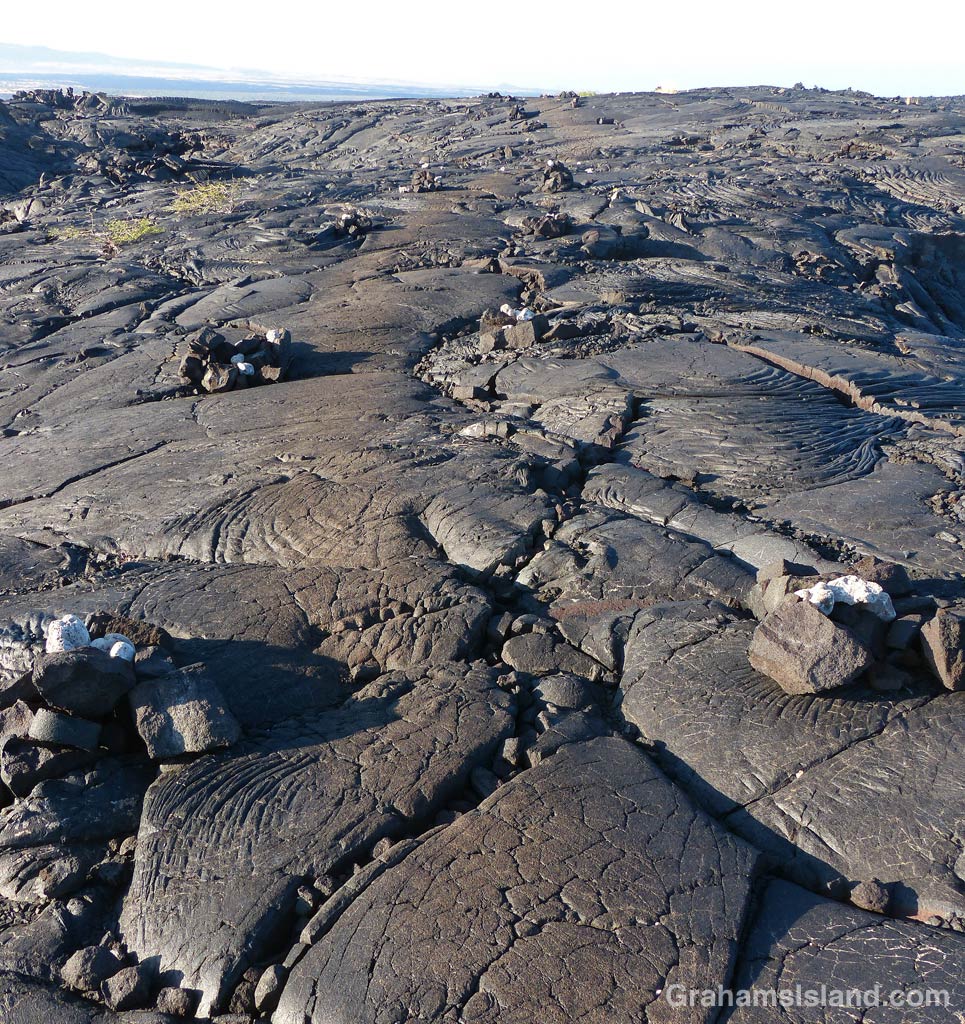
The King's Trail winds over the pahoehoe lava of Mauna Loa's 1859 eruption. The trail is marked by cairns and, in places, the worn surface of the trail stands out from the surrounding lava.
The trail is marked by cairns and, in places, the worn surface stands out from the surrounding lava.
1-6-16-1859-flow-HW
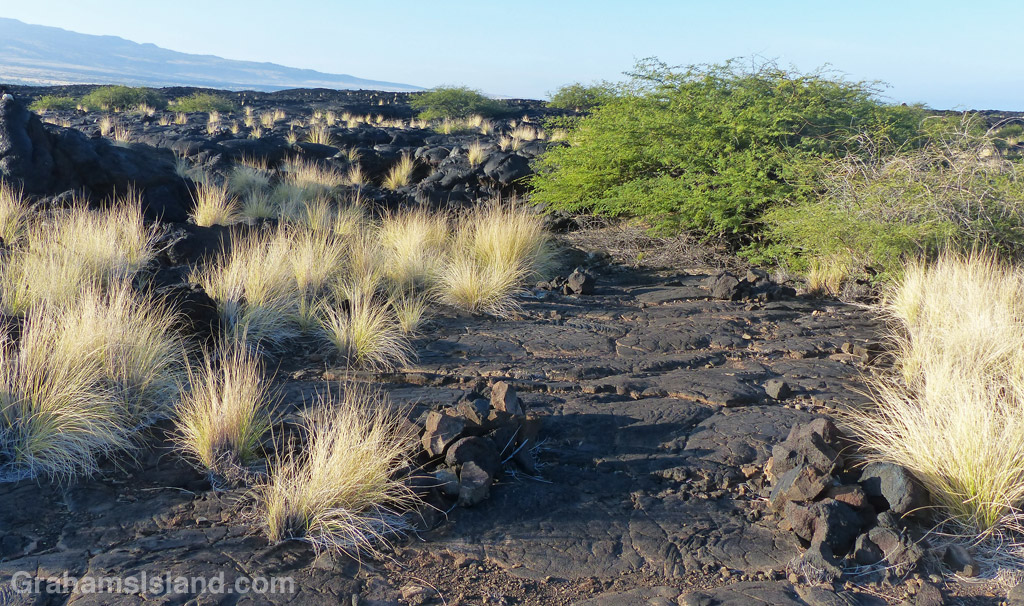
The trail takes a turn.

This hike is the first half of a loop from inland of Keawaiki Bay, south on the old King’s Trail to Kiholo, returning along the coast.

I was on the trail before 8 a.m. because the lava fields become very hot as the day wears on. The trail started out dead straight, with rock wall sides, until it reached a scrubby tree growing in the path. I figured it would pick up again on the other side, but this marked the boundary of the lava flow from Mauna Loa’s 1859 eruption, which destroyed fishponds and a village on the coast near here.

Instead, the trail wound over and around hummocks of pahoehoe lava and the way was marked mostly by cairns. Pahoehoe lava tends to be fairly smooth and rounded and is relatively easy to walk on, but still requires attention. It’s a matter of a moment’s inattention to end up jamming a foot into a crack and turning an ankle or worse. It’s also very easy to spot the next cairn, wander in its direction, then suddenly realize you don’t see any more because the trail has veered off to avoid some hole ahead or take advantage of easier going.

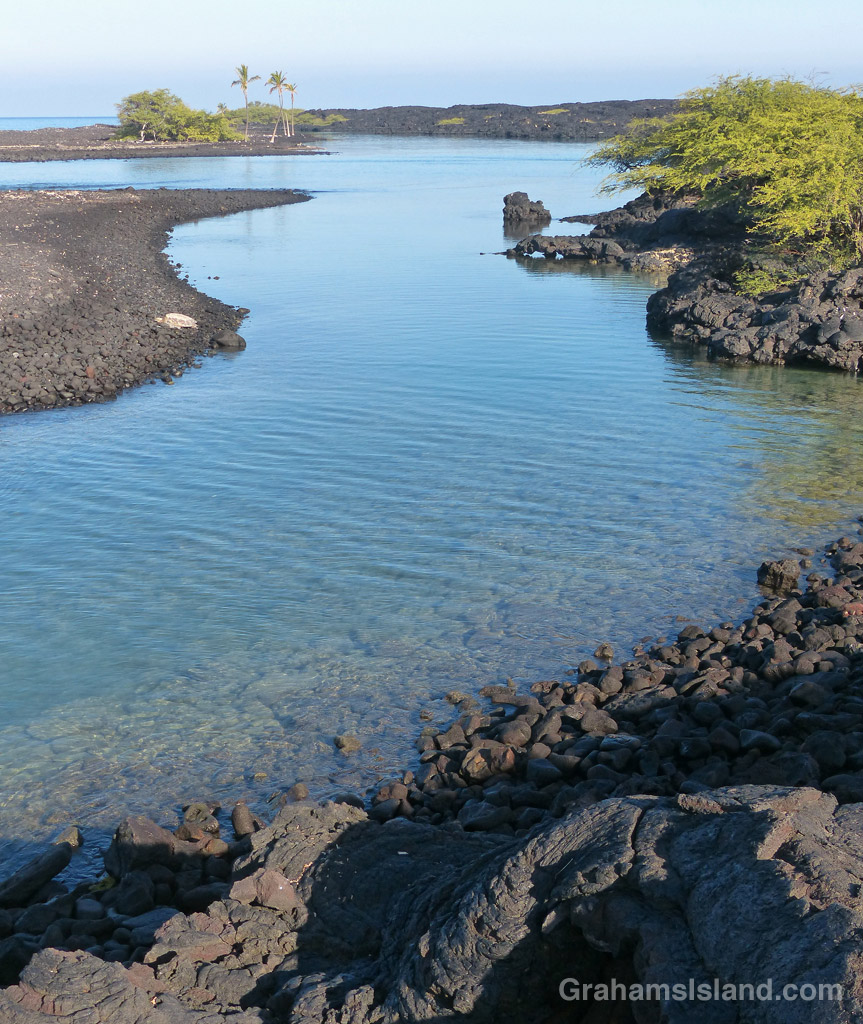
The tranquil waters of Kiholo Bay.

This is a stark landscape, unrelenting lava with occasional shrubs and tufts of fountain grass. But I like the history of the trail, its connection to the early days of Hawaii.

The distance to Kiholo is a little under 3 miles and I was plenty hot by the time I got there. But at Kiholo there’s shade to be found and the opportunity for a swim. I’ve snorkeled at Kiholo before, but it’s not the greatest. Freshwater springs make the water cloudy and cool.

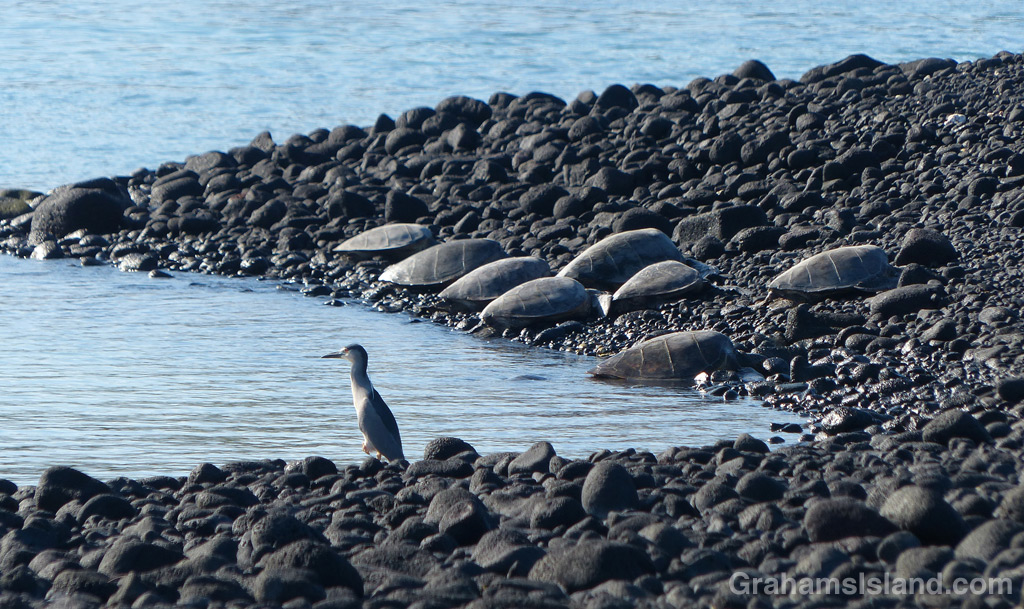
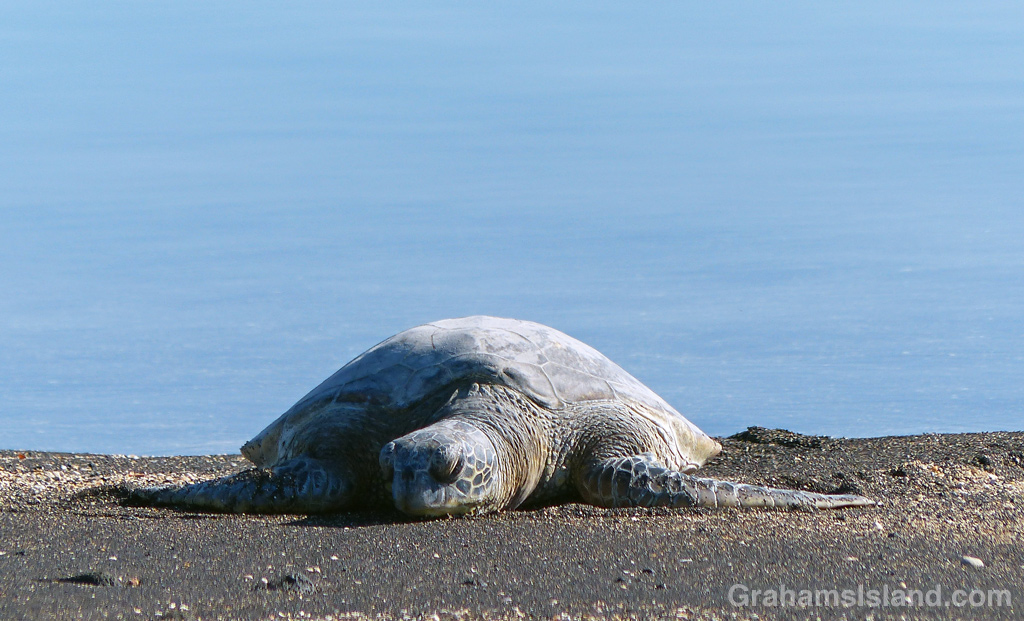
There’s a blue Kiholo Bay Fisheries Management Area sign where the coast trail almost doubles back on the one I’d arrived on. This lightly marked trail winds around a bay rich with wildlife, most notably green sea turtles. Usually they’re hauled out on the spit that forms the outer part of the bay. This day was no exception. A cluster of 8 turtles had lumped ashore near the tip of the spit, watched over by a guardian heron. Others were scattered in ones and twos up the inside of the spit. I hiked down the length of the spit enjoying the welcome sea breeze and taking photos, making sure not to disturb the turtles. Then it was time to head north again. (For the return hike, click here)

For more info about this, and other hikes on the Big Island, go to bigislandhikes.com. (The hike is listed as Kiholo to Keawaiki, starting from the south.)

A heron stands watch while green sea turtles rest on shore at Kiholo Bay,
A heron stands watch while green sea turtles rest on shore at Kiholo Bay.
1-6-16-Green-Turtle-HW
Green sea turtle resting on the shore at Kiholo Bay.