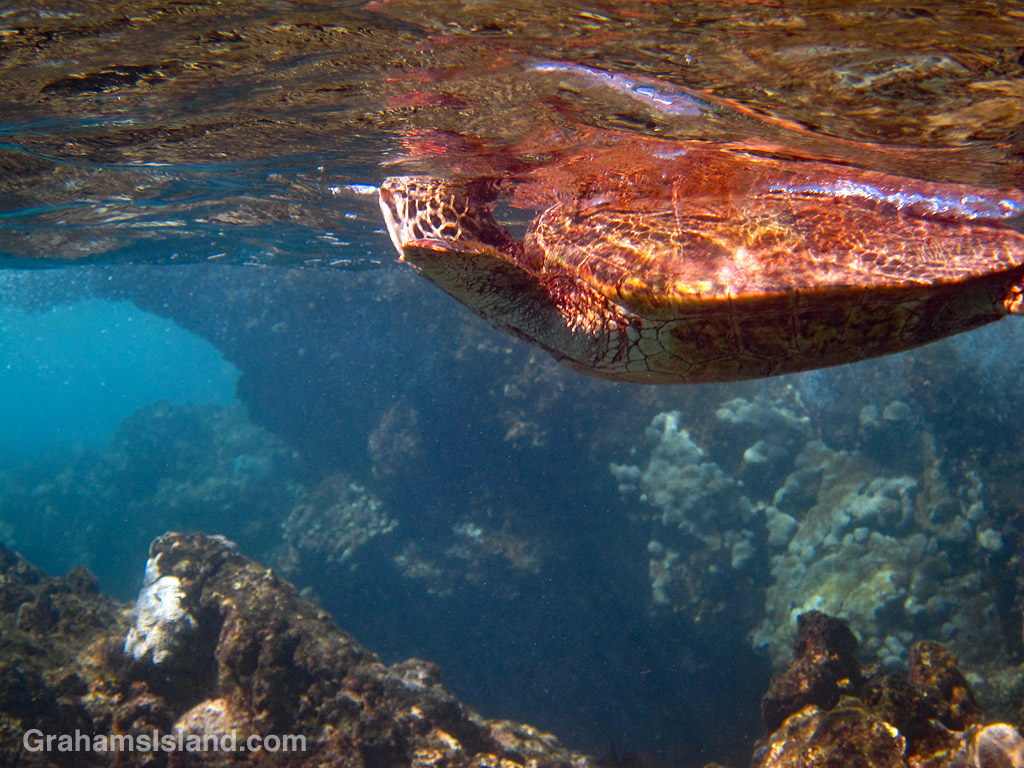
A turtle pops its head above water to take a breath.

A turtle pops its head above water to take a breath.
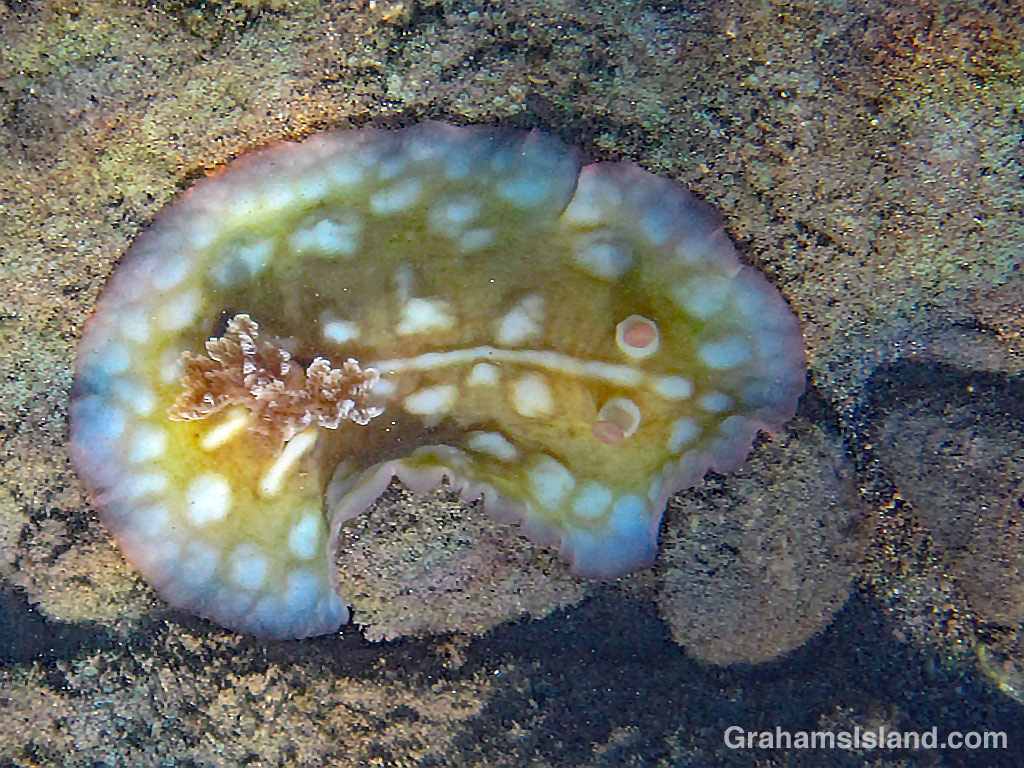


My local snorkeling spot has been roiled with excitement lately over the appearance of a couple of clumpy nudibranchs. Well, it’s exciting for us.
Nudibranchs (pronounced noo-di-branks or noo-da-branks) are members of the sea slug family. Granted this doesn’t sound too exciting, but nudibranchs are strange and exotic and often wildly colorful. The reason I haven’t posted photos of a nudibranch before is that I’ve never seen one before, let alone got a photo of one. That’s the downside of nudibranchs; they tend to be on the small side. One to three inches is typical for most of them. But clumpy nudibranchs are big, up to 10 inches long. In nudibranch world they’re like King Kong, visible from space.
When they were first spotted, I didn’t see them, but I was on high alert. And then, one day, I saw my first nudibranch. I popped up and called to my wife, only to see her waving at me to come see the nudibranch where she was. So this established that nudibranchs are like buses; you wait and wait and wait, then two come along at the same time. Since then, I’ve seen one or both of them most days I get in the water. Each time I’ve seen either of them they’ve been motoring along at speed, at least for a slug.
Clumpy nudibranchs have some color variations which can be seen in these photos. One has more yellow coloring, the other (second photo) being browner. The order’s name, Nudibranchia, means naked gills. These are the feathery clumps to the rear of the nudibranch. The two protuberances at the front are sensory organs. Clumpy nudibranchs feed mainly on sponges (not the cake variety).


I’ve posted photos of shoals of little fish before, making the assumption that these were juveniles of some fish species or other. However, this year the local snorkeling spot has been thick with these fish. It’s not been unusual for me to get in the water and find myself surrounded by a swirling ball of fish. It can actually be quite disorienting.
Because of this bumper crop, it occurred to me that I really should try to identify these fish. I think the answer is that they’re Hawaiian silversides, an endemic species. The problem is that there are a couple of other possible species, the goldspot sardine and the Hawaiian anchovy. Short of catching a few and examining them in the light of day, it’s hard to tell them apart.
Regardless of species, it’s been fun interacting with the shoals. Swim toward them and the shoal will part, then recombine behind. Point a camera in their direction and they jet off in another direction. It’s best just to float in the water, with the camera pointed in the right general direction. Then they’ll get quite close and I’ll snap a photo or two hoping something will turn out.
In the top photo, a shoal surges by in front of me. Below, the silvery stripe along their bodies can be seen.

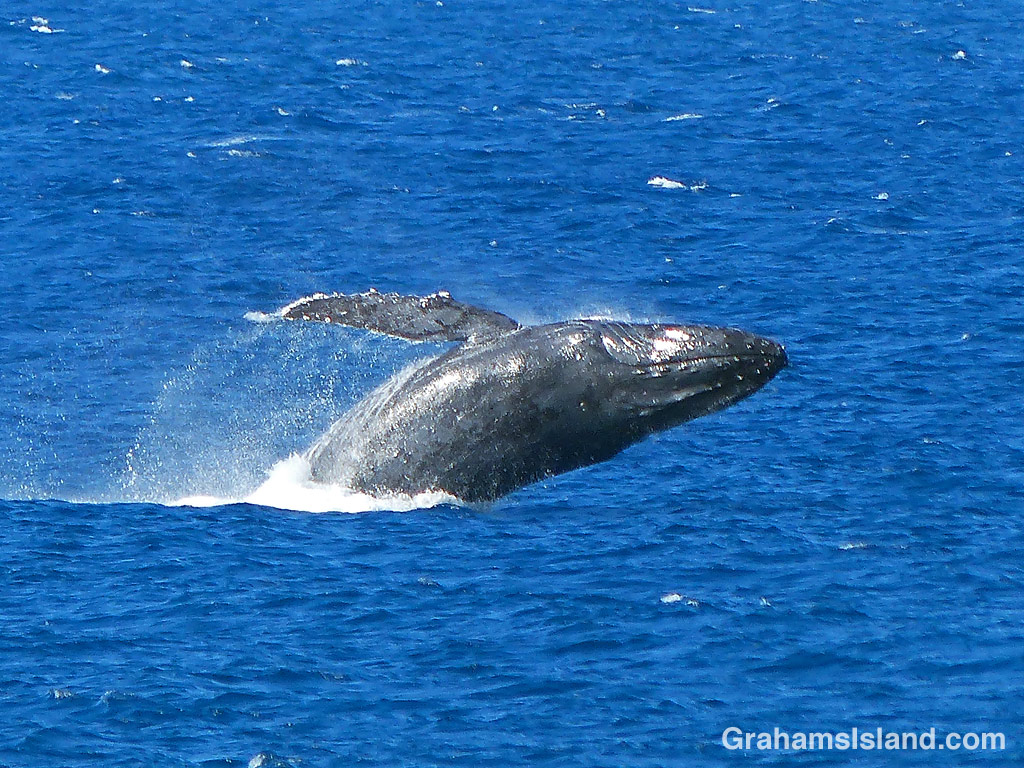

This week’s Sunday Stills challenge theme is ‘Winter.’ See more responses here.
There are seasons in Hawaii, but they’re not as markedly different as they are on the mainland. So when it comes to a seasonal challenge theme I tend to fall back on migratory creatures. When it comes to winter, I think of humpback whales.
Humpbacks spend their summers in Alaska, which is their prime feeding ground. They come to Hawaii to calve and to mate. The first humpbacks arrive in Hawaii in October or November, but the high season for them is January through March. They can be seen anywhere around the island, but the prime viewing spots are on the more sheltered west side, from Kailua Kona all the way up to Upolu, at the island’s northern tip.

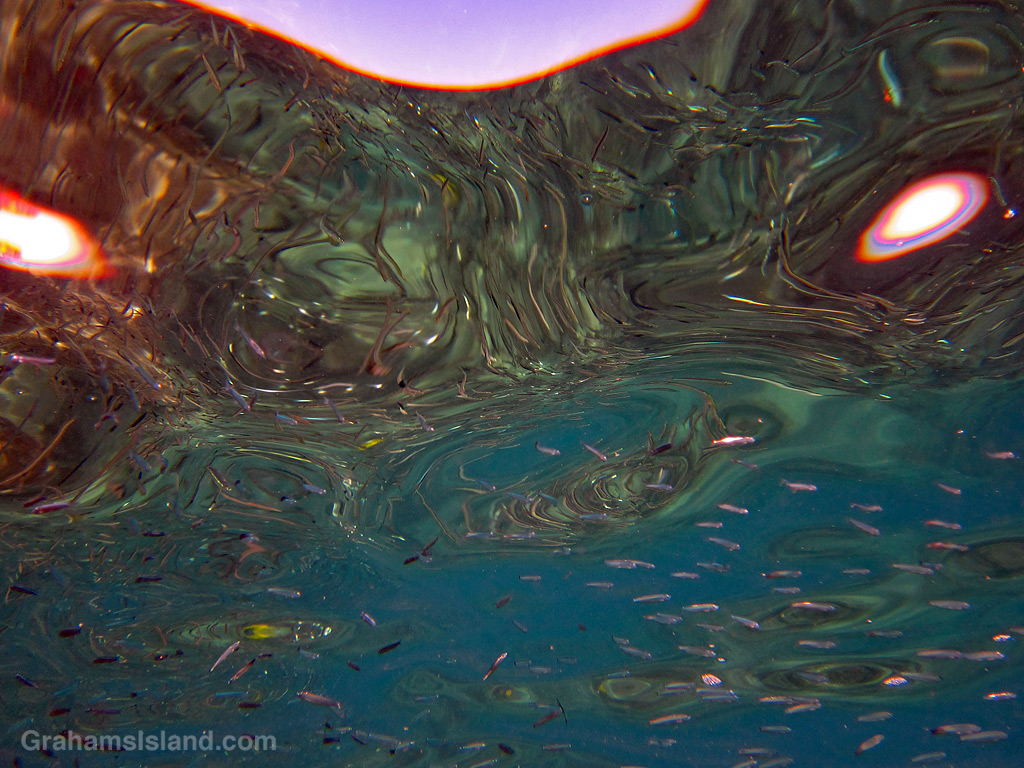
Recently, I’ve been taking photos of shoals of little fish I see when I get in the water. I thought I’d try shooting them from underneath and, while this hasn’t resulted in decent fish photos, I rather like the look of the water that’s shown up in some of the photos. This one has the added bonus that even the fish can be seen, too.
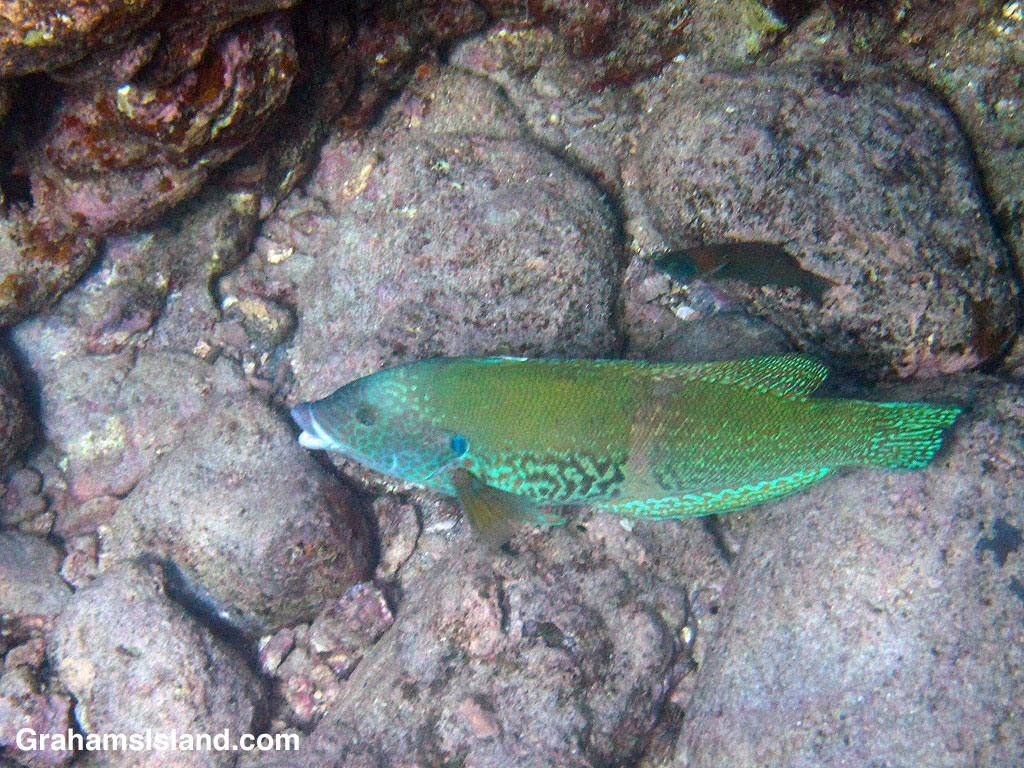
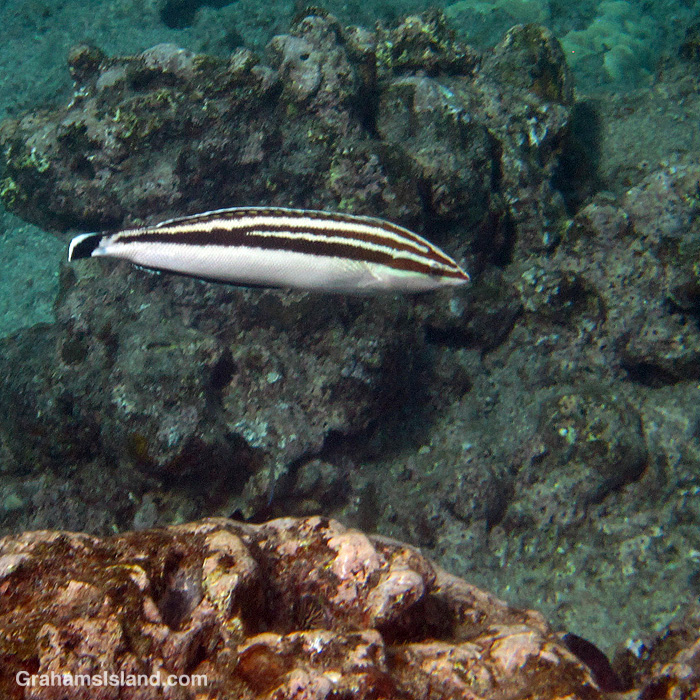
The blackstripe coris, also known as the yellowstripe coris, is an endemic wrasse. According to my fish book, John P. Hoover’s The Ultimate Guide to Hawaiian Reef Fishes, Sea Turtles, Dolphins, Whales, and Seals, it’s most abundant around the northwestern islands of the Hawaii chain. Around the main islands, mature females are uncommon and males rare.
The fish in the top photo is a large male. It has no black stripes, yellow stripes, or stripes of any kind, because this is one of those species where the male and female look radically different. This male was sparkling green in a variety of patterns. The other photo shows a female, which gives a better idea of why the fish got its name.

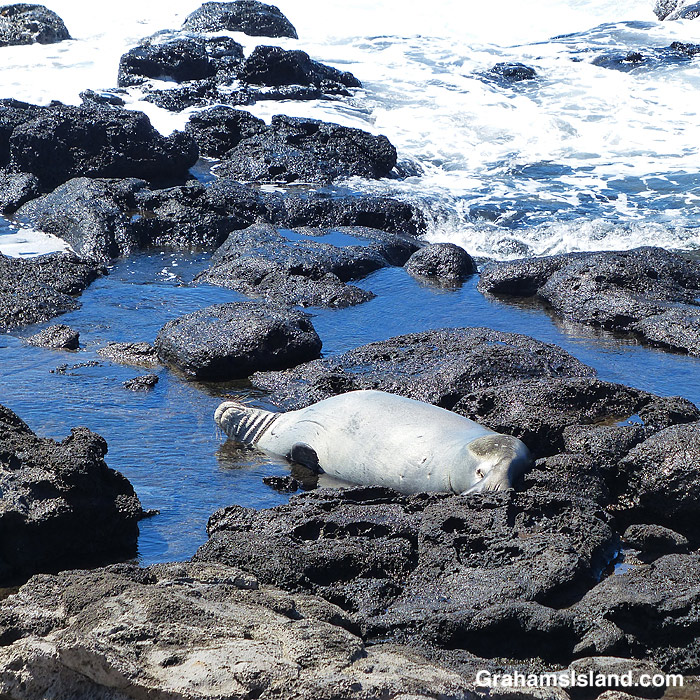
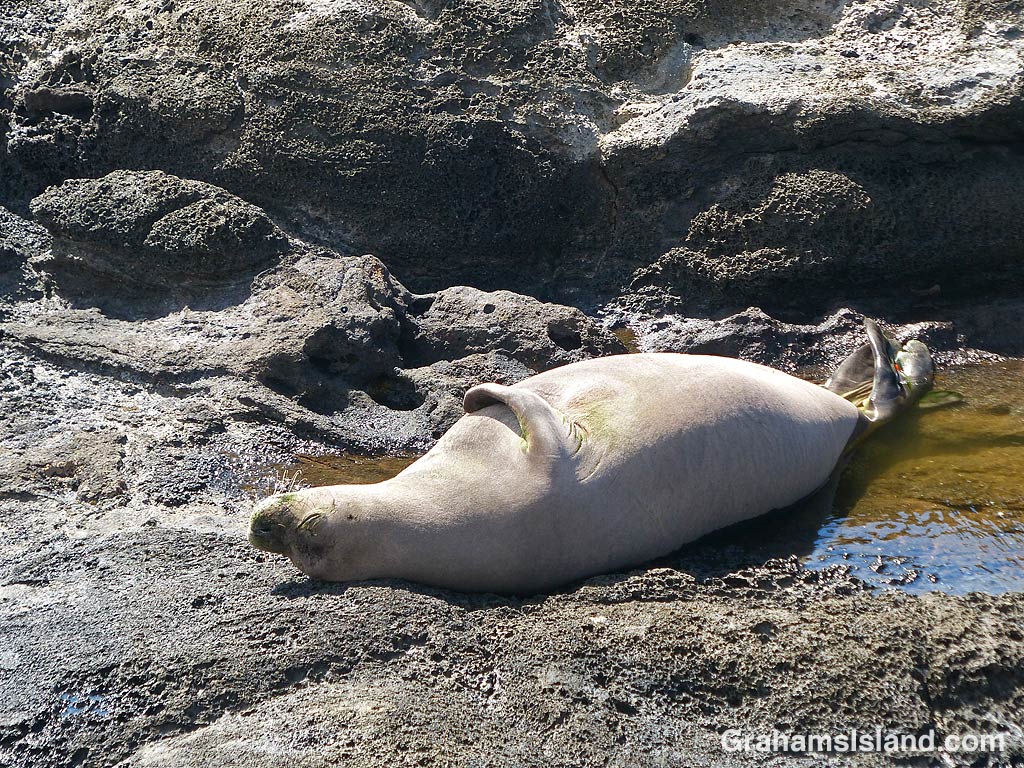
A couple of days ago, I saw this monk seal resting on the shore below Upolu Airport. It turned out to be RA20, the same seal I saw there back in May (bottom photo). In the interim, she had obviously molted and looked very shiny and clean. Pre-molt monks seals look quite ratty and green, particularly around the flippers and head. After a molt, they look sleek and silvery as this one does.
Monk seals molt about once a year and it is a process that can take 10 days or so. During this time the seal will generally remain on the beach or rocks where it has hauled out.
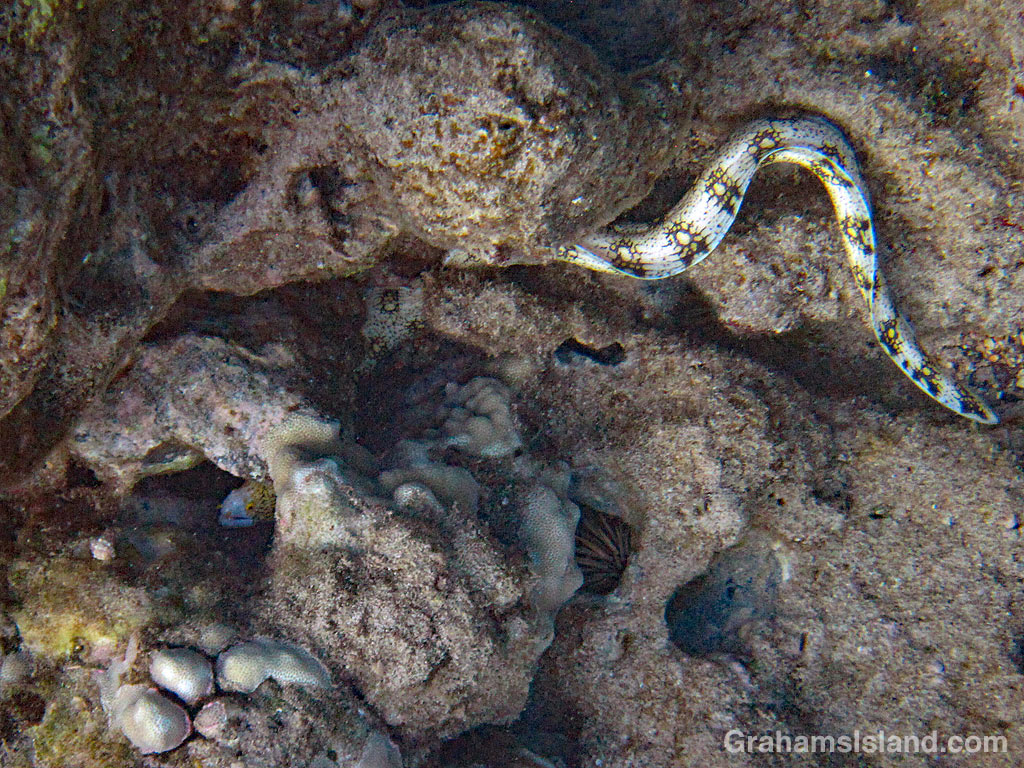
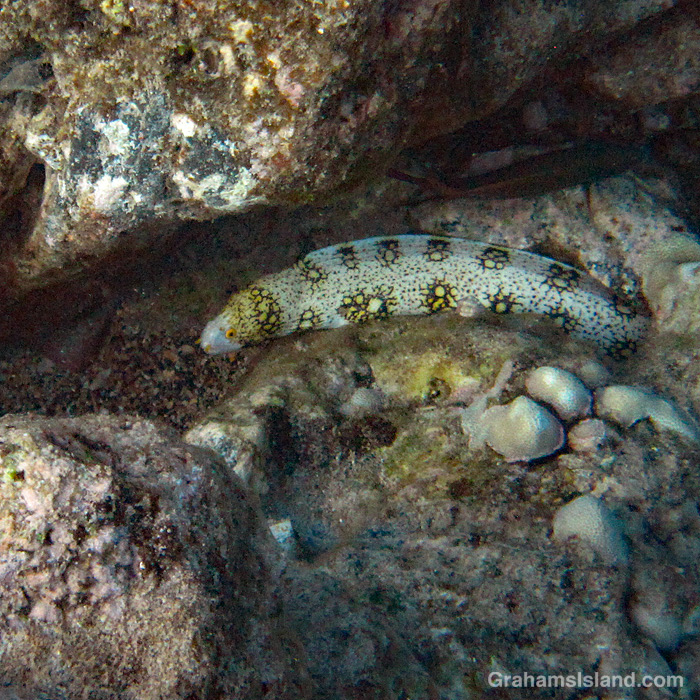
I saw this fairly small snowflake moray eel sliding over and around a shallow rocky area recently. Often times, eels will vanish into barely visible holes in the reef, but this one stayed in sight for quite a while before doing so. I like how, in the top photo, it’s peeking out to see if I’m still there.
Snowflake eels are probably the prettiest eels to be seen in the waters around here.

 Graham's Island