Category Archives: In The Water

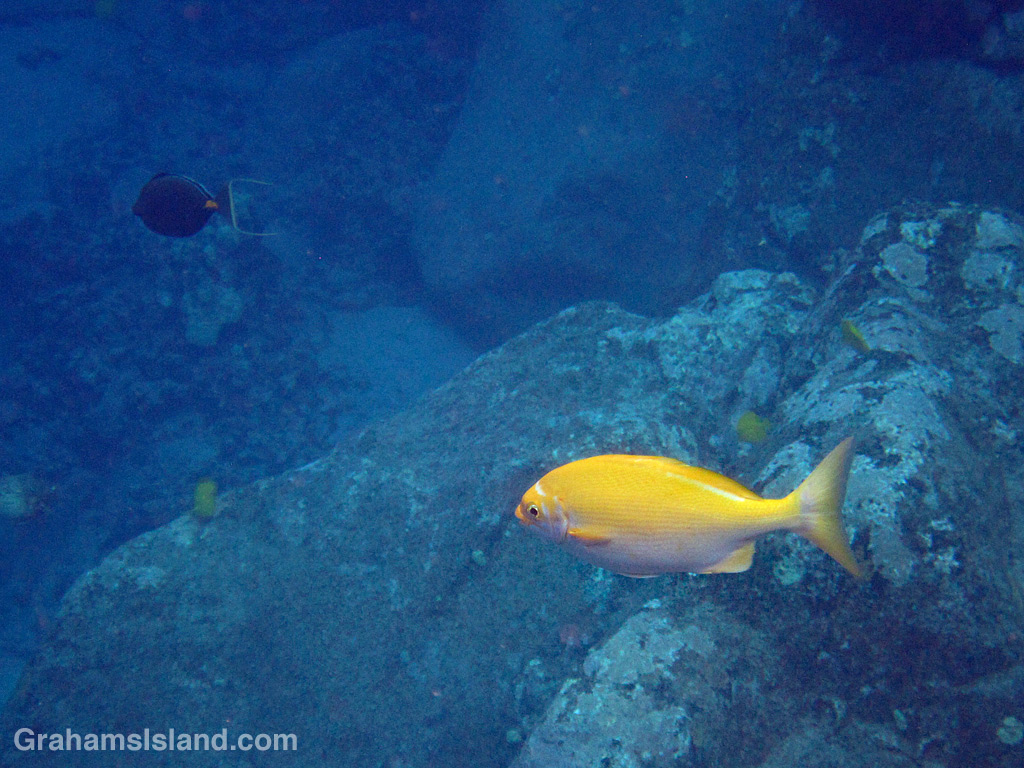
Yellow gray chub

This fish is a gray chub, so why is it yellow? That’s a question with no good answer. Locals used to think that yellow-colored chubs were ‘queens’ of their schools, but there’s no evidence to support that. Instead, it’s regarded as simply a color variation, seen in a few fish, that is without significance. This is the first one of these I’ve seen.

Gray chubs’ usual coloration can be seen in the photo below.

A gray chub in the waters off the Big Island

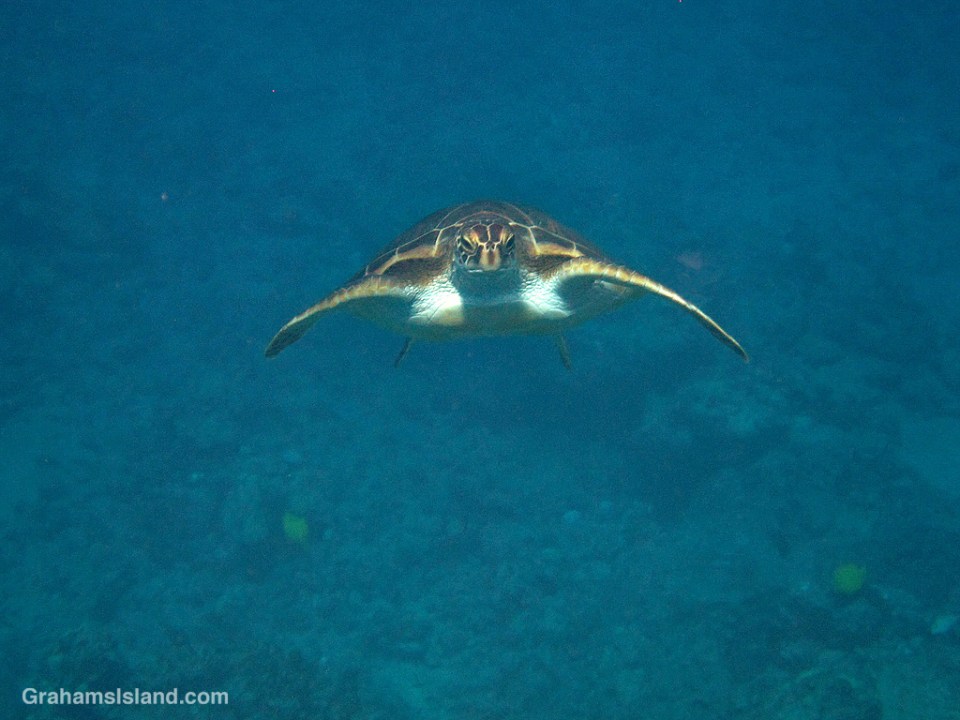
A green turtle says hello

Green turtle says hello

During a recent snorkeling trip, I happened to turn around and saw this turtle heading toward me. Usually they will head off in a different direction when they see something as strange as me, but this one came up quite close before sliding off to the side and gliding away again.

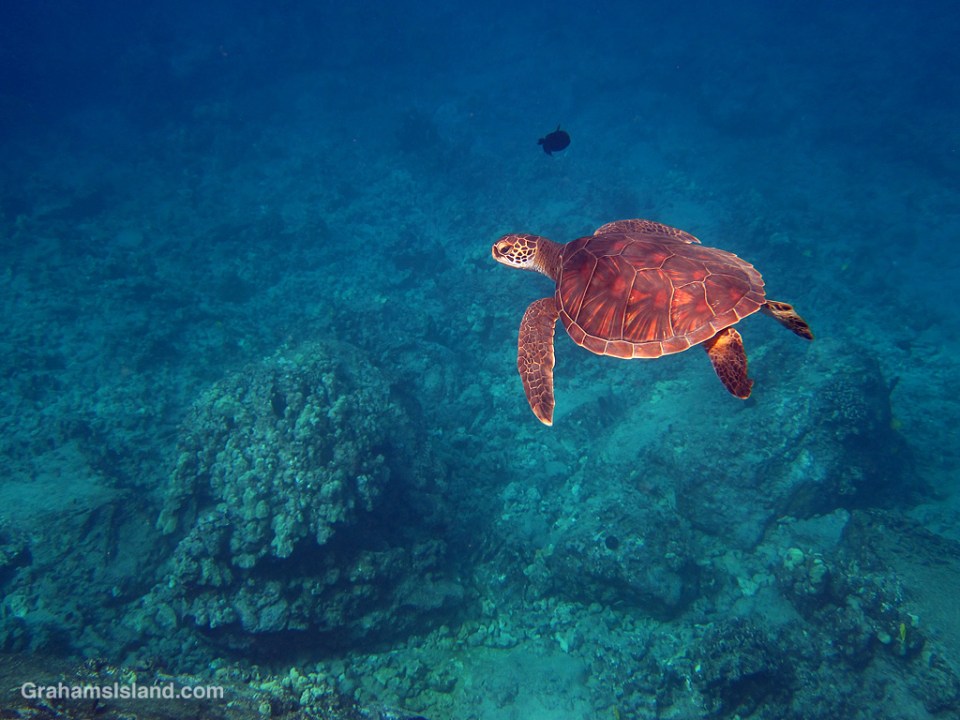
As you can see, there’s nothing green in the appearance of green turtles. The name comes from the color of their fat, found between their organs and carapace.

Posted in response to this week’s Sunday Stills challenge on the theme of ‘Green.’ See more offerings here.

Green turtle swimming

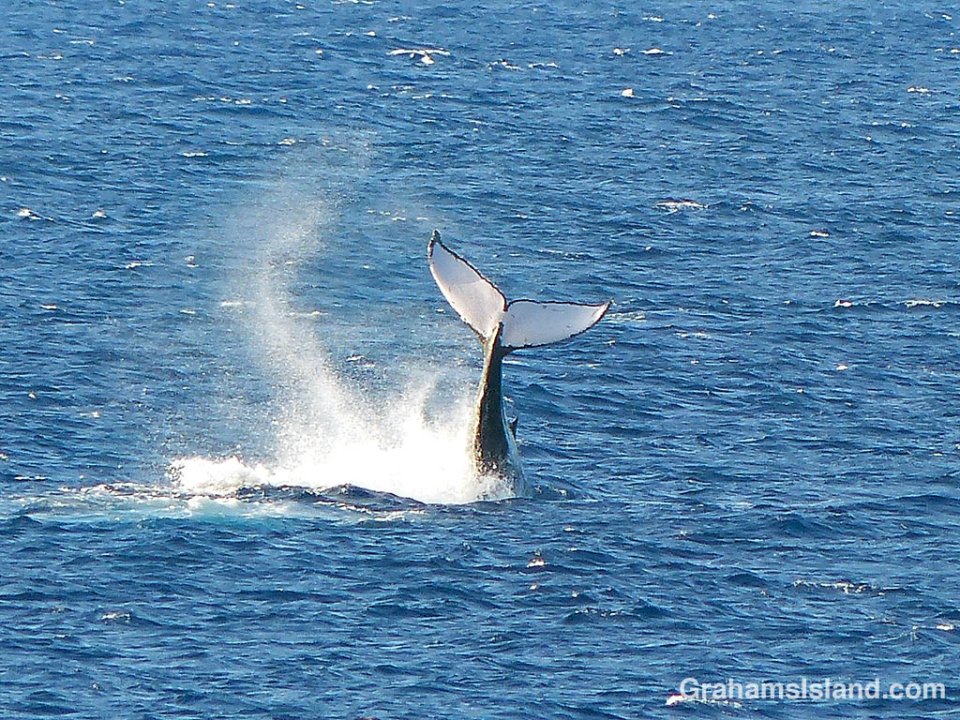
Humpback whale tail slaps

Humpback tail slap

Humpback whale tail slapThis week’s Friendly Friday challenge theme is ‘Climate Change.’ (See more responses here.) Living on an island in the middle of the Pacific Ocean makes climate change a relevant topic. Our weather is affected, our wildlife is impacted, our food supplies could be disrupted. But I’ve chosen to picture something obvious and current – humpback whales.

I posted (here) about the decline in the number of humpbacks coming to Hawaii to breed and calve, an estimated drop of 50- to 80-percent over the last four years. I expect that decline to extend to this year’s numbers.

I’ve lived here for seven whale seasons and the drop in numbers from the first couple of years to now is visible and obvious. January through March are supposed to be the height of whale season, but the number of whales here is dropping. I spend a lot of time in the island’s prime whale viewing area and already they are few and far between.

Each year, NOAA conducts a whale count on the last Saturday of January, February, and March. Last year, at the count site I attended, we saw no whales in March – none. This was unprecedented. I wouldn’t be surprised if this month’s count repeats that result and I certainly don’t expect them to see more than two or three whales.

A conference in Honolulu last fall attributed the drop in the number of whales visiting Hawaii to warmer waters in Alaska affecting the whales’ food supply. Those waters are warming because of climate change. So what will happen? Well, my belief is that people make money off activities that cause climate change and the best/only way to change that is to make those activities less profitable or to make it more profitable to be engaged in activities that combat climate change. An alternative is to have people become less geared to making obscene amounts of money, but that, I think, is wishful thinking indeed.

In these photos, a humpback whale slaps its tail, one of several common humpback activities that are monitored during the NOAA whale counts.
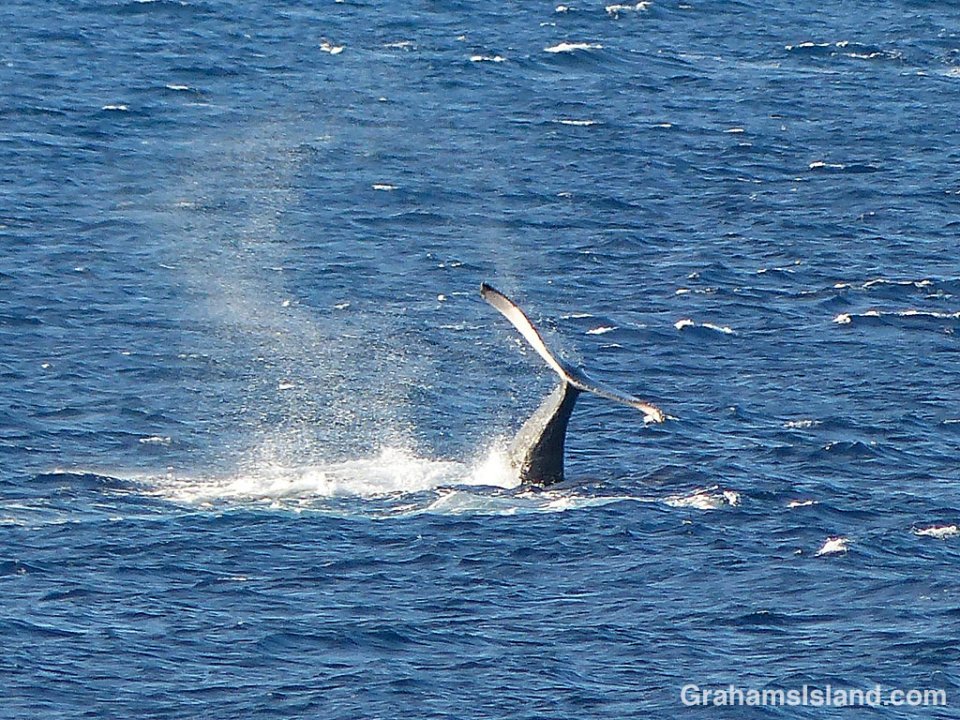

Humpback tail slaps

A mackerel scad school draws attention

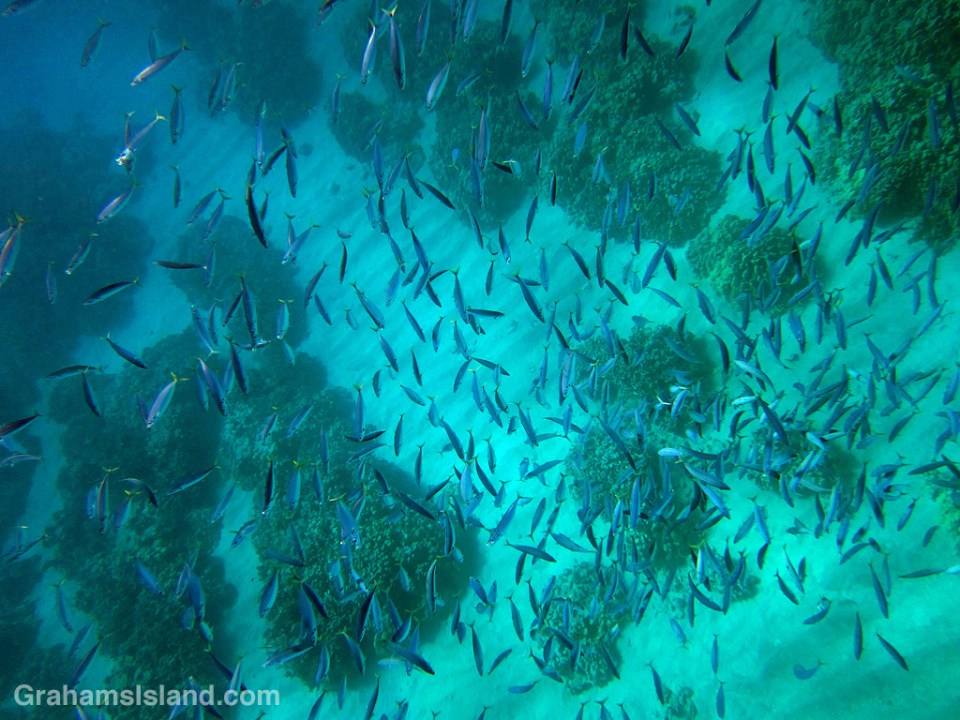
Mackerel Scad shoal

Mackerel Scad shoal over coralMackerel scad are schooling fish, the kind that make ‘bait balls’ which end up being decimated by large predators. They’re members of the jack family, not that this does them much good. Some of those large predators are other members of the jack family such as greater amberjacks and almaco jacks.
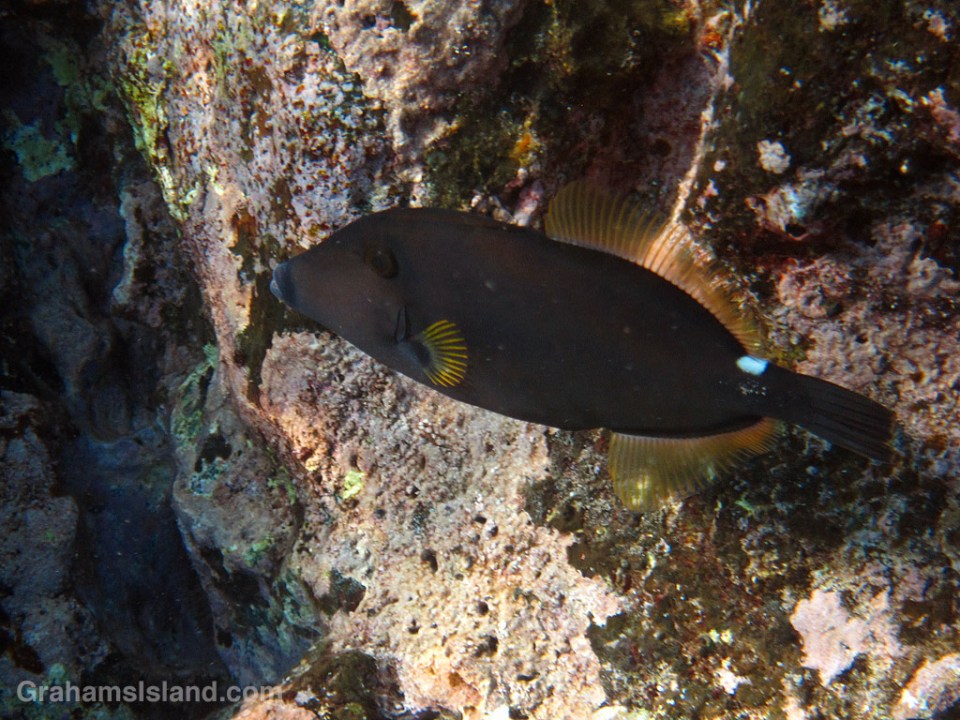
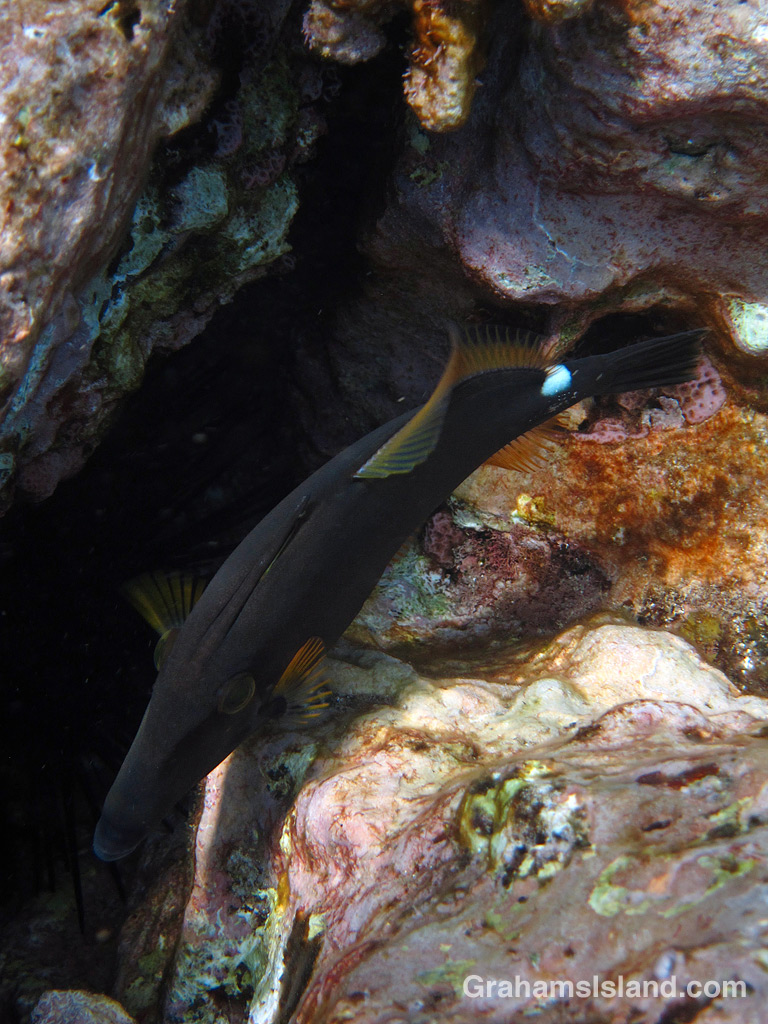
I came across this school not far from shore. There were probably two or three hundred fish in the school and it was fun watching them twirl and circle in harmony. They encircled me, went past and I popped out the other side. It was then I noticed they weren’t alone. One the other side of the school, a medium-sized great barracuda cruised around.

The barracuda came toward me to take a look, but I was clearly less interesting than the scad and it moved away again. The barracuda can be seen in the bottom photo. See if you can spot it.

Mackerel Scad shoal and a great barracuda

Bluefin trevally

Bluefin Trevally

A couple of views of different bluefin trevallies. There are two things I particularly I like about this quite large fish. One is that they’re quite beautiful when the sun catches their blue markings. The other is that they tend to hunt in twos and threes, often times in the company of goatfish, and an eel or octopus. Indeed, if you want to see an octopus, one of the best ways is to watch for trevallies, especially if they’re just stooging around in one area for no apparent reason. In that case, it’s probably because there’s an eel or octopus present that can’t easily be seen.

Bluefin Trevally approaching

Brown water

Brown water

After something of a dry spell, during which I was able to drive my truck out of the yard without sliding about, there’s been a lot of rain lately. My truck is back to sliding, but that’s a minor issue compared with what happens to all that rainfall.

What happens is that the rain hits the land and runs downhill. It channels into dry gullies. If the rain is heavy enough, flash floods occur and wash all before them – dirt, rocks, trees. But any kind of heavy or prolonged rain will wash earth and debris down the gullies. All those gullies lead to the ocean, channeled under roads by culverts (bottom photo).

When the runoff reaches the ocean, it forms a distinct area of dirty brown water in the blue Pacific Ocean (top photo). The contrast is striking and easily visible from miles away. Over time, the brown and blue water will begin to mix until the delineation is gone, but part of that process is the dirt from the brown water settling to the ocean floor.

This kind of runoff is one of many threats to coral reefs around the Big Island. It’s not just dirt in the runoff, but also pesticides and other chemicals that can be washed down into the reefs, damaging the coral. There are hundreds of gullies and only a few places have erosion prevention measures to help mitigate this pollution.

So while Hawaii may be considered paradise, it has its share of challenges. And the problems associated with runoff and pollution are more visible and obvious than most.

Posted in response to this week’s Friendly Friday challenge on the theme of ‘Contrasts.’ See more responses here.

Brown water and culvert