Category Archives: In The Water

Three green turtles and a passenger

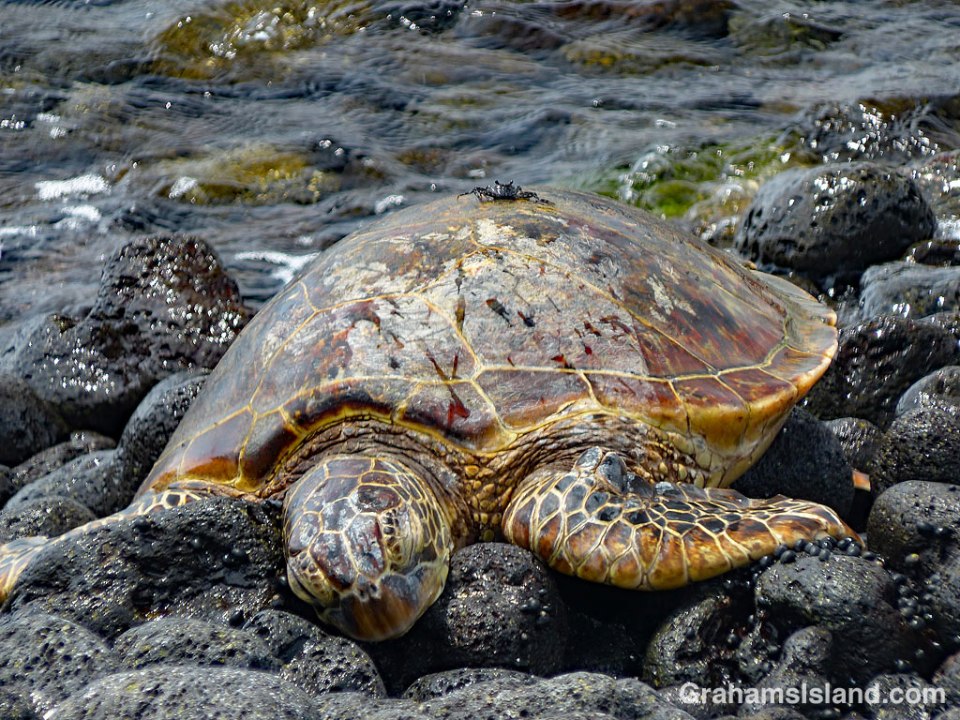
Three green turtles

It’s not unusual to see green turtles hauled out on shore. Sandy beaches are prime resting spots, but these three chose this rocky bay, only a few hundred yards from some of the best beaches on the island. Perhaps they valued quiet over easy access.

The middle one of the three had gained a passenger that I didn’t notice until I processed the photos, an a’ama crab, making the most of its excellent vantage point.

Green turtle and A'ama crab

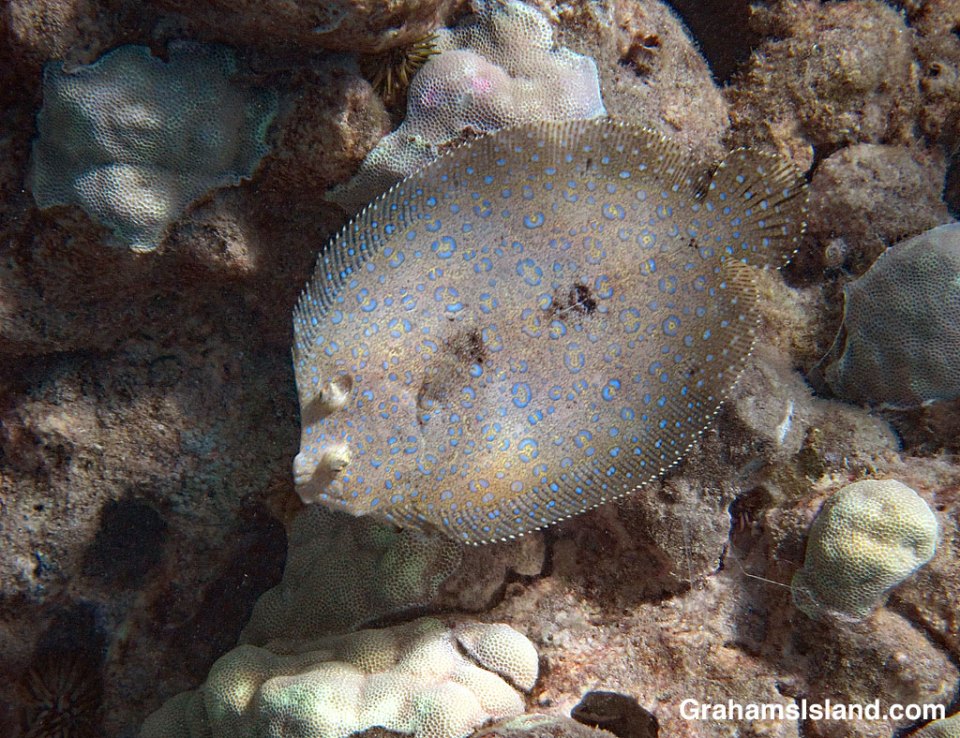
A flowery flounder and lobe coral

Flowery Flounder and lobe coral

A small flowery flounder passes over what I think are patches of lobe coral. Those two bumps casting shadows on the top of the fish are the flounder’s eyes, which sit on the end of small stalks. As you can see in the photo, the two eyes are pointing in different directions. This isn’t a case of wandering eyes; they work independently.

However, flounders, like other flatfish, do indeed have the most remarkable wandering eyes. Flatfish start out looking like regular fish, with one eye on each side of the head. As they transition from the larval to juvenile stage, one of the eyes migrates over the head to join the other one on what ends up being the top side of the fish.

The eyes migrate to different places, depending on the kind of flatfish. Some are left-eyed and some right-eyed, which refers to the eyes’ relationship to the mouth. Flowery flounders are left-eyed flatfish, the eyes being to the left of the mouth when seen from head on.

There are pros and cons to photographing flounders and other fish that rely on camouflage for protection. On the plus side, once they settle, they tend not to move so it makes it easier to get a photo. On the downside, because they blend in so well, it’s not easy to get a photo where the fish is clear. The best hope is to see one on the move, as I did with this one, not only to get a photo, but also to enjoy their elegant motion as they ripple through the water.

Hawaiian zebra blennies and padina japonica

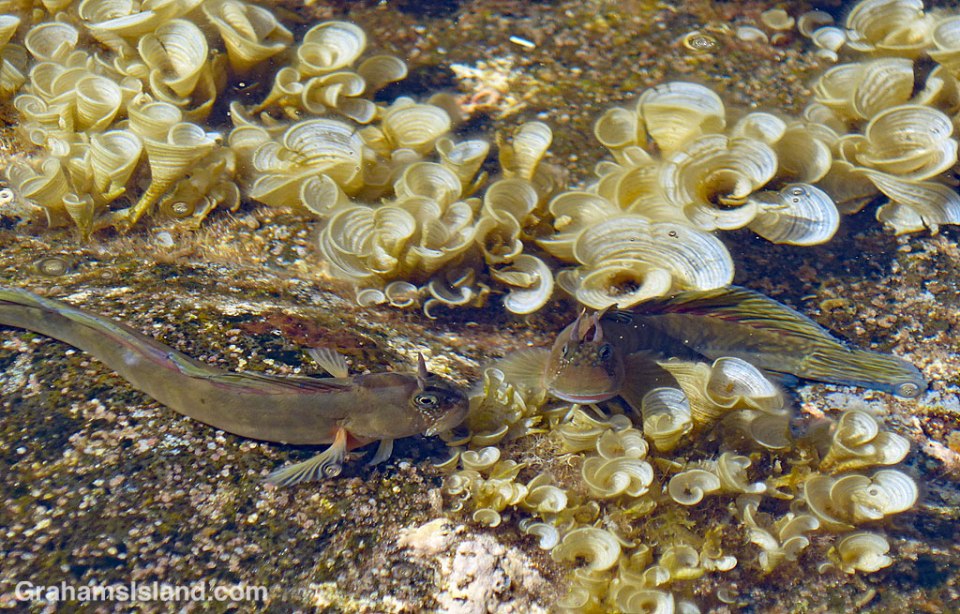
Hawaiian Zebra blennies and Padina japonica

A few weeks ago, I posted a photo of a dead blenny floating in a tide pool filled with ‘delicate creamy shells.’ Recently, I returned to that area and I realized that the creamy shells were not shells, but something growing.

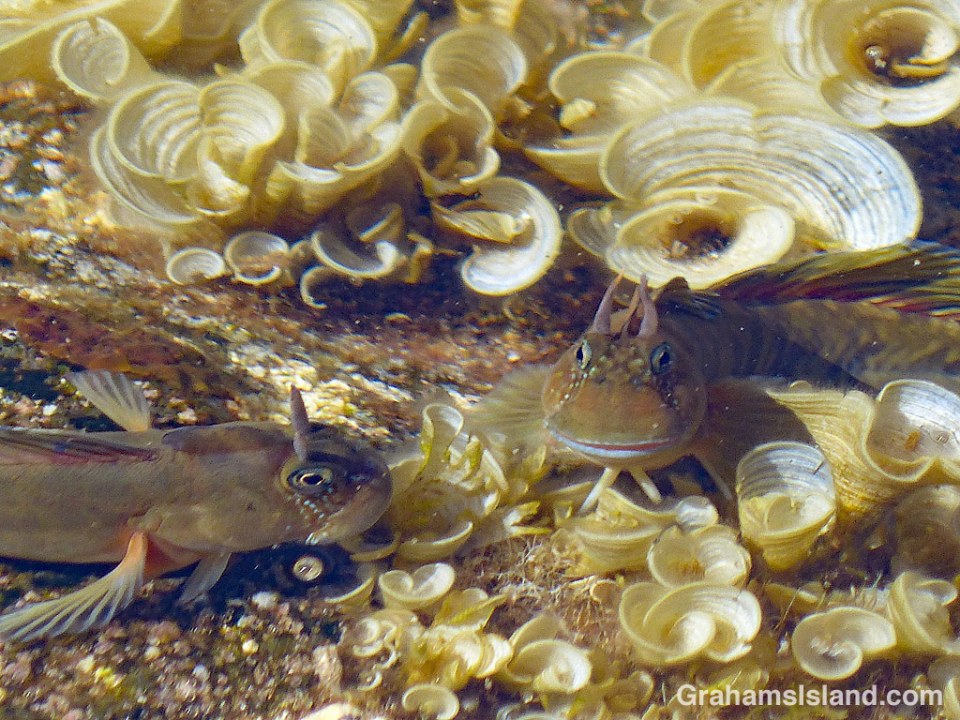
It turns out they’re a kind of seaweed, padina japonica, which both surprised and delighted me, since I think of seaweed as being stringy and brown. I learn something every day.

To celebrate, I went back and took some more photos, including these two Hawaiian zebra blennies, both very much alive, and both as delightful as the seaweed, with their little blue dots under the eyes and those oh-so-charming expressions.

Thanks to Jeanne at http://hawaiinaturejournal.weebly.com/ for help with the padina japonica identification.

Hawaiian Zebra blennies with Padina japonica

Monk seal scars

Monk seal scars

Monk seal with scarsThese are older photos, but still interesting to me. I spotted this monk seal one day, not too far from a second seal that is a regular around the Big Island.

The top photo shows some lighter marking on the side of the seal, below and behind the two dark marks. This lighter marking is bleaching, which is applied to seals when possible, to help researchers monitor the population and keep track of their travels. The bleaching only lasts a year as seals molt annually. In addition to the bleaching, most seals have red tags placed in their rear flippers, to help identify them. It can be a hit and miss method as these photos show. This seal has tags in both flippers, but they were never visible to me.

The other interesting thing is those two dark circles on the seal’s back. They’re made by cookiecutter sharks. Cookiecutter sharks are small dogfish sharks, less than two feet in length. They feed by gouging round plugs, hence the name, out of larger creatures such as monk seals.

Cookiecutter sharks live in the deep ocean during the day, sometimes at depths over two miles. At dusk they rise up toward the surface, before descending to the depths again around daybreak. Another reason not to go swimming at night.

What a day for a day octopus

Day Octopus

Day Octopus on the moveThe trick to spotting an octopus is to see it in motion. I’ve seen one or two when they’ve been stationary, but only by accident, watching something else and realizing that there was something slightly odd about that ‘rock’ next to it.
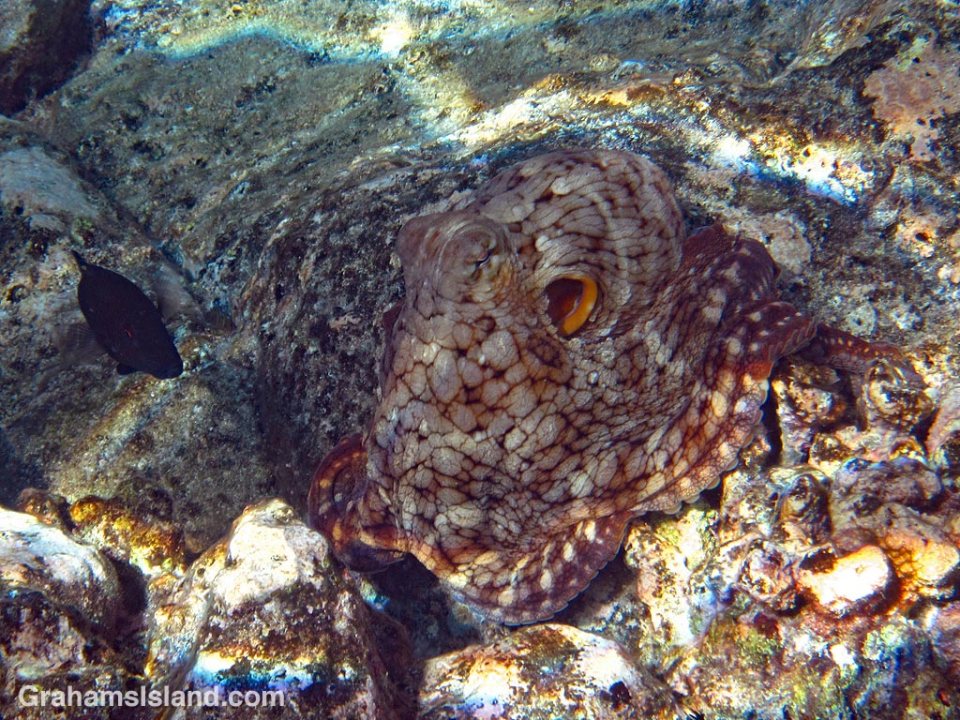
When I do see an octopus, one of the first things I tend to notice is the siphon and the outdated facial recognition software that is my brain thinks, ‘that’s an eye.’ Except it isn’t.

In the top photo, the eyes of this day octopus can be seen at the highest point of the view. The siphon, orange on the outside and white inside, is below and a little to the right. The siphon, also known as the funnel or hyponome, is used for respiration, waste disposal, and discharging ink. It’s also used for locomotion. Water is taken in through the aperture around the siphon and then expelled out of the siphon, propelling the octopus in the opposite direction.

The bottom photo shows the octopus changing its coloration. They can change their color and texture to blend in with their surroundings. The middle photo shows the octopus saying ‘I’ve had enough of this. Arrivederci.’

Day Octopus on a rock

Most of a white-spotted surgeonfish

White-spotted Surgeonfish

This white-spotted surgeonfish is one that I see regularly when I’m snorkeling. It’s quite distinctive as something has taken a chomp or two out of its back. It’s not unusual to see fish like this, with chunks missing here and there, but if they survive the encounter, they seem to fare as well as the other fish. This one though seems, perhaps understandably, to be more skittish than most.