Category Archives: In The Water

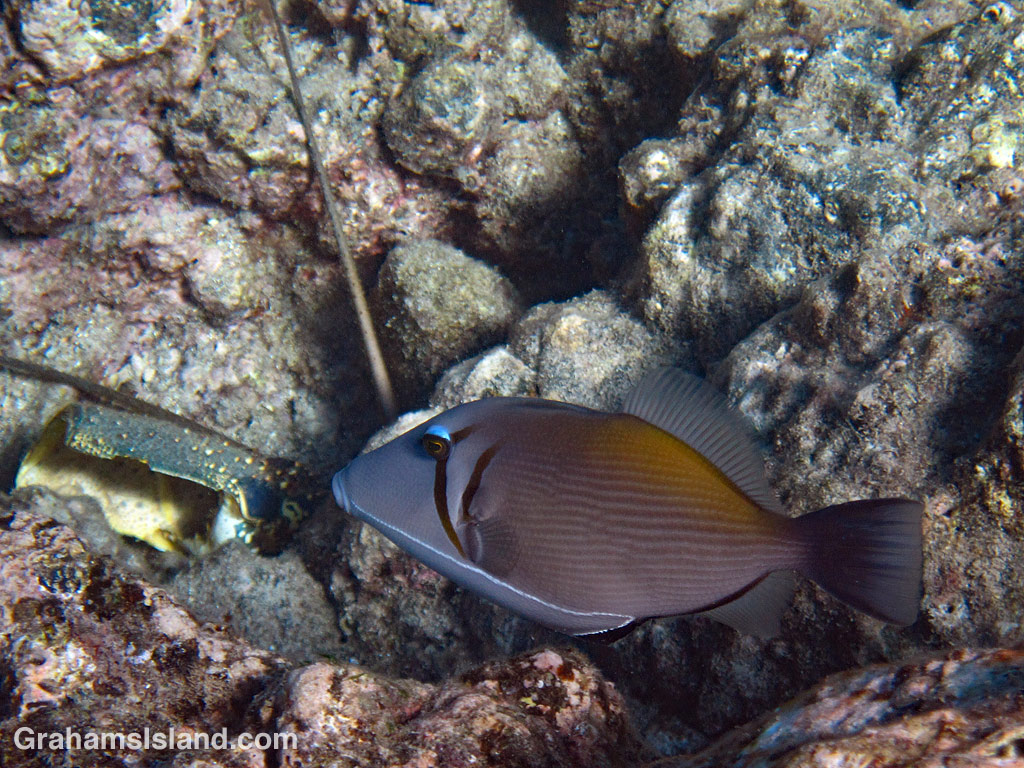
Lei triggerfish

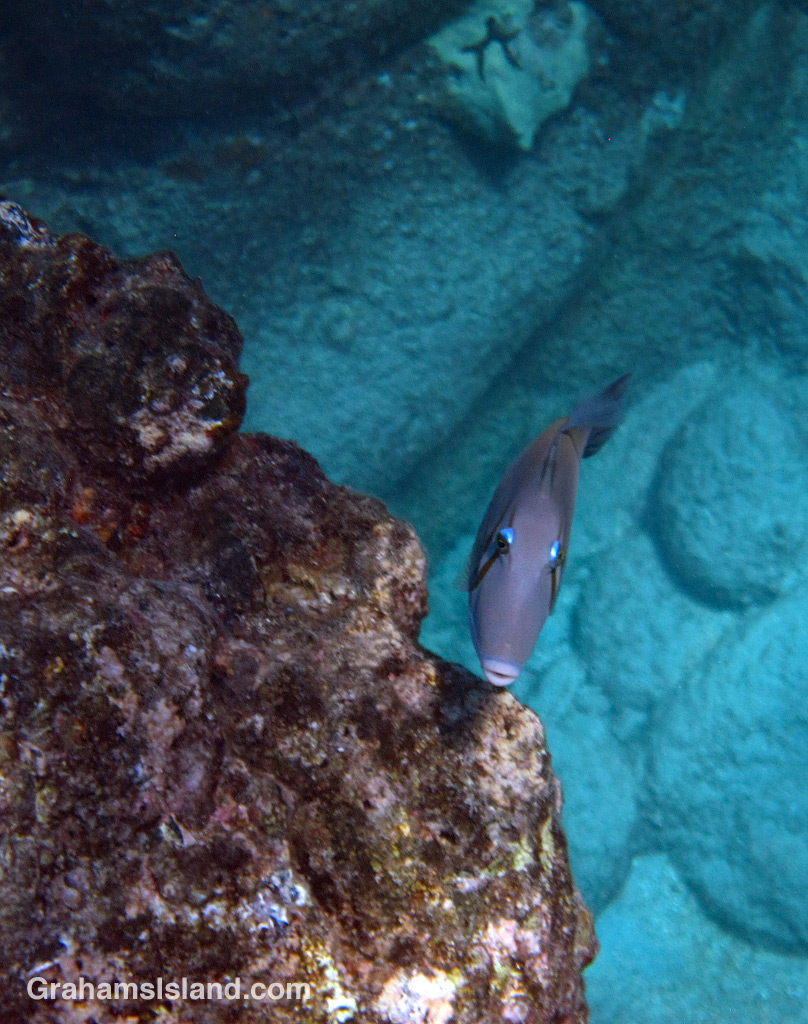
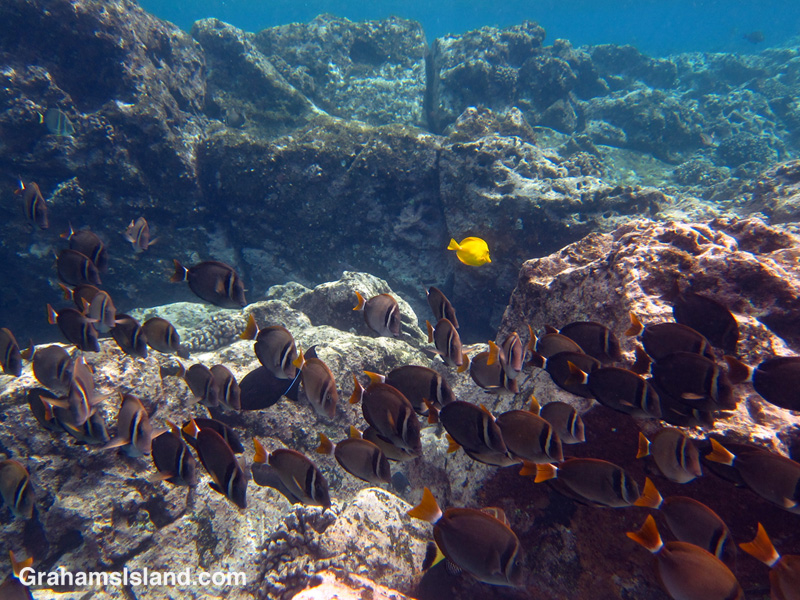
Lei triggerfish are quite common in Big Island waters.Lei triggerfish are quite common in Big Island waters.

Lei triggerfish are quite common in Big Island waters. Sometimes two or three of them can be seen circling, then chasing each other. The two bands behind the eyes can change color from brown to gray or yellow. I like their blue eye shadow and their permanent look of surprise, as if they’re always saying ‘Oooo.’

Spotted boxfish

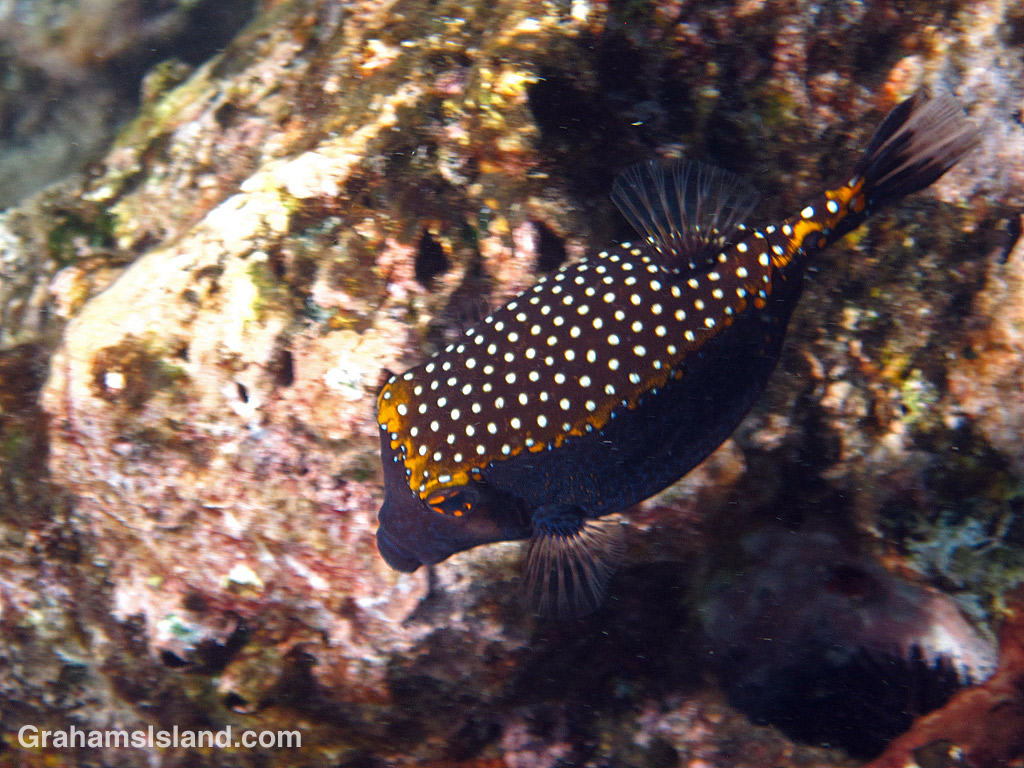
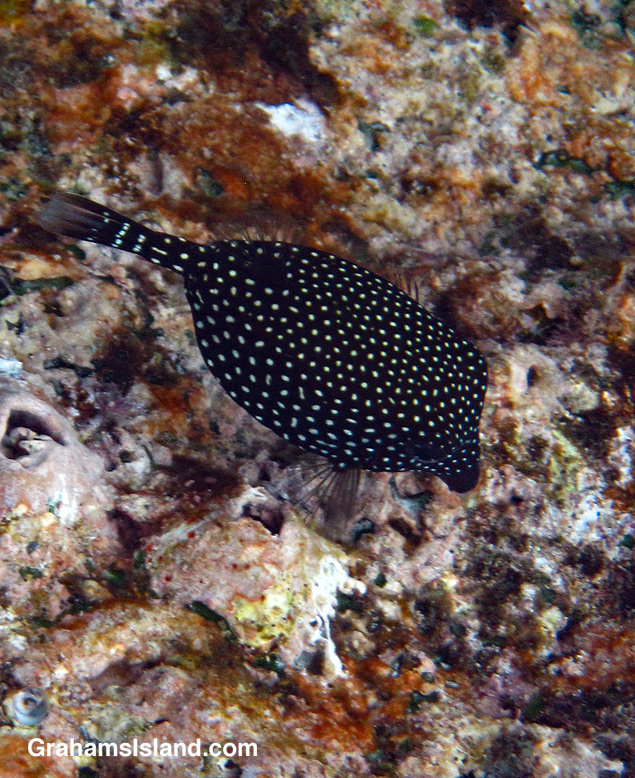
A male spotted boxfish in the water off the Big Island of Hawaii.A female spotted boxfish in the water off the Big Island of Hawaii.

The spotted boxfish is the most common boxfish in Hawaii. They really are little boxes with a hard carapace. Only their fins, eyes and mouth move. They can also secrete a toxic slime if they’re bothered.

Surprisingly, given their shape, they’re very good swimmers and can easily outdistance a human. Such is their prowess in this regard that they’ve served as inspiration for submarine and car designs.

On a more basic level, they’re always fun to see in the water, puttering along nimbly, and keeping a good distance ahead of pursuing photographers. The top boxfish is a male and the one below, a female.

Stareye parrotfish

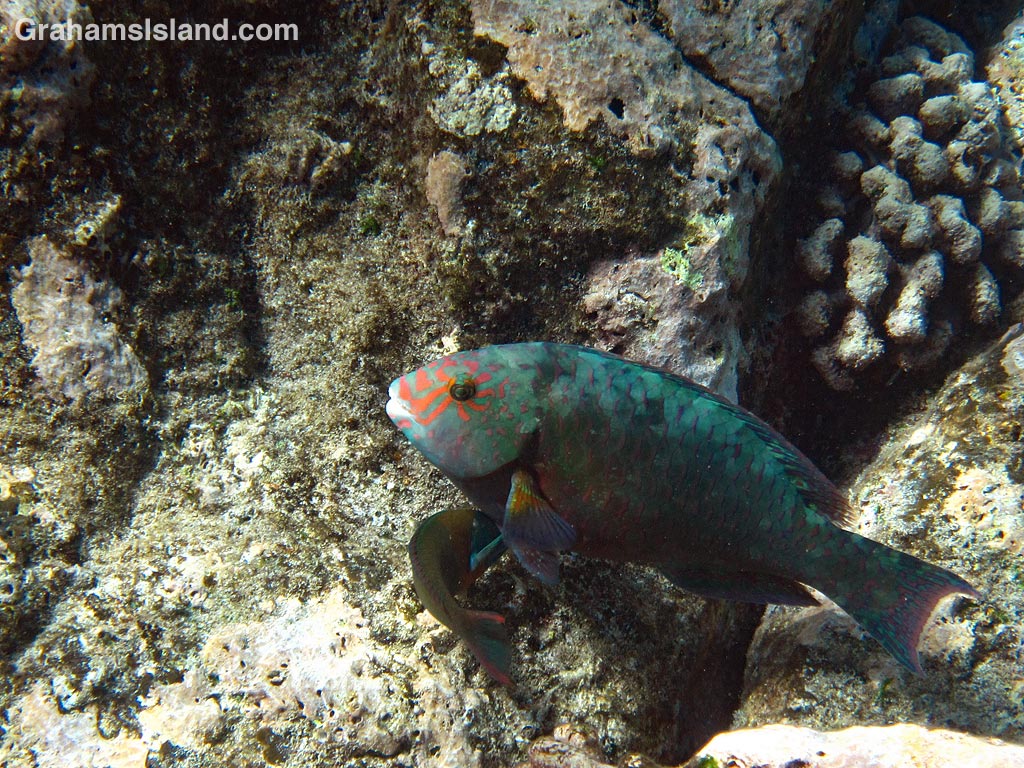
A stareye parrotfish in the waters off the Big Island of Hawaii.

There are several kinds of parrotfish in the waters off the Big Island, but the lines radiating out from the eye make the stareye easy to identify. In its initial phase (below), those lines are much less obvious, and the fish blends in with its surroundings so well that it’s sometimes difficult to spot at all.

An initial phase stareye parrotfish in the waters off the Big Island of Hawaii.

Abstracts: Jellyfish

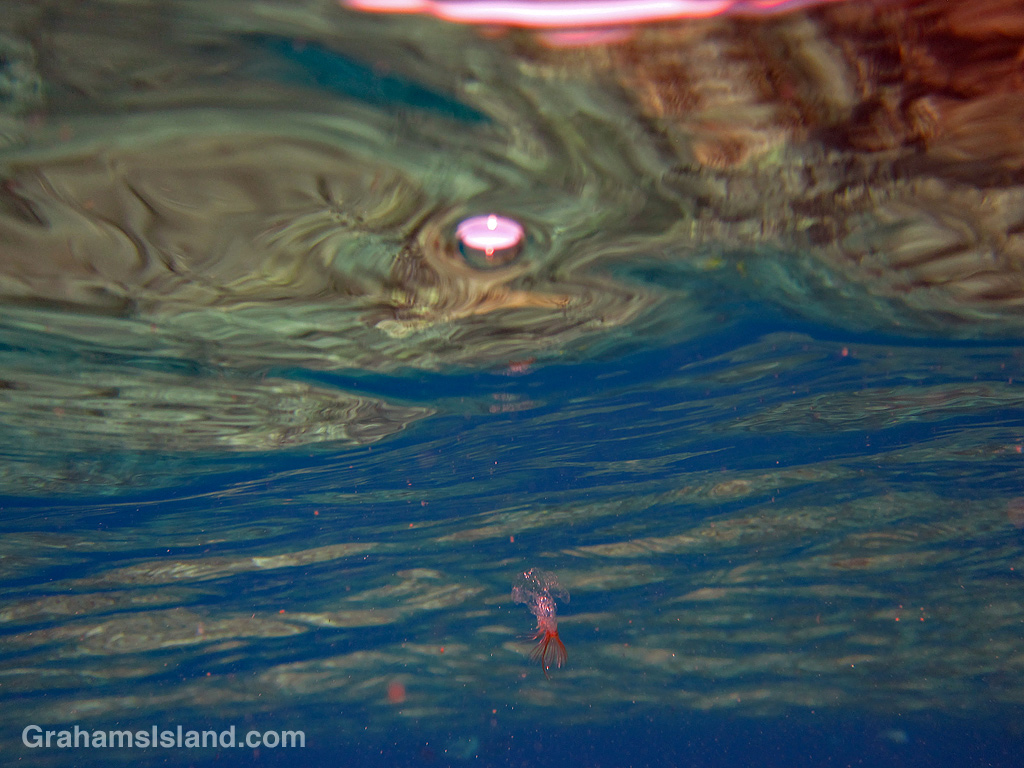
A tiny jellyfish floats in the waters off the Big Island of Hawaii.

Every so often, when I go snorkeling, the water is full of small pink filament-like things. Swimming through them leaves me feeling slightly itchy and I’ve been told they’re baby jellyfish. A few days ago, in amongst these little pink blobs was a somewhat larger one, still only an inch or two long, but definitely a jellyfish.

This was the best photo I got, but I liked how the water swirled around above it with the pink-rimmed hole looking like it might just have beamed the jellyfish down.

Abstracts: Yellow-spotted Amazon river turtles

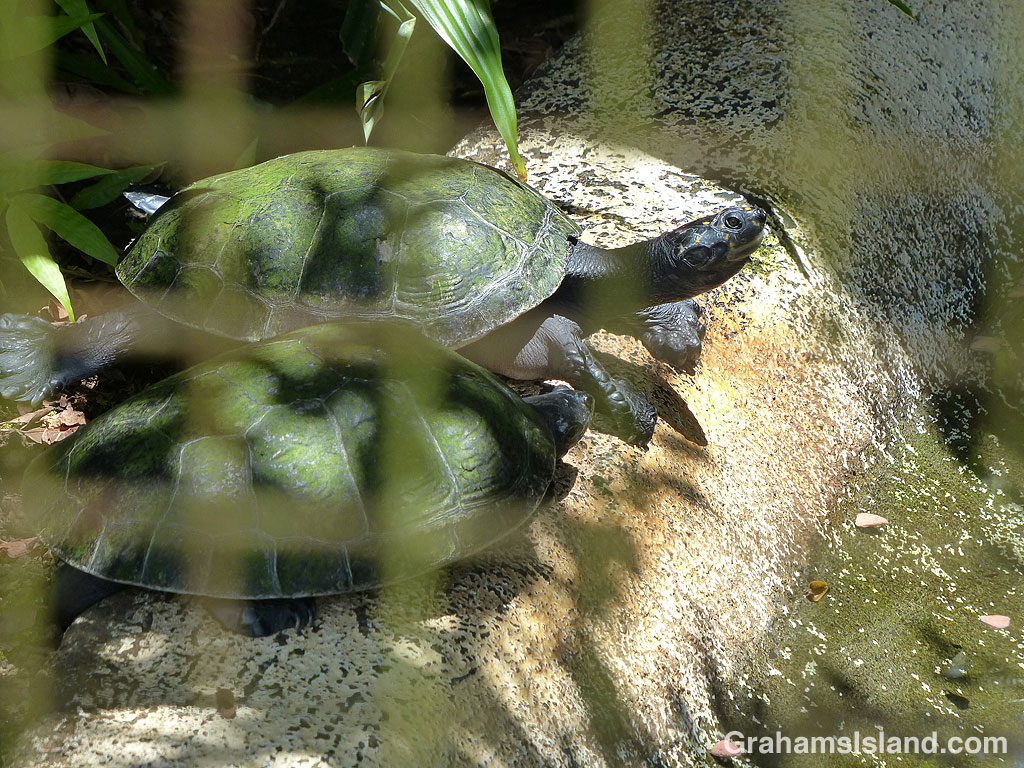
This pair of yellow-spotted Amazon river turtles were waiting for something at Pana‘ewa Rainforest Zoo & Gardens

This pair of yellow-spotted Amazon river turtles were waiting for something at Pana‘ewa Rainforest Zoo & Gardens. Perhaps they were plotting a breakout, figuring out how to cut through the mesh, before making a plod for it.

For more information about Pana‘ewa Rainforest Zoo & Gardens, go to hilozoo.org.

Reef lizardfish

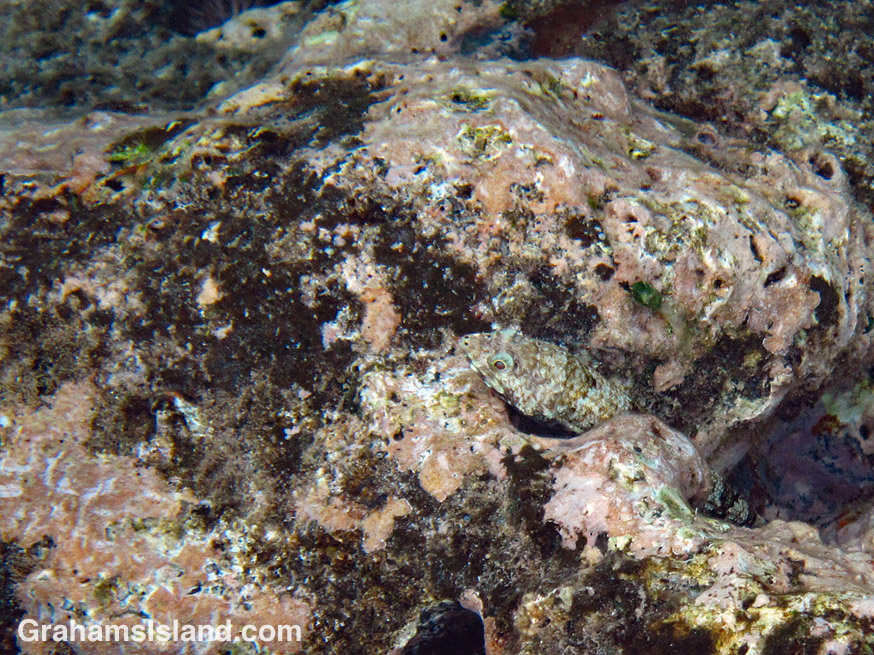
A reef lizardfish sits motionless on a rock off the Big Island of Hawaii.

I saw my first lizardfish just a few weeks ago, noticing unusual marking on the rocks at a spot I often check out. Flipping through the pages of my fish book, it was fairly easy to figure out what I’d been looking at. Since then, I’ve been looking out for them and have seen several, a case of knowing what to look for I think.

Lizardfish, like hawkfish, flounders and octopuses, are better spotted on the move before they settle and blend in. I saw this reef lizardfish just as it plunked into this spot and froze. As I drifted around above it, it remained motionless, waiting for me to go away. When I did so, I saw the lizardfish shoot off and hide on a different slab of rock.

Stocky hawkfish

A stocky hawkfish in the waters off the Big Island of Hawaii.

A lot of fish use camouflage, either for defense or for ambushing prey. From a photographic point of view, the nice thing about these kinds of fish are that they’ll remain stationary, relying on blending in, even when I get quite close. The downside, of course, is that it’s really hard to spot them unless they move.

Lately, I’ve been on a bit of a run of noticing some of these fish, moving or not. This stocky hawkfish remained glued to this spot even as I floated a foot or two away. It’s fun to see them on the move because they swim quite fast and then plunk down on a bit of rock or coral and are instantly still.