
A paper wasp clambers over a budding plumeria.
Category Archives: Flowers
Bleeding heart vine

Also known as glory bower (Clerodendrum thomsoniae), this is a colorful and vigorous vine. I believe this is the variety, ‘Delectum.’
Brugmansia

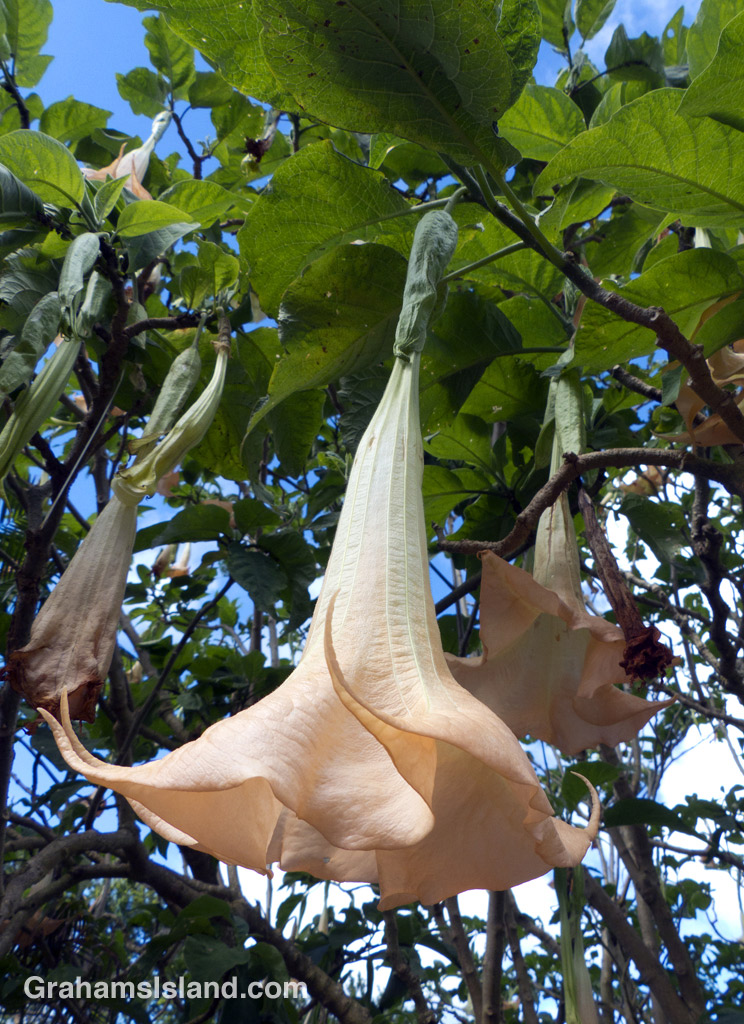
I grew a brugmansia at my old garden in Washington State. During the course of a summer, it grew to two or three feet high and bloomed. As I expected, the first serious dip in temperature reduced it to a sorry wilted remnant.
Here on the Big Island, such temperature dips aren’t a worry, so a brugmansia will grow to a very large shrub and carry its blooms a good while. This splendid specimen is growing next to the Kohala Ditch in North Kohala. The ditch was used to bring water from the Kohala Mountains to the sugar plantations. These days the water is mostly used for agricultural irrigation.
For more information about the history of the Kohala Ditch, go to fluminkohala.com/the-kohala-ditch.
Sea purslane
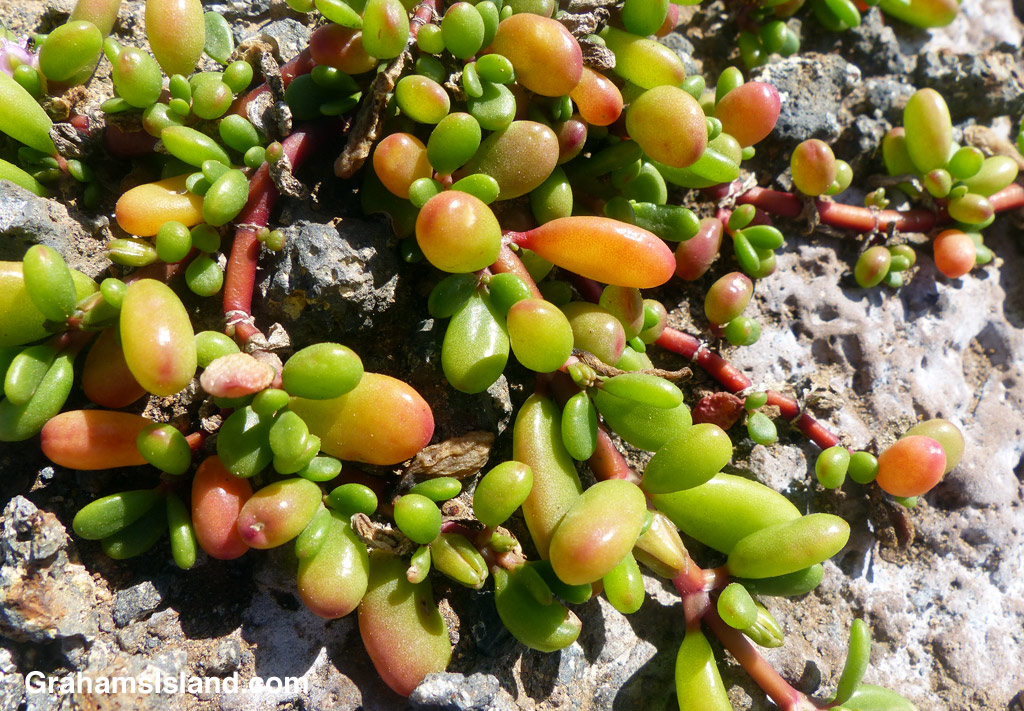
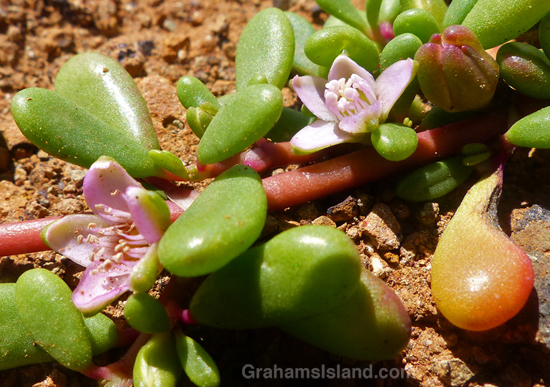
This groundcover (Sesuvium portulacastrum), known in Hawaii as ‘Ākulikuli, is common on the coast. It tolerates wind, heat, salt and drought, which means it does well on the coast. The flowers are a pale pink or purple. The green leaves become red or yellow with age, and often look like little fruit drops. Not sure eating them would be a good idea though.
For more information about sea purslane, go to nativeplants.hawaii.edu/plant/view/Sesuvium_portulacastrum.

Mock orange abuzz
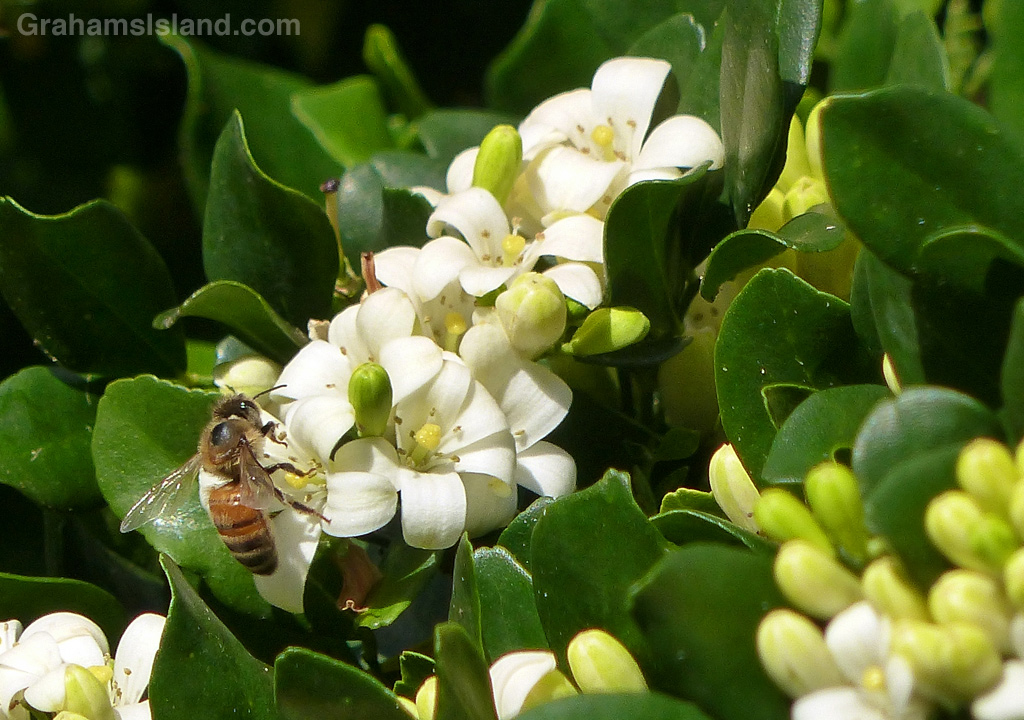
A bee forages through the blooms of a mock orange.
Denobrium orchid
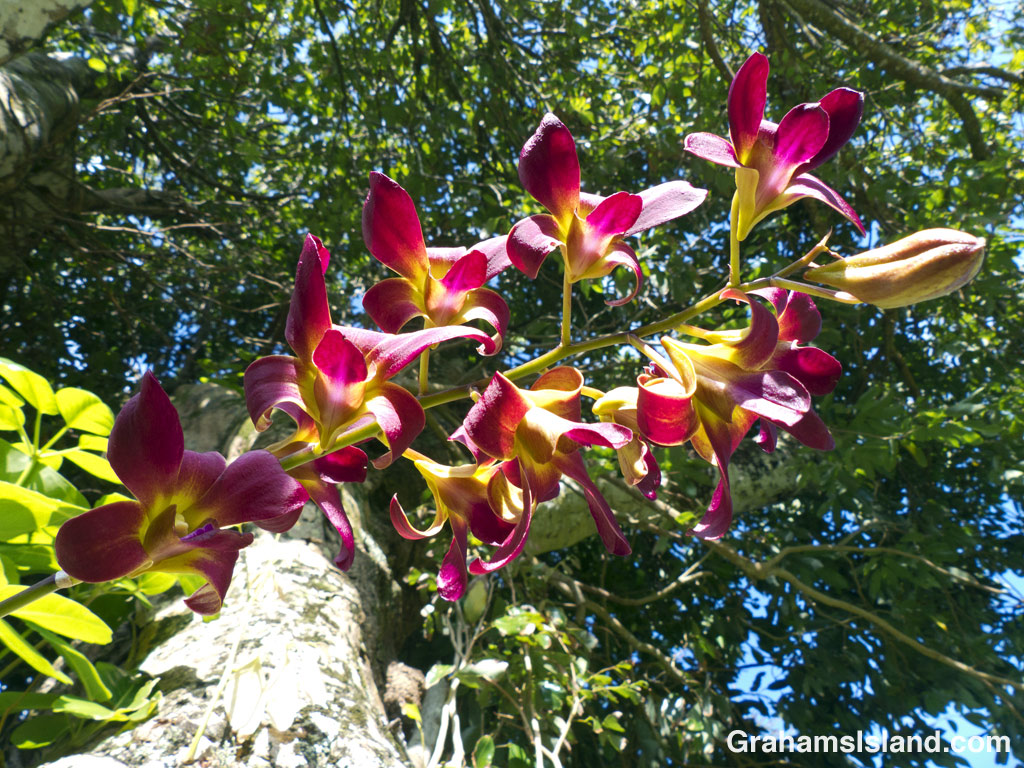
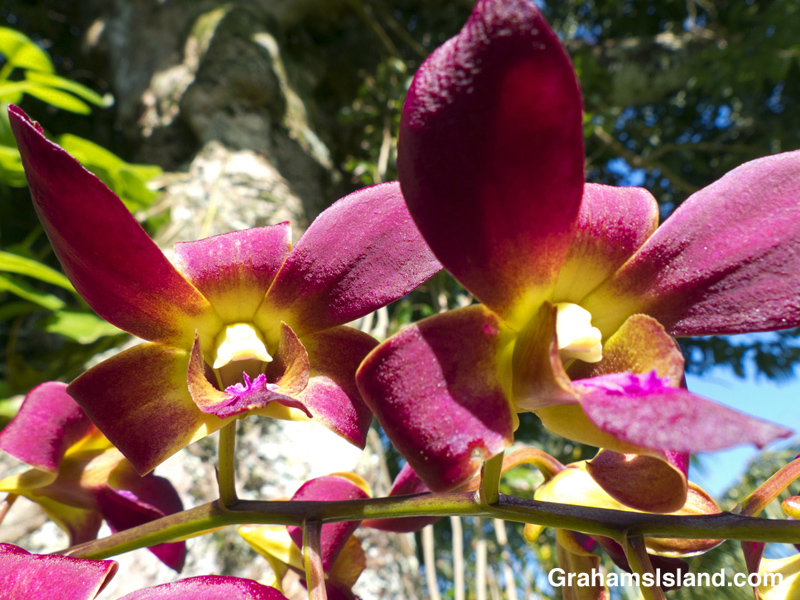
I think this is a denobrium orchid. It’s an epiphytic plant, growing off of the lower part of a lychee tree.
Lesser grass blue butterfly
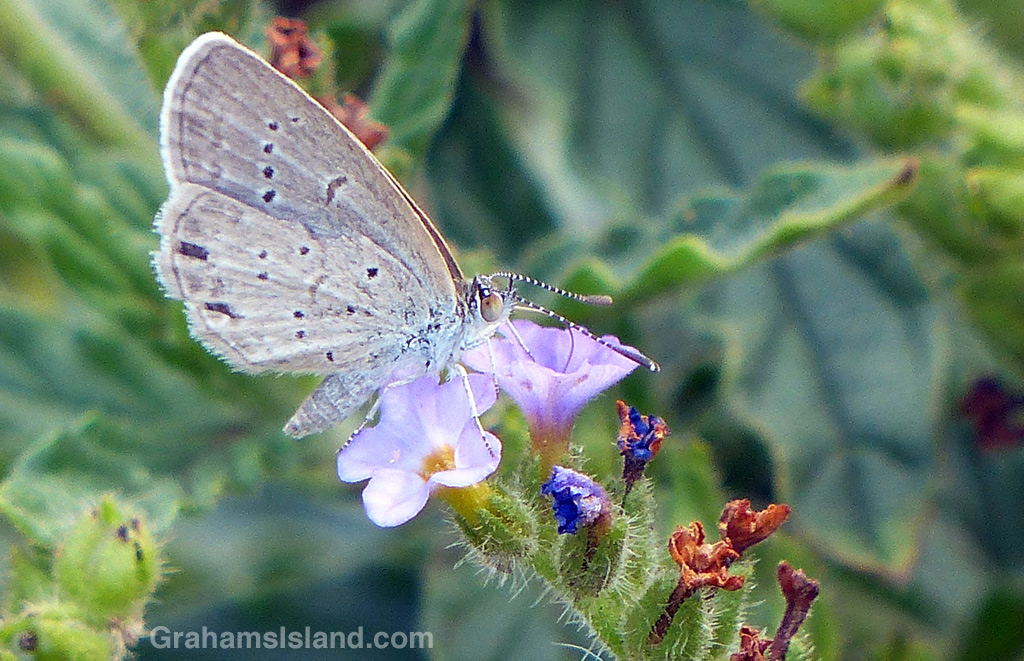
A lesser grass blue butterfly takes a drink from a small purple flower.
Tree tobacco

Tree Tobacco (Nicotiana glauca) heralds from South America, but in Hawaii, it’s an invasive species. The chances of eradicating it are slight. Controlling its spread is a more realistic possibility. But tree tobacco is one invasive species in Hawaii that does have something going for it.
Enter Blackburn’s sphinx moth (Manduca blackburni), a large, endemic moth, once thought extinct, and a long-time resident on the endangered species list. Among its problems is that its host species, ‘aiea, (Nothocestrum spp.) has been on the decline for a while. ‘Aiea belongs to the nightshade family (Solanaceae) as does tree tobacco.
It seems that the moth, in the interests of survival, decided tree tobacco is not so bad. So we have an endangered species becoming reliant on an invasive species. Hmm. As I said, control is the most likely approach with tree tobacco and that will undoubtedly involve checking to see whether Blackburn’s sphinx moth is present before removing areas of tree tobacco.
That’s good news for the plant in this photo. I found it at Pu’u Wa’awa’a, a State Forest Reserve on the northern slope of Hualalai. Pu’u Wa’awa’a is home to a variety of endangered plants and animals including Blackburn’s sphinx moth.
For more information about tree tobacco, go to cabi.org/isc/datasheet/36324.
For more information about Blackburn’s sphinx moth, go to fws.gov/pacificislands/fauna/bsmoth.html.
For more information about Pu’u Wa’a Wa’a, go to puuwaawaa.org.

