This week’s Friendly Friday challenge theme is ‘Red and Green.’ See more responses here.
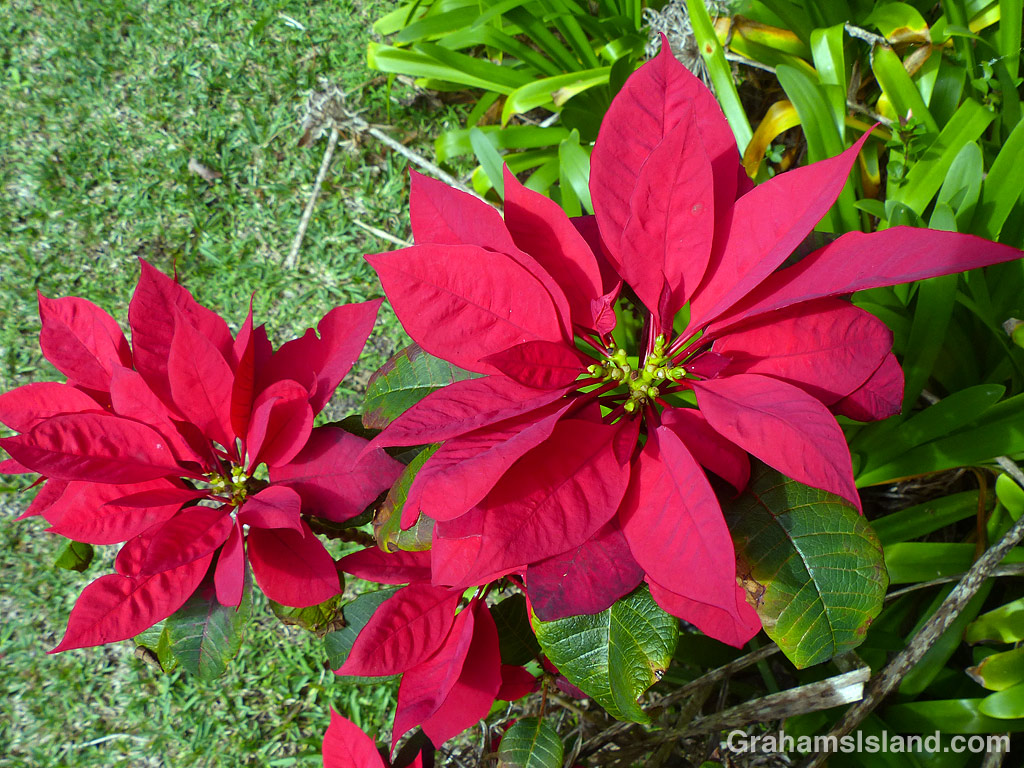
Poinsettias (Euphorbia pulcherrima) have been associated with Christmas for centuries in Mexico and Central America, where the plant hails from. The plant was introduced to the United States in the 1800s, but it wasn’t until the last century that the Christmas link really took off. This was mostly due to savvy marketing tactics by the Ecke family, which had a monopoly on the poinsettia market thanks to their discovery of a secret grafting method which produced a denser plant and wasn’t duplicated until the 1990s.
The red ‘flowers’ are actually bracts, which hold the fairly insignificant flowers. On the Big Island, their brilliant displays are quite common on the west side of the island, where they can be seen as bushes and trees.
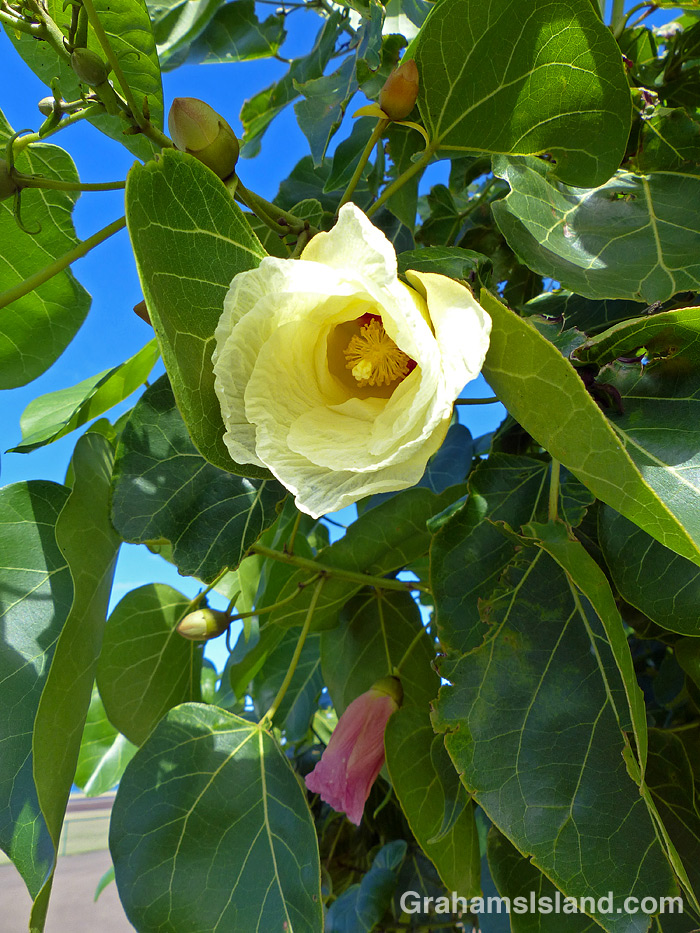
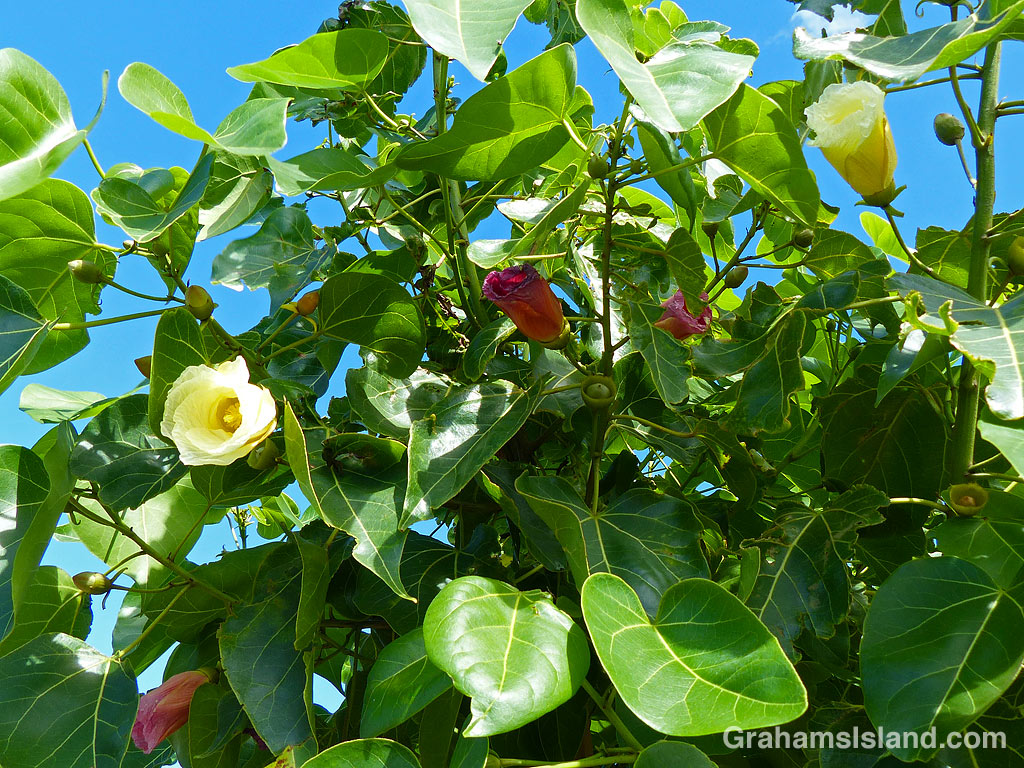
The milo tree (Thespesia populnea) is a canoe plant, brought to Hawaii by the early Polynesians, though it was probably already here before then and so is considered indigenous.
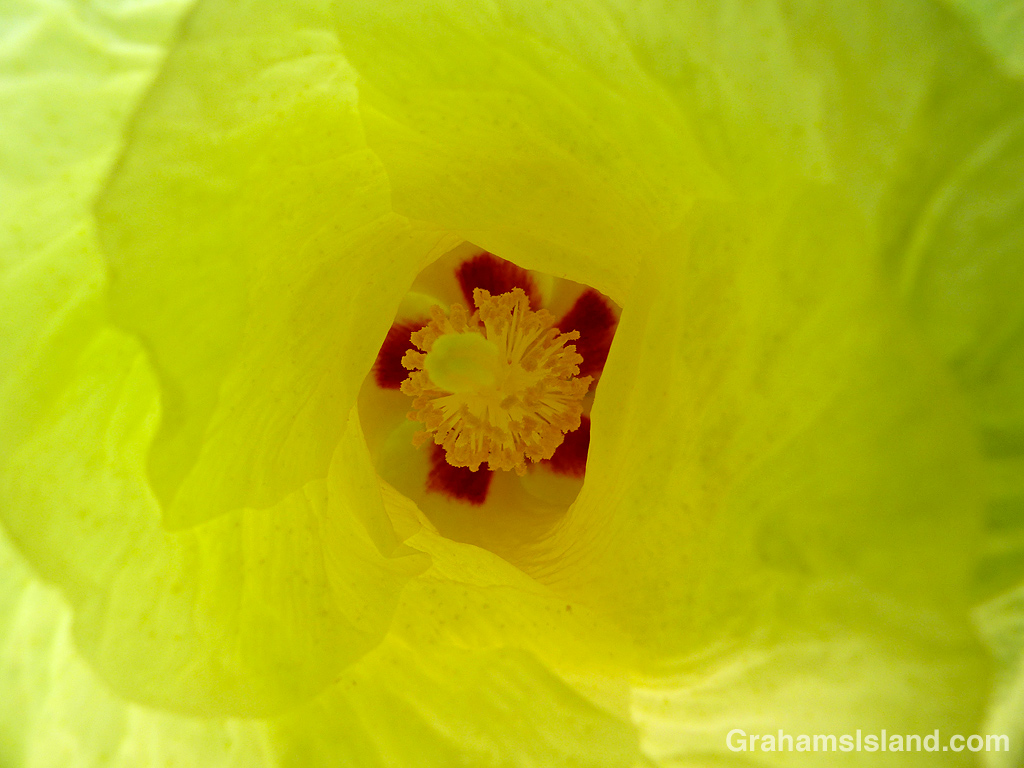
The flowers, which don’t open fully, start out a delicate yellow with red patches at the base, becoming dark pink later. The flowers are followed by green seed capsules which dry to brown.
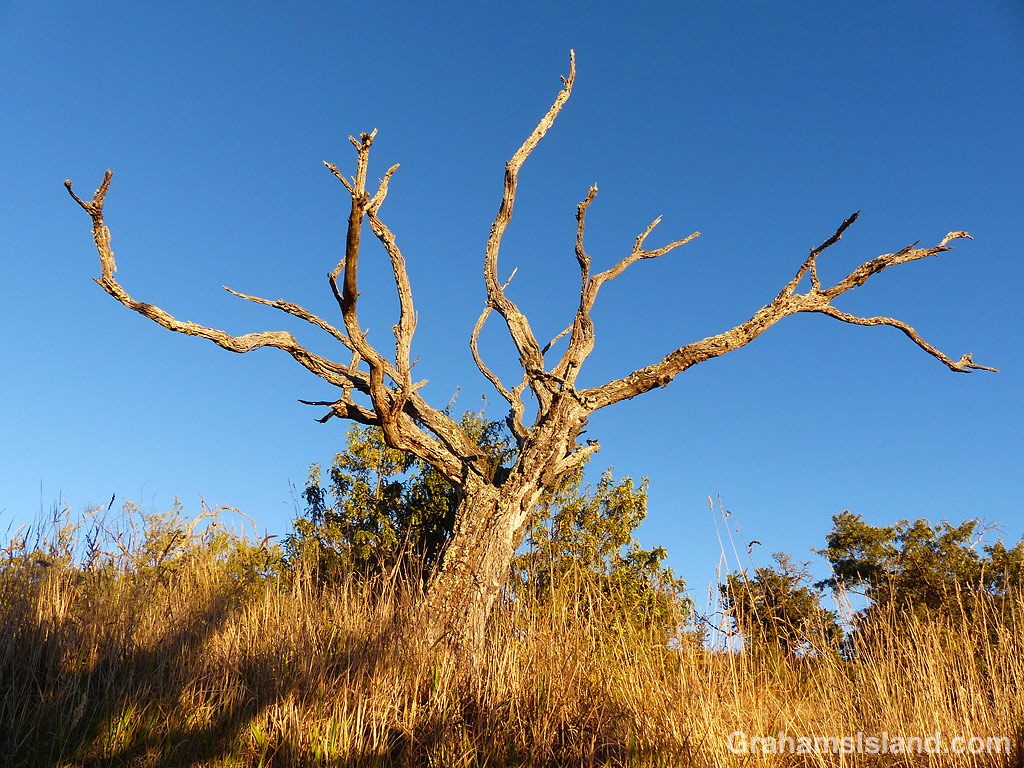
This week’s Sunday Stills challenge theme is ‘Weathered.’ See more responses here.
In the top photo, a dead tree on the lower slopes on Mauna Kea, stretches weathered branches toward the sky.
Second photo: Petroglyphs in Hawaii Volcanoes National Park have been weathered by years of sun and rain, but are still clearly visible.
Third photo: A cattle ranch alongside old Saddle Road includes this old structure bordering a stockyard.
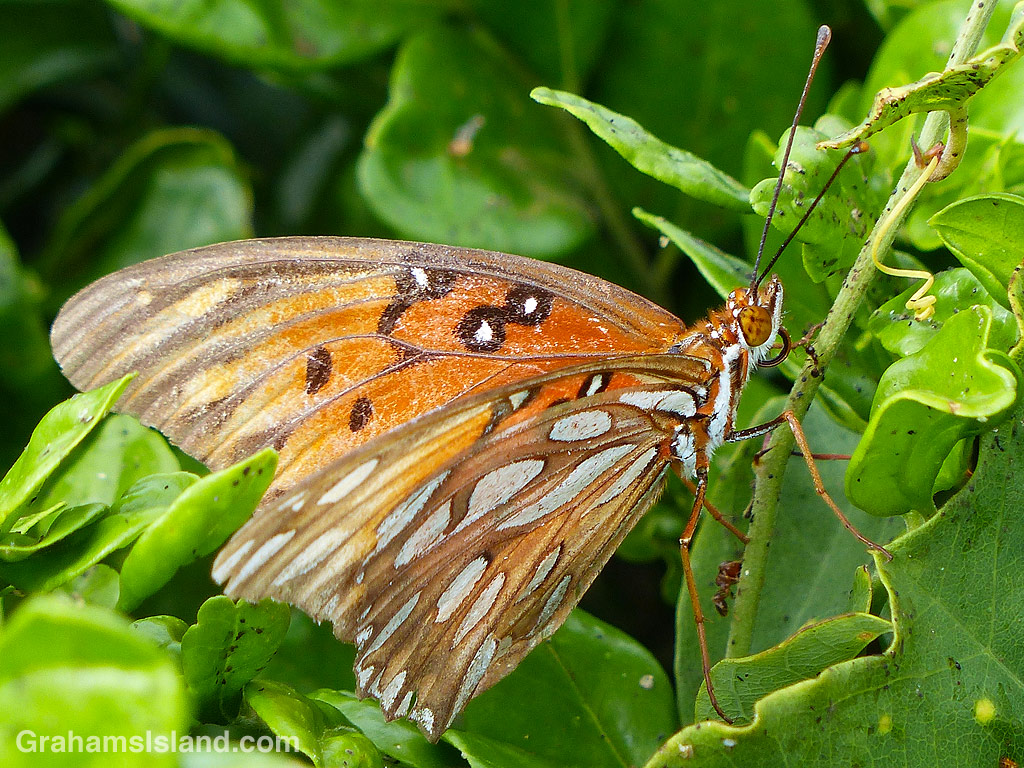
Bottom photo: Butterflies have a short lifespan, but in that time they can go from looking boldly marked and colored to very faded, with some looking like it’s a miracle they can fly at all.
For more information about Hawaii Volcanoes National Park, go to nps.gov/havo/.
I suppose this should really be titled ‘Never, ever do this.’ It’s the kind of view that can get you into trouble, but I like the patterns. I just have to remember to stay alert.
Posted in response to Becky’s October Squares challenge theme of ‘Kind.’ See more responses here.
There’s a good variety of fish at Two Step including raccoon butterflyfishes, seen here mingling with goatfishes and yellow tangs.
A barred filefish swims by with a startled look on its face, which is just their usual look.
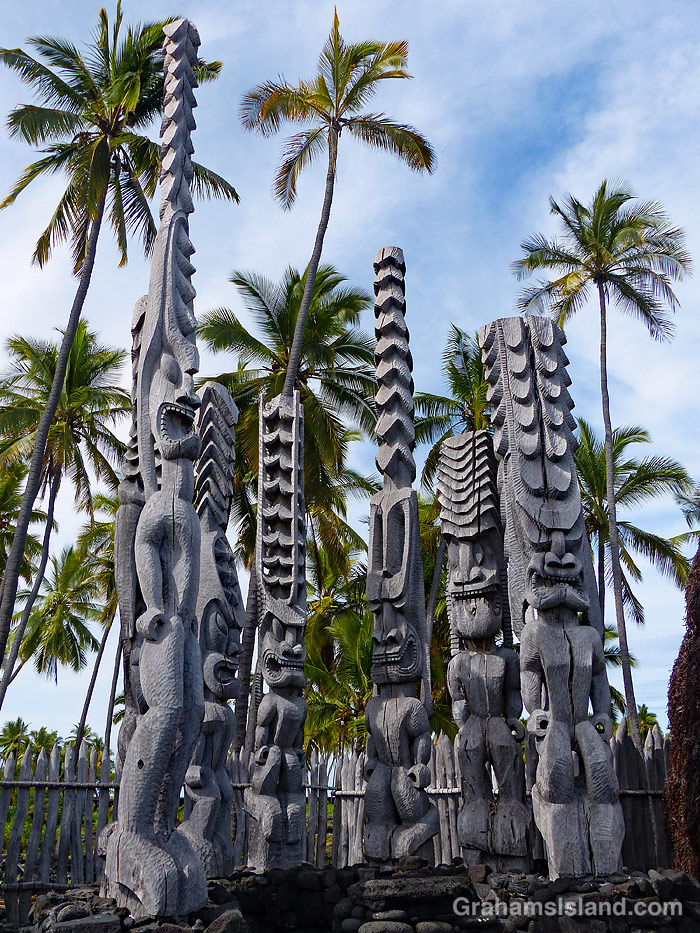
Ki’i at Pu’uhonua o Hōnaunau National Historical Park, better known as Place of Refuge.
This week’s Friendly Friday challenge theme is ‘Anniversaries.’ See more responses here.
Often, on our wedding anniversary, my wife and I go to Hawaii Tropical Bioreserve and Garden (formerly Hawaii Tropical Botanical Garden). This year the garden was shut, and still is, probably until tourists return to the islands. So a different anniversary is my birthday, which is not marked with candles on a cake, since that would be prohibitively expensive, but usually by a trip somewhere and a meal out. This year we went down to snorkel at Two Step and then had a wander around Pu’uhonua o Hōnaunau National Historical Park, otherwise known as Place of Refuge, which is right next door.
Two Step is a very popular snorkeling spot on Honaunau Bay, south of Captain Cook. This is a marine reserve so no fishing is allowed and the fish tend to be more numerous and mellow because of this. It’s a popular spot to see and swim with dolphins, though I haven’t done either of those things there. Currently, it’s not nearly as busy since there are very few tourists on the island and those that are here are diligently following quarantine rules (I’m trying to keep a straight face writing this!).
After our swim we made the short walk to Pu’uhonua o Hōnaunau National Historical Park. The park is on the south side of the bay and, at the moment, is fully open only on Fridays, Saturdays, and Sundays. However, on the other days, pretty much everything else is accessible, it’s just that the parking lot and visitor center are closed. What this means is that there’s basically nobody there so our visit was quiet and uncrowded. The park is an important place in Hawaiian history, and the location is beautiful. What’s not to like?








 Graham's Island