Category Archives: Better Days

Better Days: Dead blenny

Better Days-Dead Blenny

Exploring tide pools one day, I found this unfortunate floating blenny. It was quite large, for a blenny, and in a small pool. The weather had been calm for a few days, without much ocean swell. I think the fish was trapped in the pool and, without fresh seawater reaching it, the pool had become stale and oxygen starved.

The macabre essence of the scene contrasted with its painterly quality, enhanced by the blenny’s coloration and the delicate creamy shells in the pool.

Updated 6-20-18

I’ve since learned that the ‘delicate creamy shells’ in the pool are actually a type of seaweed, Padina japonica. I’m also not sure about my oxygen starvation theory either since blennies are notoriously adept as jumping from pool to pool. Two things are unchanged however: the blenny is still dead and I still like the painterly quality.
Better Days: Outhouse

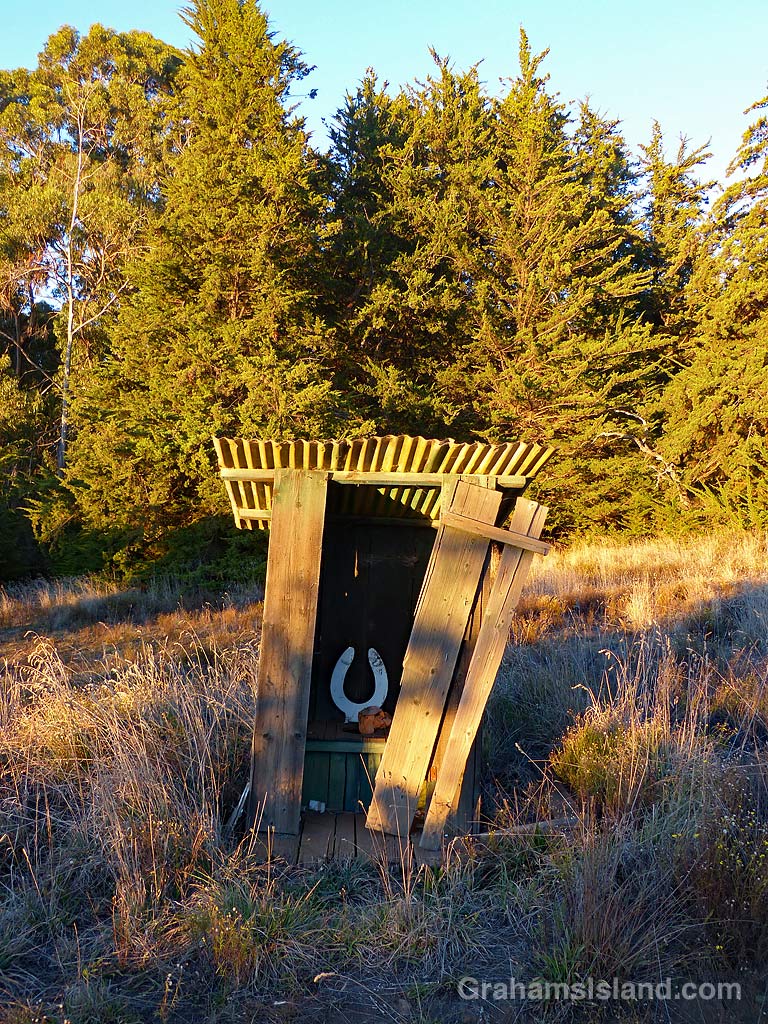
One of those photos better taken with a telephoto lens, perhaps. This is by the old Civilian Conservation Corps Cabin near the Palila Forest Discovery Trail on the slopes of Mauna Kea.

For more information about Palila Forest Discovery Trail, go to dlnr.hawaii.gov/restoremaunakea/palila-forest-discovery-trail/.

Better Days: ’Aimakapa Fishpond sluice

’Aimakapa Fishpond sluice at Kaloko-Honokohau National Historical Park

’Aimakapa Fishpond is one of two fishponds at Kaloko-Honokohau National Historical Park. The other is Kaloko Fishpond, which is separated from the ocean by a huge rock wall, currently being restored. ’Aimakapa Fishpond’s barrier is made up of sand dunes.

A channel was dug to the ocean to allow water to circulate back and forth and, at the ocean end (seen here), a sluice gate (makaha) installed. The sluice gate helped keep predators out. These days it isn’t used and so the channel has silted up with sand.

Fishponds are different to fish traps. Ponds allow for the rearing of fish from small fry. Traps are shallow walled enclosures, which fish can cross at high tide, but cannot escape from when the tide goes out.

For more information about Kaloko-Honokohau National Historical Park, go to www.nps.gov/kaho/index.htm.

Better Days: Girdled tree

A dead tree stands out on Pu'u Wa'awa'a

This dead tree on the slopes of Pu’u Wa’awa’a did not die of natural causes. The pale strip near the bottom of the trunk is where the tree was girdled.

The tree is, I’m pretty sure, a silk oak. Native to Australia, these trees were introduced to Hawaii around 1880. When in bloom, they present a mass of brilliant orange flowers, but they seed prolifically and also produce an allelopathic substance that inhibits the growth of other plants. Because of this, they can crowd out native plants, of which there are many on Pu’u Wa’awa’a, so trees in areas where they have become too dense or are not wanted, are girdled.

For more information about Pu’u Wa’awa’a and its trails, go to puuwaawaa.org.

Better Days: Old Pu’u Wa’awa’a blockhouse

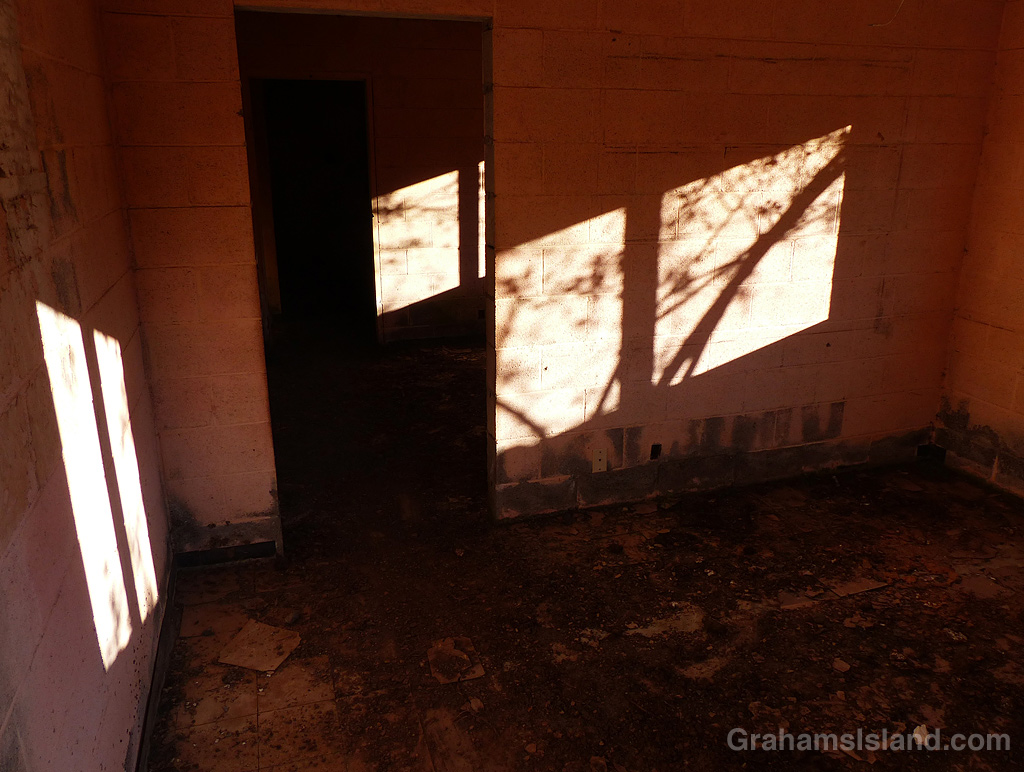
The interior of an old building on the Pu’u Wa’awa’a trail.

A few days ago I posted (here) about the view from an old blockhouse on the Pu’u Wa’awa’a trail. Today, I’m taking a look inside. As I mentioned before, the building is now a shelter for livestock with assorted detritus on the floor, but light through the empty windows still casts a bright image on the painted walls.

For more information about Pu’u Wa’awa’a and its trails, go to puuwaawaa.org.

Better Days: Honokane Nui Valley trail

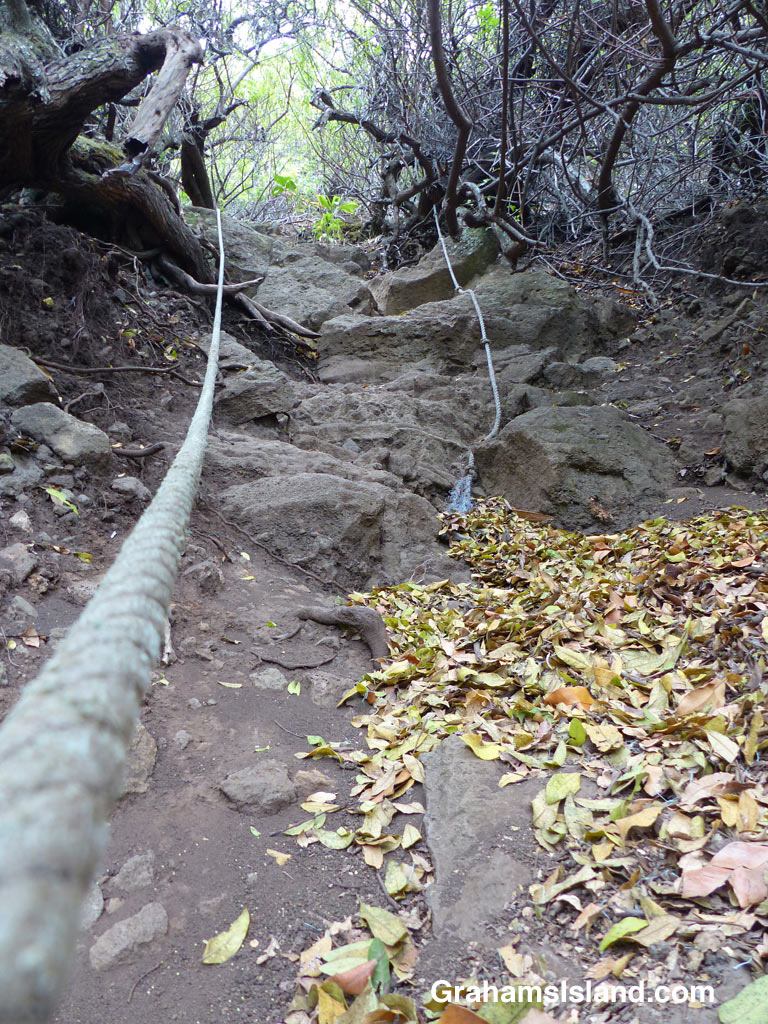
Top of Rope section on Honokane Nui Valley trailA steep part of the rope section on Honokane Nui Valley trail

Last May, I posted here about the hike from the end of Highway 270 down to the beach at Pololū and up on to the ridge on the other side. There, a bench awaits the hardy hiker, as well as wonderful views along the coast and into Honokane Nui Valley. I’m happy to report that the bench, which was in bad shape last time I was there, has been replaced by one with a plastic frame. While this might be aesthetically less pleasing, it should last a good deal longer.

I also mentioned that not far beyond this point, the trail into Honokane Nui Valley got wiped out by a landslide in the earthquake of 2006. Now, instead of switch-backing down to the valley floor, the trail goes straight down. The precipitous drop is made passable by a series of ropes, to hang on to on the way down, and to haul on on the way up. It’s a great workout though not necessarily the safest one around. If a rope gives way, it could be a long and nasty fall. Let the user beware.

The top photo shows what the entry into this section of trail looks like. This part is steep, then it drops off out of view. The second photo shows a steeper section with two ropes to hang on to.

For more information about the Pololū hike, go to bigislandhikes.com/pololu-valley/.