This is the sign at the landward end of the breakwater that protects Kawaihae harbor. The breakwater is just over half a mile long and, as you’d expect, people rigorously respect the warning to stay off this dangerous structure. Just kidding. We’re talking people here. They fish from the structure on a regular basis and, as far as I can tell, nobody seems too bothered about that. This is an early morning view.
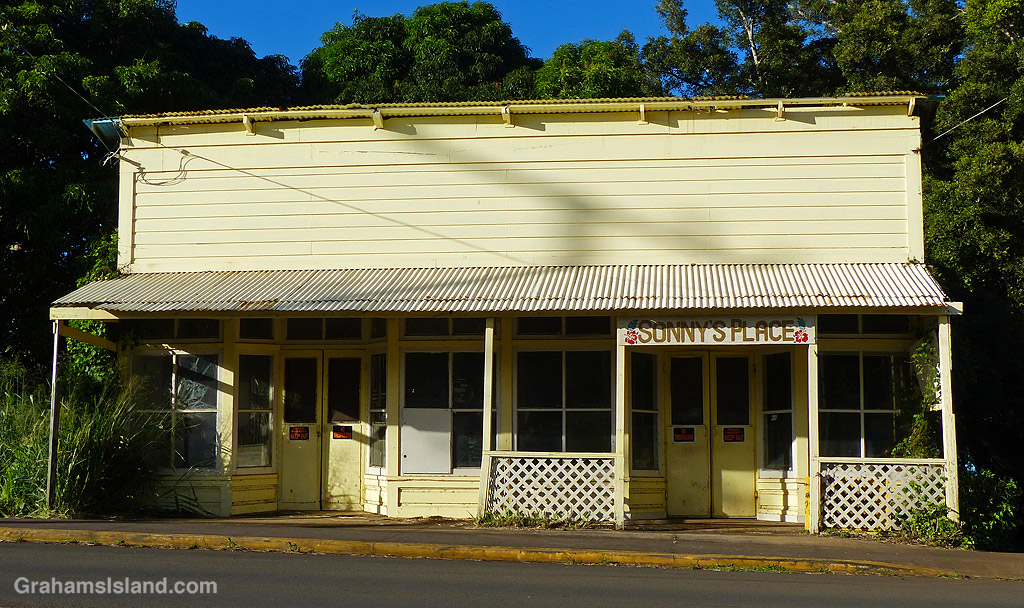
When I moved to Hawaii, this building looked pretty much like this. The only difference was that Sonny’s Place, a restaurant, was a going concern. Not that I ever saw anyone going in or out. Indeed, I never saw any activity there at all except for the occasional sighting of a cat in the window.
It’s not a going concern today, though I honestly don’t know when that change took place. One thing’s for certain, the transition made no difference to the appearance of the place.
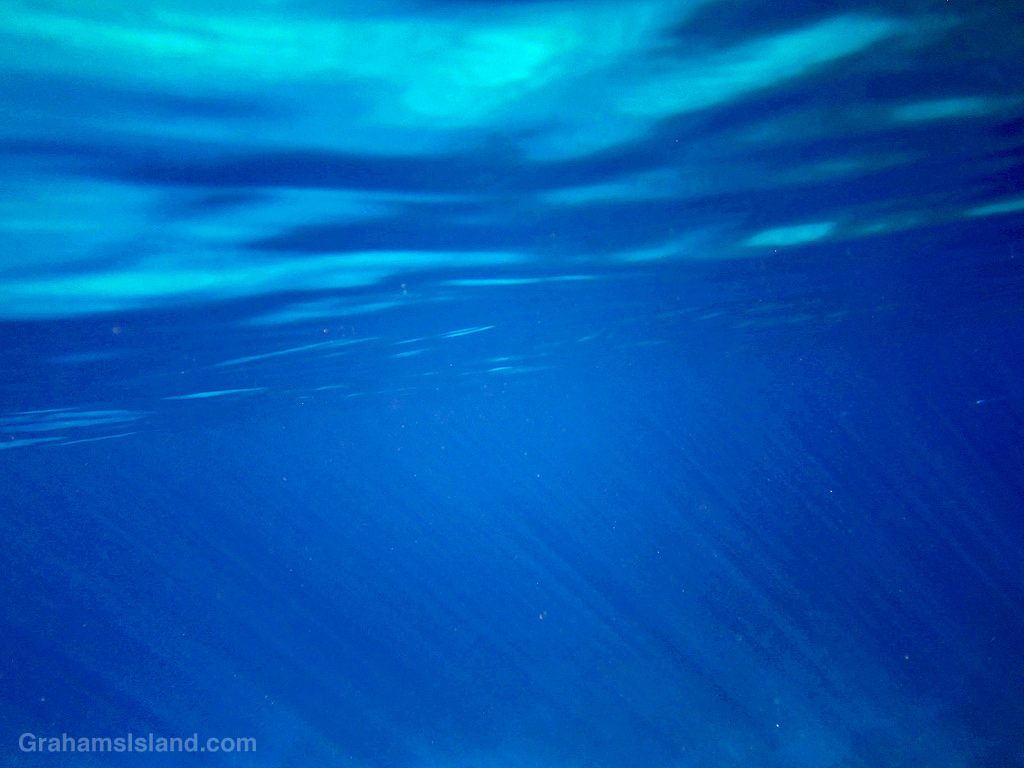
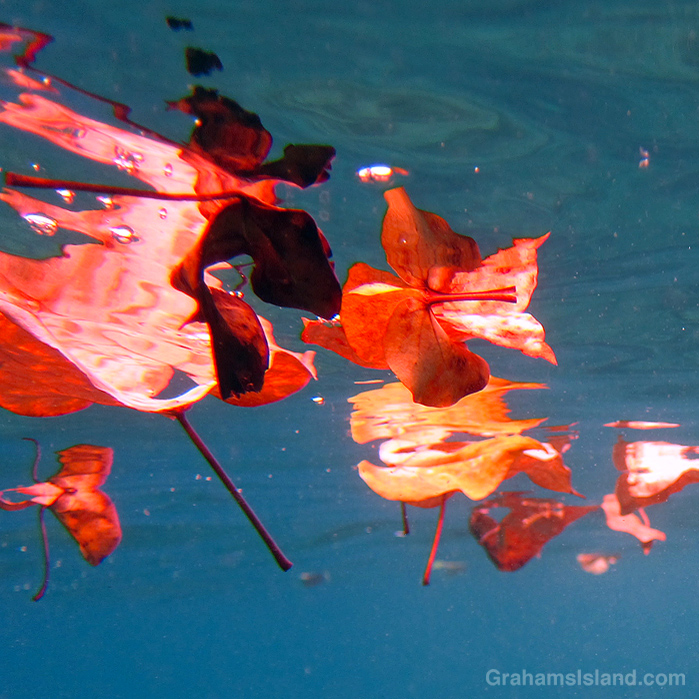
When I’m snorkeling, the idea is to look around and down to see what the fish are up to. But sometimes it pays to look up to see what’s happening at the water’s surface.
Posted in response to Becky’s January Squares challenge theme of ‘Up.’ See more responses here.
The coastal regions of Hawaii are dotted with tsunami warning signs. Basically, any place within reach of a tsunami gets a sign.
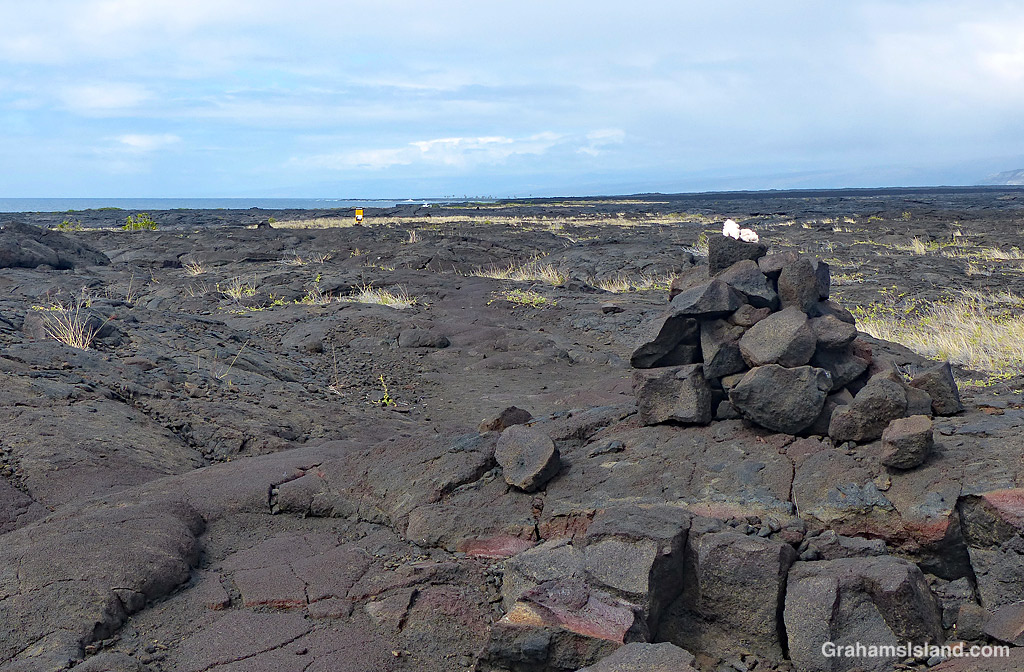
I came across this sign while hiking the Puna Coast Trail in Hawaii Volcanoes National Park. It stood out as a dot of color in a field of lava and scrubby grasses. What I liked about the sign was its sage advice ‘In case of earthquake, immediately go to high ground or inland.’ At this spot, the high ground is inland, so that kills two birds with one stone.
On the other hand, getting to that high ground inland involves scrambling over a mile or more of rough lava. Also, if the earthquake was big enough, it might just mean that you could encounter lava from a new eruption heading down to the coast to meet you. The sign doesn’t offer any advice on what to do then!
For more information about Hawaii Volcanoes National Park, go to nps.gov/havo/.
Rampant tropical foliage can cover a multitude of sins, including abandoned vehicles. The cost of getting rid of an old vehicle is relatively high here, so many are abandoned. Some are left on the edge of the highway or, more often, on undeveloped private property alongside the highway.
If a vehicle is on private property, the owners have to be contacted first. Often they don’t respond because they’re big corporations or investment entities and an old car or two is not worth the bother.
Those on the highway can be posted and then cleared by the highway department, but even this is not a speedy process. Recently, a Prius, of all things, was parked by the highway a few miles south of Hawi. It looked in decent shape and I assumed it had broken down. However, it sat there for more than a week, untouched. After that, an official warning notice appeared on the window. Police post these to let the owner know their vehicle will be towed and disposed of, in theory at the owner’s expense. Another week or so passed. One day I saw a policeman by the car making some notes. A couple of days later, when I went by, I saw the windows had been smashed and a couple of wheels removed. The next day, more damage had been inflicted. It was a couple of days later that the now useless wreck was removed.
Another disposal option is to shove the vehicles into a gully and let nature do the rest. These three vehicles, and there were others down there, are on the owner’s property, so that’s some consolation.
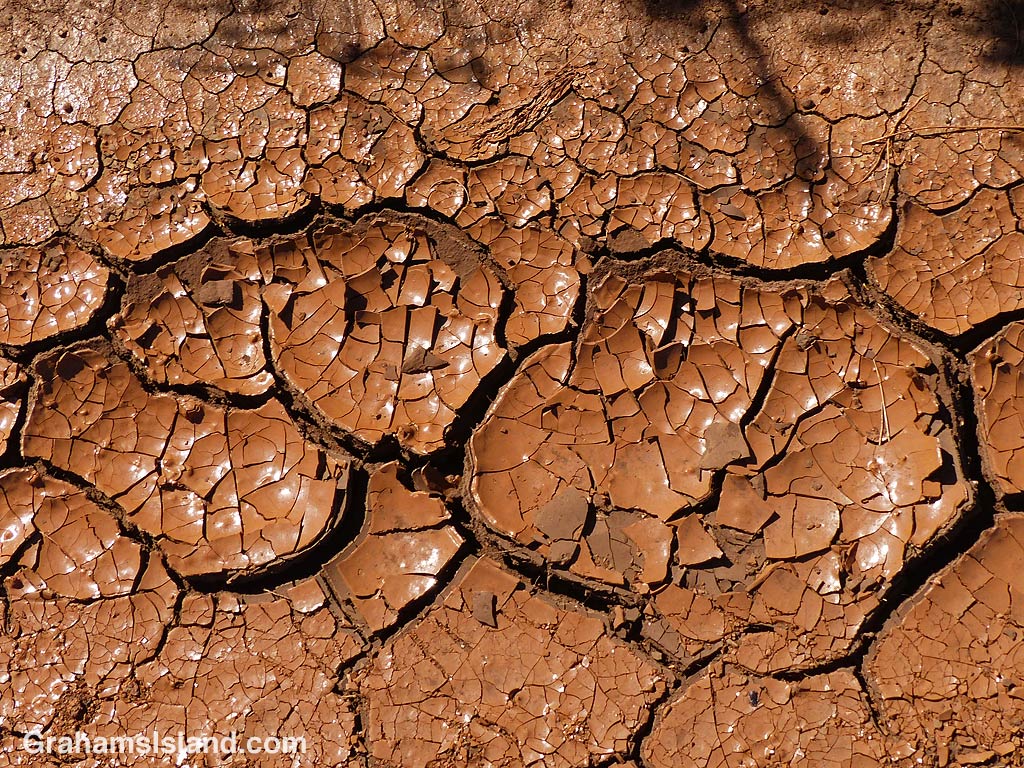
I like seeing how mud puddles dry (I don’t get out much). I like the patterns that the cracks make and how the top layer breaks up into small pieces the eventually get broken up and scattered.