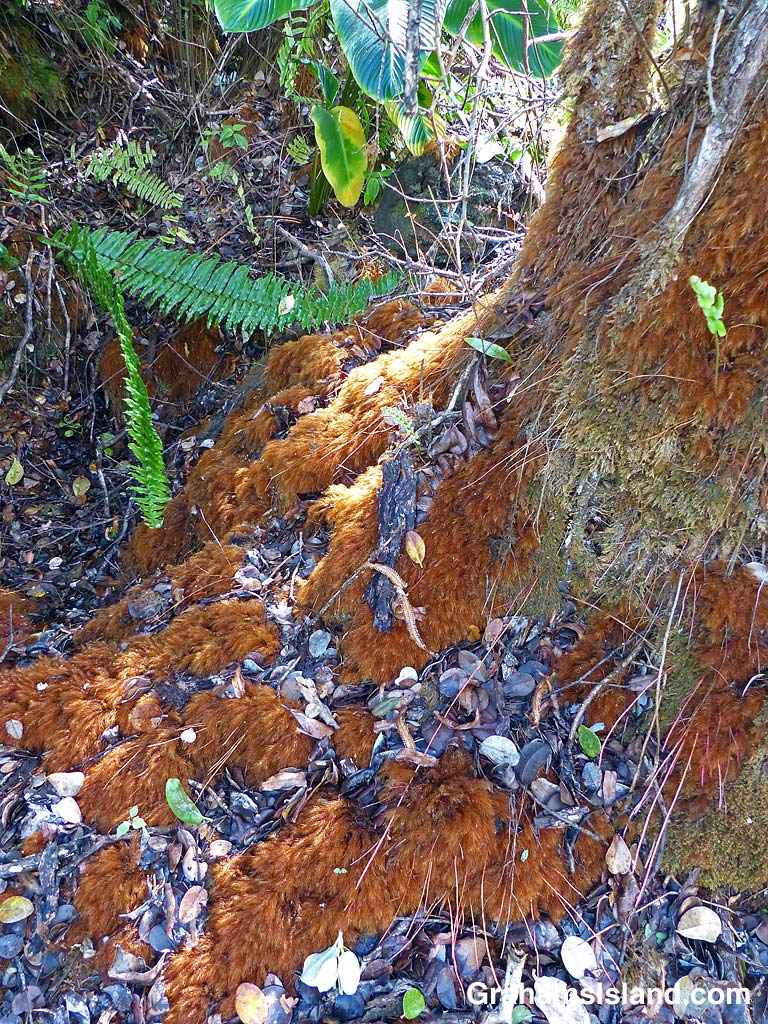
Patches of moss coat the base of a tree at Kalōpā Forest Reserve.

Patches of moss coat the base of a tree at Kalōpā Forest Reserve.

This sign guards what is presumably Hawaii’s heavy water plant, though why such a plant would be halfway up the side of Mauna Kea is a mystery. Or perhaps the sign is just a warning that it would not be a good idea to pick up the large water tank behind the sign. Either way, the sign made me smile.

The fronds of a fern stand out against overhead light.
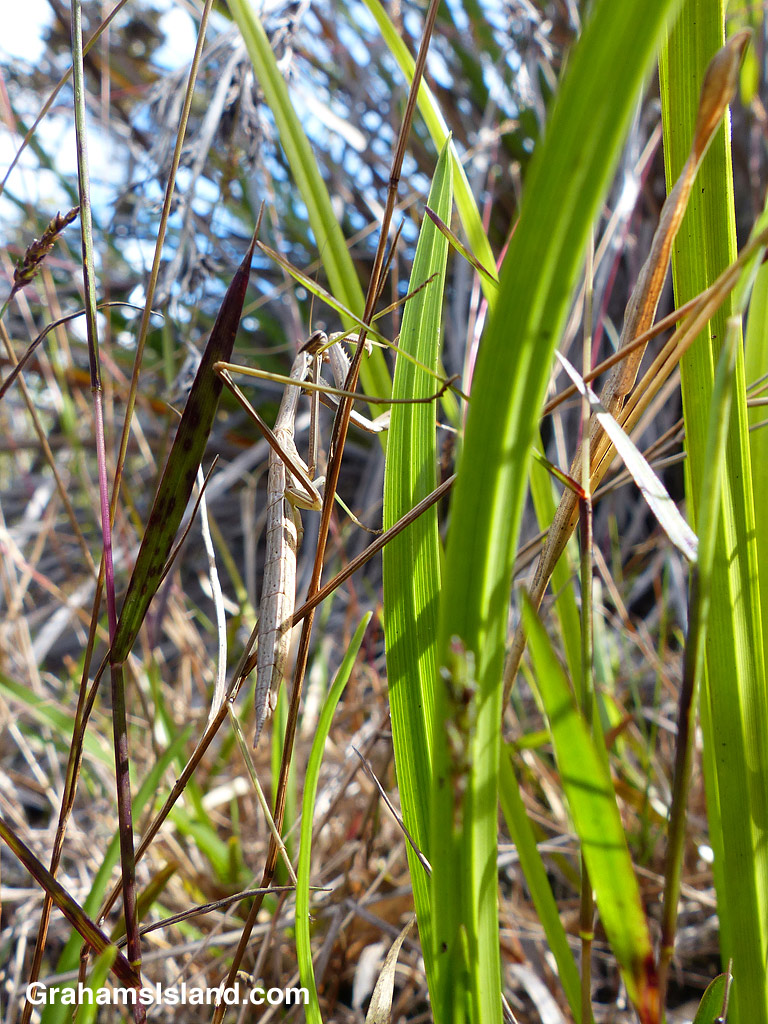
A praying mantis shows how well it can blend into the background while climbing through some grasses.
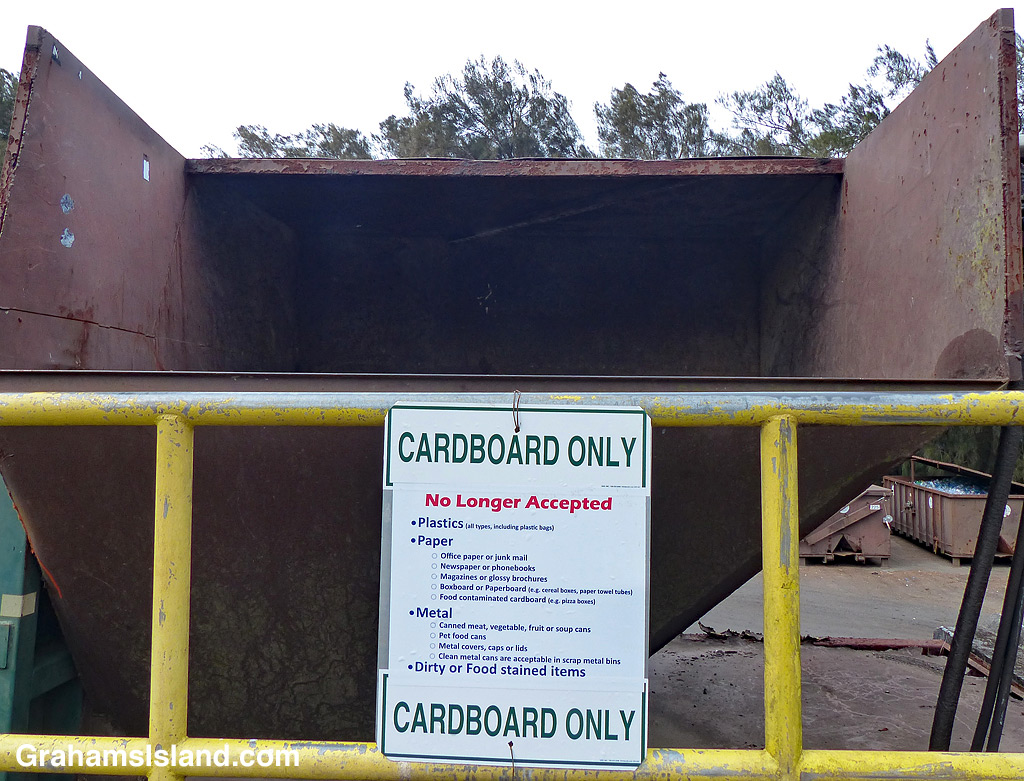
For a good many years, the Big Island has had a fairly standard recycling program. Glass, cardboard, paper, aluminum and other metals, and many types of plastic were collected for recycling.
Last week, the plastic and paper part of that program was tossed into the trash. The reason, according to officials, is that the market for those kinds of materials has gone in the tank. China stopped buying those materials last year. Since then, other countries in that business have been overwhelmed and shut up shop.
But the economics of the program weren’t the only problem. A lot of those recyclable products couldn’t actually be recycled because they had so much trash mixed in with them they were essentially garbage. People didn’t pay attention to what they could and couldn’t recycle and didn’t put the appropriate, clean materials in the proper place. ‘Recycling’ used pizza boxes with bits of three cheese pizza stuck all over them didn’t help, and I’ve seen plenty of things like that being recycled.
What will happen now is that more stuff will end up in the trash and that’s still a problem. The landfill on the east side of the island closed this year and now all trash from that side is trucked to the west side landfill. At some point that will become full. And then what. It’s not a situation that’s likely to get better any time soon.
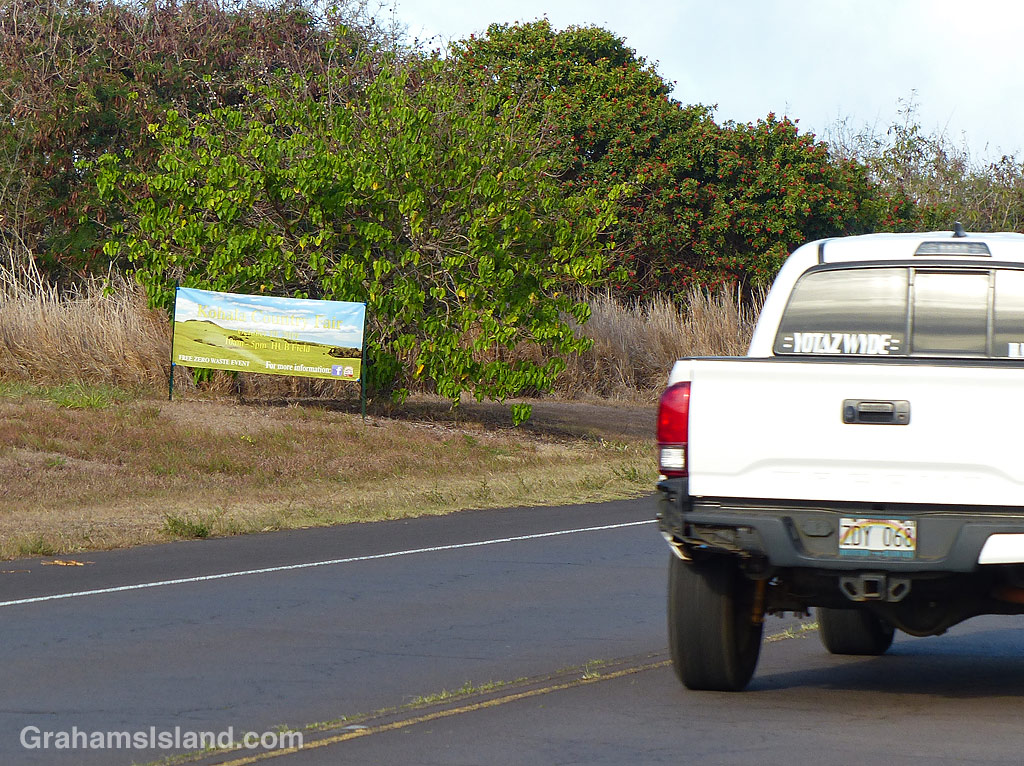
Driving toward Hawi recently, I noticed this sign. The speed limit in this area is 45 mph and I was actually traveling at around that speed, but by the time the sign registered and I looked at it, I was unable to see what it said.
Next time I drove by, I slowed down and focused on the sign. I still couldn’t read it. Today, I stopped, got out of the truck and walked over to the sign to see what it actually said. I had to get pretty close before I could read it. I doubt many passing drivers, the target of the sign, had any clue as to what it was about.
It’s one of those signs that might have looked good on a computer screen, capturing the rural feel of the area, but it’s a real world fail.
And what is the event being promoted? It’s the Kohala Country Fair and it’s happening today from 10 am to 5 pm. Better get your skates on.
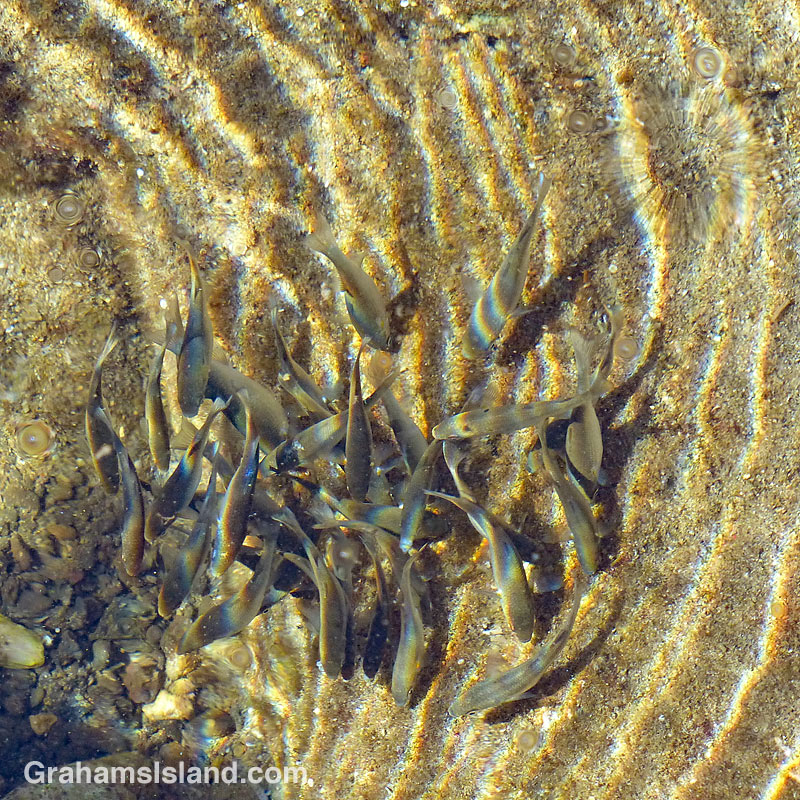
Little fish swim in a tide pool dappled in sunlight.
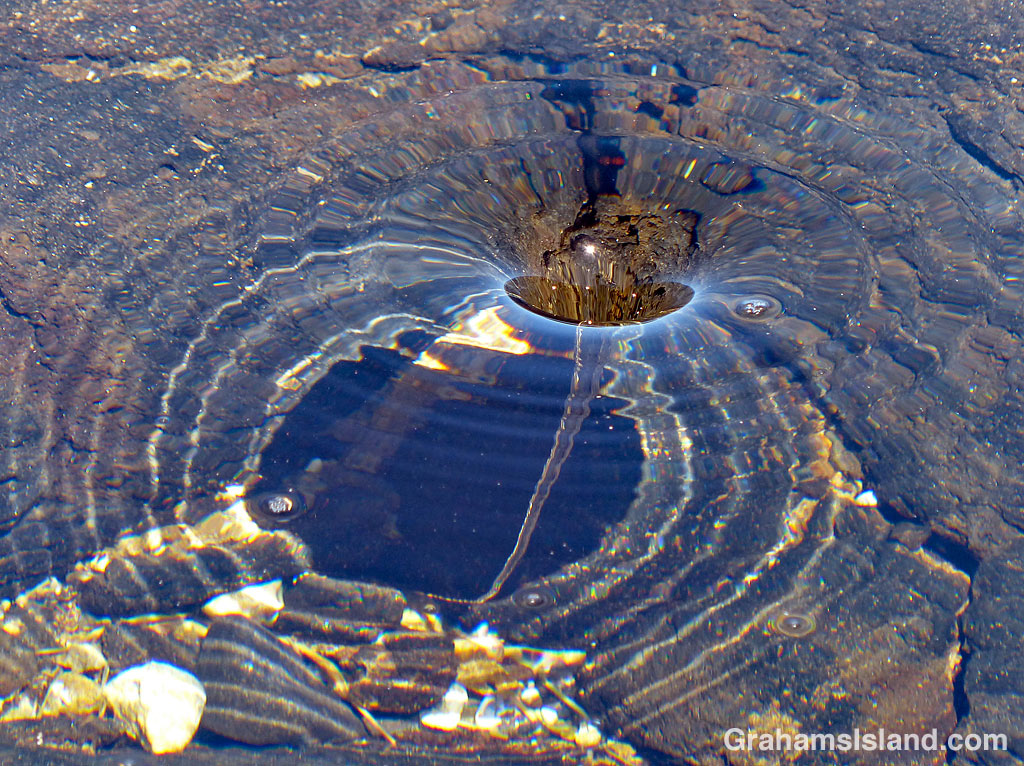
I watched this little whirlpool come and go in a tide pool, its state varying with the influx of water from the ocean. Sometimes it disappeared altogether, but usually returned.
What first drew my attention was not the whirlpool itself, but the shadow on the floor of the tide pool, which varied from fairly circular to heart-shaped.

