The weather here is governed by the northeast trade winds. These bring abundant moisture to the windward side of Big Island, but the western side, in the lee of the volcanoes, is mostly hot and dry. There are local variations, and different times of the year can bring different winds. During the summer, Kona winds, blowing from the south or southwest, reverse the usual pattern.
Then there are weather systems which upset all the norms. Hurricanes are the most obvious. This year, in dramatic contrast to the Atlantic and Caribbean areas, there has been virtually no action in the Central Pacific. Only a couple of storms headed in this general direction and both petered out well before they reached the islands.
From time to time, an unstable air mass will pass over the state bringing with it unsettled weather and thunderstorms. One of the biggest dangers with such systems is when a storm cell settles over an area, dumping many inches of water, and sometimes generating flash floods. It’s interesting to follow these on the weather radar. The storm cells show up red, orange, and yellow. Sometimes they’re big enough to blanket an entire island.
One such system passed through the islands recently. Thunder had rumbled through the night, with distant lightning illuminating the sky. Next morning, I checked the radar and saw large areas of red and orange slowly working their way southeast, toward the Big Island. Then I noticed a little ball of orange appear and start to grow close to where I live. That online apparition was matched by an increase in the thunder’s volume and by the lightning becoming distinct strikes.
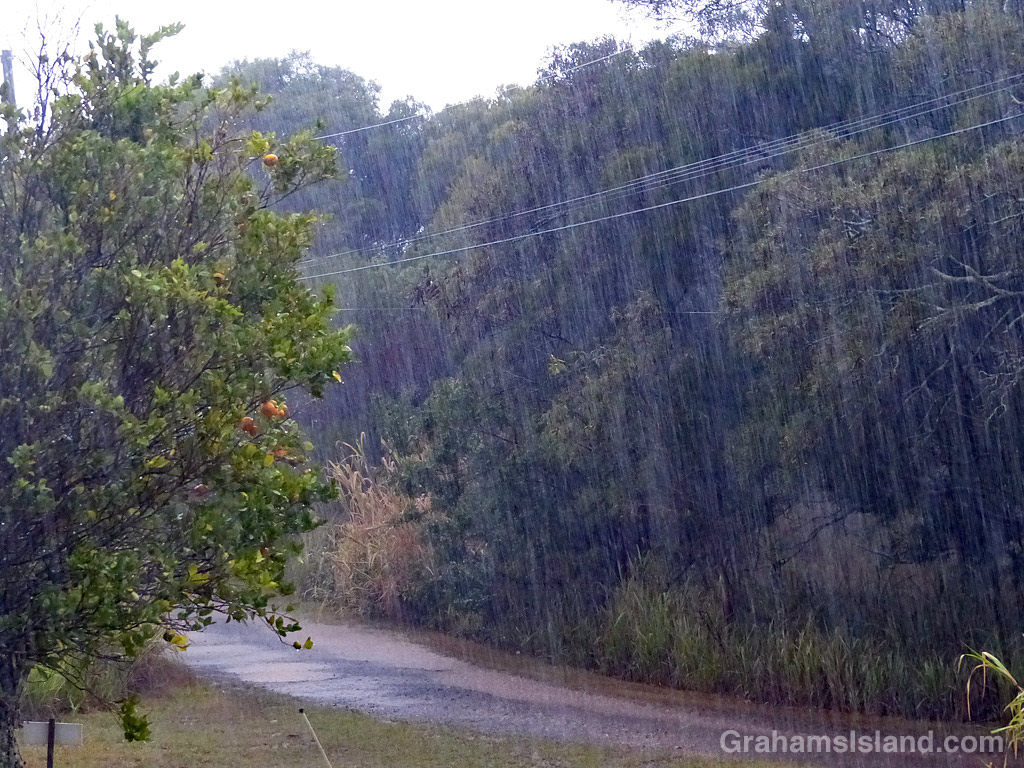
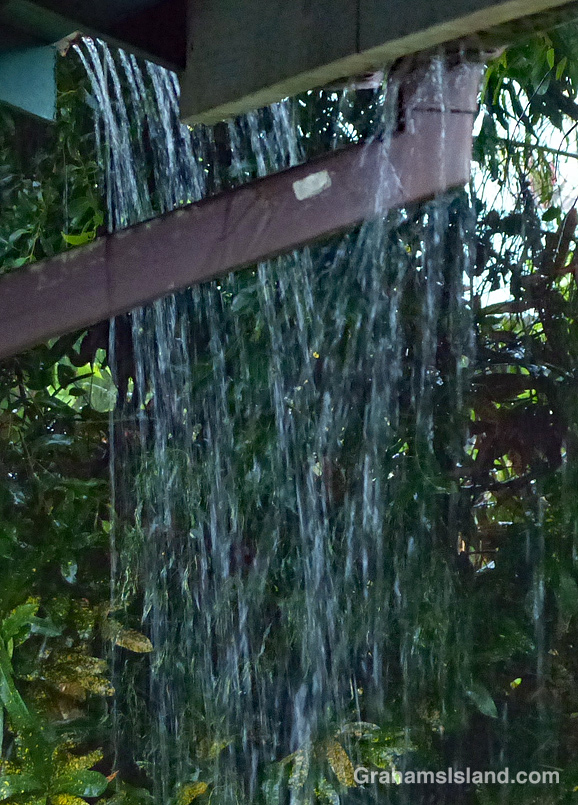
Very quickly, a cell built up that hung over this area for a couple of hours. It was quite the show. Three times the disturbance was so close overhead that I heard the crack of the lightning followed instantly by a clap of thunder that shook the house. Through it all, the rain hammered down, which I tried to capture in these photos.
Eventually, the large cell moving down from the northwest arrived, but instead of making things worse, it absorbed our local fireworks show and carried on to inundate areas to the southeast. An hour later, the sun broke through and our temporary weather maelstrom was over.